
Theodore Roosevelt National Park
The Three Units of the Park
Theodore Roosevelt National Park consists of three separate units, each with distinct character and features.
The South Unit
The South Unit, near the town of Medora, is the most visited section of the park. It contains the park's headquarters, visitor center, and campground. A scenic 36-mile loop drive winds through the unit, offering views of badlands topography and wildlife (a section of the loop has been closed since 2019 due to slumping—check current conditions with the park). The Theodore Roosevelt Presidential Library and Museum sits on the butte above Medora, near the South Unit entrance.
The South Unit is where most visitors experience the park and where the connection to Theodore Roosevelt is most direct. The landscape here—the broken terrain, the dramatic buttes, the Medora town itself—is the landscape Roosevelt would have known during his years as a rancher in Dakota Territory.
The North Unit
The North Unit, near the town of Watford City, is less developed and less visited than the South Unit, making it an excellent destination for visitors seeking solitude and a deeper wilderness experience. A scenic 14-mile drive (28 miles out and back) traverses the North Unit, offering views of canyons, streams, and wildlife. The North Unit is particularly good for seeing bison herds and for photography.
The Elkhorn Ranch Unit
The Elkhorn Ranch Unit is the most historically significant section of the park for Roosevelt enthusiasts. This small, remote unit preserves the site of Roosevelt's Elkhorn Ranch, where he lived during his years as a Dakota rancher (1885–1887). The actual ranch buildings are long gone, but the foundation and landscape remain, and a short trail leads to the site.
Visiting the Elkhorn Ranch site means standing where Roosevelt stood, looking at the same Missouri River bottom, imagining the cattle ranching operation that he managed. For those who want to understand Roosevelt's formative years in Dakota, this site is essential.
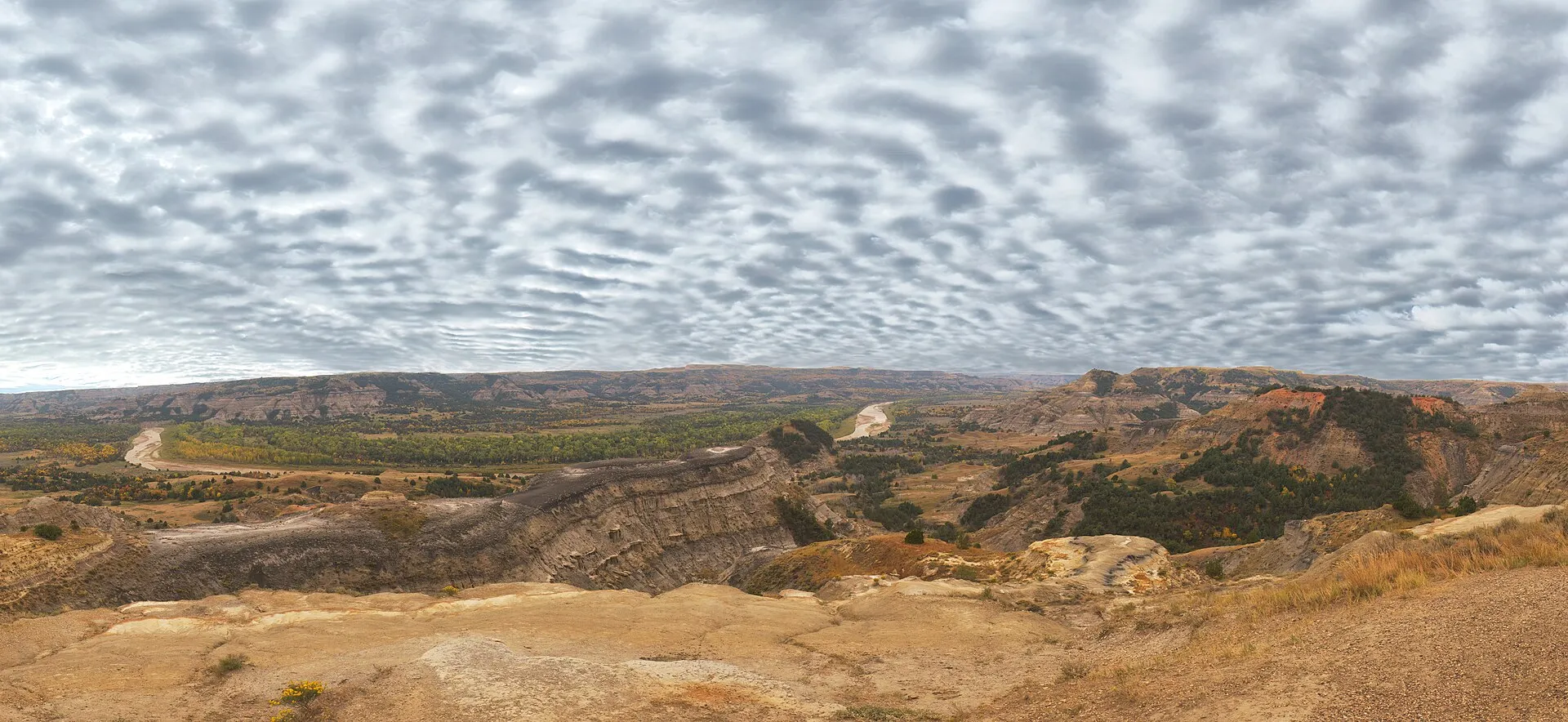
A sweeping overlook takes in the Badlands buttes, prairie, and Little Missouri River country that make up the North, South, and Elkhorn Ranch units of Theodore Roosevelt National Park. (Wikimedia Commons)

Bands of red scoria, tan clay, and gray bentonite stripe the buttes at Painted Canyon, where the erosion of ancient river sediments carved the North Dakota Badlands over millions of years. (Wikimedia Commons)
Geology and Landscape
The Theodore Roosevelt National Park landscape is a study in geological complexity. The Badlands were formed over millions of years as the erosive power of water cut through layers of sedimentary rock. The result is a landscape of steep buttes, narrow canyons, and sharply eroded pinnacles—a terrain that looks almost lunar in its starkness.
The park encompasses grasslands as well as badlands proper. These shortgrass prairies are home to the animals that Roosevelt hunted and observed: prairie dogs, bison, elk, pronghorn antelope, and mule deer. The landscape shifts dramatically depending on elevation and precipitation, creating diverse habitats in close proximity.
The Little Missouri River winds through all three units of the park, carving its valley through the badlands. Roosevelt lived near the river and used it for transportation and as a source of water for his cattle operations. The river remains a defining feature of the landscape and a draw for visitors interested in floating or fishing.
Wildlife in the Park
The park is home to a remarkable variety of wildlife—much of it the same species that Roosevelt observed and hunted more than a century ago.
Bison: The park is home to more than 400 bison, a thriving herd that represents the recovery of these animals from near-extinction. Roosevelt cared passionately about preserving bison, and the presence of a healthy bison population in the park would have pleased him.
Wild Horses: Feral horses roam parts of the park, descended from domestic animals gone wild. They add a wild element to the landscape and are often seen from the scenic drives.
Elk: A healthy elk population inhabits the park, particularly in riparian areas along the Little Missouri River. Seeing a bull elk in the Badlands provides a visceral connection to the frontier landscape Roosevelt knew.
Prairie Dogs: Large prairie dog towns are visible from some of the park's scenic areas. These social rodents fascinated Roosevelt as a naturalist, and their presence in the park connects visitors to the natural history that Roosevelt so carefully studied.
Other Animals: The park is also home to mule deer, pronghorn antelope, coyotes, foxes, eagles, and numerous other species that give the park its character as a functioning prairie and badlands ecosystem.

A bison stands on a grassy Badlands ridge. The park protects free-roaming bison, elk, wild horses, and prairie dogs on the range Roosevelt knew as a rancher in the 1880s. (TRPL)

Roosevelt’s Maltese Cross Cabin, restored near the South Unit visitor center in Medora, is among the park’s most-visited sites and a genuine link to TR’s 1880s ranching life in the Badlands. (Wikimedia Commons)
Visiting the Park
The park is open year-round, though winter conditions can make some roads impassable. The best visiting season is late spring through early fall, when weather is mild and wildlife is most active.
The scenic loop drives in both the South Unit and North Unit can be driven in a few hours, but visitors can spend days exploring the park through hiking, camping, and wildlife observation. The park has excellent campgrounds in both the South and North Units, and the nearby town of Medora offers lodging and restaurants.
Hiking trails range from short walks to ambitious backcountry routes. A hike to the Elkhorn Ranch site provides direct connection to Roosevelt's history. Other trails offer views of badlands geology, wildlife observation opportunities, and prairie landscape perspectives.
Planning a trip? See Visiting Theodore Roosevelt National Park for drive times from the Library, the park's three units, and a one-day plan.
The Park as Roosevelt's Monument
When the park was established on April 25, 1947, it was designated Theodore Roosevelt National Memorial Park—the only "national memorial park" ever created—as a monument to Roosevelt's leadership and his conservation vision. On November 10, 1978, Congress redesignated it Theodore Roosevelt National Park and gave much of its acreage formal wilderness protection. The park preserves the landscape that shaped him and that he, in turn, worked to preserve through his conservation policies and his establishment of national parks and forests throughout the West.
Visitors to the park today can walk the same landscape, see the same animals, and feel the same isolation and grandeur that Roosevelt experienced more than 120 years ago. The park is a living testimony to Roosevelt's conviction that America's natural wonders should be preserved for the benefit of present and future generations.

Theodore Roosevelt in his Badlands buckskin, about 1885. The national park that bears his name preserves the rugged country that shaped both the conservationist and the man. (Library of Congress)
The Park and the Theodore Roosevelt Presidential Library
The Theodore Roosevelt Presidential Library and Museum are located near the South Unit of the park, north of Medora. The library and museum provide interpretation and context for understanding Roosevelt's life and legacy, including his years in Dakota and his conservation accomplishments.
A visit to the park and the library together provides a comprehensive understanding of Roosevelt's formative Badlands experience and his later work as a conservation champion and president.
Continue Reading
- The Badlands Years — Roosevelt's formative time in Dakota Territory
- Maltese Cross Ranch — Roosevelt's first Dakota ranching venture
- Elkhorn Ranch — Roosevelt's larger and more ambitious Dakota operation
From the Archives
Explore original photographs, documents, and illustrations related to this topic in the Theodore Roosevelt Center Digital Library.
Recommended Reading
- Theodore Roosevelt in the Badlands: A Young Politician's Quest for Recovery in the American West by Roger L. Di Silvestro (2011)
- The Rise of Theodore Roosevelt by Edmund Morris (1979)