
Legacy + Impact
More than a century after his death, Theodore Roosevelt remains a vivid presence in American life and conversation. His energetic, fearless, and outspoken personality still represents the ideal of bold, principled leadership. Modern political figures across the spectrum invoke Roosevelt’s name when discussing conservation, courage, or reform. His “Citizenship in a Republic” speech, delivered at the Sorbonne in 1910 and known for its “man in the arena” passage, continues to inspire people around the world to dare greatly, even at the risk of failure. Roosevelt’s adventurous spirit also captures the public imagination: his Smithsonian-Roosevelt African Expedition of 1909–1910 and his later exploration down the River of Doubt with Brazilian Colonel Cândido Mariano da Silva Rondon remain legendary examples of scientific discovery and personal endurance. Conservationists still cite his creation of national parks and wildlife refuges as the foundation of America’s environmental movement, while his push for fairness through the “Square Deal” echoes in ongoing debates about corporate power and social justice. Roosevelt’s larger-than-life character—cowboy, soldier, naturalist, reformer, and writer—makes him a timeless figure who bridges the past and present. Whether through renewed interest in his wilderness preservation efforts, discussions of his complex legacy on issues of race and imperialism, or the enduring appeal to action, Theodore Roosevelt continues to shape how Americans think about leadership, citizenship, conservation, and the call to live passionately.
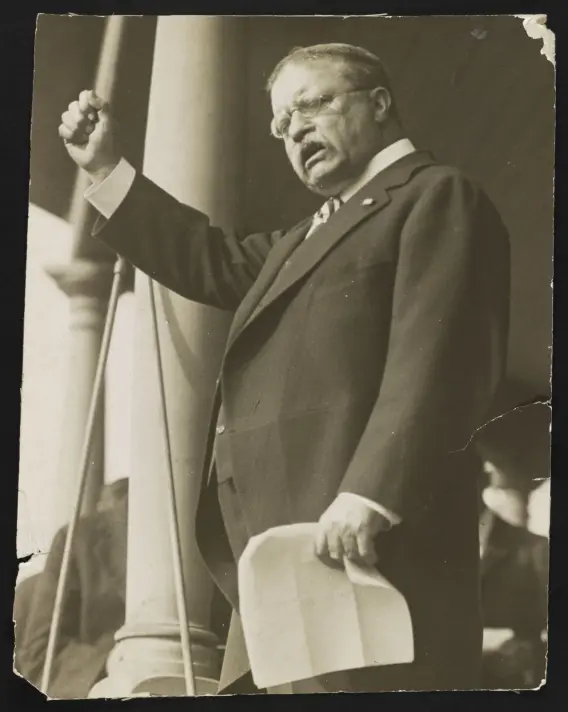
This article clarifies numerous quotations commonly misattributed to Theodore Roosevelt, distinguishing between his authentic statements and modern misquotes, while providing context and sources for his actual words on topics such as leadership, patriotism, immigration, and perseverance.
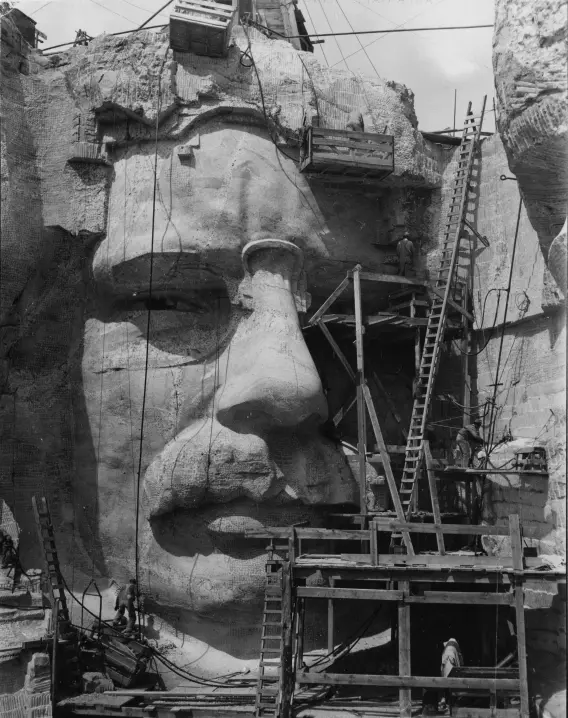
Mount Rushmore, carved between 1927 and 1941 in South Dakota’s Black Hills, features the faces of four U.S. presidents—George Washington, Thomas Jefferson, Abraham Lincoln, and Theodore Roosevelt—each symbolizing key eras in American history, with Roosevelt representing the nation’s expansion, reform, and emergence as a global power, reflecting sculptor Gutzon Borglum’s vision of a national monument celebrating American ideals and progress.
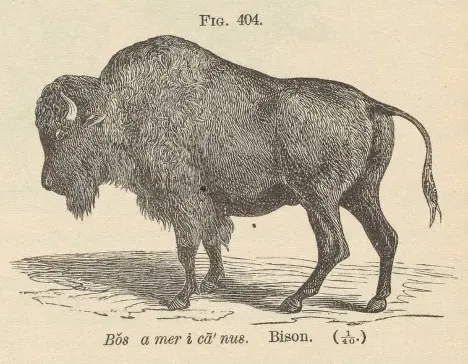
The North American bison were nearly extinct by 1900 due to hunting and habitat loss. Thanks to Theodore Roosevelt’s significant but collaborative role in their conservation through political advocacy and support for the American Bison Society, bison are alive and well today. Roosevelt didn’t work alone, supported by contributions from private ranchers and Indigenous communities. Following in Roosevelt’s conservation legacy, there are ongoing efforts to sustain and restore bison populations and habitats today.
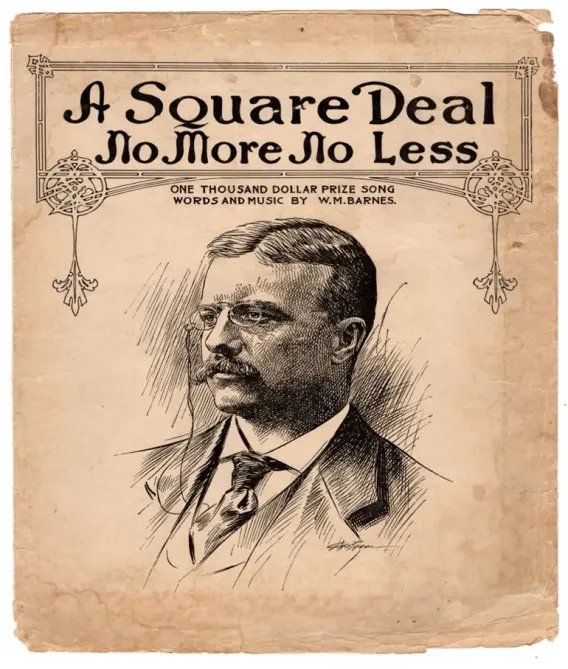
The Square Deal was a term popularized by President Theodore Roosevelt, first used in 1902 to describe his fair and reform-oriented domestic policies focused on corporate regulation, consumer protection, and conservation of natural resources, which aimed to ensure fairness and equality for all Americans regardless of social status, and remains an ideal that continues to be referenced in American political discourse today.