
TR's Badlands: The Places That Made Him
One full day for the first three stops · two days if you want the Elkhorn · all within about 40 miles of Medora
Theodore Roosevelt came to the Dakota Badlands in September 1883 to shoot a buffalo. He stayed, on and off, for the better part of a decade — and he left a different man. “I never would have been President,” he said later, “if it had not been for my experiences in North Dakota.”
This is a route through the places that did it. Some you can walk into. One of them is gone, and the going is the point.

The trail at Painted Canyon Overlook.
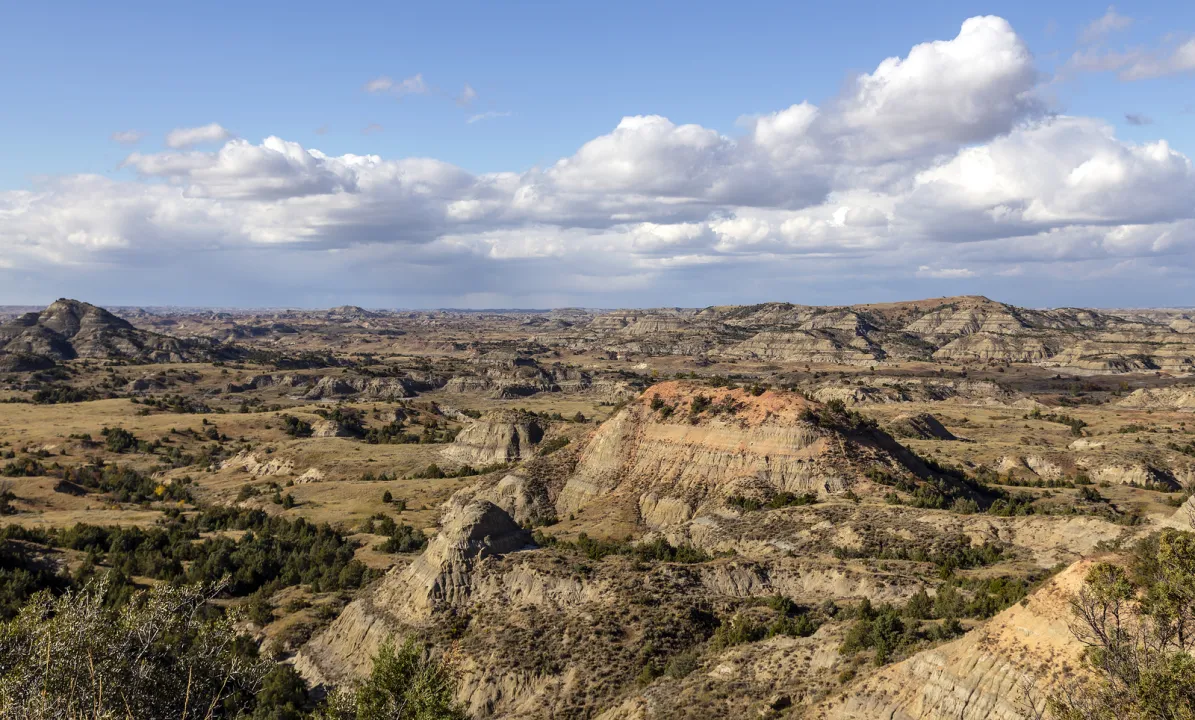
The rugged expanse seen from Painted Canyon overlook is the kind of country that inspired a national park bearing Roosevelt’s name. (Wikimedia Commons)
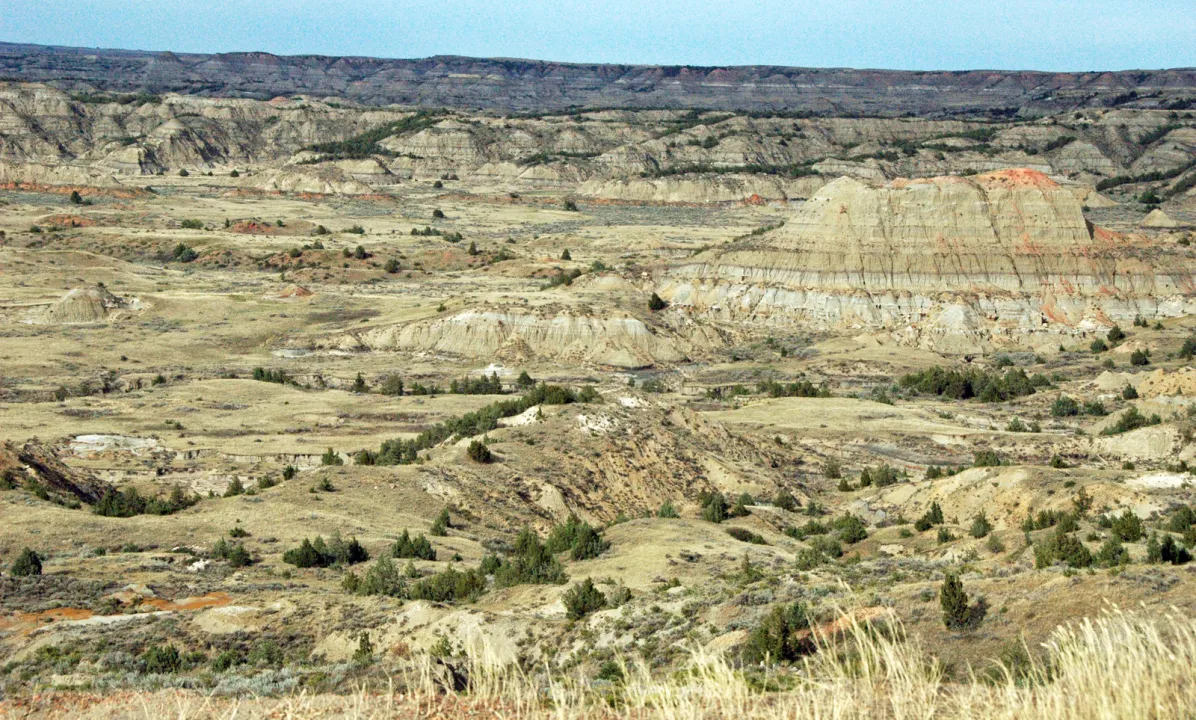
Bands of ancient clay, sandstone, lignite, and scoria record millions of years of Earth’s history in the exposed strata of the Little Missouri Badlands. (Wikimedia Commons)
Stop one: Painted Canyon
Roosevelt arrived by train in the dark and got his first look at this country the next morning. He was not immediately charmed — he called it “a chaos of peaks and plateaus.”
- Painted Canyon Overlook, just off I-94 at Exit 32, is the fastest way to understand the landscape he was reacting to: bands of rust, grey and ochre cut hundreds of feet down into flat prairie.
- Seasonal visitor center, restrooms, and a short rim trail.
30–45 minutes · 15 minutes east of Medora

The Maltese Cross Ranch cabin in a historic photograph.
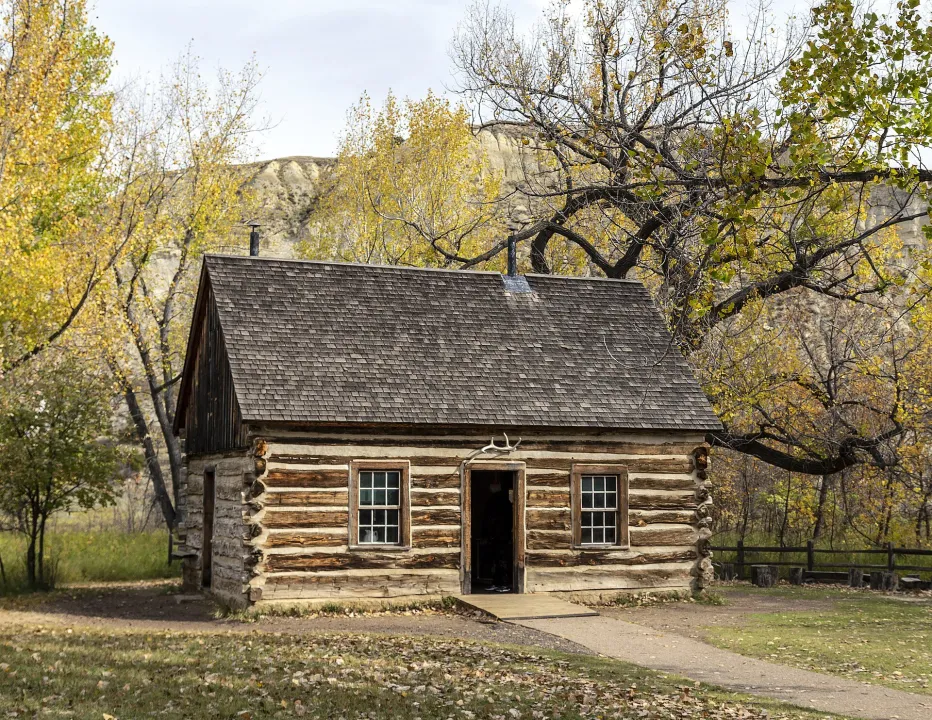
The cabin's logs are the original 1883 ponderosa pine.
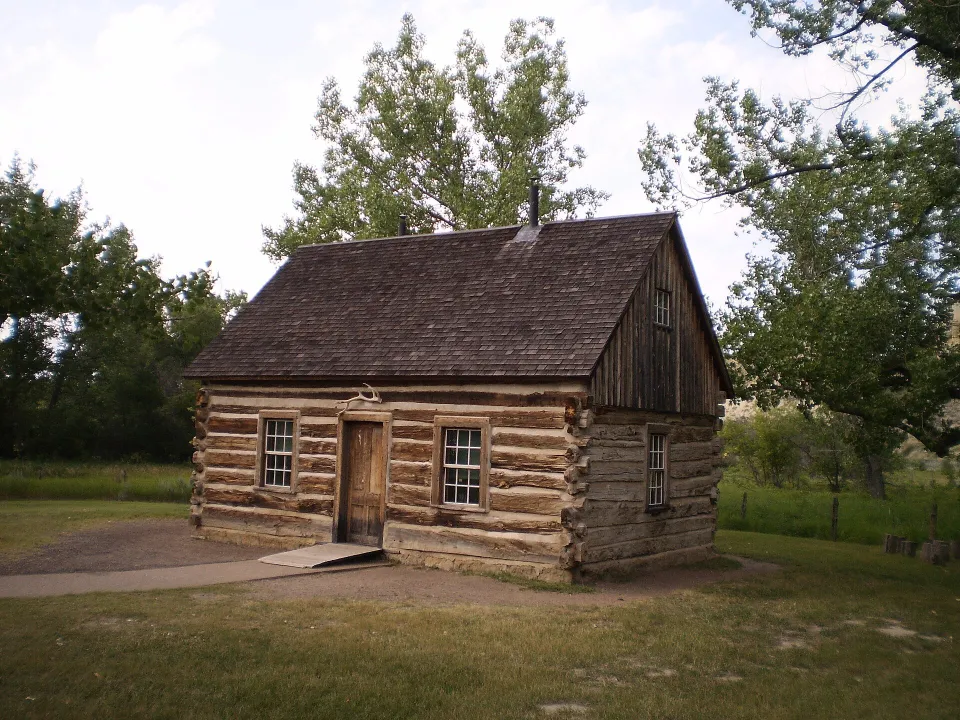
Theodore Roosevelt's Maltese Cross Cabin behind the South Unit Visitor Center.
Stop two: the Maltese Cross
Within days of arriving, Roosevelt bought into a cattle operation seven miles south of Medora. The Maltese Cross was a working ranch, and the cabin was a working cabin — a one-and-a-half-storey house of ponderosa pine, unusually fine for the country.
- The cabin still stands. It has been moved, and now sits behind the South Unit visitor center in Theodore Roosevelt National Park, where you can walk through it.
- Inside are his writing table and travelling trunk. It is a small room, and it is worth standing in.
30–45 minutes with the visitor center · in Medora
Pictured: the Maltese Cross cabin in its working years. Theodore Roosevelt Collection, Harvard College Library.

The Elkhorn Ranch corrals and buildings in a historic photograph.
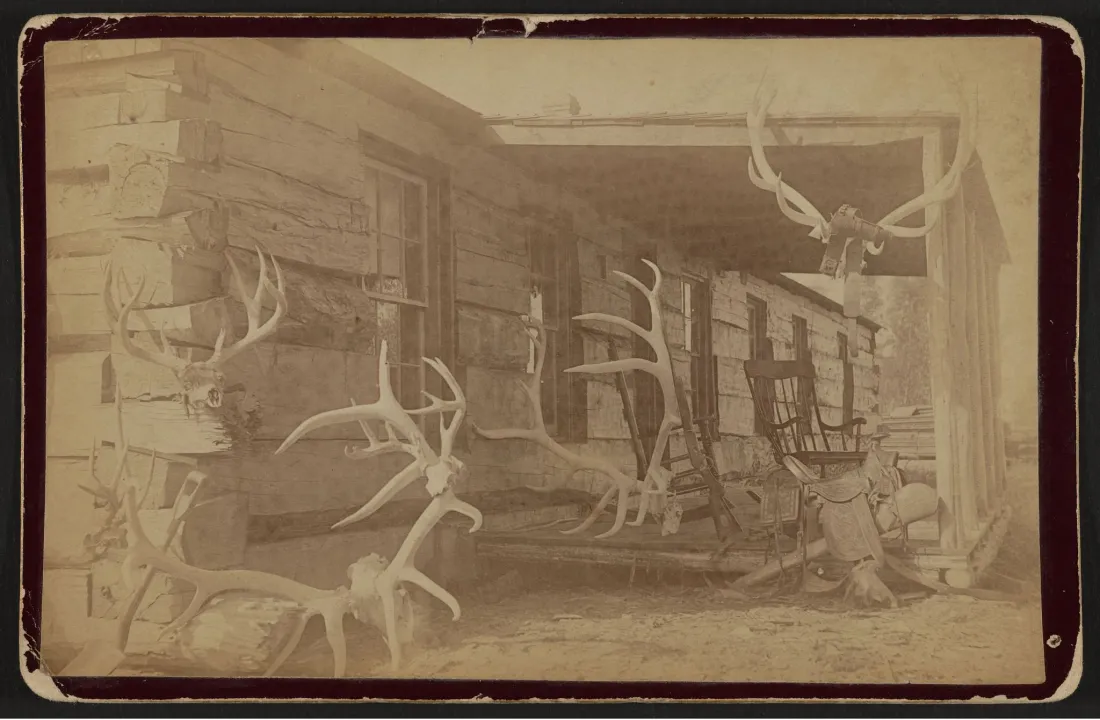
Sewall and Dow built a long, low ranch house of cottonwood logs, its wide veranda a place where Roosevelt read, wrote, and watched the river. (Theodore Roosevelt Collection, Harvard College Library)
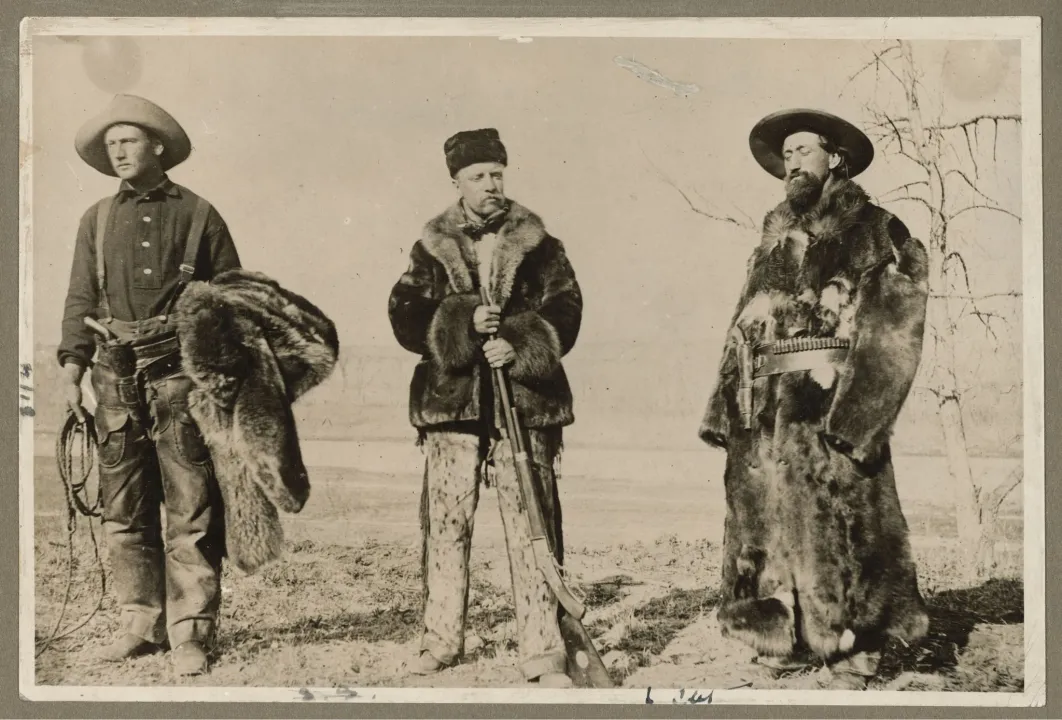
To run Elkhorn, Roosevelt brought out two trusted woodsmen from Maine, Bill Sewall and his nephew Wilmot Dow — plainspoken men whose integrity he admired all his life. (Theodore Roosevelt Collection, Harvard College Library)
The Elkhorn, then
On 14 February 1884, Roosevelt’s wife and his mother died in the same house on the same day. He went west.
The Elkhorn was the ranch he built afterward, thirty-five miles north of Medora on the Little Missouri, deliberately remote. He called it his “home ranch.” He wrote three books there. He rode, worked cattle, served as a deputy sheriff, and by his own account put himself back together.
- The photographs are what survive: the low ranch house, the corrals, the cottonwoods along the river.
Pictured: the corrals at the Elkhorn. Theodore Roosevelt Collection, Harvard College Library.
The Elkhorn, now
Nothing is left. The buildings were dismantled and hauled away; the foundation stones sit in the grass where the house was. It is a meadow with cottonwoods and a view of the river.
That is what makes it worth the drive. Standing on the empty ground with the photograph in your head is the closest you will get to what this place did to him.
- A unit of Theodore Roosevelt National Park, about 35 miles north of Medora on gravel roads.
- Check road conditions with the park before you go. The last stretch is unpaved and can be impassable when wet. High clearance is a good idea.
- No services, no water, and often no cell signal.
Half a day round trip from Medora · this is the second day of the itinerary
Plan the rest of your trip

Things to Do in Medora
Museums, the Medora Musical, trail rides, golf and more, most within a few blocks of the Library.

Hiking
Trails for every pace in Theodore Roosevelt National Park and on the Maah Daah Hey.

Where to Eat
From Salt+Scoria at the Library to steaks, pizza and ice cream in downtown Medora.

Where to Stay
Hotels, cabins and campgrounds in Medora, the national park and nearby Dickinson.