
TR as Western Writer: The Badlands That Made an Author
From Dude to Author: Writing in the Wilderness
Theodore Roosevelt came to the Dakota Badlands as a hunter, became a rancher, worked as a deputy sheriff—but he was always, fundamentally, a writer. Even while immersed in the physical work of the frontier, while his hands were worn and his body exhausted from eighteen-hour days of ranch work, Roosevelt was writing. He kept detailed journals. He wrote articles for national magazines. He worked on books that would become American classics. The Badlands experience was not separate from his writing life; it was the source material that would establish his reputation as one of America's most important nature writers.
Roosevelt's first western book, Hunting Trips of a Ranchman, was published in 1885—only two years after he arrived in Dakota. The book was based on his hunting experiences, drawn from his early months on the frontier and drafted mostly in New York during the winter of 1884–85. The writing was difficult. Roosevelt was working without secretaries, typists, or libraries. He was often exhausted. Yet the book found completion and publication, and when it appeared, it was well-received by critics and readers alike. It established Roosevelt's reputation as someone capable of capturing the western experience for an educated eastern audience.
This was not the work of a casual observer. Roosevelt wrote with precision and vivid detail about hunting elk, buffalo, and other game. He described the landscape with the eye of a naturalist and the soul of a poet. He captured conversations with frontier characters with an ear for authentic dialogue. Most importantly, he conveyed what it actually felt like to hunt in the American West—the beauty, the danger, the profound solitude, the communion with nature that was possible when a man moved through wild country on horseback with nothing but his rifle and his wits.
Roosevelt's first western book established him as a nature writer of genuine literary power.

Roosevelt wrote constantly in the Badlands. His first Western book, Hunting Trips of a Ranchman (1885), announced a new authorial voice — the rancher-naturalist. (From Roosevelt’s “Hunting Trips of a Ranchman,” 1885)

Ranch Life and the Hunting-Trail (1888), richly illustrated by Frederic Remington, captured the vanishing world of the open range and became a classic of Western literature. (Frederic Remington, “Ranch Life and the Hunting-Trail,” 1888)
Ranch Life and the Hunting-Trail: A Classic of Western Literature
Roosevelt's second major western work, Ranch Life and the Hunting-Trail, was published in 1888 and is widely considered a classic of American western literature. This book was illustrated by Frederic Remington, the celebrated artist who had become famous for his realistic depictions of frontier life. The collaboration between Roosevelt's vivid prose and Remington's powerful illustrations created something remarkable—a work that combined careful observation with artistic interpretation to capture the essence of western experience.
Ranch Life and the Hunting-Trail covers a broader range of topics than his first book. Yes, there are hunting stories—dramatic accounts of stalking elk in the mountains, pursuing buffalo across the prairie, tracking bear through rough country. But there are also chapters on the daily reality of ranch work: the spring and fall roundups, the management of cattle, the relationships between ranchers and their hired hands, the economics and challenges of operating a ranch on the open range. Roosevelt wrote about the characters he had known—the cowboys, the ranchers, the frontiersmen—with a combination of respect and clear-eyed observation.
One of the remarkable aspects of the book is Roosevelt's ability to move seamlessly between different registers. He could describe the technical details of how to break a horse to saddle, the proper method of handling cattle in a roundup, the geography of the Badlands landscape. Then he would shift to something more personal and reflective: "In the soft springtime the stars were glorious in our eyes each night before we fell asleep; and in the winter we rode through blinding blizzards, when the driven snow-dust burned our faces." The combination of technical precision and personal reflection made the book valuable both to people interested in the practical details of ranching and to those seeking a more literary engagement with the western experience.
The Wilderness Hunter and Nature Writing
In 1893, Roosevelt published The Wilderness Hunter, a book that further established his reputation as a nature writer of the first rank. This work was more ambitious than his earlier books. It combined hunting narratives with serious natural history observation. Roosevelt wrote about the animals he encountered—deer, elk, moose, bear—with the precision of a zoologist and the enthusiasm of a hunter. He included detailed observations about animal behavior, habitat preferences, and the ecological relationships between predators and prey.
The Wilderness Hunter is particularly valuable for what it reveals about Roosevelt's developing conservation thinking. While he was a hunter and fully supported hunting as a legitimate use of wild animals, he was also deeply concerned about conservation. He wrote about the near-extinction of the buffalo with genuine anguish. He described the destructive practices of commercial hunters who killed animals not for food or sport but simply to eliminate them from rangeland used for cattle. He advocated for regulated hunting and protected game reserves—ideas that were relatively progressive for the 1890s.
The book also contains some of Roosevelt's most lyrical descriptions of wild landscape. He wrote about the vast plains, the mountains, the forests of the American West with a poetic sensibility that elevated descriptions of place into something approaching art. Yet the poetic quality never overwhelmed the precision of his observation. Roosevelt was always, first and foremost, someone who paid careful attention to what he was actually seeing.

In The Wilderness Hunter (1893), Roosevelt blended tales of the chase with close observation of animals and landscape — an early strain of American nature writing. (Frederic Remington, “Ranch Life and the Hunting-Trail,” 1888)
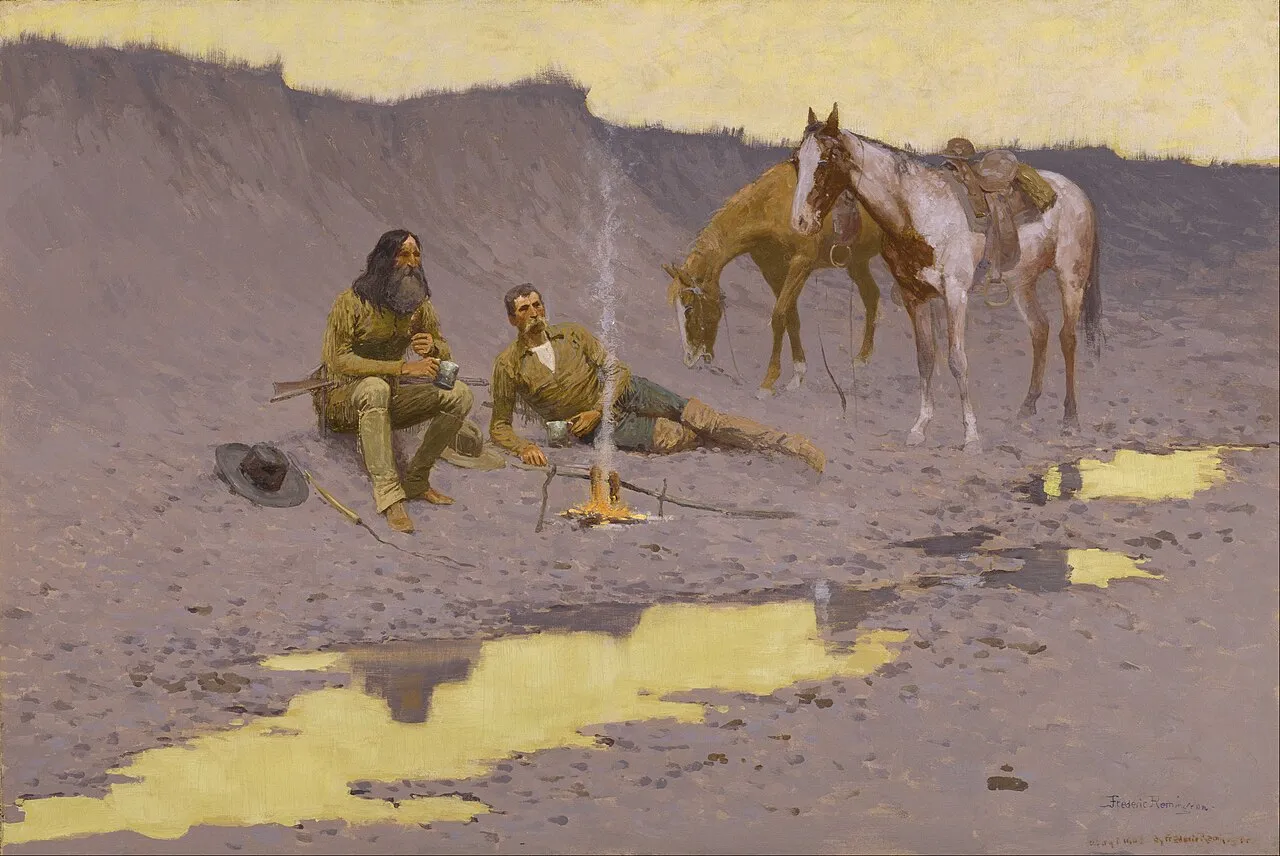
Roosevelt’s four-volume The Winning of the West (1889–1896) was a sweeping history of the American frontier — a bestseller that established him as a serious historian. (Frederic Remington)
The Winning of the West: History and Ambition
While Roosevelt was producing books about hunting and ranch life, he was also engaged in a far more ambitious historical project: The Winning of the West, a four-volume history of American frontier expansion that would occupy much of his intellectual energy from the late 1880s through 1896. The work was explicitly celebratory of western expansion, viewing it through a lens that emphasized the triumph of a superior civilization over more primitive peoples. It reflected the imperial and racial assumptions of the late nineteenth century—assumptions that would, in hindsight, require significant historical correction.
Yet The Winning of the West was also genuinely scholarly. Roosevelt drew on extensive archival research. He consulted primary sources. He attempted to base his narrative on evidence rather than mere assertion. The work established him as a serious historian whose writing would be consulted by specialists in American history. For all its problematic elements, The Winning of the West was a major contribution to American historical writing in its era.
Remarkably, Roosevelt was writing significant portions of The Winning of the West while simultaneously engaged in the hard physical work of ranching. In 1886, while working eighteen-hour days through the spring roundup, he also completed a biography of Thomas Hart Benton—a 400-page work of historical scholarship that was published in 1887. He wrote in rooms above stores in Medora, working in the early morning before the heat made concentration impossible, or in the evenings after ranch work was completed. Joe Ferris, his friend and business partner, remembered Roosevelt pacing back and forth in that upstairs room, wrestling with sentences, struggling to capture complex historical figures on the page.
Roosevelt wrote major historical and literary works by lamplight in rough ranch houses.
Style and Voice: The Roosevelt Literary Presence
What distinguished Roosevelt's writing from much of the nature writing of his era was his style. He wrote with vigor and directness. He avoided pretension and excessive ornamentation. His sentences were clear and often short. He used concrete details rather than abstractions. When describing a hunting scene, he didn't write about "the majestic wilderness" in vague terms; he wrote about specific animals, specific terrain, specific challenges. He wrote about how it felt to be cold and hungry, to be afraid, to be triumphant. He made the reader experience what he had experienced.
Roosevelt was also unafraid to inject his personality into his writing. His opinions were evident. His enthusiasms were clear. He used the first person naturally and unselfconsciously. He didn't pretend to be a detached observer; he was a participant, and his readers understood that they were reading the accounts of a man who had actually done the things he was describing. This authenticity—combined with genuine literary skill—gave his writing a power that mere technical competence could never have achieved.
Roosevelt's prose style influenced American nature writing for generations. Later writers like Aldo Leopold, while different in significant ways from Roosevelt, were writing in a tradition that Roosevelt had helped establish: the idea that nature writing could be both scientifically precise and personally reflective, that it could combine technical detail with literary artistry, that the writer's own experience was not a liability but an asset.

Roosevelt wrote as he lived — vigorous, direct, and vivid. His plainspoken, action-driven prose brought the West alive for Eastern readers. (Frederic Remington, “Ranch Life and the Hunting-Trail,” 1888)

Remington’s illustrations and Roosevelt’s words were a perfect match. Their collaboration on Ranch Life helped both men define the popular image of the American West. (Frederic Remington)
The Partnership with Frederic Remington
One of the most important aspects of Roosevelt's western writing was his collaboration with Frederic Remington, the celebrated artist and illustrator. Remington had established his reputation through his realistic depictions of western life: cowboys, soldiers, Native Americans, and the landscapes they inhabited. When Remington illustrated Roosevelt's Ranch Life and the Hunting-Trail, the combination of Roosevelt's prose and Remington's visual art created a synergy that gave readers a more complete sense of western experience.
Remington and Roosevelt were approximate contemporaries who appreciated each other's work. They shared a belief that the frontier was worth documenting and preserving—not through nostalgic idealization but through careful, realistic observation. Remington's illustrations for Ranch Life and the Hunting-Trail enhanced the book's appeal significantly. His images of roundups, of hunting scenes, of frontier characters, complemented Roosevelt's descriptions and provided visual equivalents to the literary scenes Roosevelt was creating.
The illustrations were not mere decoration. They were integral to the book's power. A reader seeing Remington's image of cowboys breaking horses would understand the scene in a more complete way when combined with Roosevelt's detailed written description. The combination of word and image created a more vivid impression than either could have achieved alone.
The Legacy of Western Writing
Roosevelt's western books did something important: they established that the American frontier was worthy of serious literary and historical attention. Before Roosevelt, frontier experience had been captured mainly in sensational dime novels and crude journalism. Roosevelt brought to frontier writing the standards of serious literature and serious history. He treated his subject matter with respect. He took the lives and experiences of ordinary people—cowboys, ranchers, hunters—seriously enough to describe them with precision and care.
His books also served a crucial function in preserving knowledge about a way of life that was already disappearing as he was writing about it. The open-range frontier was dying. By the 1890s, it was becoming historical. Roosevelt's detailed accounts of how roundups worked, how cattle were managed, how ranch communities organized themselves, have enormous value to historians trying to understand the frontier era. But they also have literary value for readers seeking to understand a vanished world.
Roosevelt himself understood this. In his autobiography, written decades after his frontier years, he reflected: "That land of the West has gone now, 'gone, gone with lost Atlantis,' gone to the isle of ghosts and of strange dead memories." The elegiac quality of this passage comes from his deep understanding that he was writing about something irretrievable—a world that was being destroyed by the same processes of civilization and development that were creating the modern America he would help lead as president.
Remington's illustrations brought Roosevelt's descriptions vividly to life for readers.
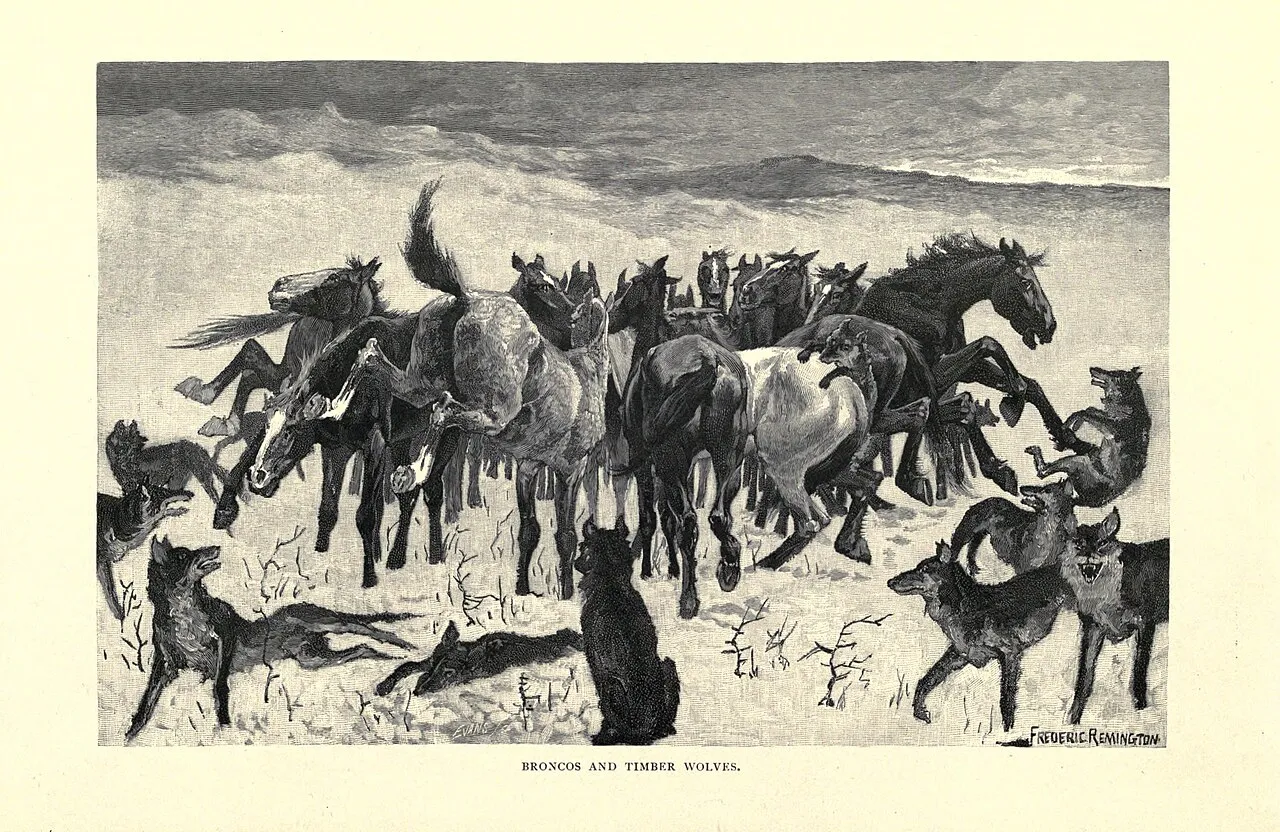
Roosevelt’s Western books outlived the frontier they described, shaping how generations of Americans imagined the cowboy, the hunter, and the wild country. (Frederic Remington, “Ranch Life and the Hunting-Trail,” 1888)
From Writer to President: The Influence Persists
Roosevelt's western writing remained influential throughout his life. When he became president, his identity as a nature writer was well-established. This literary credibility—combined with his actual experience of wild places—gave him authority when he spoke about conservation. People took his advocacy for wilderness preservation seriously, in part, because he had demonstrated through his writings that he understood and loved wild country in a way that went deeper than mere sentiment.
The lessons Roosevelt had learned on the frontier were embedded in his writing. The fragility of wild places, the destructiveness of unchecked commercial exploitation, the value of preserving wilderness even while engaging in legitimate uses like hunting and ranching—these were not abstract principles to Roosevelt. They were lessons he had learned through direct experience and recorded in his books.
As president, when Roosevelt protected vast areas of public land and established five national parks and eighteen national monuments, he was acting on principles he had developed and articulated as a western writer. The Badlands that had made him an author would influence the conservation policies of his presidency. The frontier he had known would be preserved—not frozen in the past, but protected as wild country where future generations could experience something of what had drawn him west in the first place.
Continue Reading
- Frontier Life in the Badlands—The experiences that inspired Roosevelt's writing
- Elkhorn Ranch—Where Roosevelt worked and wrote in the wilderness
- The Badlands Landscape—The country Roosevelt captured in vivid prose
- Medora and the Badlands Frontier—The community where Roosevelt engaged with the frontier
Primary Sources at the TR Center
Explore Roosevelt's own western writings and related materials in the Theodore Roosevelt Center Digital Library.
- Dakota and Ranching Encyclopedia—Overview of his frontier experience and literary output
- Roosevelt in the Badlands Timeline—Chronology of his Dakota years and publications
- Theodore Roosevelt Center Encyclopedia—Comprehensive information about his written works and their significance
From the Archives
Explore original photographs, documents, and illustrations related to this topic in the Theodore Roosevelt Center Digital Library.
Recommended Reading
- Theodore Roosevelt: A Literary Life by Thomas Bailey and Katherine Joslin (2018). ISBN: 9781512602593
- Ranch Life and the Hunting-Trail by Theodore Roosevelt (1888)
- The Wilderness Hunter by Theodore Roosevelt (1893)
- The Language of Cottonwoods by Clay Jenkinson (2021). ISBN: 978-1-64663-100-1