
The Badlands Landscape: The Land That Changed Roosevelt
A Landscape Unlike Any Other
The Dakota Badlands are not beautiful in a gentle or obvious way. They are beautiful in the way that wildness is beautiful—in their strangeness, their harshness, their refusal to conform to human expectations or desires. The landscape is characterized by eroded buttes rising abruptly from the prairie, separated by deep coulees and ravines carved by the Little Missouri River. The ground is a patchwork of exposed sediment: layers of clay, lignite, sandstone, and scoria painted in colors that shift with the light—reds, grays, golds, cream-colored rock worn smooth by wind and water. In the early morning light, the landscape glows. In the harsh midday sun, it becomes almost hostile in its starkness. As evening approaches, the colors deepen and shift, creating a visual complexity that could occupy an observer for hours.
The Little Missouri River winds through the badlands landscape in a series of gentle curves, lined with cottonwood groves that stand out like green oases against the exposed rock and sparse vegetation. The river itself is more creek than river in most seasons, but it is the lifeblood of the landscape—the source of water, the reason that the sparse vegetation exists, the focal point around which the entire ecosystem organizes itself. The landscape away from the river is often surprisingly sparse: prairie grasses, small shrubs, the occasional stunted tree. Water is precious. Survival depends on knowing where it is and how to reach it.
Roosevelt fell in love with this landscape. Not with the romantic love that comes from immediate aesthetic appreciation, but with the deeper love that comes from intimate knowledge. He came to know the landscape through repetition: riding the same country in all seasons and all weathers until every gully, every water source, every distinctive formation became familiar. He learned the trails that wound through the badlands. He learned which buttes could be used as landmarks for navigation. He learned where water could be found. He learned how the landscape changed with the seasons—the way snow accumulated in particular draws in winter, the way flash floods transformed dry coulees into roaring torrents in summer, the way spring transformed the landscape into something briefly green and vibrant. This intimate knowledge would eventually shape his thinking about conservation and land stewardship.
The landscape Roosevelt knew: eroded buttes, scattered vegetation, and the Little Missouri River.
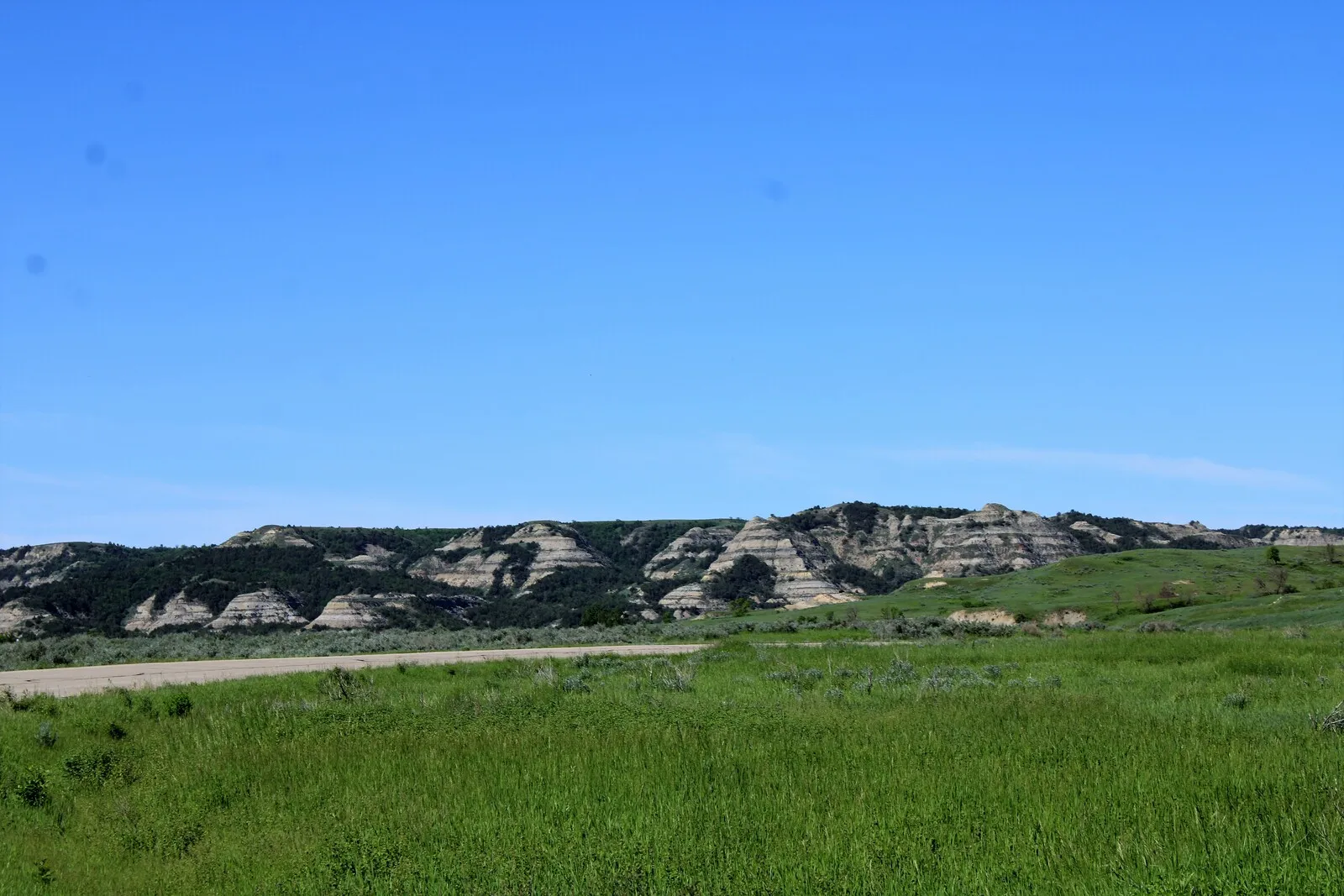
Eroded buttes rise abruptly from the prairie in the North Dakota Badlands, the wild country that shaped and inspired Theodore Roosevelt. (Wikimedia Commons)
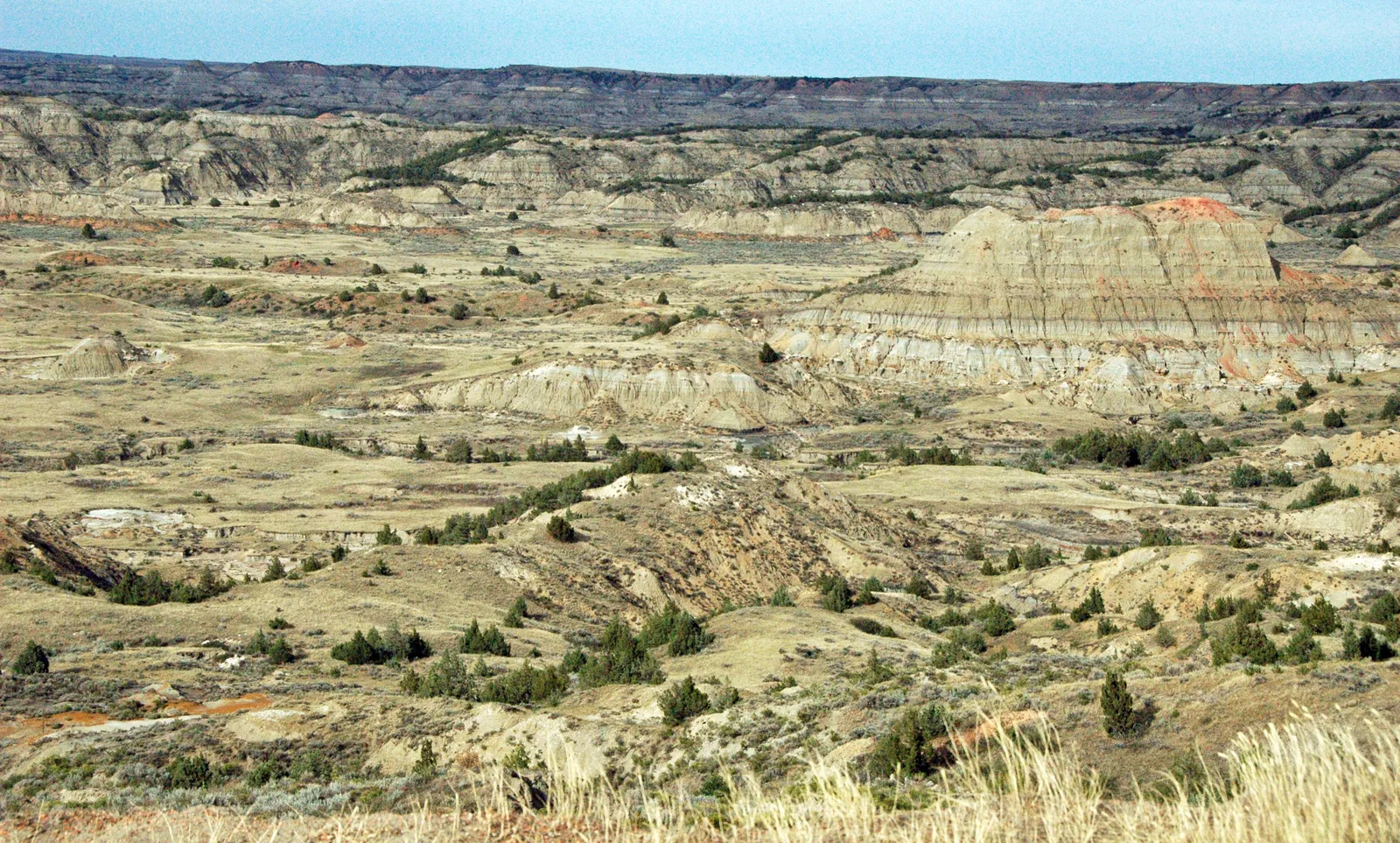
Bands of ancient clay, sandstone, lignite, and scoria record millions of years of Earth’s history in the exposed strata of the Little Missouri Badlands. (Wikimedia Commons)
The Geology Beneath: Ancient Rivers and Distant Time
The Badlands are a geologist's paradise—a place where millions of years of Earth's history are exposed in accessible layers. The landscape we see today was created by the interaction of ancient geological processes and modern erosion. Roughly 60 million years ago, after the shallow seaway of the dinosaurs' era had retreated from the northern Great Plains, rivers flowing east from the young Rocky Mountains spread sediment across a broad, swampy floodplain here. Those river-borne sediments—clays, silts, sands—accumulated in thick layers. Plant material from the lush swamps was buried and, over millions of years, transformed into deposits of lignite (low-grade coal).
As the climate dried, the landscape that emerged was quite different from the current badlands. The sediments were buried beneath layers of younger rock and sediment. But over the past few million years, as the Little Missouri River cut deeper into the landscape and as weather and erosion worked at the exposed formations, the buried ancient sediments were revealed. Today, walking through the badlands, a person can see the evidence of those ancient floodplains: petrified wood and fossil plants from millions of years ago, layers of sediment that record the changing conditions of the past, evidence of the vast stretches of time that geology operates on.
Roosevelt, who had a serious interest in natural history, understood something of this geological complexity. He recognized that the landscape he was riding through was the product of vast forces operating over timescales that dwarf human existence. The badlands were not permanent. They were not stable. They were the temporary result of erosion and exposure—a window into deep time that would eventually close as erosion continued its work. The awareness that even something as seemingly permanent as a landscape is constantly changing was part of what drew Roosevelt to this country.
The Wildlife Roosevelt Encountered
When Roosevelt arrived in Dakota in 1883, the landscape had been dramatically altered by human activity—particularly by the commercial hunting that had devastated the great herds. The buffalo that had once numbered in the tens of millions had been reduced to a few hundred scattered individuals. The great herds were gone. Elk populations had been severely depleted. Yet there was still wildlife—different from what the landscape had supported a century before, but still abundant enough to reward careful observation.
The mule deer were common. Roosevelt hunted them and wrote about them with the eye of both a hunter and a naturalist. He observed their behavior, their habitat preferences, their seasonal movements. The antelope (pronghorn) roamed the open prairie in groups. Eagles and other raptors hunted over the badlands. Prairie dogs created their elaborate underground towns. Grouse of various species were abundant. Along the Little Missouri, beaver still built lodges and dams, though commercial hunting had reduced their numbers compared to earlier times. The landscape was alive, but it was living under the constraints of a dramatically altered ecosystem.
Roosevelt was painfully aware that he was witnessing the last moments of a world that was disappearing. The buffalo were nearly extinct. The hunting pressure on other species was intense. Commercial hunters were indiscriminately killing animals not for food but to clear rangeland for cattle. Roosevelt hunted himself—he killed the animals he described in his writing—but his hunting was selective and reflective. He killed what he needed and what could be sustainably hunted. He was appalled by the wasteful slaughter that was happening around him.
The antelope Roosevelt saw on the open prairie—survivors of commercial hunting but still vulnerable.
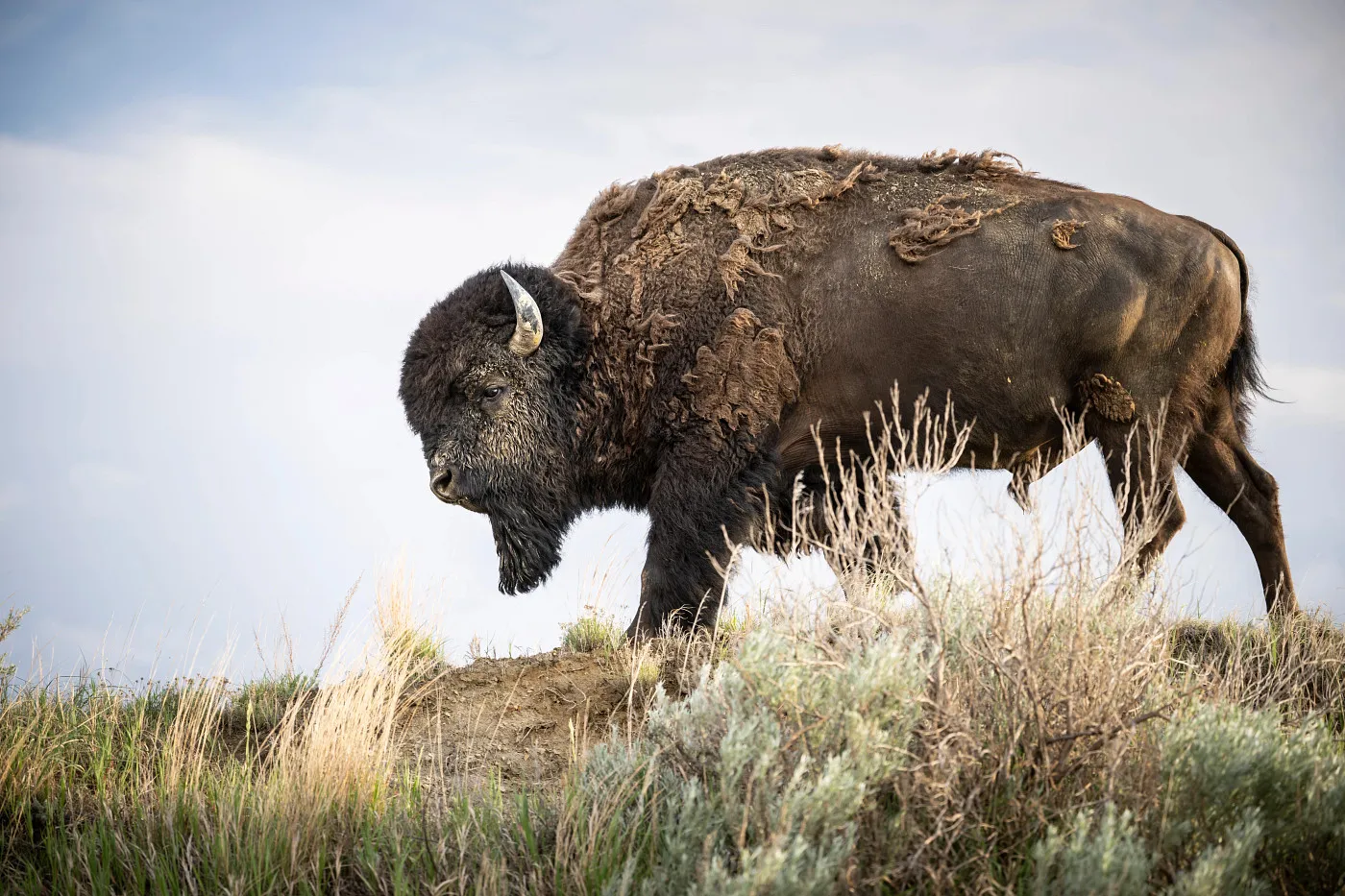
A bison stands on a Badlands ridge, a descendant of the great herds whose near-extinction helped turn Roosevelt into a lifelong conservationist. (Theodore Roosevelt Presidential Library)
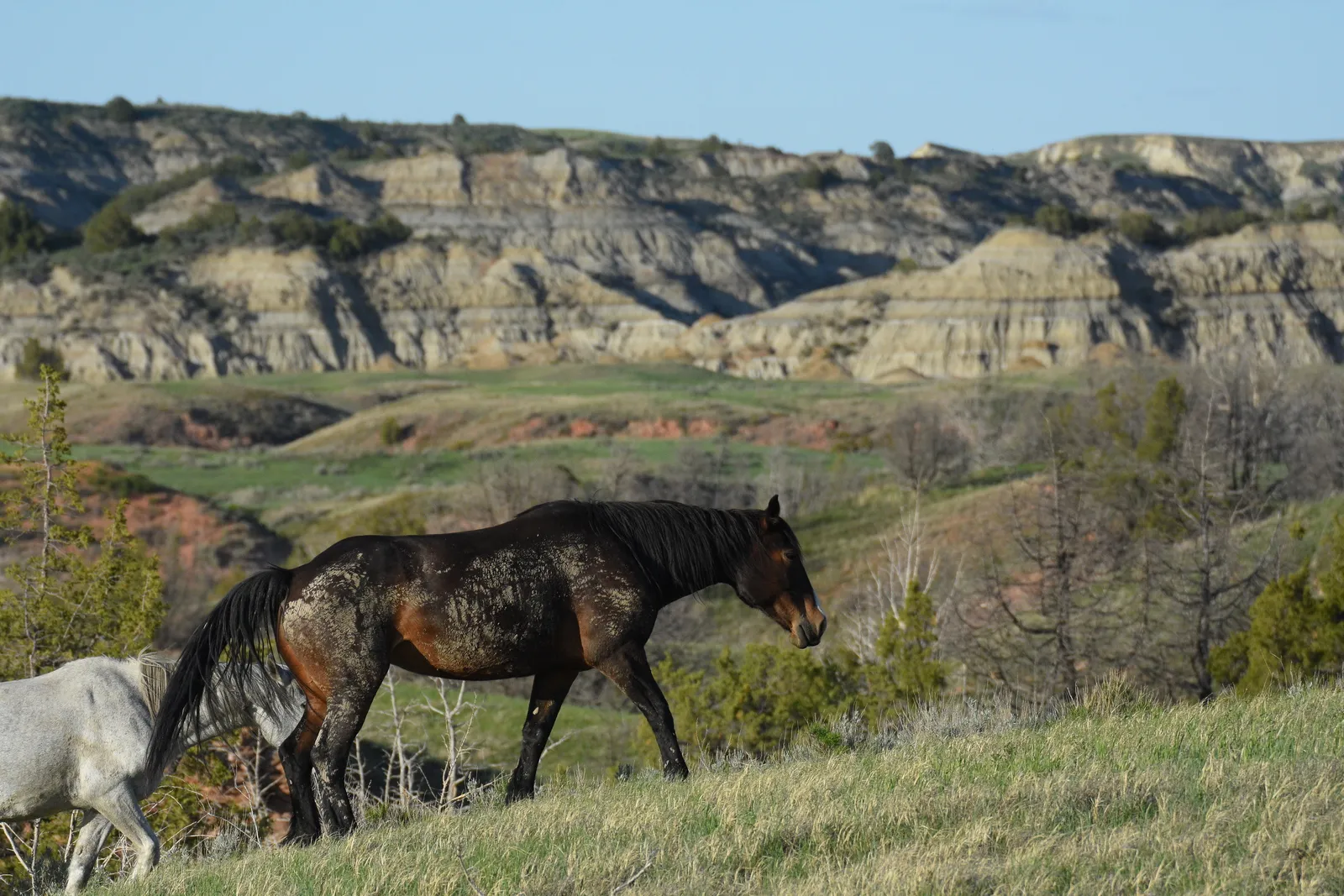
Feral horses graze below the banded cliffs of Theodore Roosevelt National Park, a reminder of how fragile the West’s remaining wild places are. (Wikimedia Commons)
The Vulnerability of Wild Places
The most important lesson Roosevelt learned from the Badlands landscape was its vulnerability. Here was a place that seemed vast and empty and permanent. The sky stretched to the horizon. The grasslands seemed to go on forever. The badlands seemed like the very definition of wilderness—a place that could never be diminished or damaged by human activity. Yet Roosevelt watched as this "permanent" landscape was being systematically degraded. The buffalo were gone. The grass was being eaten to nothing by overstocked cattle. The streams that had once run clear were being damaged by erosion from overgrazing.
The lesson was clear: wildness was not infinite. Wild places could be destroyed. The animals that inhabited those places were vulnerable to hunting pressure and habitat loss. The vegetation that sustained them could be consumed faster than it could regenerate. Nature had limits. Human activity—if unlimited and unregulated—could damage wild places beyond the point of recovery. These were not abstract insights from books. They were lessons Roosevelt learned through direct observation of a landscape he came to know intimately.
Roosevelt's personal observation of the destruction of the buffalo herds was particularly important. The buffalo had been incomprehensibly abundant—tens of millions of them, so numerous that they darkened the prairie. Yet they had been reduced to near extinction in a matter of decades by commercial hunting. Roosevelt had seen the hunters who killed buffalo not for food but simply to eliminate them from rangeland. He understood that this was wasteful and destructive. He understood that once they were gone, they might never return. The lesson that even the most abundant animals could be exterminated by human activity would inform his conservation thinking for the rest of his life.
The Prairie Grasses and Cottonwood Groves
The vegetation of the Badlands is sparse but diverse. The open prairie is dominated by grasses—blue grama, buffalo grass, and other species that had evolved to survive the harsh conditions of the northern Great Plains: limited water, extreme temperatures, intense wind. These shortgrass species hug the ground, rarely rising more than a few inches even when ungrazed; only in the moister draws and river bottoms do taller grasses take hold. They formed a dense root system that held the soil in place and supported a complex ecosystem of insects, small mammals, and birds that depended on the grassland. Roosevelt rode through these grasslands, understanding them in a visceral way that a person who had only read about them could never achieve.
Along the Little Missouri River, cottonwood trees created linear forests—narrow green corridors that were the habitat for beaver, muskrats, deer, and other animals. The cottonwoods seemed miraculous in the sparse landscape—these hardy trees had adapted to survive in a narrow riparian zone where water was available even when the surrounding landscape was dry. Roosevelt spent significant time in these cottonwood groves, hunting and observing wildlife. He understood that they were crucial to the ecosystem, that they represented a different kind of landscape from the open prairie.
Roosevelt was aware, even as he rode through these landscapes, that they were being altered by human activity. The grass was being eaten down to nothing. The cottonwoods were being cut for firewood and building material. The entire ecosystem was being reshaped by the arrival of cattle, by hunting pressure, by the simple human presence. Yet the landscape was still recognizable as wild. It was still a place where a person could experience genuine wilderness—the feeling of isolation, of dependence on one’s own skills, of small human importance in a vast landscape. This experience of nature's power would later inform his work as a conservationist president.
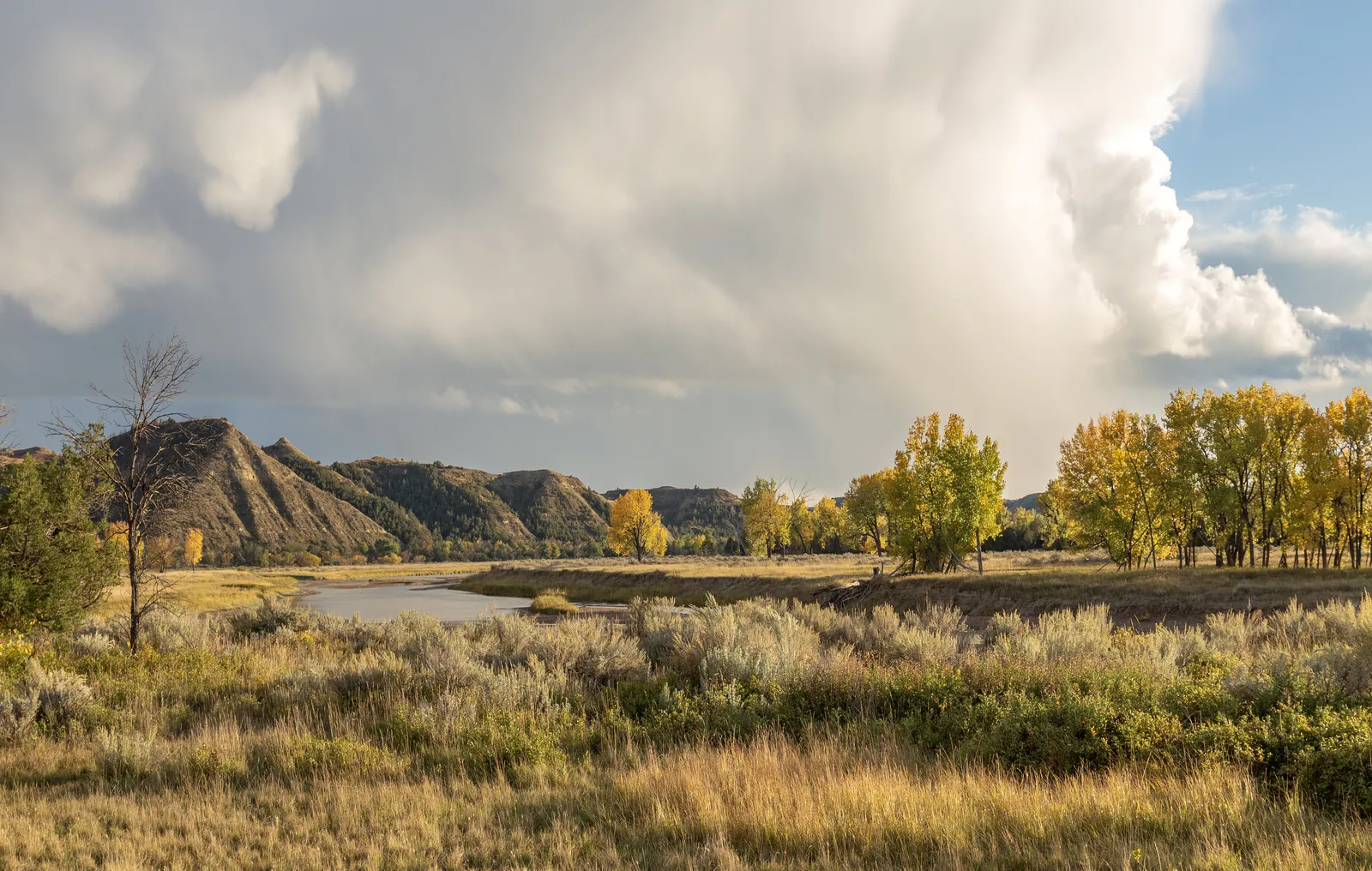
The Little Missouri River curves past cottonwood groves and open prairie, the green thread running through the heart of the Badlands. (Wikimedia Commons)
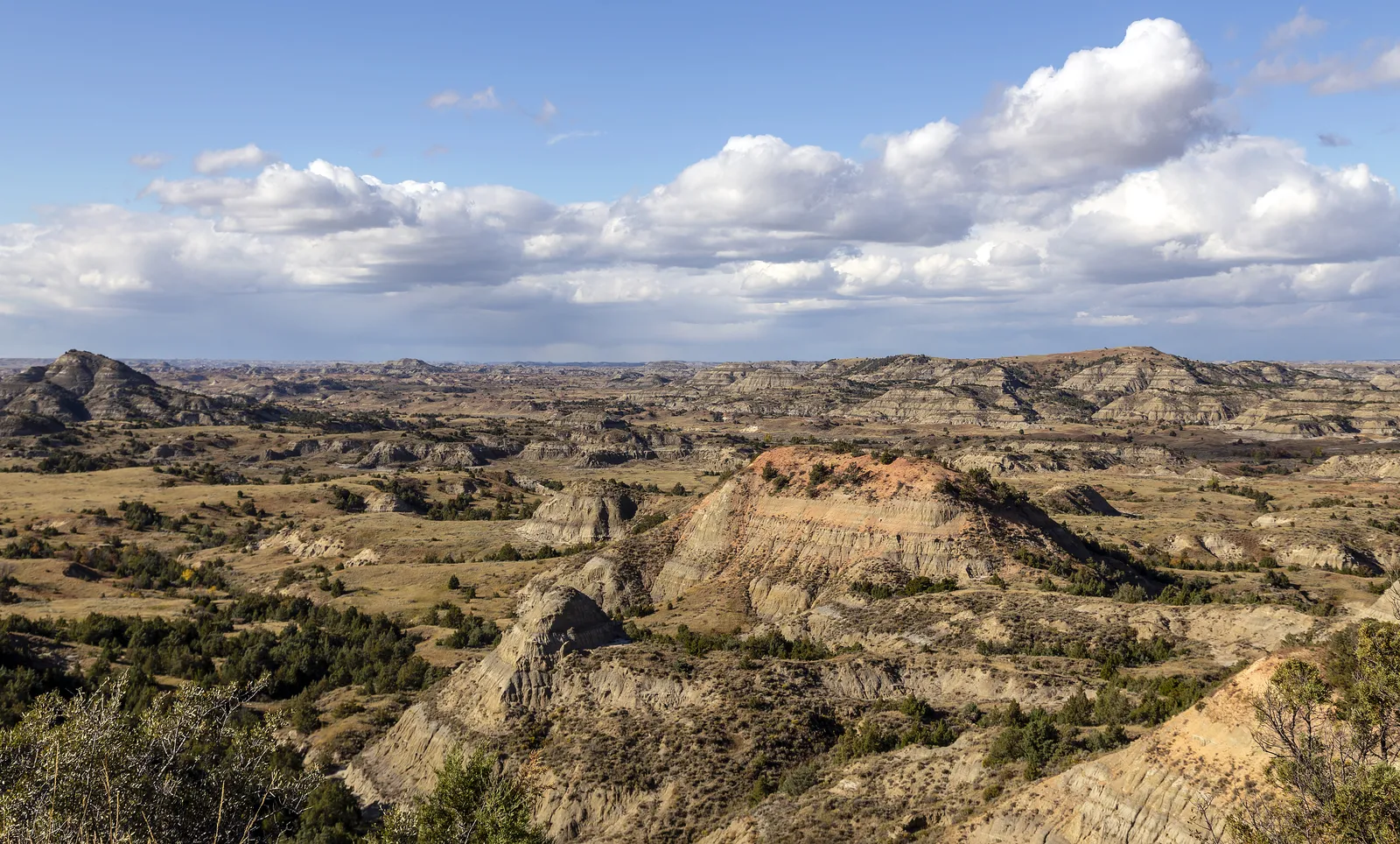
The rugged expanse seen from Painted Canyon overlook is the kind of country that inspired a national park bearing Roosevelt’s name. (Wikimedia Commons)
Why This Landscape Endures as Roosevelt's Monument
The Badlands landscape that Roosevelt knew is protected today because generations of North Dakotans, and ultimately the nation, understood that this landscape was fundamental to who he became. The man who would later protect roughly 230 million acres of public land as president was shaped by his intimate knowledge of this particular place. The conservation policies that Roosevelt would champion were not theoretical—they were grounded in his direct experience of watching a landscape be damaged by human excess.
Theodore Roosevelt National Park—established as Theodore Roosevelt National Memorial Park in 1947 and redesignated a national park in 1978—now protects about 70,000 acres of the badlands landscape that Roosevelt knew. The park preserves not just the landscape but the ecosystem that Roosevelt observed: the prairie grasses (managed now through controlled burning to maintain their health), the little Missouri River corridor, the wildlife that depends on the badlands habitat. The park is not a museum or a memorial—it is a living landscape where visitors can experience something of what Roosevelt experienced when he rode across these badlands more than 140 years ago.
Standing on a butte in Theodore Roosevelt National Park, looking out across the landscape of striped badlands and flowing prairie, a person can understand why Roosevelt was drawn to this place and why it meant so much to him. The vast sky, the isolation, the sense of standing in a place where human presence is barely visible—these create the conditions for the kinds of observations and reflections that shaped Roosevelt's understanding of humanity's relationship with the natural world. The landscape is not as wild as it was in Roosevelt's time. There are more people. The wildlife is different. The vegetation has been altered. Yet the essential character of the place—its harshness, its beauty, its power—remains.
Theodore Roosevelt National Park preserves the landscape that changed Roosevelt forever.
Light and Color: The Artist's Vision
One of Roosevelt's most remarkable achievements was his ability to capture the visual qualities of the Badlands landscape in his writing. He wrote about how the light changed the appearance of the landscape. In early morning, when the sun was low and the badlands were backlit, the striped formations seemed to glow. As the sun climbed higher, shadows filled the coulees, creating a sense of depth and complexity. In the harsh midday light, the landscape seemed almost hostile—stripped of mercy, revealing only its harshness and strangeness.
Roosevelt was aware that different light revealed different truths about the landscape. The beauty he experienced was not static. It was a quality that emerged from the interaction of light, land, and observer. This understanding shaped the way he described the landscape: not as a fixed thing to be admired, but as a dynamic environment that constantly changed, depending on conditions, season, and the observer's own state of mind.
The colors of the badlands fascinated Roosevelt: the reds of exposed clay, the pale yellows of certain sandstone formations, the dark browns of weathered lignite, the grays of other rocks. The vegetation—the browns and tans of the prairie grasses, the pale green of sparse shrubs, the deep green of the cottonwood trees—provided color contrasts. The sky, especially at dawn and dusk, could be stunning in its intensity. Roosevelt attempted to capture these visual qualities in his writing, not primarily as a painter might, but as a naturalist observing and recording precise details about an actual landscape.
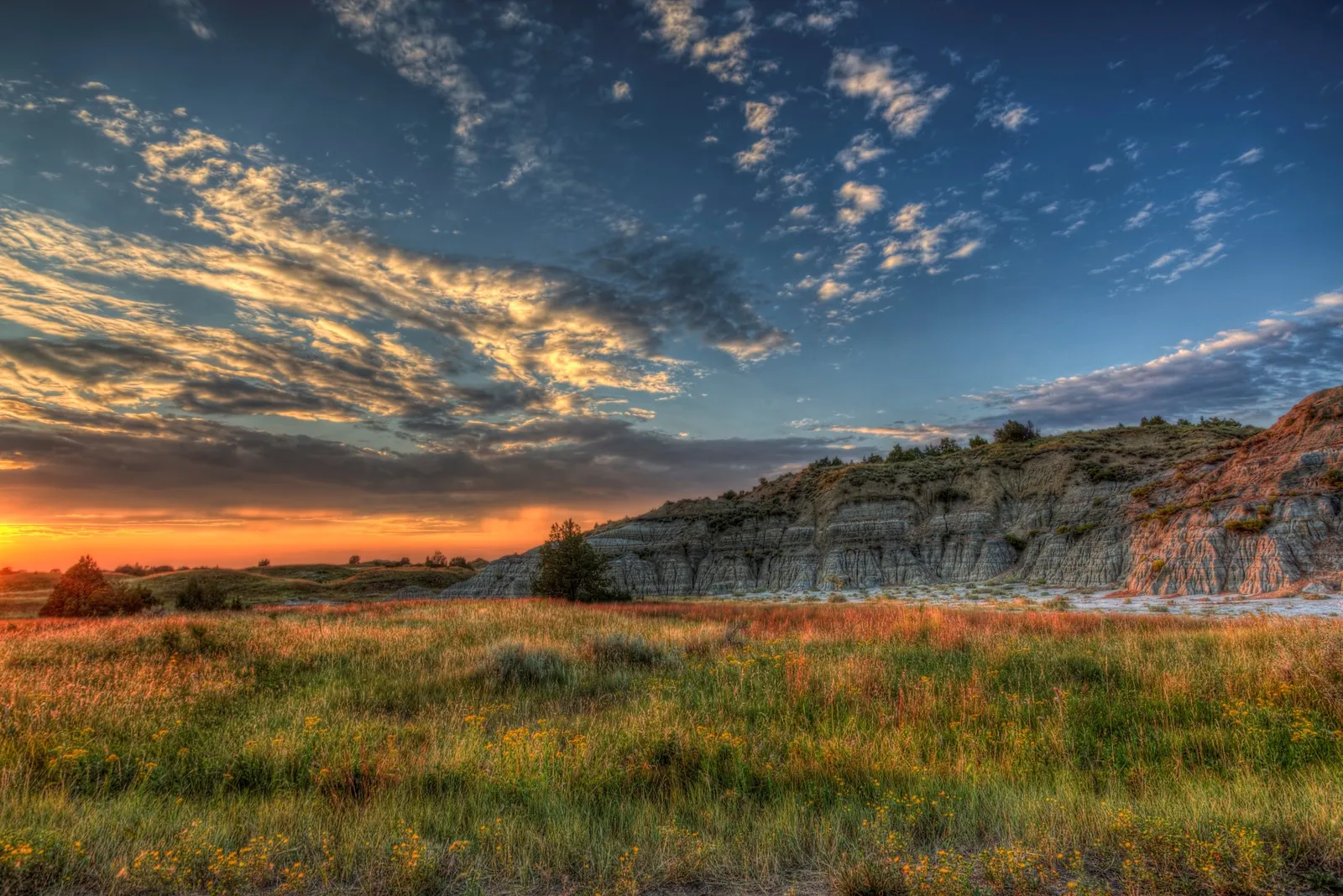
Sunset sets the Badlands aglow, the shifting play of light and color that Roosevelt described with a painter’s eye. (Wikimedia Commons)
The Landscape as Teacher and Healer
For Roosevelt personally, the Badlands landscape provided something beyond beauty or scientific interest. It provided solitude and space for psychological healing. After the devastating losses of 1884—the deaths of his wife Alice and his mother—Roosevelt used the landscape as a refuge and a restorative force. The harshness of the environment, the absolute indifference of the Dakota plains to human suffering, had a paradoxical healing effect. In a landscape that demanded everything and offered no sympathy, Roosevelt could work through his grief through action rather than introspection.
Roosevelt wrote: "Black care rarely sits behind a rider whose pace is fast enough." The implication was clear: physical exertion in a demanding landscape could be a form of therapy, a way to process emotion through action. The landscape that challenged him physically also healed him emotionally. The vast sky and endless grasslands put human suffering in perspective. Roosevelt's grief was real and valid, but it was not the largest thing in the world. The landscape was larger. Time was longer. The work that needed to be done was more important than personal suffering.
This understanding of landscape as a force that could heal and transform shaped Roosevelt's relationship with wild places for the rest of his life. He believed that engagement with wild country was not a luxury or an escape—it was essential to human health and development. The landscape of the Badlands had taught him this lesson through direct experience. As president, when he worked to protect wild places, he was motivated in part by the belief that future generations deserved access to the same kind of landscape-based healing and transformation that the Badlands had provided for him.
Continue Reading
- Elkhorn Ranch—The shelter Roosevelt built in this landscape
- A Day in the Life—Living within the Badlands terrain
- Frontier Life in the Badlands—Society and survival in the landscape
- Roosevelt the Western Writer—How he captured the landscape in prose
Primary Sources at the TR Center
Explore photographs, manuscripts, and resources documenting Roosevelt's observations of the Dakota landscape in the Theodore Roosevelt Center Digital Library.
- Theodore Roosevelt National Park Collection—Resources from the protected landscape he knew
- Roosevelt in the Badlands Timeline—Chronology of his western years
- Dakota and Ranching Encyclopedia—Overview of the landscape and his life there
- Elkhorn Ranch Bottoms Photograph—Historical image of the landscape
From the Archives
Explore original photographs, documents, and illustrations related to this topic in the Theodore Roosevelt Center Digital Library.
Recommended Reading
- The Language of Cottonwoods by Clay Jenkinson (2021). ISBN: 978-1-64663-100-1
- Your Guide to Theodore Roosevelt National Park by Michael Joseph Oswald (2012). ISBN: 978-1-62128-014-9
- Reflections of the Badlands by Philip S. Hall (1993). ISBN: 0-929925-24-6
- Theodore Roosevelt in the Dakota Badlands: An Historical Guide by Clay Jenkinson (2006). ISBN: 0-9786267-0-2