
Elliott Roosevelt: Theodore's Troubled Brother
The Golden Youth
Elliott Roosevelt was born on February 28, 1860, two years after his brother Theodore. While Theodore struggled with asthma and had to remake his body through conscious effort, Elliott seemed to have been born with everything: physical grace, charm, athletic prowess, and the kind of natural magnetism that drew people to him. In youth, he was the more impressive Roosevelt, the one on whom the family's hopes seemed to rest more lightly because he seemed destined for success through sheer natural ability.
He was handsome in a way that appealed to women—not the strenuous, intense look of his brother Theodore, but rather a softer, more romantic beauty. He had an easy charm and a gift for conversation. He seemed to embody the aristocratic ideal: wealthy, athletic, cultured, and destined for a life of privilege and ease.

Theodore and Elliott Roosevelt (with fellow young Americans) in the Dresden Literary American Club during the charmed youth the brothers shared abroad in the early 1870s. (Wikimedia Commons)
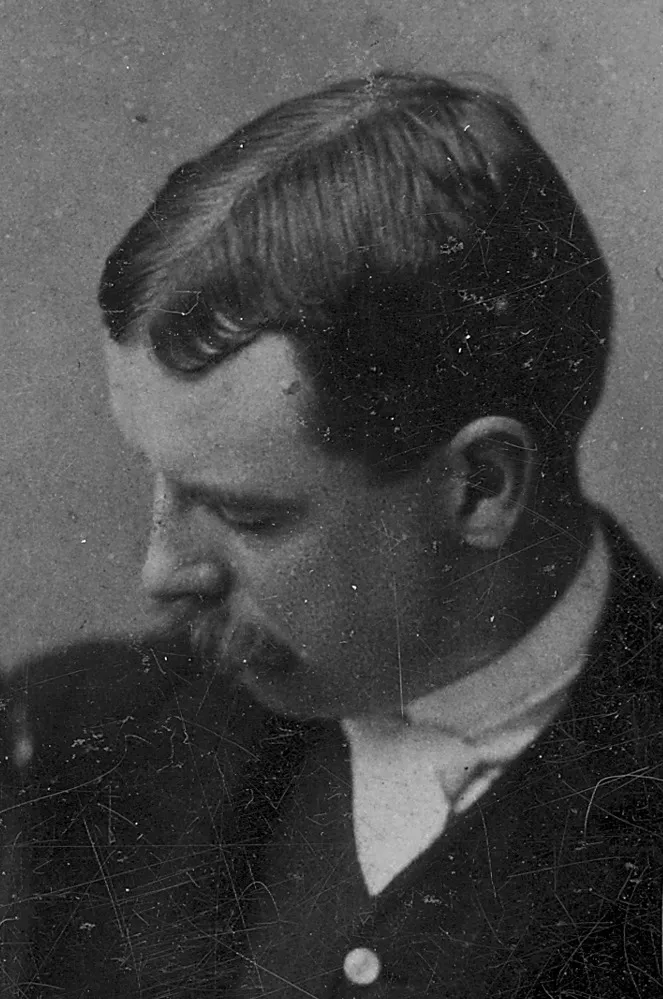
Elliott Bulloch Roosevelt, Theodore's charming younger brother, in a pensive studio portrait. (Wikimedia Commons)
The Descent Begins
But beneath the charm and good looks, something was fundamentally unstable in Elliott's character. He lacked the iron will and moral seriousness that characterized his father Theodore Sr. and that his brother Theodore Jr. inherited. He had intelligence, but not the disciplined focus that intelligence requires. He had charm, but not the integrity that gives charm lasting power.
In his twenties, Elliott began to show signs of the problem that would consume the rest of his life: alcohol. What began as the casual drinking of a young aristocrat gradually became something darker and more compulsive. The charming young man began to drink heavily, often, and with increasing desperation.
Eleanor's Mother: Anna Rebecca Hall
In 1883, Elliott married Anna Rebecca Hall, a woman who came from a family of considerable standing. Their daughter, Eleanor Roosevelt, was born on October 11, 1884. Eleanor was, by all accounts, a quiet, serious child—more like her uncle Theodore than like her charming but increasingly troubled father.
Anna Rebecca was a gentle woman, but she was not equipped to handle Elliott's drinking and the erratic behavior that accompanied it. The marriage deteriorated rapidly. Elliott's infidelities became known. His binges became more frequent and more severe. The household became unstable.
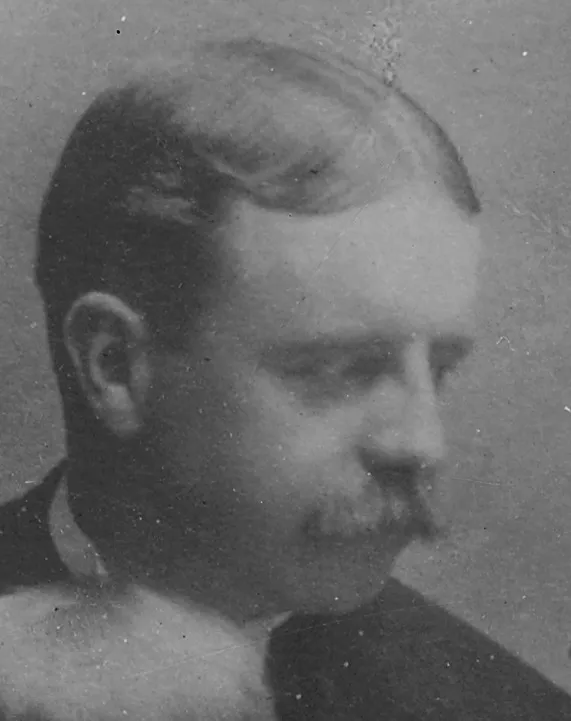
Elliott Bulloch Roosevelt, whose early charm gradually gave way to years of struggle with alcoholism. (Wikimedia Commons)
The Collapse of the Marriage
Theodore Sr. died in 1878, and without his stern authority, the structure that had barely contained Elliott's problems began to crumble entirely. Elliott's drinking accelerated. His behavior became increasingly scandalous. He began to spend money recklessly. He was involved in affairs. He treated his wife with increasing cruelty and neglect.
Anna Rebecca, devastated and helpless, did what women in her position often did in that era: she removed herself. She took Eleanor, then just a small child, and attempted to separate from Elliott. But the laws of the time were entirely in the man's favor. Elliott could claim custody of Eleanor regardless of his unfitness. Anna Rebecca lived in anxiety and fear.
Theodore's Anguished Intervention
Theodore Jr., now a rising politician and a man of serious moral conviction, watched his brother's destruction with anguish. He tried, repeatedly, to save Elliott from himself. He appealed to Elliott's better nature. He offered financial support if Elliott would commit to sobriety. He tried to involve him in serious work, in causes that might give his life meaning. He pleaded with him, as a brother and as a man of conscience, to honor his obligations to his wife and child.
Nothing worked. Elliott's addiction was stronger than filial obligation, stronger than paternal responsibility, stronger than the love that others felt for him. Theodore had to watch helplessly as his brother—the brother who had seemed so promising in youth—descended into increasingly pathetic circumstances.

Theodore (right) and Elliott Roosevelt in hunting attire as young men, before their paths diverged. (Theodore Roosevelt Collection, Harvard College Library)

A signed portrait of Elliott Bulloch Roosevelt, Theodore's brother and the father of Eleanor Roosevelt. (Wikimedia Commons)
Exile and Confinement
In desperation, Theodore and other family members eventually arranged for Elliott to be institutionalized, confined to an asylum in an attempt to break his addiction and prevent him from further damaging the family's reputation and Eleanor's welfare. For a time, Elliott was essentially imprisoned, locked away in the hope that isolation and treatment might restore him to himself.
But the confinement did not hold. Elliott contested the family's legal proceedings and negotiated his release, accepting a period of probationary exile in Abingdon, Virginia; in his final months he lived in New York under an assumed name, attempting to rebuild a life from the ruins he had created.
The Death of Eleanor's Mother
Throughout this chaos, young Eleanor—now a motherless child in the legal sense, though her mother was still alive—was shuttled between relatives and uncertain guardianship. Her mother, Anna Rebecca, was effectively cut off from her own daughter by Elliott's legal rights and his family's efforts to protect Eleanor from the scandal.
Anna Rebecca died on December 7, 1892, when Eleanor was just eight years old. She died knowing that her daughter was being raised without her, that her husband was beyond recovery, and that the family she had married into—despite their genuine care for Eleanor—was essentially powerless to change the fundamental situation.

Elliott Roosevelt with his adoring young daughter, the future Eleanor Roosevelt, in a New York studio portrait. (Wikimedia Commons)
The Impact on Eleanor
Eleanor was taken in by her maternal grandmother, Mary Livingston Ludlow Hall, who remained her guardian throughout her childhood. She was a quiet, serious child, marked by loss and uncertainty. She had lost her mother to death and her father to addiction. The household had been chaotic. She had experienced rejection and displacement at the most formative moments of her childhood.
Theodore Roosevelt took an interest in his orphaned niece. He made sure she was cared for, that she received proper education, and that she understood his values of duty and service. When Eleanor came of age, it was Theodore—by then President of the United States—who gave her away at her wedding to Franklin Delano Roosevelt, acting as the male family head and blessing the union that would determine Eleanor's adult life.
Elliott's Final Years
Elliott Roosevelt died on August 14, 1894, at age 34. He never recovered his footing. He never defeated his addiction. He never returned to the promise that his youth had suggested. He left behind a daughter who would become one of the most important women of the 20th century, and a brother who carried the grief of Elliott's failure for the rest of his life.
Theodore, in letters to friends, expressed his anguish over Elliott: the tragedy of a man who had been given everything and thrown it away, who had hurt those he claimed to love, and who had let his own weakness destroy both his life and his family. For Theodore, Elliott represented a cautionary tale about the importance of self-discipline, moral seriousness, and the refusal to surrender to weakness.

Elliott Roosevelt with his three children — Eleanor, Elliott Jr., and baby Hall — in 1891, during his final years. (Wikimedia Commons)
The Shadow Story
Elliott Roosevelt's story is largely forgotten. Americans remember Theodore as the vigorous, courageous, unstoppable president. They remember Eleanor as the remarkable First Lady and advocate for human rights. But they know little of Elliott, the talented brother whose promise was destroyed by his own demons, and whose tragedy reverberated through the lives of those who loved him.
Yet Elliott's story matters. It matters because it reveals the stakes of character, the reality that talent without integrity is worthless, and the way that one person's addiction and moral failure ripples outward to damage everyone they touch. It matters because it shaped young Eleanor, making her serious, dutiful, and determined to build something meaningful from the chaos of her childhood. And it matters because it shows Theodore Roosevelt not as a cardboard hero, but as a human being who loved his brother, tried desperately to help him, and lived with the grief of his failure.
Continue Reading
- Eleanor Roosevelt — Elliott's daughter who overcame her tragic childhood to become a transformative First Lady
- The Roosevelt Family Tree — Understanding Elliott's place within the broader Roosevelt family structure
- Theodore Roosevelt Sr. — The father whose early death removed crucial family discipline
Primary Sources at the TR Center
Explore letters and family documents related to Elliott Roosevelt and the Roosevelt family dynamics in the Theodore Roosevelt Center Digital Library.
- Elliott Roosevelt Encyclopedia Entry — Biographical essay on Elliott's life and his impact on family members including Eleanor and Theodore
- The Roosevelt Family — Essays and documents examining family relationships, values, and dynamics across generations
From the Archives
Explore original photographs, documents, and illustrations related to this topic in the Theodore Roosevelt Center Digital Library.
Recommended Reading
- Mornings on Horseback by David McCullough (1981)
- The Loves of Theodore Roosevelt by Edward F. O'Keefe (2024). ISBN: 978-1-9821-4568-2
- The Rise of Theodore Roosevelt by Edmund Morris (1979). ISBN: 978-0-307-77782-9