
Timeline of T.R.’s Fourths of July
Follow Theodore Roosevelt through five decades of Fourths of July, from a boy’s firecrackers to a wartime loyalty parade in 1918. Read the full story at The Fourth of July with Theodore Roosevelt.
A SUNDAY FOURTH IN ENGLAND
On a family trip abroad, 10-year-old T.R. went to church in Hastings and walked on the cliffs. His diary records that "coming back we made a feeble attempt at cheering the 4th of July."
"WHEW!"
"Whew! Did not we have fun," T.R. wrote in his diary. "We cracked torpedos etc etc." Johney and Maud Elliott came, there was a mock battle of soldiers, and the day ended with fireworks.
THE MOST SPLENDID FUN
Writing to his aunt from Dobbs Ferry, New York, T.R. reported "the most splendid fun on the fourth of July," starting at eight o'clock with firecrackers. Rain pushed the fireworks to the next evening. "We each got his fair share of burns."
ORATOR OF THE DAY IN DICKINSON
The Fourth fell on a Sunday, so Dickinson, Dakota Territory, held its first-ever Independence Day celebration on Monday. T.R., a 27-year-old rancher, gave the oration, then stayed to watch "the horse races between the cowboys and Indians," he wrote.
A BELATED FOURTH
T.R. spent the Fourth itself away from home. In a letter of July 19, he reported that the children at Sagamore Hill had held "a kind of mild party and belated Fourth of July celebration." "Nobody was burned," he wrote.
IN THE TRENCHES
Three days after the charge at Kettle Hill, T.R. was in the trenches on the San Juan Heights outside Santiago, Cuba, during the truce. "I sleep in the drenching rain, and drink putrid water," he had written to Henry Cabot Lodge the day before.
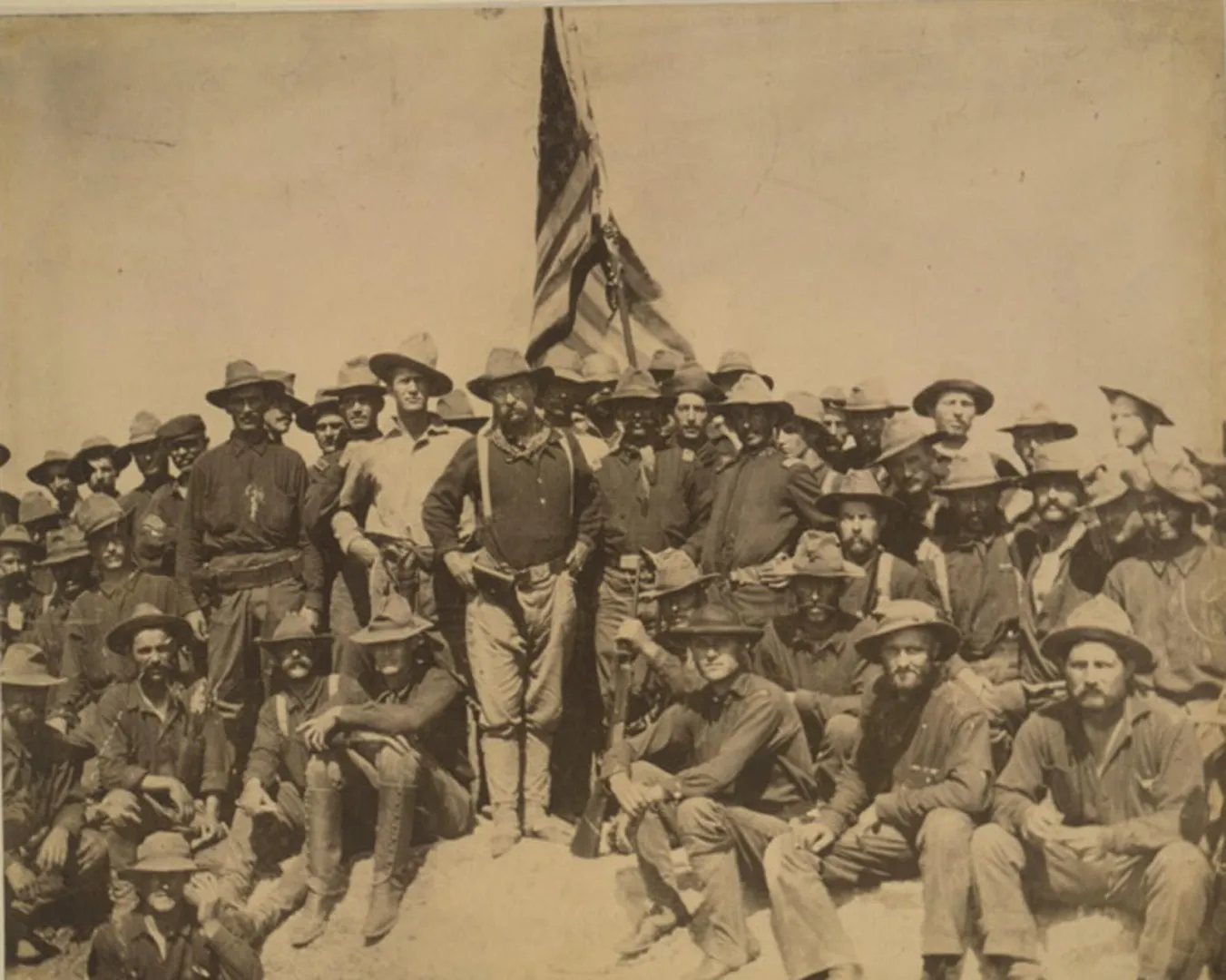
THE GOVERNOR COMES HOME
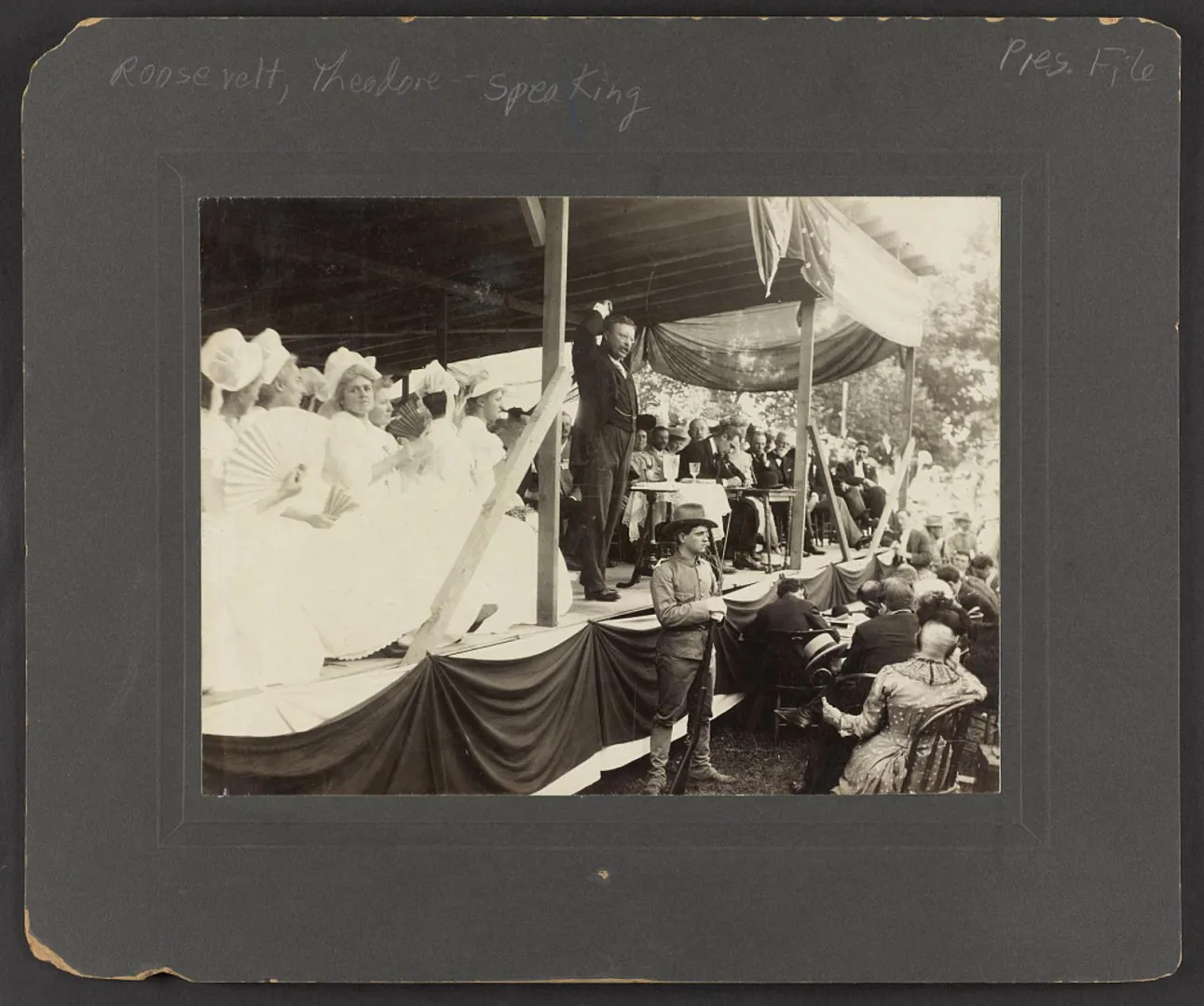
Governor Roosevelt gave Oyster Bay's Fourth of July oration to one of the biggest crowds the village had seen. Booths sold "Roosevelt buttons," the New-York Tribune reported, and afterward he greeted one small boy with "Hullo, Rough Rider."
PITTSBURGH
President Roosevelt gave the Fourth of July oration at Schenley Park in Pittsburgh, using it to press for commercial freedom for Cuba.
AROUND THE WORLD IN TWELVE MINUTES
After speaking at Huntington's 250th-anniversary celebration, T.R. opened the completed Commercial Pacific Cable from Oyster Bay that night with "greetings to you and the people of the Philippines." A second message, sent westward around the world, reached Clarence Mackay, who was with him at Oyster Bay, in twelve minutes.
A ROWBOAT PICNIC
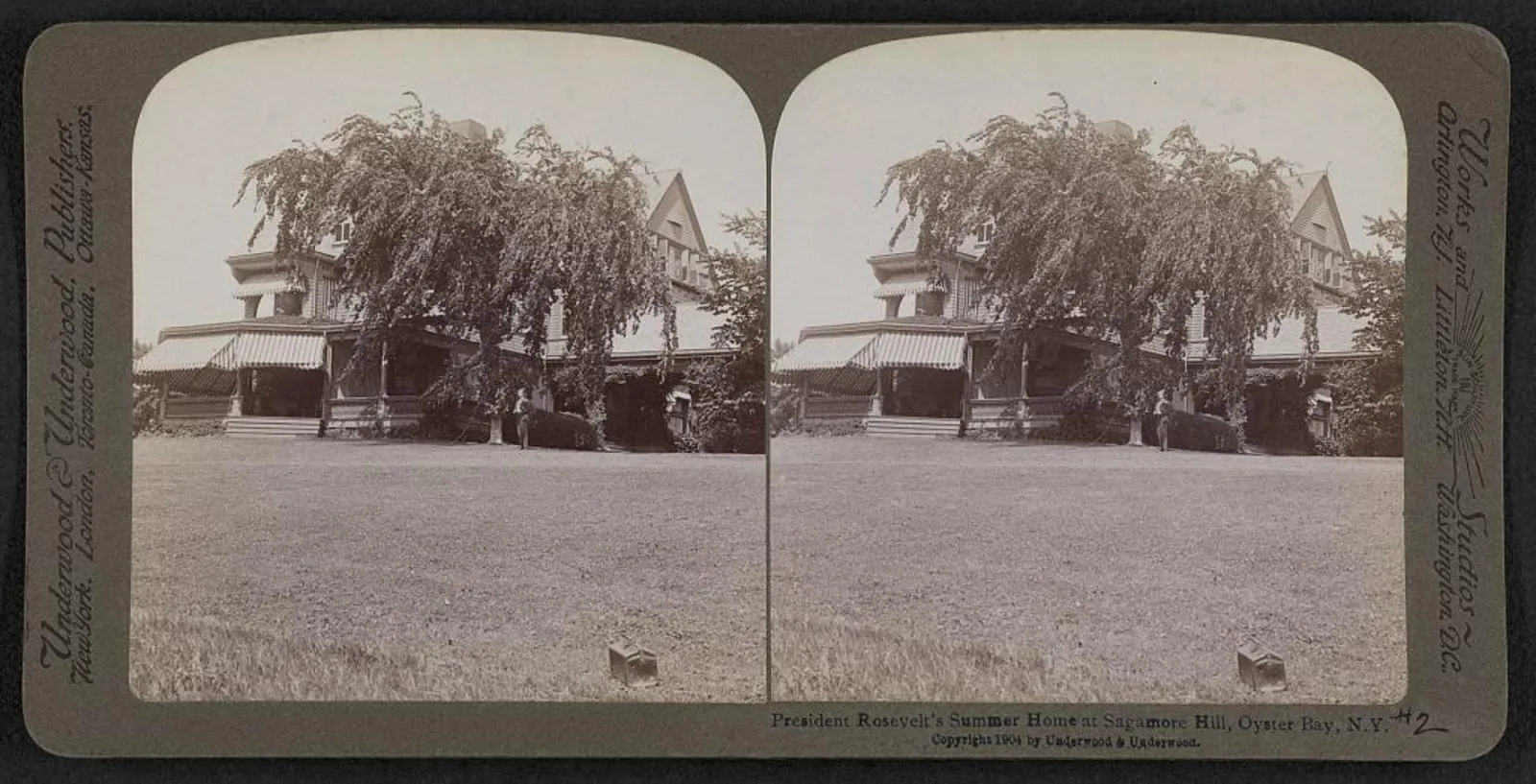
The family rowed to a picnic spot near Cold Spring Harbor, then came home for fireworks and "a country dance," the New-York Tribune reported. The Roosevelt Fourth, the paper said, had become "as much of a fixture in Oyster Bay as the planting and harvesting of the shell fish."
A FOURTH IN MOURNING
Secretary of State John Hay had died on July 1. T.R. left Oyster Bay by special train that afternoon for the funeral in Cleveland, and the Sagamore Hill fireworks were postponed.
SPEAKING THROUGH THE RAIN
T.R. spoke for an hour to his Oyster Bay neighbors, "half of it in a driving rain," then went home for dry clothes and hosted the annual fireworks party.
PICNIC BY BOAT
With no village speech this year, the family set out with lunch baskets. Newspapers reported that Mrs. Roosevelt and Ethel went on the yacht Sylph, while T.R. and three of the boys went by rowboat.
ROCKETS OVER SAGAMORE HILL
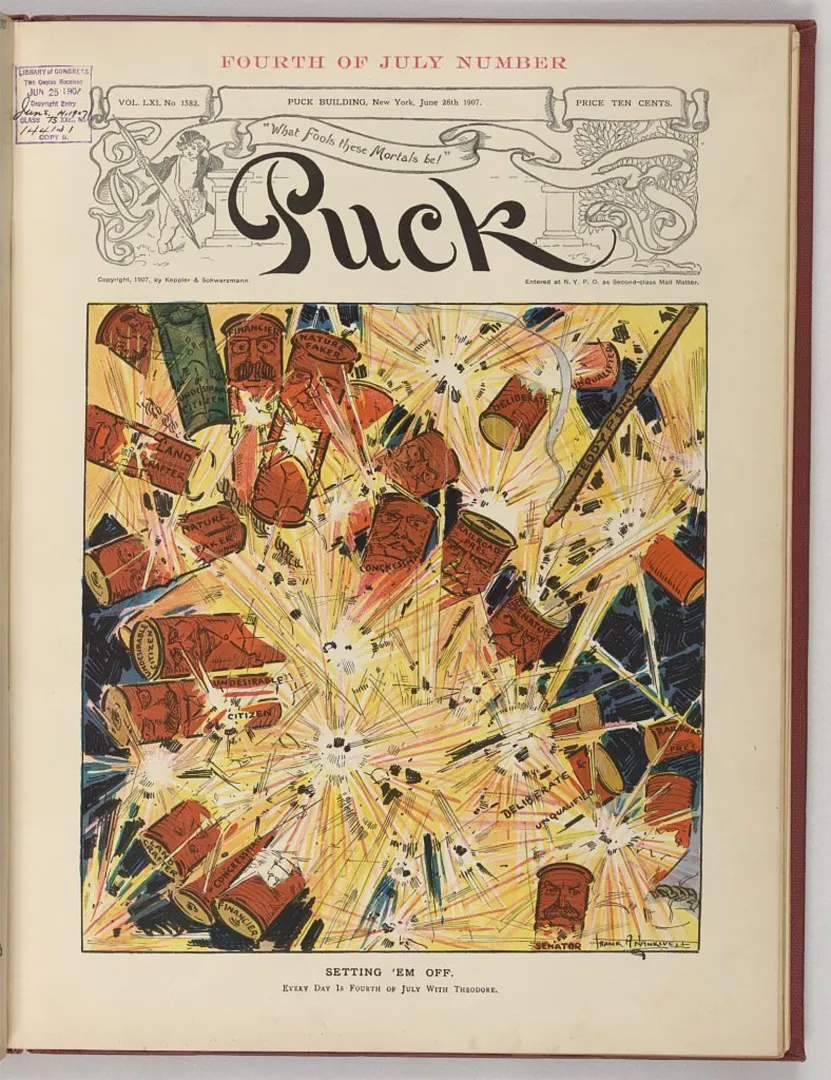
On his last Fourth as President, T.R. celebrated at Sagamore Hill with family and a few friends. That night, an AP report said, the grounds "blazed with rockets."
HOME FROM AFRICA
Sixteen days after landing in New York from Africa and Europe, T.R. was at Oyster Bay. That day, an AP dispatch reported, he sent a message of condolence to the daughter of Chief Justice Melville Fuller, who had died that day.
PLANNING A CAMPAIGN
At Oyster Bay, an AP dispatch reported, T.R. "sketched in bare outline" a campaign "along novel lines." The Progressive convention followed in August.
THE FAMILY PICNIC
Back from Brazil and Europe, T.R. joined the family's "time-honored celebration of the Fourth," which the Evening Star said was observed "with the same spirit shown when the children were youngsters."
AN UNPLANNED SPEECH
T.R. had not expected to speak at the Oyster Bay celebration, but wire reports said the villagers "would not rest" until he did. He also reviewed a parade of villagers.
FOREST HILLS GARDENS
T.R. gave a wartime Independence Day address at Station Square in Forest Hills Gardens, Queens, calling for undivided loyalty to the country. The Library of Congress holds a typescript of the speech.
A LOYALTY PARADE IN PASSAIC
On his last Fourth of July, T.R. led a loyalty parade of 20,000 marchers "representing thirty-seven different nationalities" in Passaic, New Jersey, and told the crowd, "We must not be contented until our army in France is larger than the French and British armies combined." His son Quentin was flying at the front; he was killed ten days later.
From the Archives
Letters, speeches and photographs about the Fourth of July from the Theodore Roosevelt Center’s digital library.