
The Black Hills Loop: Six Days from Medora
Most Black Hills trips start in Rapid City and end there. This one starts and ends in Medora, which means you get the badlands at both ends and the Hills in the middle — and you finish where your car already is.
It also happens to follow Roosevelt. He signed the act that made Wind Cave a national park in January 1903 — the eighth national park in the country and the first anywhere in the world created to protect a cave. Three years later he proclaimed Devils Tower the first national monument. And in Deadwood you will find Seth Bullock, the frontier sheriff who became one of Roosevelt's closest friends, and who built the first monument to him raised anywhere in America.
Roughly 800 miles over six days. Distances below are close approximations from route mapping rather than official figures, so treat them as planning numbers.

The geographic center of the nation marker at Belle Fourche, South Dakota.
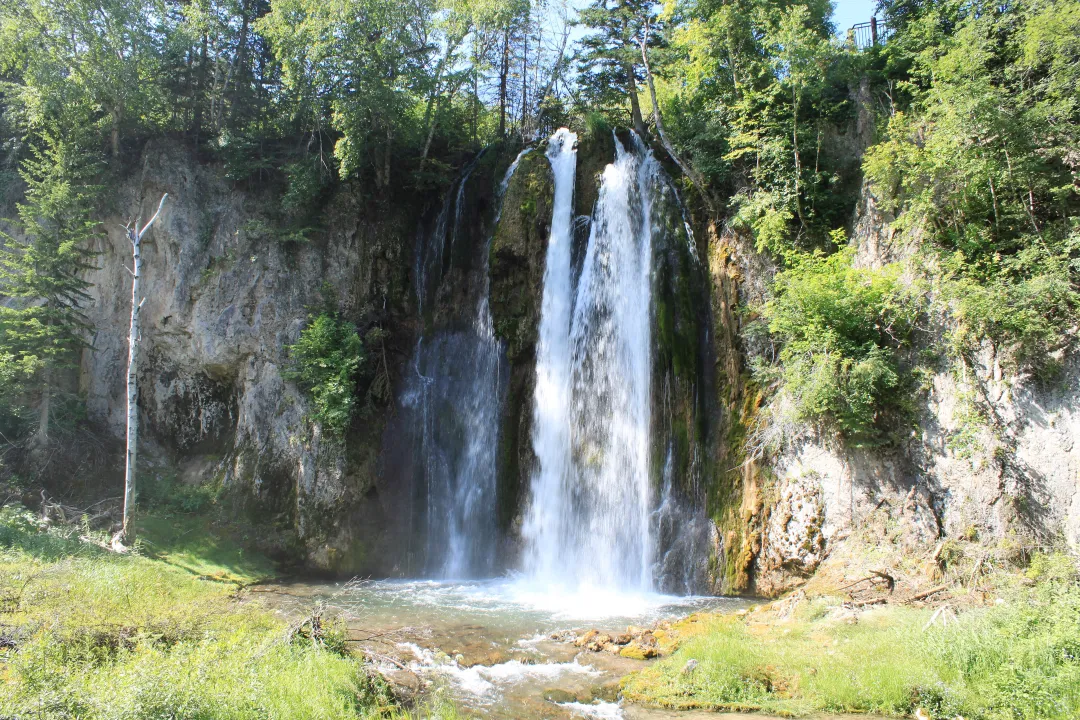
Spearfish Falls in Spearfish Canyon.
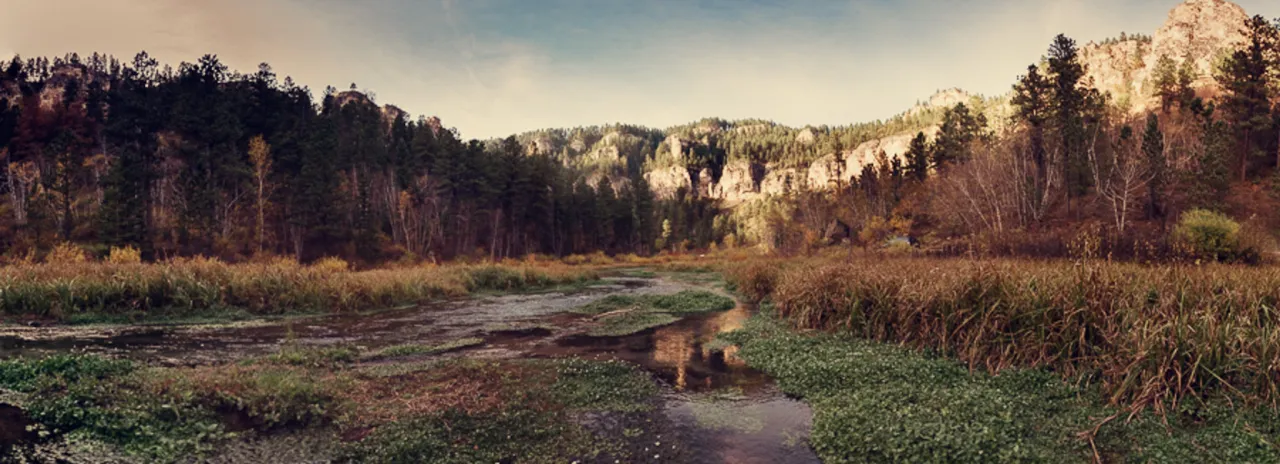
Spearfish Canyon, cut through limestone on the northern edge of the Black Hills.
Days one and two: south to Belle Fourche and Spearfish Canyon
Run south out of Medora on US 85 across the high plains into South Dakota. Belle Fourche marks the geographic center of the nation with a granite compass rose beside the Tri-State Museum; the true survey point sits about twenty miles away on private land.
The next morning, turn up the Spearfish Canyon Scenic Byway — nineteen miles of US 14A following Spearfish Creek under limestone walls. Bridal Veil Falls drops sixty feet right beside the road about six miles in. Roughlock Falls, the one people remember, is a short walk from Savoy. In autumn the aspen and birch turn the whole canyon; in deep winter the seeps freeze into ice columns.
Day one: 197 miles from Medora, about 4 hours · Day two: about 50 miles, Belle Fourche to Deadwood

Re-enactors on Main Street in Deadwood.
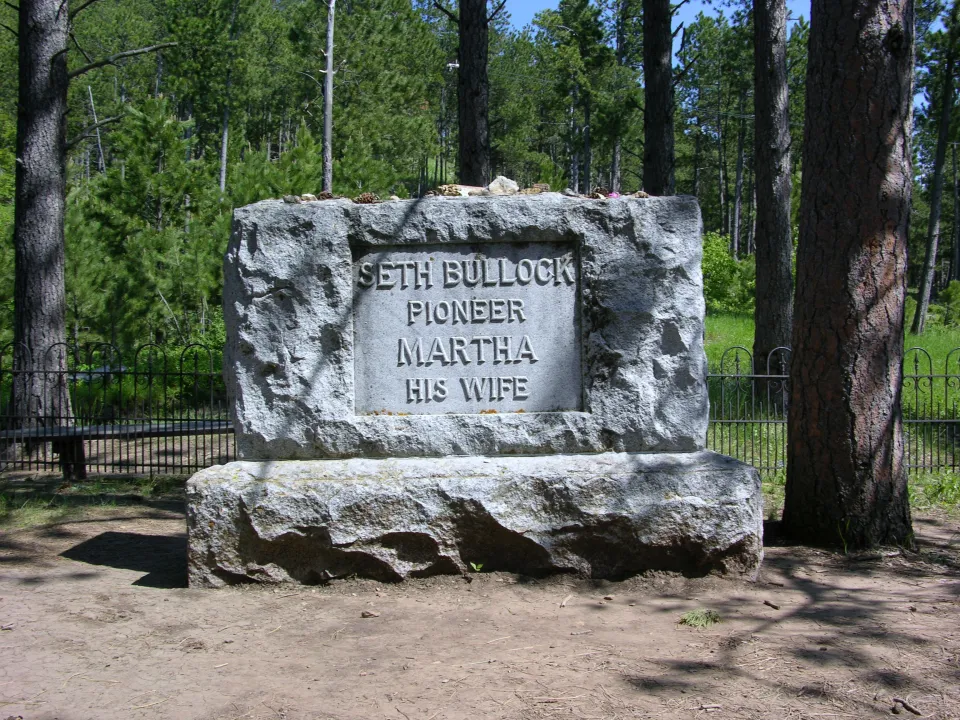
The grave of Seth and Martha Bullock at Mount Moriah Cemetery, Deadwood.
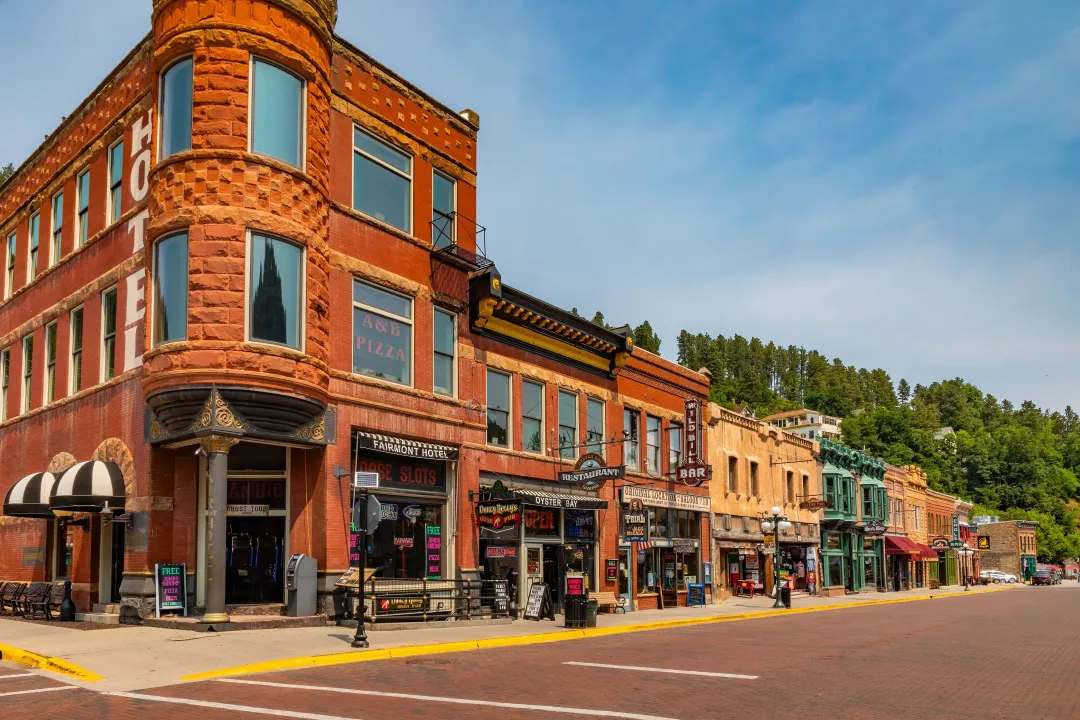
Deadwood's historic district, rebuilt in brick after the fire of 1879.
Day three: Deadwood, Mount Moriah and Seth Bullock
Mount Moriah Cemetery sits on the hill above Deadwood and holds Wild Bill Hickok, Calamity Jane, and Seth Bullock. Bullock is the reason this stop belongs on a Roosevelt itinerary. He was Deadwood's first sheriff, and he and Roosevelt met on the trail in 1884 and stayed close for the rest of Roosevelt's life.
When Roosevelt died in 1919, Bullock built a thirty-one-foot stone tower on the mountain outside town and dedicated it that Fourth of July — the first monument to Roosevelt raised anywhere in the country. Bullock died ten weeks later, and asked to be buried high enough on Mount Moriah to keep it in view.
Roosevelt had also made him supervisor of Wind Cave in 1902, which is where you are headed in two days' time.
A full day · 42 miles on to Rapid City by way of Sturgis

Bison on the Wildlife Loop Road in Custer State Park.
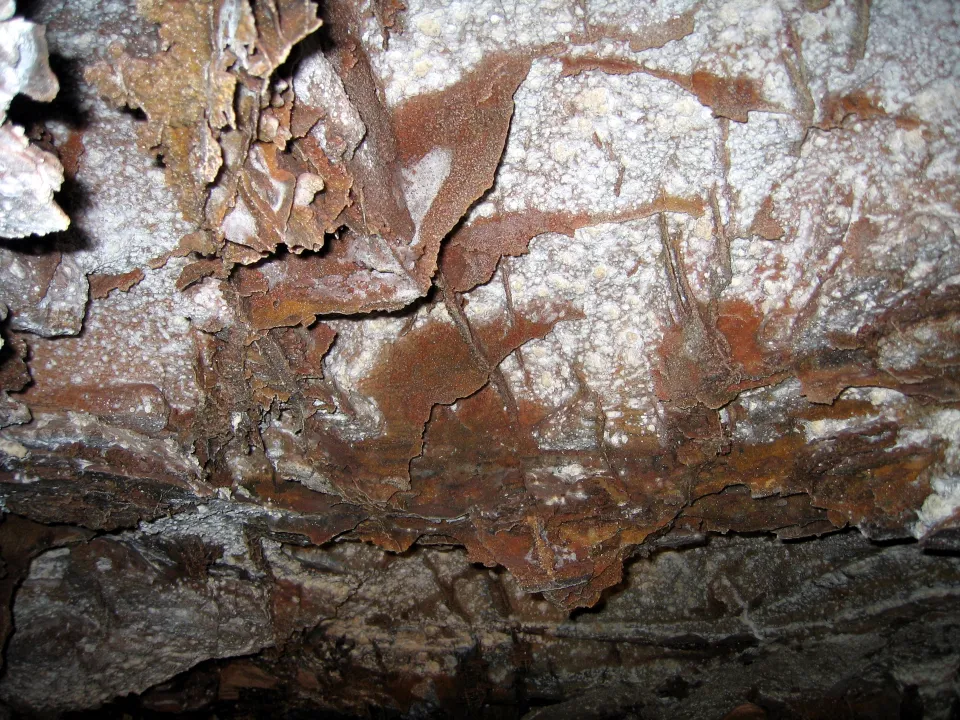
Boxwork formations in Wind Cave National Park.
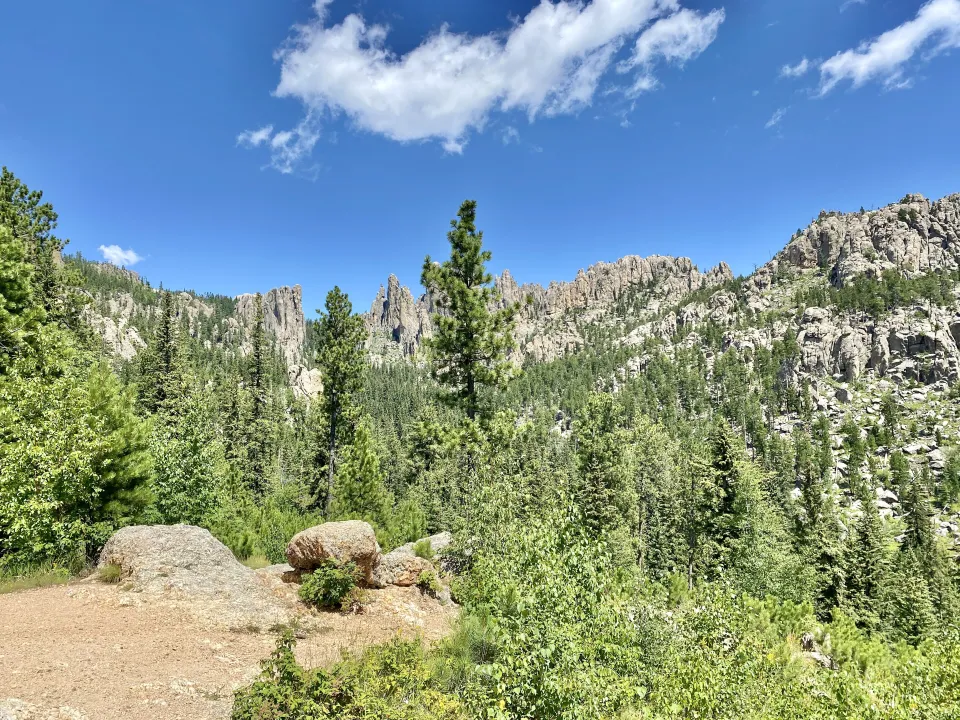
The granite spires along the Needles Highway in Custer State Park.
Days four and five: Custer State Park, Wind Cave and the carvings
Custer State Park covers 71,000 acres, and the Wildlife Loop Road runs eighteen miles of it through prairie and ponderosa. Roughly 1,300 bison roam free here, along with elk, pronghorn, bighorn sheep and a band of burros that will put their heads in your car window. Give it ninety minutes and go early or late. Entry is $25 a vehicle, $20 a motorcycle.
Day five is the spectacular driving. The Needles Highway climbs fourteen miles through granite spires on SD 87, and its tunnels are genuinely tight — the Needles Eye is eight feet wide. Iron Mountain Road covers seventeen miles of tunnels deliberately cut to frame Mount Rushmore, with pigtail bridges spiralling down the grade. In between, Wind Cave protects both the cave and the mixed-grass prairie above it. There is no entrance fee, and every cave tour is ranger-guided, so check tour availability before you count on going underground.
Day four: 32 miles from Rapid City plus the 18-mile loop · Day five: about 70 miles of park roads
Needles Highway and Iron Mountain Road close with snow and reopen in April at the earliest. In winter, check South Dakota 511 before you set out.

Devils Tower above the pine forest of northeastern Wyoming.
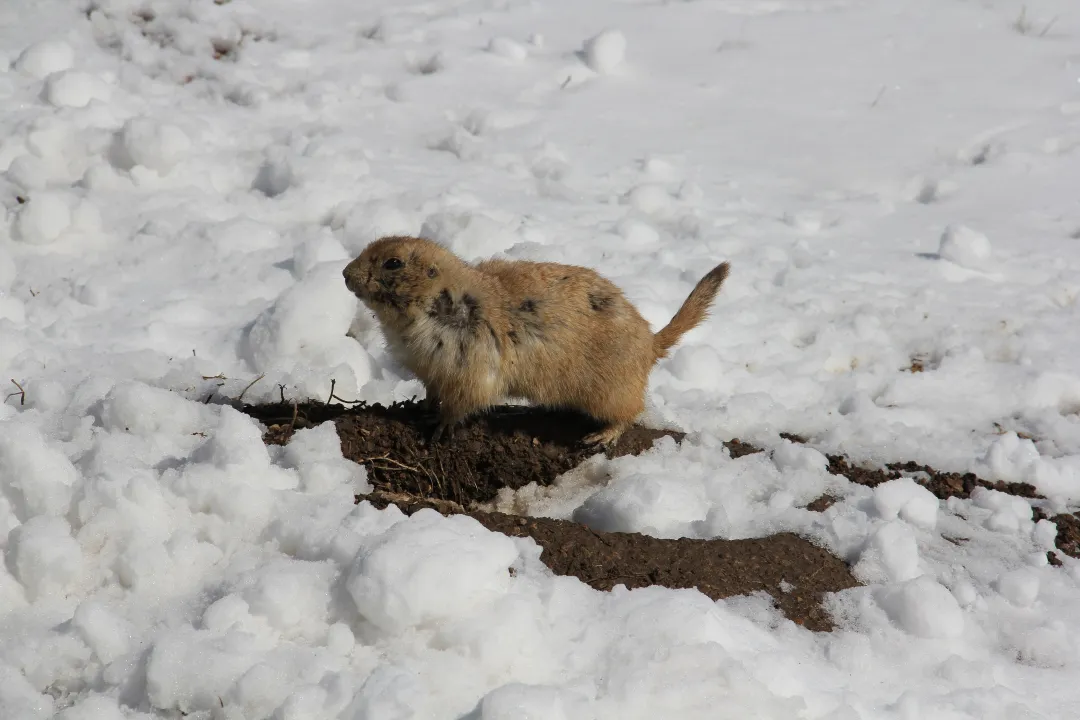
Prairie dogs in the town at the foot of Devils Tower.
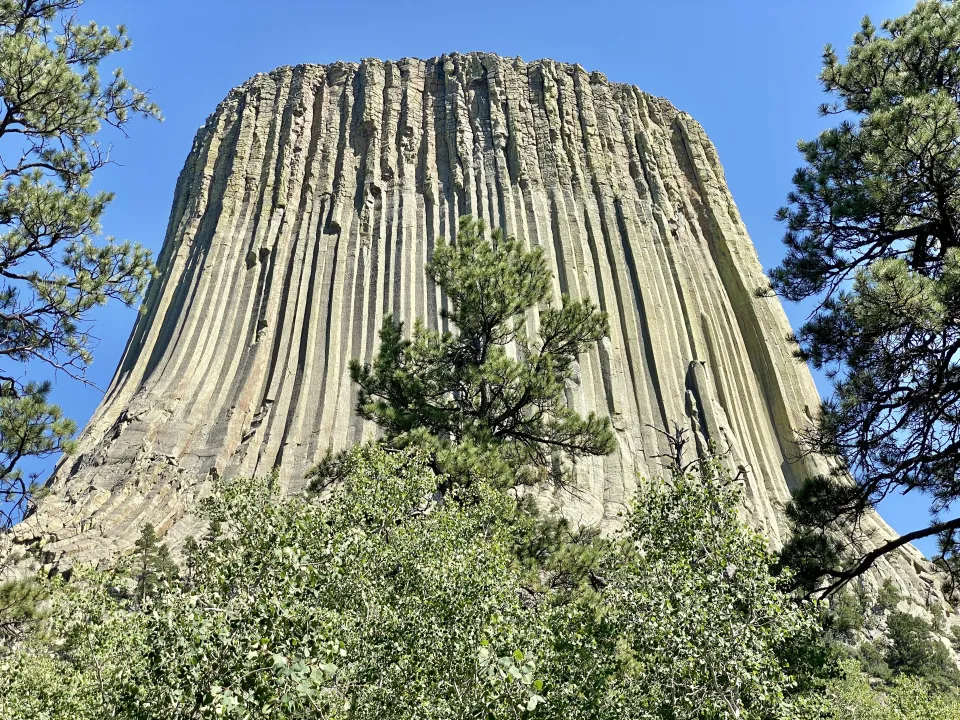
Devils Tower, called Bear Lodge by many Plains tribes.
Day six: Devils Tower and the road home
Roosevelt signed the Antiquities Act in June 1906 and used it for the first time three months later, on 24 September, to protect Devils Tower. It rises 1,267 feet above the Belle Fourche River and it is the reason the whole loop bends west before it turns north. Entry is $25 a vehicle, $20 a motorcycle; the park does not take cash.
From there it is US 85 back through Belle Fourche and north across the grassland to Medora. It is a long day, and it is worth it: you finish the drive having seen the first national monument, the first national park created to protect a cave, and the badlands that made the man who protected both.
A full travel day · 252 miles from Devils Tower to Medora, about 5 hours
Roosevelt's birthday, 27 October, is a fee-free day across the National Park Service — a good reason to run this loop in autumn.