
Where to See Theodore Roosevelt's North Dakota
Theodore Roosevelt stepped off the train at the Little Missouri stop in September 1883, a 24-year-old New Yorker who had come to hunt bison before the last herds disappeared. Before he went home, he had put money into a cattle ranch. Over the next four years, in stretches, he ran cattle on two ranches, served as a deputy sheriff and wrote about ranch life. After his wife and his mother died on the same day in February 1884, this was where he came to put his life back together.
Much of that country still looks the way he knew it. You can walk into his first ranch cabin, stand where his Elkhorn ranch house stood, and see his whole story told at the Theodore Roosevelt Presidential Library in Medora. Every place below is within about 40 miles of town.
Key Facts
| First arrival | September 1883, at the Little Missouri railroad stop |
|---|---|
| Age on arrival | 24 |
| Ranches | Maltese Cross (Chimney Butte), about seven miles south of Medora; Elkhorn, about thirty-five miles north |
| Time in Dakota | Roughly four years, in stretches, 1883–1887 |
| Office held | Deputy sheriff, Billings County |
| What survives | The Maltese Cross Cabin, behind the South Unit Visitor Center; the Elkhorn Ranch site’s foundation stones |
| Last visit to Medora | 1918, months before his death |

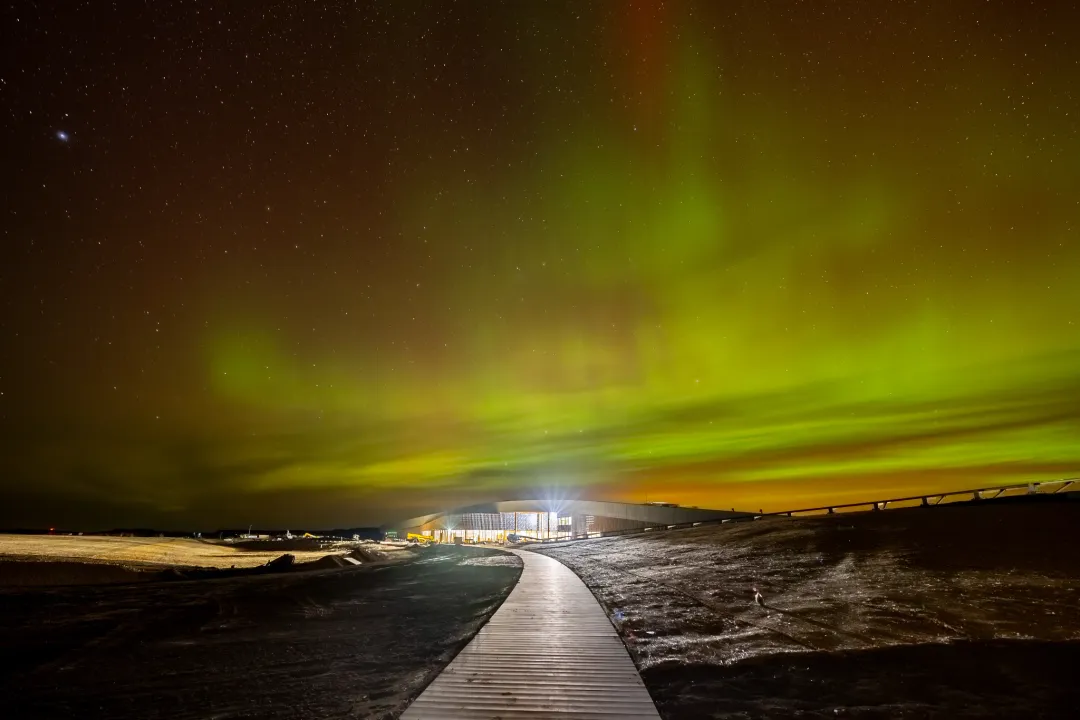
The aurora over the Boardwalk, November 11, 2025. (Chad Ziemendorf / Theodore Roosevelt Presidential Library)
Start at the Library
On the butte above Medora, the Theodore Roosevelt Presidential Library is the place to get the whole story before heading out. The permanent exhibition follows Roosevelt in eight chapters, from a New York City childhood to the Badlands, Cuba, the White House, the Amazon and home again to Oyster Bay.
Plan about three and a half hours, then walk the one-mile Boardwalk through the restored prairie around the building. Driving in? See the best stops on I-94 along the way.
The Maltese Cross Cabin
On that first trip, Roosevelt bought into a cattle operation about seven miles south of Medora. Its cabin, a one-and-a-half-story house of ponderosa pine, was unusually fine for the country, and most of its original logs still stand.
- The cabin has been moved and now sits behind the South Unit Visitor Center of Theodore Roosevelt National Park, in Medora.
- Step inside to see his writing table and traveling trunk. Plan 30 to 45 minutes with the visitor center. Hours and details are on the National Park Service’s Maltese Cross Cabin page.

Theodore Roosevelt's Maltese Cross Cabin behind the South Unit Visitor Center.
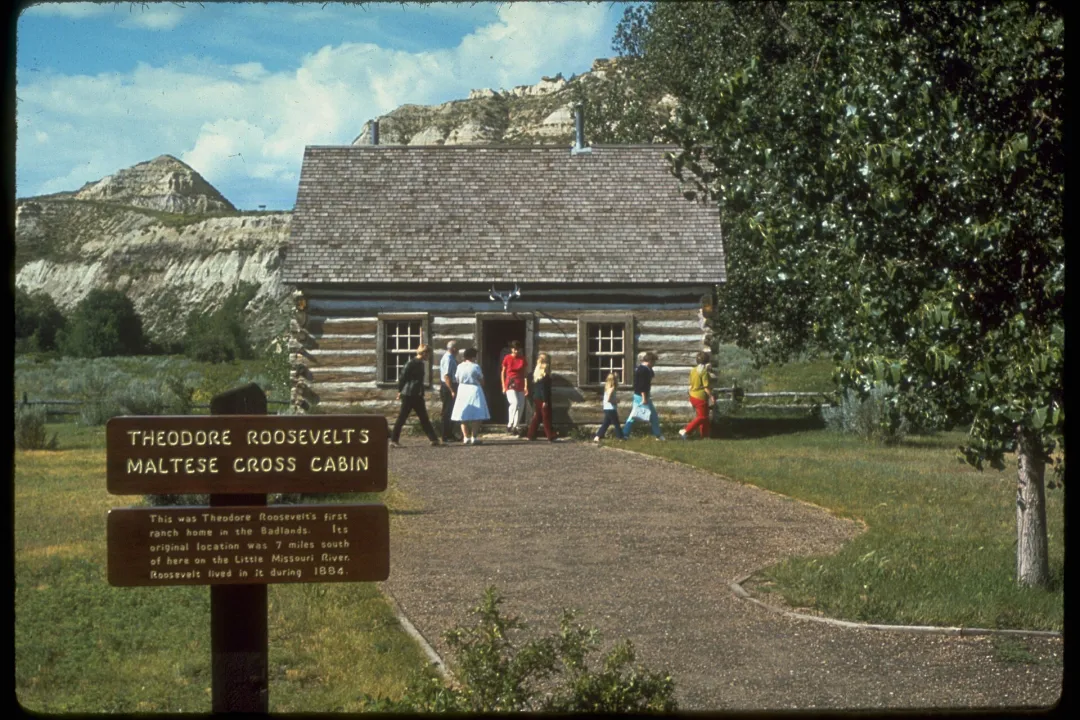
A vintage view of the Maltese Cross Cabin.
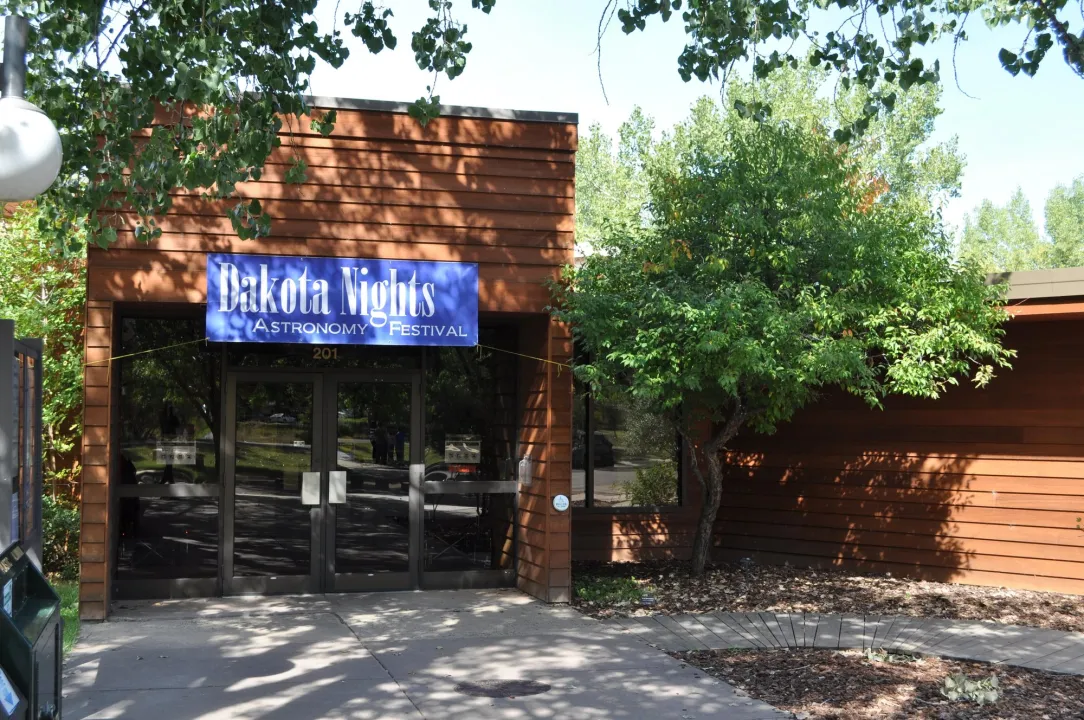
The South Unit Visitor Center, Theodore Roosevelt National Park.

The Elkhorn Ranch site today, where none of the ranch buildings still stand.
The Elkhorn Ranch site
After the deaths of his wife and mother, Roosevelt built a second ranch about 35 miles north of Medora on the Little Missouri River. He called the Elkhorn his home ranch, and he read, wrote and worked cattle there. Today nothing stands but foundation stones in the grass, the cottonwoods and the river. Standing on that empty ground is the reason to go.
- A unit of Theodore Roosevelt National Park, reached on gravel roads that can be impassable when wet. High clearance helps; check road conditions with the park first.
- No services, no water and often no cell signal. Plan half a day round trip. The park’s Elkhorn Ranch history page has more.
Medora and the Chateau de Mores
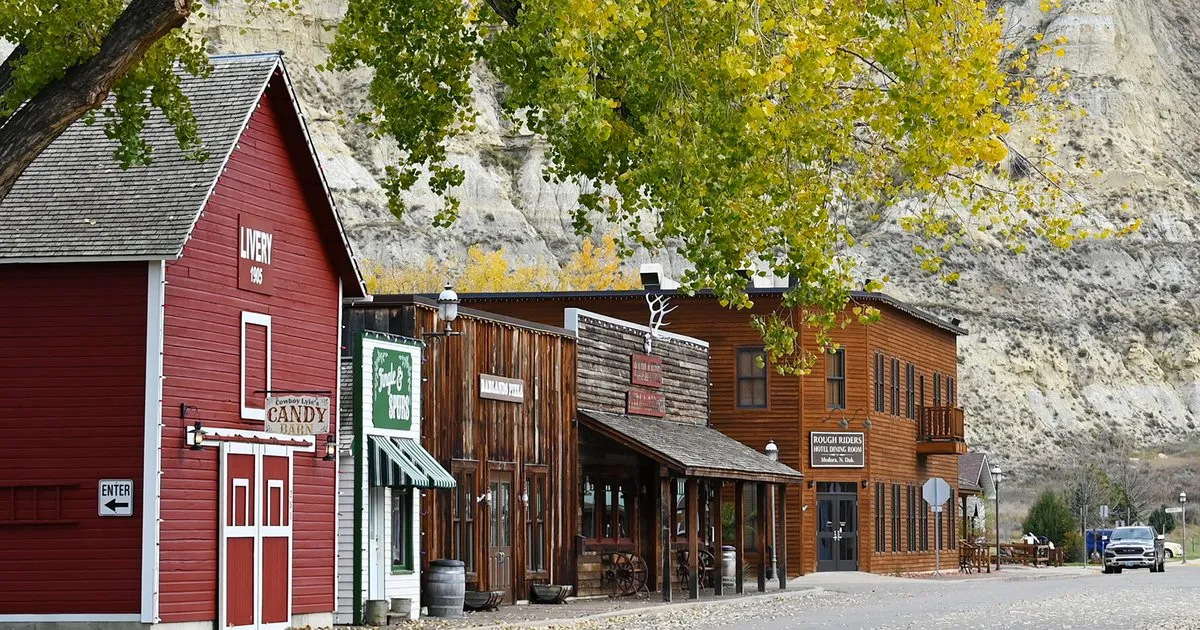
Medora dates to April 1883, when the Marquis de Morès named the new settlement after his wife. His 26-room summer home, the Chateau de Mores, still overlooks town from the bluff and is now a State Historic Site. Downtown, the original storefronts and the North Dakota Cowboy Hall of Fame are an easy walk.

The 26-room Chateau de Mores, summer home of the Marquis and Marquise de Morès.
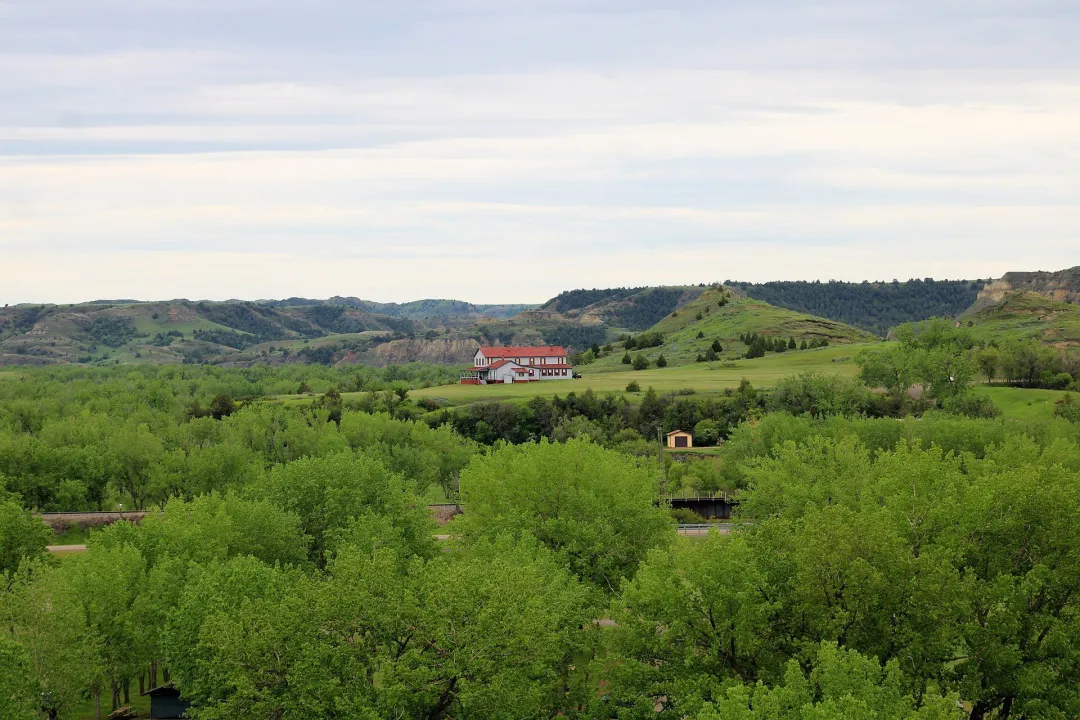
The Chateau de Mores, built in 1883, overlooks Medora from the bluff west of town.

The trail at Painted Canyon Overlook.
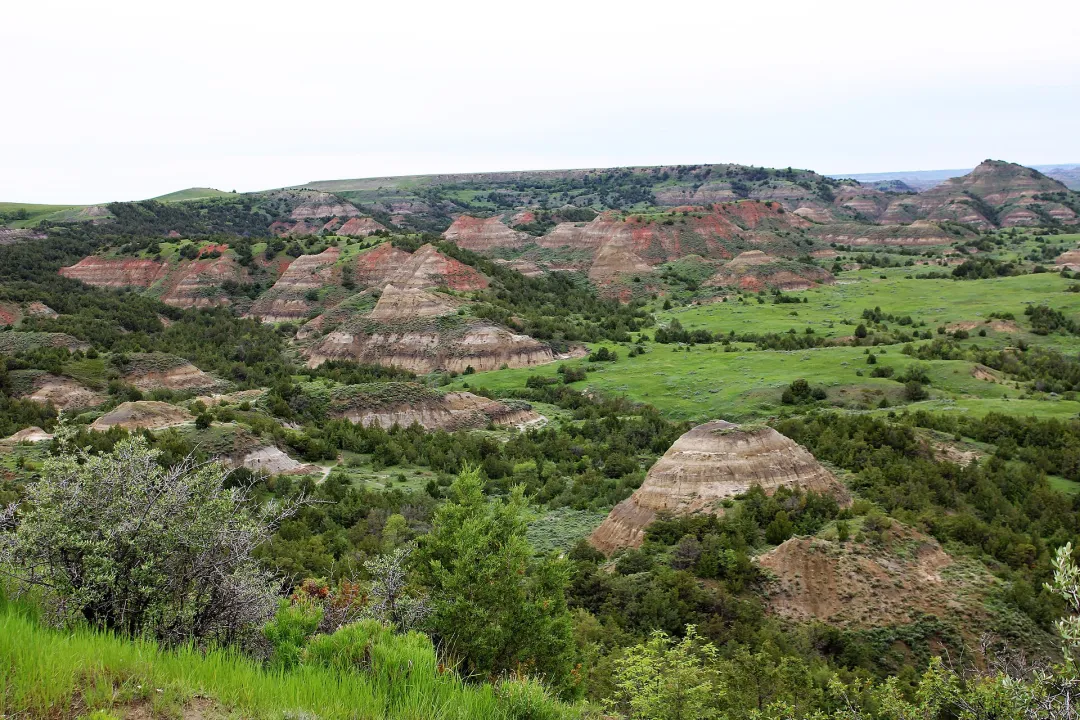
Bands of red scoria, tan clay, and gray bentonite stripe the buttes at Painted Canyon, where the erosion of ancient river sediments carved the North Dakota Badlands over millions of years. (Wikimedia Commons)
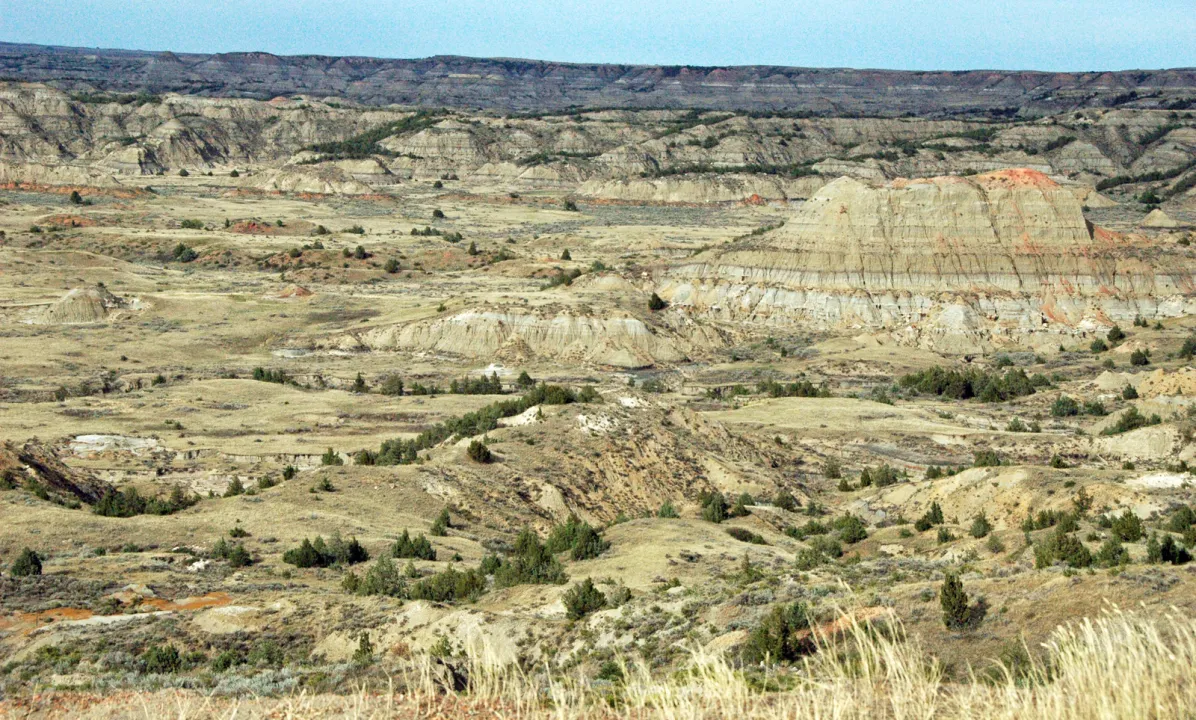
Bands of ancient clay, sandstone, lignite, and scoria record millions of years of Earth’s history in the exposed strata of the Little Missouri Badlands. (Wikimedia Commons)
Painted Canyon and the South Unit
Roosevelt arrived in the dark and saw the Badlands for the first time the next morning. For the same first impression, stop at Painted Canyon Overlook, off I-94 at Exit 32, about 15 minutes east of Medora. Then drive the national park South Unit’s 36-mile scenic loop, about 1½ hours with stops, for bison, prairie dogs and wild horses in the country where he ranched. Coming from farther away? See the best stops on I-94.
Roosevelt’s North Dakota: quick answers
Roosevelt ran two ranches in the Badlands. The Maltese Cross, also called the Chimney Butte ranch, sat about seven miles south of Medora. The Elkhorn, his home ranch, was about 35 miles north of Medora on the Little Missouri River. He spent roughly four years here, in stretches, between 1883 and 1887.
Yes. The Maltese Cross Cabin has been moved from its original site and stands behind the South Unit Visitor Center of Theodore Roosevelt National Park in Medora. You can walk through it.
Yes, but plan ahead. The Elkhorn Ranch site is a unit of Theodore Roosevelt National Park about 35 miles north of Medora, on gravel roads that can be impassable when wet. Only foundation stones remain, there are no services, and cell signal is often unavailable. Get directions and a walking guide
Start at the Theodore Roosevelt Presidential Library in Medora. Its permanent exhibition follows Roosevelt’s whole life, including his Badlands years, and it sits minutes from the Maltese Cross Cabin and the South Unit of Theodore Roosevelt National Park. Plan about three and a half hours.
Roosevelt’s last visit to Medora came in 1918, months before his death.
Keep exploring

Roosevelt in the Badlands
The buffalo hunt, the ranches, the boat thieves and the winter that ended it, told in full.

The Bad Lands Cow Boy
Every surviving issue of Medora’s newspaper from Roosevelt’s years here, transcribed and searchable.

TR's Badlands: A Driving Day
Painted Canyon, the Maltese Cross and the Elkhorn, all within about 40 miles of Medora.