
The Equestrian Statue: How We Remember Complex Historical Figures
The Statue's Design and Its Symbolism
James Earle Fraser was a prominent American sculptor who had created other significant public monuments. The Roosevelt statue was conceived as a heroic monument, celebrating the president's achievements as a naturalist, outdoorsman, and leader. Fraser's design placed Roosevelt at the center and apex of the composition, mounted on his horse, his posture suggesting command and authority. Fraser described the flanking figures — a Native American man and an African man — as guides symbolizing the continents of Africa and America, an account the American Museum of Natural History has published.
Critics from the 1970s onward read the composition differently: a mounted white man elevated above two men of color on foot. The dispute over which reading governs — the sculptor’s stated intent or the composition’s effect — has been the heart of the controversy ever since.
For decades, the statue stood on the steps of the museum without serious challenge. It was an artifact of the era in which it was created—the 1940s, when Roosevelt had been dead for two decades, when his racial views (though controversial) had not yet become historical subjects for critical examination. The statue was simply accepted as a tribute to a great man.

James Earle Fraser's statue, dedicated 1940, showed Theodore Roosevelt on horseback with a Native American man and an African man on foot at his sides, at the American Museum of Natural History. (Harvard College Library, TR Collection)

The composition placed Roosevelt on horseback above the two flanking figures on foot, an arrangement long criticized as depicting a racial hierarchy. (Jay Dobkin / Wikimedia Commons, CC BY-SA 4.0)
From Monument to Controversy
Objections came slowly. In the 1970s and 1980s, some commentators began to question the statue's composition. Native American groups objected to the depiction. African Americans questioned what the statue conveyed about black people's place in American society and American history. But the statue remained, and the objections remained marginal. Serious institutional attention came in the twenty-first century. In 2017–2018 a mayoral commission on city monuments reviewed the statue without reaching consensus, and in 2019 the museum mounted an exhibition, “Addressing the Statue,” examining its history and the debate around it.
In June 2020, weeks after the murder of George Floyd, the American Museum of Natural History asked New York City, which owns the property, to remove the statue; Mayor Bill de Blasio supported the request. The museum’s stated rationale was that the issue was the statue’s hierarchical composition — the mounted figure above the two men on foot — not Roosevelt himself.
The decision drew both criticism and support on the record. President Donald Trump objected publicly to the proposed removal in June 2020, and critics argued that taking the statue down erased history. Theodore Roosevelt IV, the president’s great-grandson and a museum trustee, supported relocation, saying the statue’s composition did not reflect Roosevelt’s legacy and endorsing its removal and contextualized display. The city and museum proceeded, and in January 2022 the statue was taken down from the museum’s steps.
Removing the Statue, Preserving the History
The statue was not destroyed. It was transferred on long-term loan to the Theodore Roosevelt Presidential Library in Medora, North Dakota — a disposition worked out among the museum, the city, and the Library. The Library presents the statue with its full history: who commissioned it, what Fraser said the composition meant, who objected and when, and how and why it came down.
The removal itself remains publicly contested. Supporters of relocation, including the museum and Theodore Roosevelt IV, argued that the composition’s hierarchy made its original placement untenable; critics, including President Trump in 2020, objected to its removal. The Library’s role is to preserve the object and the record of the argument.
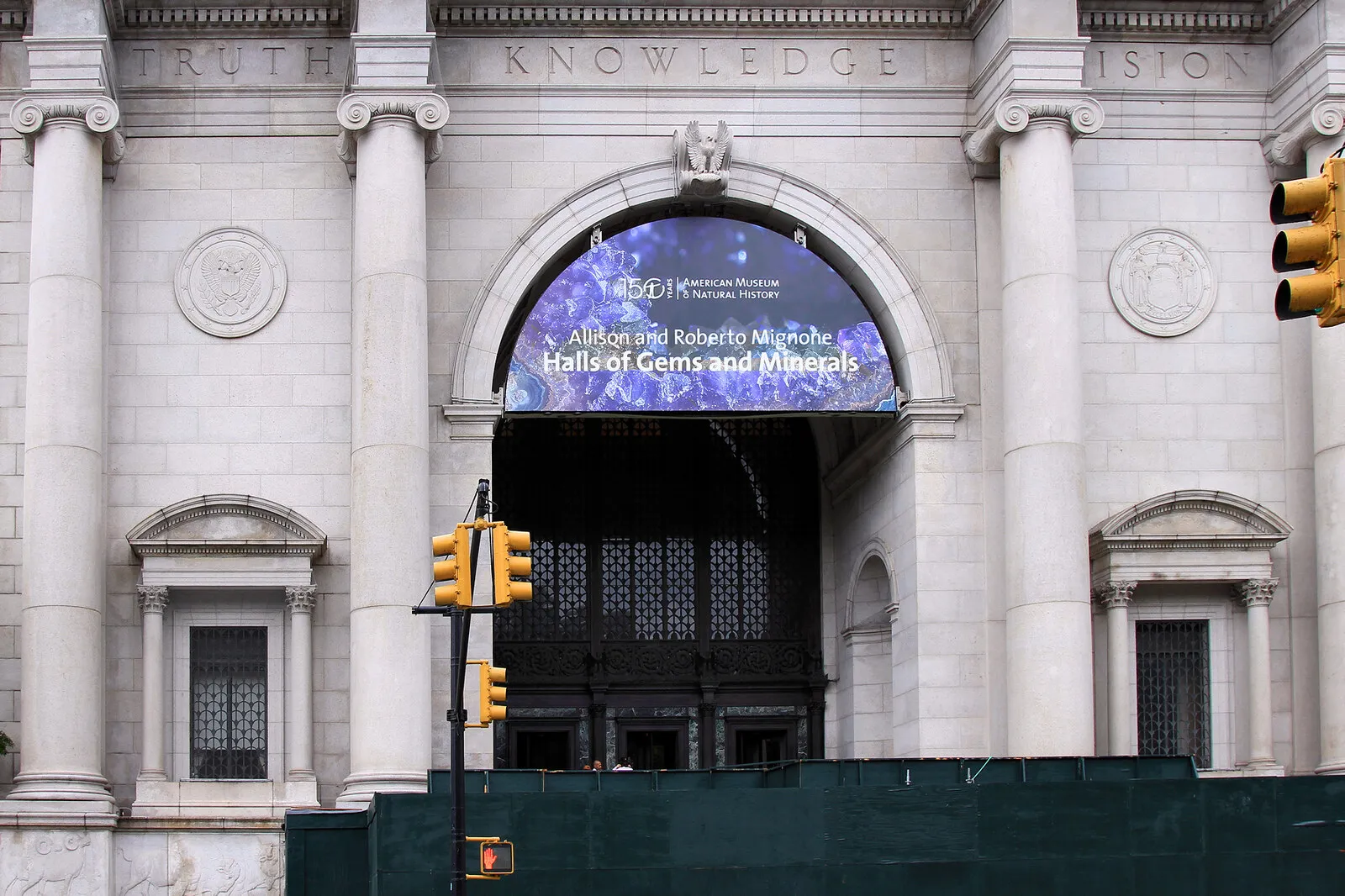
The American Museum of Natural History's central entrance in May 2022, after the equestrian statue was removed and relocated on long-term loan to the Theodore Roosevelt Presidential Library. (Larry D. Moore / Wikimedia Commons, CC BY 4.0)

The American Museum of Natural History in New York, where the statue stood for eight decades before its removal prompted broader debate over how public monuments portray historical figures. (Saptarshi Pal / Wikimedia Commons, CC BY-SA 4.0)
The Broader Question: How Do We Remember Complex Figures?
The Roosevelt statue controversy raises fundamental questions about historical memory and how democracies handle complex historical figures. Roosevelt was genuinely consequential—his conservation legacy affects millions of people's lives. His trust-busting expanded executive authority in ways that shaped American governance. His expansionist foreign policy made the United States a world power. These are real achievements. They matter. But Roosevelt also held racist views and did harm to Native Americans and other peoples. He embraced eugenics. He engaged in imperialist conquest.
The public argument over the statue divided along exactly this line. Supporters of relocation — the museum among them — argued that a monument’s placement confers honor and that the composition asserted a racial hierarchy no longer defensible at a public entrance. Opponents argued that removal erased history and diminished real achievements. Both positions were made publicly and on the record in 2020.
Whether removal was the right answer remains publicly contested. The Library’s role is to preserve the object and the record of the argument — who commissioned the statue, what its sculptor said it meant, who objected and when, and why it came down.
Where the Statue Stands Now
Public statues communicate choices about whom a community honors, and the argument over this one was, at bottom, an argument about what its placement said. That argument is now part of the statue’s history, alongside its commissioning and its removal.
The removal did not remove Roosevelt from the historical record. Scholars continue to study him; the Presidential Library preserves his papers; the conservation lands he protected remain in public hands; the Panama Canal remains in operation.
The statue itself now stands at the Theodore Roosevelt Presidential Library in Medora, North Dakota, on long-term loan from New York City. It is presented with historical context: the story of its commissioning and 1940 dedication, Fraser’s stated intentions, the objections that began in the 1970s, and the removal and relocation of 2020–2022.
Continue Reading
- Roosevelt's Complex Legacy — Understanding Roosevelt's achievements and his flaws
- Race and Theodore Roosevelt — Examining Roosevelt's racial views and their impact
- Theodore Roosevelt National Park — The conservation legacy that shaped American landscapes
Primary Sources at the TR Center
Explore original documents and resources about Roosevelt's legacy and how it has been interpreted in the Theodore Roosevelt Center Digital Library.
- About the Theodore Roosevelt Center — Information about how the institution preserves and interprets Roosevelt's complex legacy
- Roosevelt's Complex Legacy Encyclopedia — Essays examining Roosevelt's achievements and his flaws
From the Archives
Explore original photographs, documents, and illustrations related to this topic in the Theodore Roosevelt Center Digital Library.
Recommended Reading
- Colonel Roosevelt by Edmund Morris (2010). ISBN: 978-0-679-60415-0
- Theodore Roosevelt: A Strenuous Life by Kathleen Dalton (2007). ISBN: 978-0-307-42968-1