
The Panama Canal: Roosevelt's Bold Gambit for American Power
The Strategic Dream
For centuries, explorers and strategists had dreamed of a waterway connecting the Atlantic and Pacific Oceans. A ship sailing from New York to San Francisco had to navigate around the tip of South America—a journey of nearly 13,000 miles. A canal across the Isthmus of Panama or Nicaragua would cut that distance dramatically. For a nation like America, with coasts on both oceans and growing commercial interests in Asia, such a canal was not merely convenient—it was strategically essential. It would allow American warships to move between oceans without lengthy delays. It would cut shipping costs and times for American commerce. It would cement American power as truly continental and global. This strategic ambition was central to Roosevelt's broader vision for American foreign policy.
In the 1880s, a French engineer named Ferdinand de Lesseps—who had successfully completed the Suez Canal—attempted to build a canal across Panama. The French effort was a disaster. Engineering challenges proved nearly insurmountable. Yellow fever and malaria decimated the workforce. Money ran out. The French abandoned the project, leaving behind abandoned equipment, disease-ridden camps, and the lesson that building a tropical canal required resources and technology that only a wealthy industrial nation possessed.
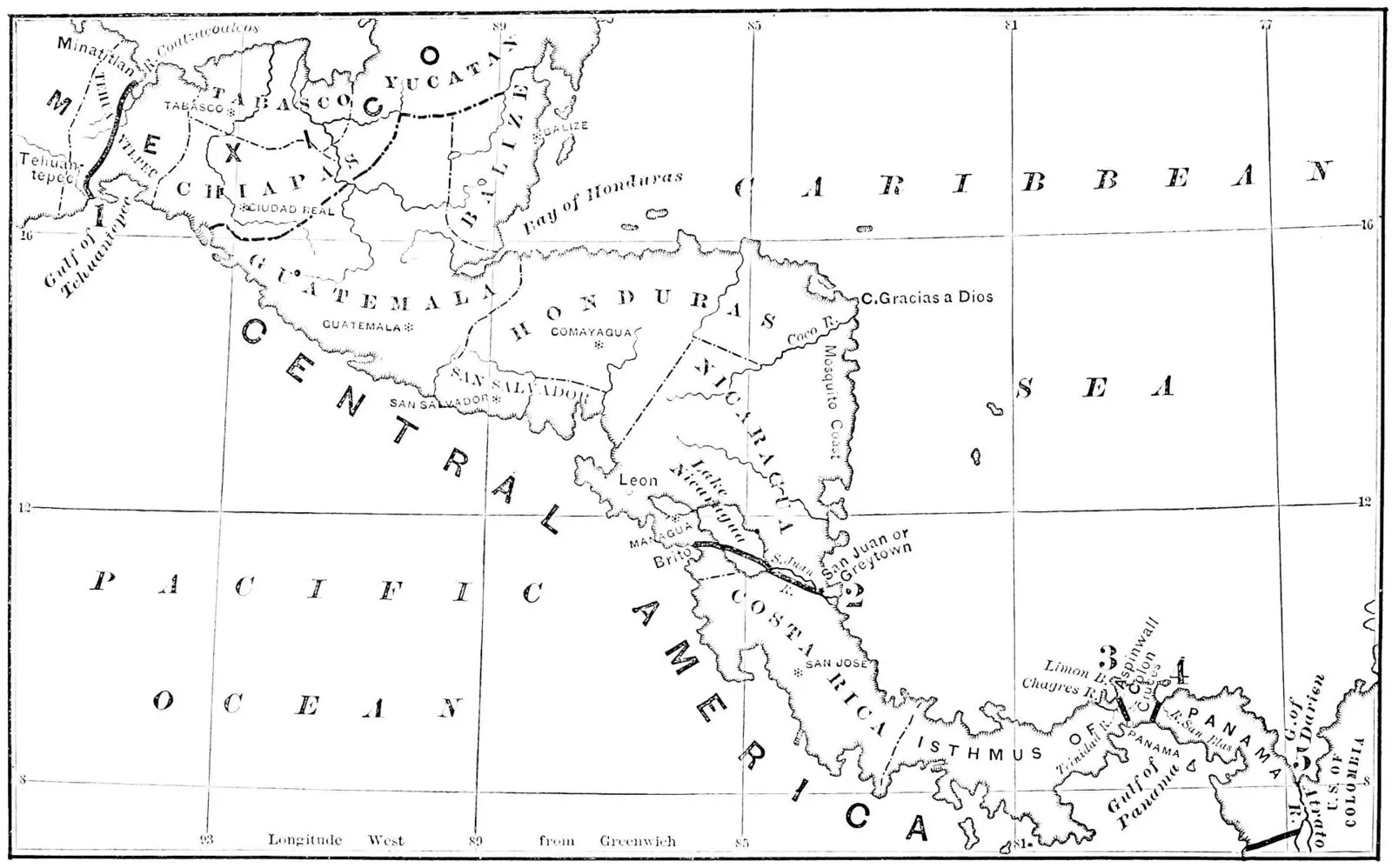
Nineteenth-century engineers mapped competing routes for an interoceanic canal across Central America — the strategic dream Roosevelt would finally realize at Panama. (Popular Science Monthly, 1880)

Ferdinand de Lesseps, builder of the Suez Canal, whose 1881–1889 French effort at Panama collapsed in disease, debt, and scandal. (Public domain)
The French Disaster: Lessons from Failure
Ferdinand de Lesseps' French effort to build the Panama Canal from 1881 to 1889 remains one of history's greatest engineering disasters—and one of its most cautionary tales. De Lesseps, flush with his triumphant completion of the Suez Canal, had been feted in London by thirty to forty thousand admirers and two hundred boys waving colored flares in an “Egyptian Salute.” He was the toast of Europe, the Napoleon of engineering. He assumed that Panama would yield to the same techniques that had conquered Egypt's desert. He was catastrophically wrong.
The Panama route presented engineering challenges far more severe than Suez. Tropical terrain, heavy rainfall creating devastating flooding and washouts, unstable soil conditions, and vast quantities of hard rock requiring excavation all defeated French techniques and engineering assumptions. The Chagres River, which the French had not anticipated would be such a problem, flooded seasonally with such force that it tore apart their dikes and excavations. More devastating, however, were tropical diseases. Yellow fever and malaria, not yet understood by science, swept through the workforce with catastrophic fury. Estimates suggest between 20,000 and 25,000 deaths among the French workforce—many of them in horrible agony, their bodies simply abandoned in mass graves. Workers fled in terror. Morale collapsed utterly. Costs spiraled beyond all control. By 1889, the money exhausted and his vision shattered, de Lesseps abandoned the project, leaving behind disease-ridden camps, rotting equipment slowly consumed by jungle, and a dark legend about the Isthmus that would haunt discussions of the canal for decades. Yet the French effort had inadvertently proved something important: a canal was technically feasible if approached with proper resources, disease management, and sufficient workforce to overcome massive mortality rates.
Two Routes, One Ambition
By the 1890s, American political and military leaders debated which route was better: Panama or Nicaragua. The Nicaragua route had advantages—the terrain was somewhat easier, and Nicaragua was not a Colombian possession that would need to be negotiated with. But the Panama route was shorter and superior from a naval perspective. Roosevelt favored Panama. Congress authorized him to pursue the Panama route under the Spooner Act of 1902, but added a condition: if the president couldn't secure satisfactory terms with Colombia, he should pursue the Nicaragua route instead. Congress was hedging its bets, but it was giving Roosevelt the authority to acquire canal rights if he could negotiate them.
What followed was one of the most dramatic episodes in American diplomatic and executive history. Secretary of State John Hay negotiated with Colombia over canal rights. The Hay-Herrán Treaty, signed in 1903, offered Colombia $10 million in immediate payment plus annual payments of $250,000—substantial money at the time. The American Senate ratified this treaty. But Colombia's government rejected it, believing that the United States would gain such enormous benefits from the canal that $10 million was inadequate compensation. The Colombian government demanded far more money.
Roosevelt was furious. He had offered what he considered generous terms. Colombia was being obstinate. American strategic interests required the canal. The negotiation was going nowhere. Roosevelt faced a choice: accept Colombian rejection and pursue the Nicaragua route, or find another way to achieve American objectives.
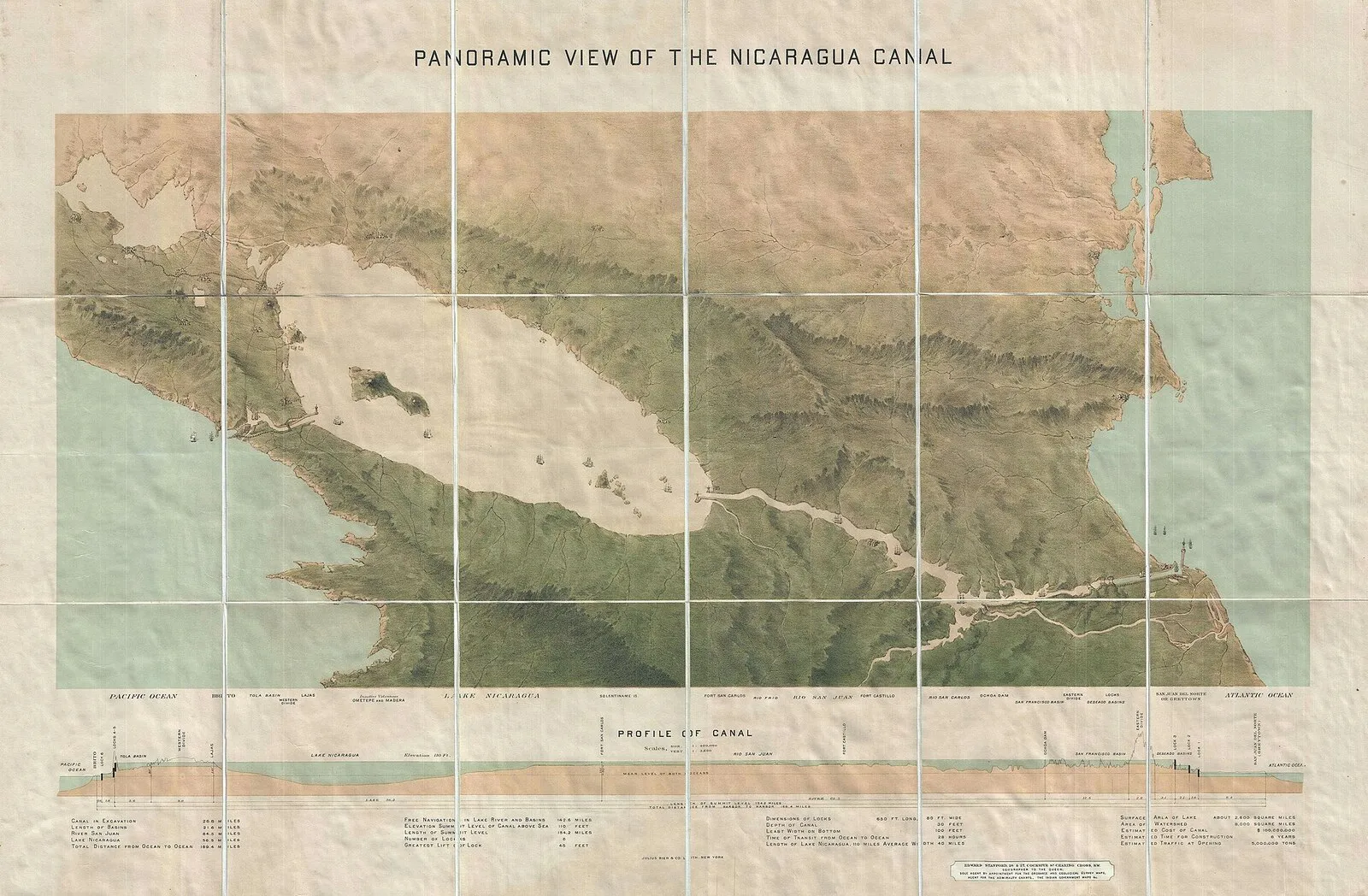
An 1899 map of the rival Nicaragua canal route — the alternative Congress weighed against Panama before Roosevelt committed the nation to the isthmus. (Julius Bien & Co., 1899)
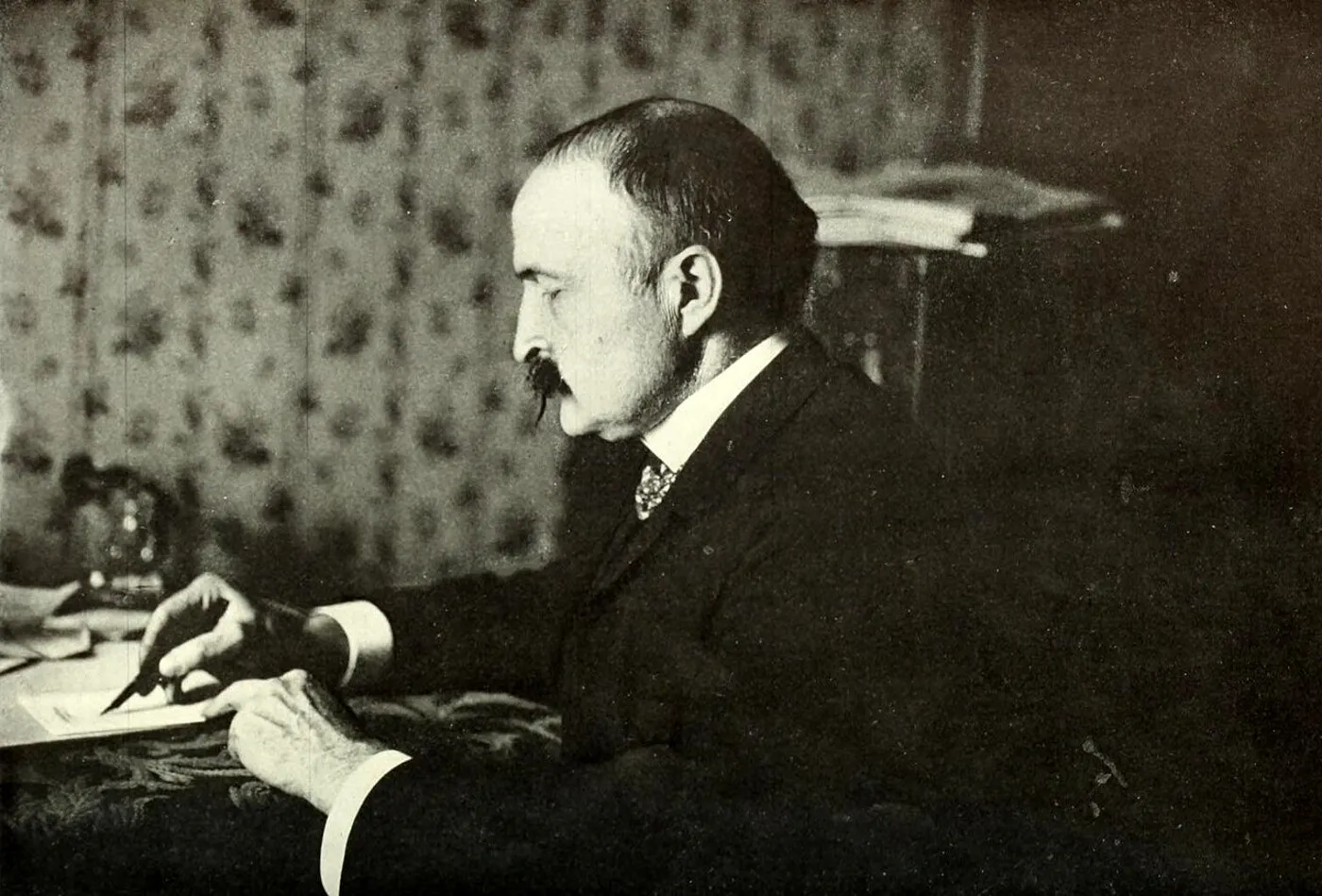
Philippe Bunau-Varilla, the French engineer who helped orchestrate Panama's 1903 revolution and then signed the canal treaty as the new republic's envoy in Washington. (Public domain)
Revolution and Intervention
What happened next revealed Roosevelt's willingness to use American power in pursuit of what he saw as vital national interests. For decades, sentiment for Panamanian independence had simmered among segments of the Panamanian population. Panama was a province of Colombia, but Panamanians resented Colombian control. They saw the canal as an opportunity for their region to prosper through construction and toll revenues. They wanted independence. Roosevelt, sympathizing with Panamanian aspirations and frustrated with Colombia, began supporting Panamanian independence movements.
On November 3, 1903, Panamanian revolutionaries declared independence. American naval vessels, including the USS Nashville, were conveniently positioned off the coast of Panama. The American Navy did not allow Colombian troops to land and suppress the independence movement. While historians debate the extent of Roosevelt's direct role in orchestrating the revolution, his support was unmistakable. He wanted Panamanian independence, and American military might ensured it would succeed.
Just three days after Panamanian independence, on November 6, 1903, the United States recognized the new Panamanian government. Swift recognition signaled American support and made clear that the United States would not tolerate Colombian retaliation. Days later, Secretary of State Hay negotiated the Hay-Bunau-Varilla Treaty with Panama's representative, granting the United States control over a ten-mile-wide canal zone and exclusive rights to construct, operate, and maintain a canal. The financial terms were identical to what Colombia had rejected: $10 million immediate payment plus $250,000 annually.
Executive Power Unleashed
When Congress questioned whether Roosevelt had exceeded his authority, he was characteristically candid. “I took the Canal Zone and let Congress debate,” he later declared in words that revealed both his confidence in his actions and his willingness to assert executive power boldly. This was something of an exaggeration—Roosevelt did have authorization under the Spooner Act of 1902, which gave him discretion to pursue either the Panama or Nicaragua route, and Congress ultimately approved his actions. But the spirit of his claim was accurate. Roosevelt had identified what he believed was a vital American interest and a strategic necessity. He had faced obstruction from Colombia, which held sovereignty over the Isthmus of Panama. And he had used American military and diplomatic power to achieve his objective—recognizing Panamanian independence within three days, and ensuring American naval vessels prevented Colombian troops from suppressing the independence movement. He accepted the political and constitutional controversy that resulted, convinced that national interest transcended legalistic objections to executive initiative.
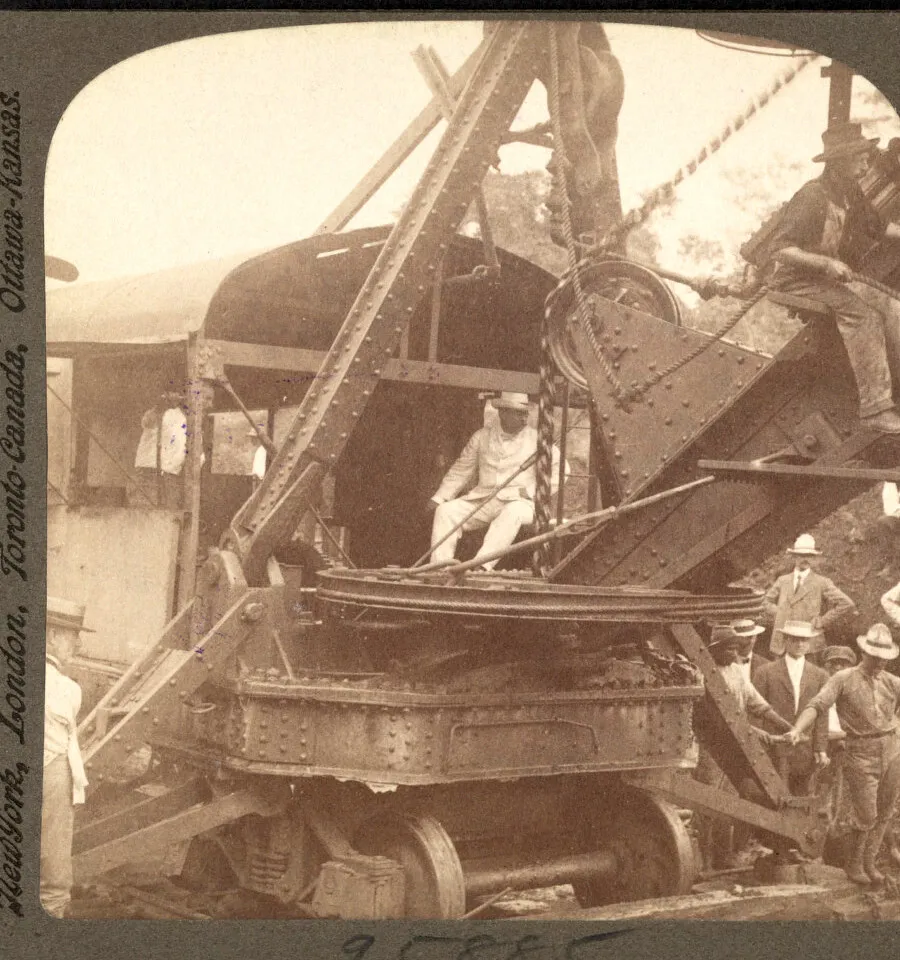
President Roosevelt at the controls of a steam shovel in the Culebra Cut during his 1906 inspection of the canal — the first foreign trip ever taken by a sitting U.S. president. (Library of Congress)

Colonel William C. Gorgas, whose mosquito-control campaign conquered yellow fever and malaria and made the American canal possible. (Public domain)
Conquering Tropical Disease: Medicine Meets Engineering
Roosevelt recognized that the American effort could succeed where the French had failed, in part because American medical knowledge had advanced dramatically since the 1880s. Scientists had recently identified mosquitoes as the vectors for yellow fever and malaria, revolutionizing tropical disease prevention. The American effort deployed this knowledge aggressively. Colonel William Gorgas, the chief sanitary officer, implemented systematic mosquito control measures: draining swamps and stagnant water where mosquitoes bred, screening buildings, deploying chemical sprays, and enforcing strict sanitation standards in worker camps. These measures were expensive and required discipline, but they worked. While yellow fever and malaria did not disappear entirely, mortality rates dropped dramatically compared to the French experience. American workers could actually survive their tenure in Panama. This medical approach—combining rigorous public health measures with advanced scientific understanding—transformed what had been a deadly enterprise into one where dangers were managed rather than catastrophic. Even so, the American decade exacted a heavy price: roughly 5,600 recorded deaths, the overwhelming majority among the West Indian laborers who did the hardest work under the segregated “gold roll/silver roll” pay system.
The United States took possession of the Canal Zone in May 1904, and digging began that same year. American engineers, including the remarkable John Stevens and later George Washington Goethals, took on the project that had defeated the French. They solved the engineering problems. They applied advanced tropical medicine to address disease challenges that had killed thousands of French workers. They mobilized thousands of workers and enormous quantities of material. The canal would take a decade to complete, finally opening in 1914—well after Roosevelt had left office but very much his legacy.
The Locks System: A Technical Breakthrough
The most remarkable feature of the American canal was the lock system designed to handle the 85-foot elevation difference across the Isthmus of Panama. Unlike the Suez Canal, which is at sea level, the Panama Canal required massive locks—a three-step flight at Gatun on the Atlantic side, with the Pedro Miguel and Miraflores locks serving the Pacific approach—to raise and lower ships crossing the isthmus. Each lock chamber was an engineering marvel: 1,000 feet long, 110 feet wide, capable of accommodating the largest ships of the era. The locks operated on a revolutionary system of electric locomotives running on rails alongside the locks, steadying and positioning ships with steel cables as the vessels transited the chambers under their own power. Water from Gatun Lake, a massive artificial reservoir created by damming the Chagres River, provided the water to fill and empty the locks. This system was so elegant and efficient that it fundamentally changed engineering thinking about large-scale hydraulic projects. The locks allowed traffic to move continuously through the canal without waiting for tides or managing currents as sailors had to at Suez. The system remains largely unchanged today, still capable of handling most modern cargo ships.

The Gatun locks rise under construction in a period etching, c. 1912; the three-step flight lifted ships 85 feet to man-made Gatun Lake. (Library of Congress)

Steam shovels and work trains grind through the Culebra Cut — the nine-mile mountain excavation that consumed the greatest share of the canal’s labor. (Harvard College Library, Theodore Roosevelt Collection)
Engineering Marvel and Strategic Achievement
The completed Panama Canal was one of the greatest engineering achievements of its age. It cut shipping distances dramatically—a journey from New York to San Francisco now took weeks instead of months. American commerce benefited immediately. But more importantly for Roosevelt, American naval power gained unprecedented mobility. A fleet operating in Atlantic could move to the Pacific and vice versa without sailing around South America. This mobility was crucial to American military strategy for the 20th century.
The canal's construction demonstrated American technological mastery and industrial capacity. The world watched as American engineers and workers accomplished what the French had failed to do. The canal became a symbol of American progress and American power. Tourists could marvel at the engineering. Schoolchildren learned about American achievement. The Panama Canal was not merely strategic infrastructure—it was a statement about American capabilities and American ambition.
Naval Strategy and the Two-Ocean Navy
Roosevelt had always understood the canal's supreme strategic importance. With the canal operational, the American Navy could maintain formidable fleets on both coasts without doubling the total number of ships required. A battleship fleet in the Atlantic could reinforce Pacific operations in weeks rather than months. This flexibility transformed American strategic options. It allowed the Navy to respond to threats in either ocean without leaving the other vulnerable. It meant American naval power was truly continental and global. Roosevelt's Great White Fleet, dispatched in 1907, demonstrated this new American capability—16 battleships circumnavigating the globe, making clear to Japan and other Pacific powers that American naval strength could reach the Pacific rapidly. The canal made that demonstration possible and meaningful. For the remainder of the 20th century, control of the canal zone remained central to American naval strategy, and disputes over canal control—culminating in the Torrijos-Carter Treaties of 1977—reflected its enduring strategic significance.
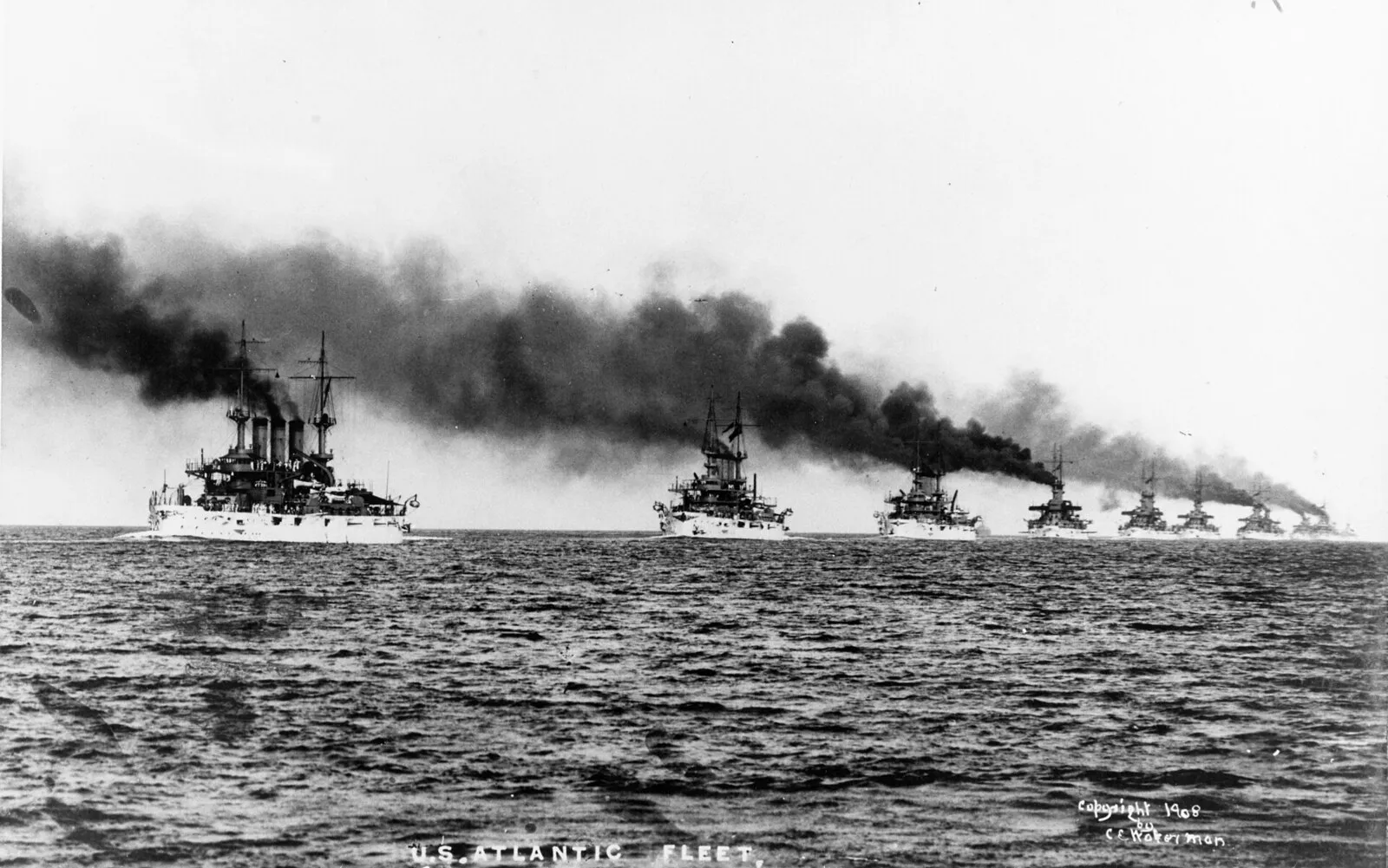
The U.S. Atlantic Fleet in 1907; the canal would let a battle fleet swing between the oceans in weeks rather than months. (Public domain)
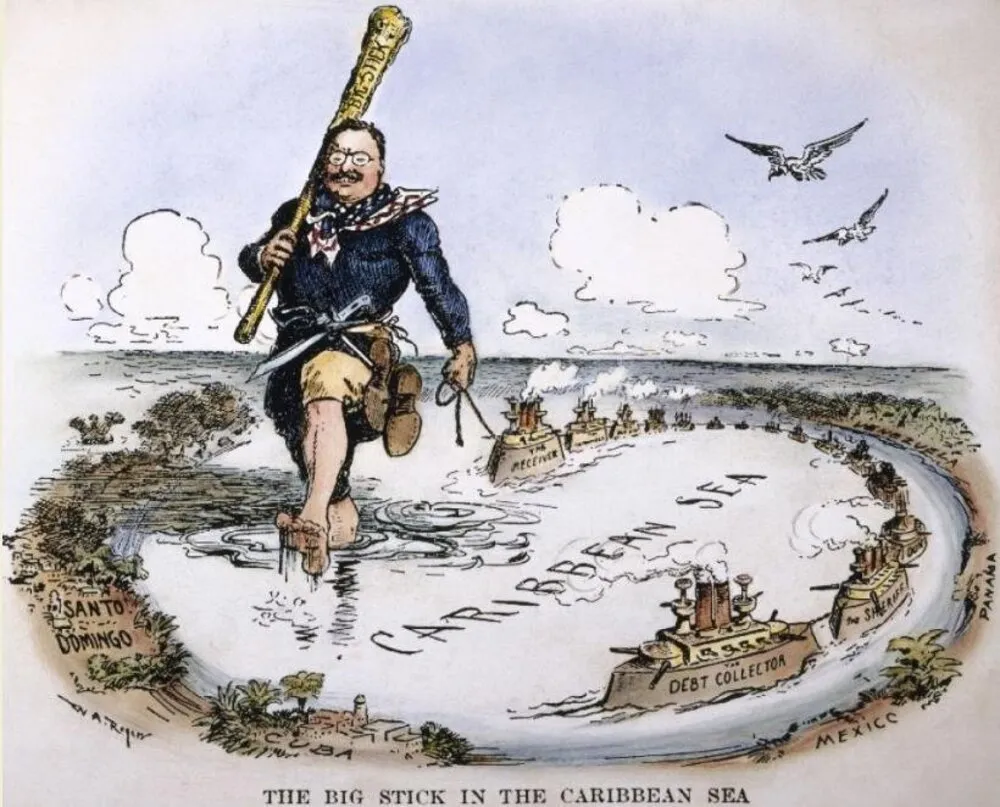
“The Big Stick in the Caribbean Sea,” a 1904 cartoon of Roosevelt striding the Caribbean towing his fleet — the interventionist image at the heart of the Panama controversy. (Public domain)
The Controversy: Imperialism or Strategic Necessity?
Yet the Panama episode raised troubling questions that remain controversial. How much did Roosevelt engineer the Panamanian revolution? Was American support for independence motivated by genuine sympathy for Panamanian aspirations, or was it purely calculated to achieve American strategic goals? Did Roosevelt violate international law or Presidential constitutional limits by using American military power to prevent Colombian intervention? Was American control of the canal zone a form of imperialism?
Roosevelt's defenders argue he did what was necessary to achieve vital American interests. The canal was strategically essential. Colombia was being obstinate. Panamanian independence was both justified and inevitable. The United States simply accelerated a process that would have occurred anyway. Moreover, the canal brought economic benefits to Panama and prosperity to the region. It was not imperialism but enlightened self-interest and regional development.
Critics argue that Roosevelt violated principles of international law and sovereignty. Colombia had legitimate rights over its territory. The United States used military power to overturn those rights. American support for Panamanian independence was not principled but opportunistic. The episode established a troubling precedent for American intervention in Latin America throughout the 20th century. If presidents could use military force to overturn foreign governments when doing so served American interests, where would such power end?
Legacy and Reckoning
In 1977, President Jimmy Carter signed treaties restoring ultimate control of the canal to Panama, with full transfer completed in 1999. Carter believed that American dominance over the canal zone was no longer justified and that granting control to Panama would improve American relations with Latin America. By the late 20th century, the strategic importance of the canal had diminished compared to the early 20th century, though the canal remains economically significant for global commerce.
The Panama Canal stands as Roosevelt's most audacious foreign policy achievement and his most controversial. It demonstrated his willingness to assert American power boldly and creatively. It succeeded in achieving its strategic objective. But it also exemplified the costs of executive unilateralism and the way that great-power assertion can ride roughshod over the rights of smaller nations. The canal works as Roosevelt intended. The question of whether it was just remains subject to debate. This episode illustrated the tensions inherent in Roosevelt's broader approach to Latin American intervention.
Continue Reading
- Foreign Policy Overview — The philosophy of speaking softly while carrying a big stick
- The Roosevelt Corollary to the Monroe Doctrine — Asserting the right to intervene in Latin American affairs
- The Great White Fleet — The naval expedition that demonstrated American power globally
- Executive Power and Constitutional Limits — How Roosevelt expanded presidential authority through the canal acquisition
- The Square Deal — Roosevelt's broader governing philosophy and vision for American leadership
Primary Sources at the TR Center
Explore primary documents related to the Panama Canal and Roosevelt's role in its construction in the Theodore Roosevelt Center Digital Library.
- Foreign Policy Encyclopedia — Essays on Roosevelt's aggressive approach to American expansionism and naval power
- Panama Encyclopedia Entry — Detailed information on Roosevelt's role in Panamanian independence and canal acquisition
- Roosevelt Biography — Comprehensive biographical information covering his foreign policy achievements
- Roosevelt's Writings — Roosevelt's own speeches and articles defending the canal acquisition
- Canal Zone Documents — Primary sources related to American control of the canal zone
From the Archives
Explore original photographs, documents, and illustrations related to this topic in the Theodore Roosevelt Center Digital Library.
Recommended Reading
- How Wall Street Created a Nation: J. P. Morgan, Teddy Roosevelt, and the Panama Canal by Ovidio Diaz Espino (2001). ISBN: 978-0805070612
- The Path Between the Seas: The Creation of the Panama Canal, 1870–1914 by David McCullough (1977). ISBN: 978-0671244095
- Theodore Roosevelt and the Japanese-American Crises: An Account of the International Complications Arising from the Race Problem on the Pacific Coast by Thomas A. Bailey (1934)
- The Big Ditch: How America Took, Built, Ran, and Ultimately Gave Away the Panama Canal by Noel Maurer and Carlos Yu (2010). ISBN: 978-0691142159