
The Square Deal: TR's Vision for a Fair American Economy
A President Steps Between Labor and Capital
Theodore Roosevelt believed America faced a choice in 1901: either the federal government would step in as an honest referee between workers and giant corporations, or the nation would descend into class warfare. The vision he called the "Square Deal" embodied this belief. It wasn't socialism—Roosevelt remained convinced that capitalism, properly channeled, benefited everyone. But it wasn't laissez-faire, either. The Square Deal meant government actively shaping the economy to ensure fairness, prevent monopoly abuse, and protect consumers and workers from exploitation.
Roosevelt articulated this vision most clearly in his message to Congress in December 1901, his first annual message as president. In it, he outlined his conviction that the federal government possessed both the constitutional authority and the moral obligation to regulate large corporations. This represented a genuine break with the hands-off approach that had dominated American policy for decades. Presidents Cleveland and Harrison had been reluctant to intervene in economic matters; McKinley had been cautious about confronting business. Roosevelt, by contrast, saw government regulation not as a violation of property rights but as the necessary condition for a genuinely free market. Without government restraint on monopoly, he argued, smaller businesses and workers faced a rigged game.

Roosevelt greets working men; his “Square Deal” promised fairness to labor and capital alike, with the president as honest broker between them. (Library of Congress)
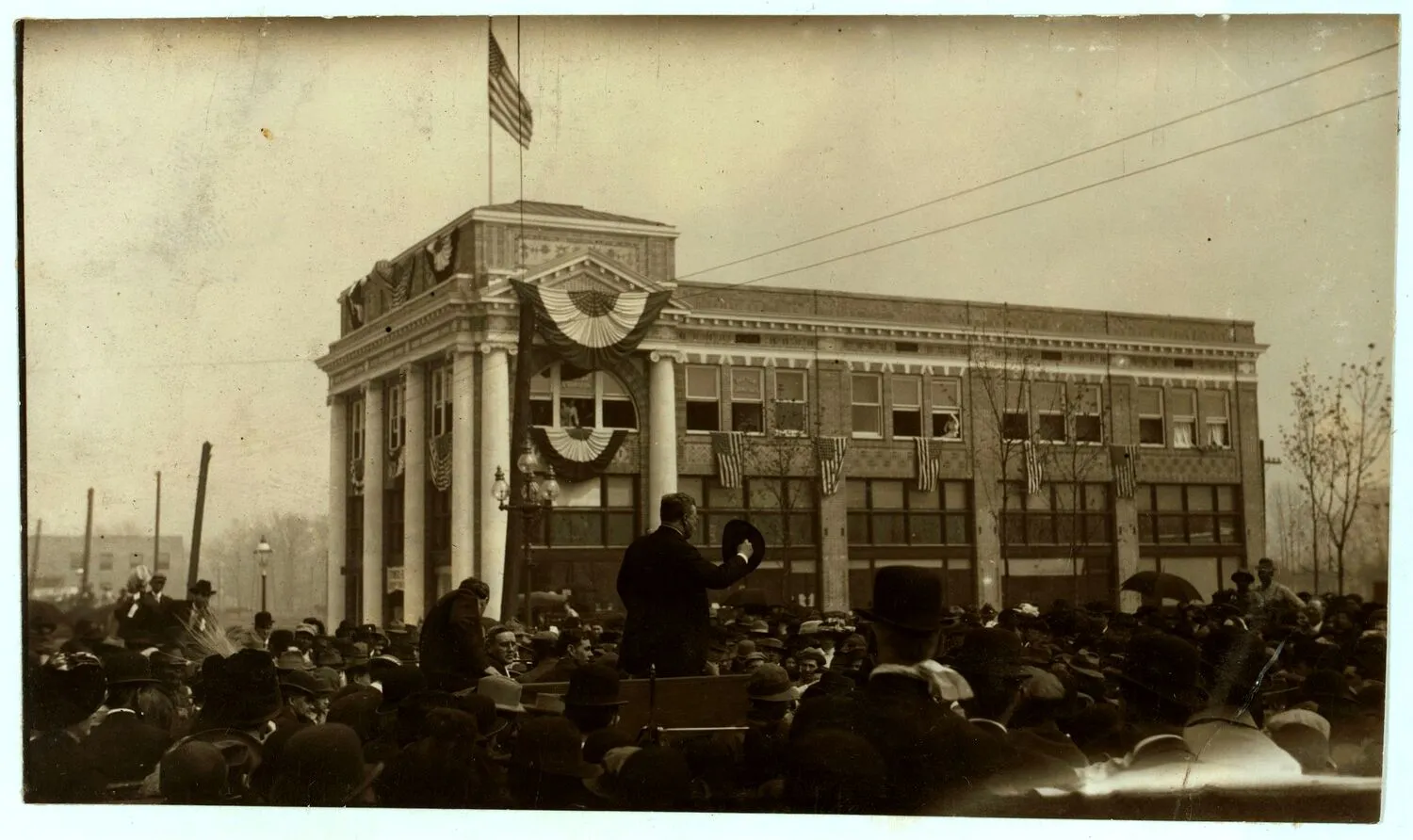
Roosevelt takes his program to the people; the Square Deal rested on three C's — control of corporations, consumer protection, and conservation. (Library of Congress)
The Three Cs: Control, Consumption, Conservation
The Square Deal rested on three pillars often summarized as the “three C’s”: control of corporations, consumer protection, and conservation of natural resources. Each represented a distinct sphere where government authority should expand, but each flowed from a common principle: the public interest trumped private profit when the two conflicted.
Control of corporations meant that the federal government would have authority to break apart monopolies that strangled competition and exploited workers. It meant regulating railroad rates to prevent abusive pricing. It meant ensuring that large firms paid their fair share of taxes and did not evade public obligations. Roosevelt's predecessor McKinley had filed some antitrust suits; Roosevelt would file more than 40 during his presidency. The message was unmistakable: the age of untouched corporate power was ending. Yet Roosevelt did not believe all large corporations were inherently evil. He distinguished between "good trusts" that operated efficiently and served consumers responsibly, and "bad trusts" that exploited monopoly power, fixed prices, and corrupted government. Good trusts might be allowed to continue; bad trusts must be broken up.
Consumer protection acknowledged a simple truth that Gilded Age America had ignored: people who bought products—food, medicine, clothing—had a right to know what they were consuming. Manufacturers should not be permitted to poison the public with contaminated meat or fraudulent medicines. The government should inspect and certify safety. This principle would crystallize most dramatically in 1906 with the Pure Food and Drug Act and the Meat Inspection Act, both signed on the same day. Roosevelt's consumer protection agenda emerged from his reading of Upton Sinclair's "The Jungle" and from pressure by chemists and progressive reformers who documented the dangers in America's food supply.
Conservation meant that America's forests, rivers, and minerals belonged ultimately to the American people, not to whoever could extract or develop them fastest for private profit. Roosevelt would preserve more than 230 million acres of public land during his presidency—a scope of conservation that shocked his contemporaries and appalled western politicians who favored unrestricted exploitation of resources. This pillar of the Square Deal would prove Roosevelt's most enduring legacy, establishing the principle that public lands belonged to the nation and should be managed for the long-term benefit of all citizens.
The Intellectual Origins: From Laissez-Faire to Progressive Regulation
Roosevelt's Square Deal represented a philosophical break with nineteenth-century American political economy. For decades, laissez-faire ideology had dominated American thought—the belief that government should interfere minimally with business, that the market would naturally produce the best outcomes. Roosevelt rejected this doctrine as obsolete. He had watched the rise of massive corporations that dominated entire industries, eliminating competitors through predatory practices and controlling prices to the disadvantage of workers and consumers. The invisible hand had not produced fairness; it had produced monopoly.
Yet Roosevelt equally rejected socialism and revolutionary movements. He believed capitalism could be preserved and improved through intelligent government regulation. His intellectual debt ran to economists and theorists who argued that modern industrial society required government oversight of corporations. He read widely in political economy and surrounded himself with progressive economists and reformers. The Square Deal synthesized these influences into a coherent vision of activist government protecting citizens while preserving capitalist markets.
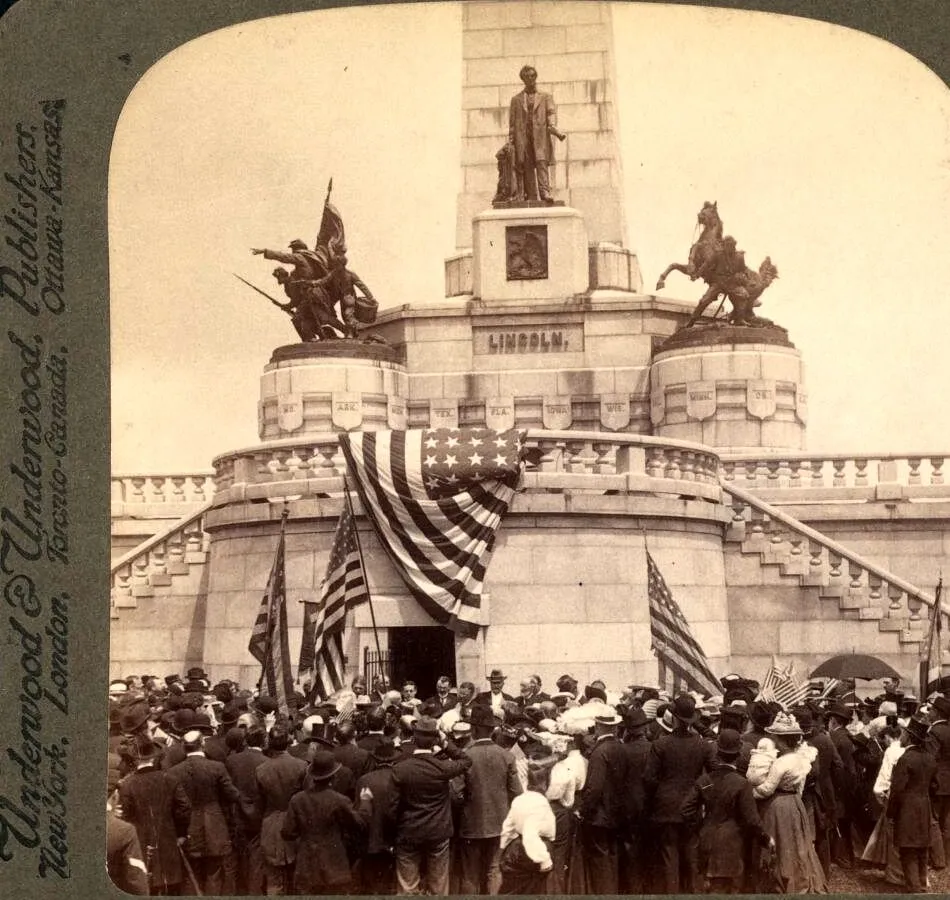
“No man shall have less than a square deal” — Roosevelt's phrase distilled a new philosophy: that government should ensure fairness, not merely stand aside. (Library of Congress)
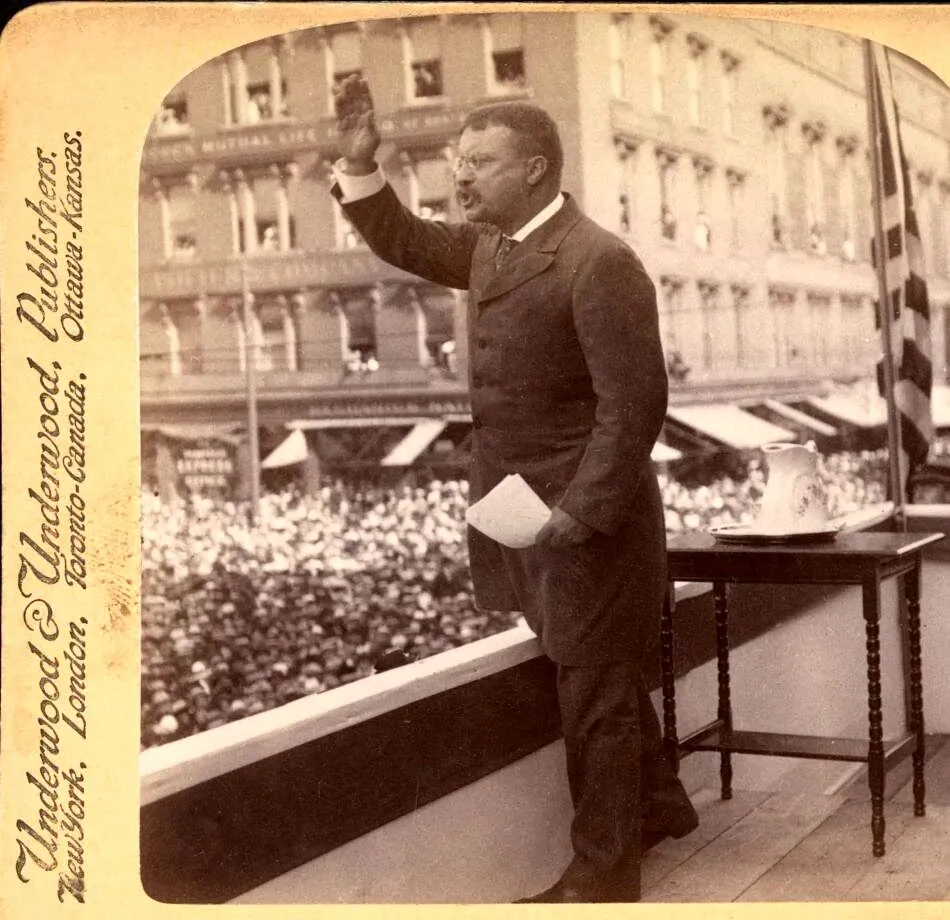
Roosevelt addresses a crowd on the “prerequisites of success”; he redefined the presidency as an active steward of the public interest. (Library of Congress)
A New Vision of Presidential Leadership
The Square Deal represented something more subtle but equally important: a transformation of what the presidency itself meant. Nineteenth-century presidents had generally seen their role as limited to executing laws Congress passed and preserving constitutional order. Roosevelt saw the presidency as a "bully pulpit"—a platform from which he could educate the nation, mobilize public opinion, and pressure Congress to pass the legislation he deemed necessary.
This shift was revolutionary. Roosevelt would give speech after speech explaining why trusts harmed workers and consumers, why food safety regulations benefited the public health, why conservation preserved America's patrimony for future generations. He wrote articles, gave interviews, and orchestrated newspaper coverage of his policies. He understood that in a democratic age, public opinion was a form of power—perhaps the form of power most important in a republic.
Roosevelt also understood that the presidency possessed constitutional prerogatives beyond Congress's control. He could issue executive orders, appoint officials who shared his vision, and direct executive agencies to pursue regulatory goals without waiting for statutory authorization. This expansion of executive power—what Roosevelt called his "stewardship theory"—became increasingly important as his presidency progressed and as Congress proved reluctant to pass some of the legislation he wanted.
The Square Deal and American Democracy
At its core, the Square Deal reflected Roosevelt's conviction that democracy itself was at stake in how America handled the "trust question." If ordinary citizens believed that the economic system was rigged, that monopolies controlled prices and wages, that workers and consumers had no recourse against exploitation, then they would turn to socialist movements or revolutionary parties. Social stability required that average Americans believe their government protected them against unfair dealing.
Roosevelt was not an enemy of business—he repeatedly stated that he wanted to attack "bad" trusts while permitting "good" ones. But he did not trust business to regulate itself. The invisible hand required government supervision. The robber barons had had their day. The twentieth century would see government, operating on behalf of the American people, actively shaping the economy to serve broad public purposes.
This vision provoked fierce opposition from conservatives who saw it as confiscatory and socialistic. Newspapers aligned with business interests attacked Roosevelt's policies with bitter language. Business leaders warned of economic catastrophe if his regulatory schemes were implemented. But Roosevelt had something his opponents lacked: the overwhelming support of the American people. In election after election, voters endorsed his approach. The Square Deal was not merely the personal philosophy of one president—it represented a genuine shift in American democratic opinion about the proper role of government in economic life.
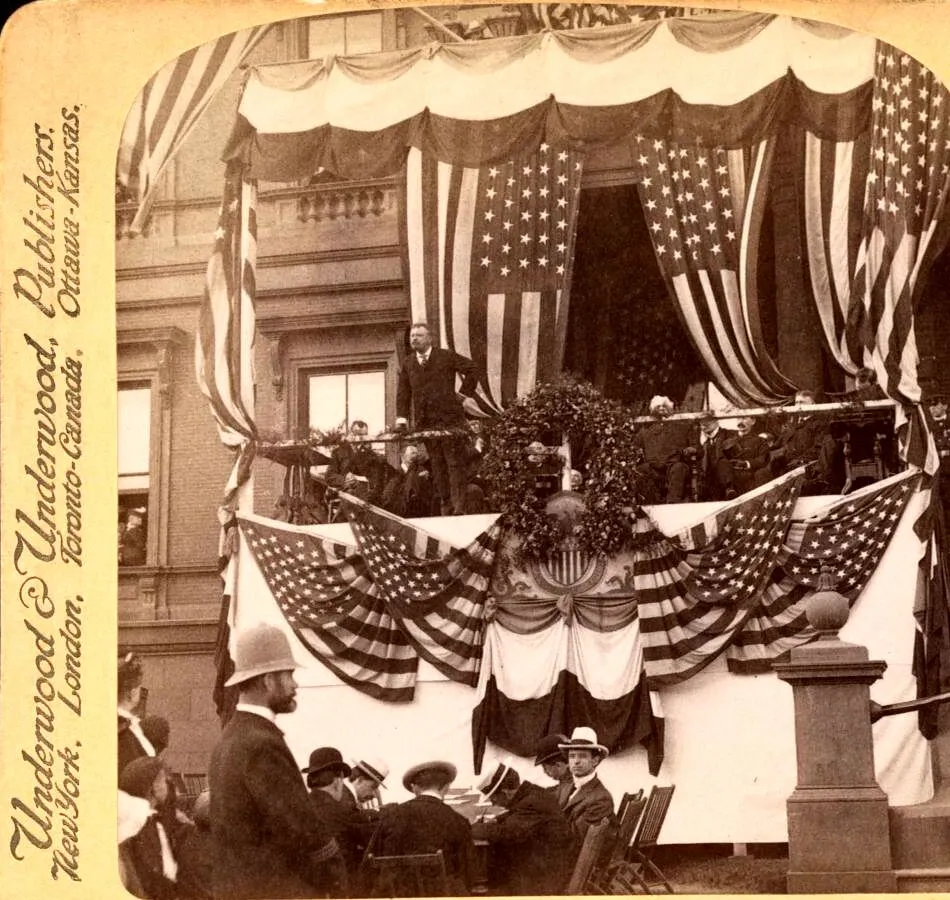
“A square deal for every man, big or small” — Roosevelt carried his message that democracy required economic fairness across the country. (Library of Congress)

A cartoon plays on Roosevelt's “Square Deal”; he cast government as the referee ensuring fair play between competing interests. (Library of Congress)
The Referee Model: Government as Arbiter
Roosevelt frequently invoked the metaphor of the referee in describing the government's proper role. Just as a referee in a sporting contest ensures that all players follow the rules and prevents cheating, the government should referee the economic contest between labor and capital, between large and small businesses, between corporations and consumers. The referee did not decide who should win—the market and competition determined that. But the referee ensured that the contest was fair, that the rules were enforced equally, and that no participant could cheat their way to victory.
This "referee" concept was more subtle and sophisticated than simple pro-labor or pro-business positions. It suggested that Roosevelt was willing to defend business interests against labor demands if he believed labor was being unreasonable, just as he was willing to restrict corporate practices when corporations violated fair dealing. He wanted an economy where business could earn reasonable profits while workers earned decent wages, where consumers could buy safe products, and where competition drove innovation and efficiency.
Legacy and Limits
The Square Deal was not perfect—some of Roosevelt's regulatory schemes proved cumbersome or ineffective. Some of his trust prosecutions were legally questionable. His labor sympathies had limits; he could not accept unlimited labor union power any more than he could accept unlimited corporate power. But the basic principle endured: government must actively ensure that American capitalism served the American people rather than a narrow elite.
Roosevelt believed he was saving capitalism, not destroying it. His regulatory vision would prove durable. The agencies and regulations he pioneered—the Department of Commerce and Labor, the Bureau of Chemistry (forerunner of the Food and Drug Administration), the Interstate Commerce Commission as an enforcement body—became permanent features of American governance. Future presidents of both parties would build on his precedent that federal government had authority to regulate corporate behavior, control monopolies, and protect consumers. The Square Deal laid intellectual and institutional foundations for the modern regulatory state that would characterize twentieth-century American capitalism.
As Roosevelt said in his July 4, 1903, speech at Springfield, Illinois, quoted in his own writings: "A man who is good enough to shed his blood for his country is good enough to be given a square deal afterwards." The phrase applied metaphorically to all Americans: if citizens were good enough to build the nation, good enough to work and sacrifice, then they deserved a government that ensured fairness and prevented exploitation. That was what the Square Deal promised—not equality of outcome, but equality of opportunity, not the elimination of difference, but the assurance that economic competition would be conducted fairly.
Continue Reading
- Trust-Busting — Breaking up illegal monopolies while defending legitimate business
- The Coal Strike of 1902 — Federal intervention as honest arbiter between capital and labor
- Food and Drug Safety — Protecting consumers from poisoned food and fraudulent medicines
- Railroad Regulation — Bringing transportation monopolies under federal oversight
- The Bully Pulpit — Using the presidency as a platform to educate the nation
Primary Sources at the TR Center
Explore Roosevelt's Square Deal philosophy through primary documents in the Theodore Roosevelt Center Digital Library.
- The Square Deal Document — Roosevelt's vision for fair dealing in American capitalism
- Politics and Government Encyclopedia — Essays on Roosevelt's regulatory and reform philosophy
- Roosevelt Biography — Comprehensive biographical information and research resources
- Roosevelt's Writings — Speeches and articles articulating his Square Deal vision
From the Archives
Explore original photographs, documents, and illustrations related to this topic in the Theodore Roosevelt Center Digital Library.
Recommended Reading
- Theodore Roosevelt: A Life by Nathan Miller (2011). ISBN: 978-0061340382
- Theodore Rex by Edmund Morris (2001)
- New Spirits: Americans in the Gilded Age, 1865–1905 by Rebecca Edwards (2006)