
The Bully Pulpit: Roosevelt Invents Modern Presidential Communication
A President Who Understood the Power of the Press
Theodore Roosevelt did not invent the relationship between politics and public communication. But he fundamentally transformed it. Before Roosevelt, the presidency had been conducted largely behind closed doors. Presidents issued formal statements. They gave occasional speeches. But they did not, as a rule, cultivate relationships with reporters, strategically time announcements for maximum impact, or systematically use the press as a tool to build support for their policies. Roosevelt did all of these things, and in doing so, he essentially created the modern presidency's relationship with the media. He coined the term himself—the "bully pulpit"—using "bully" in its nineteenth-century sense to mean "excellent" or "wonderful." From this excellent platform, he could speak directly to the American people. And he did, relentlessly, brilliantly, and with effects that transformed the nature of presidential power.
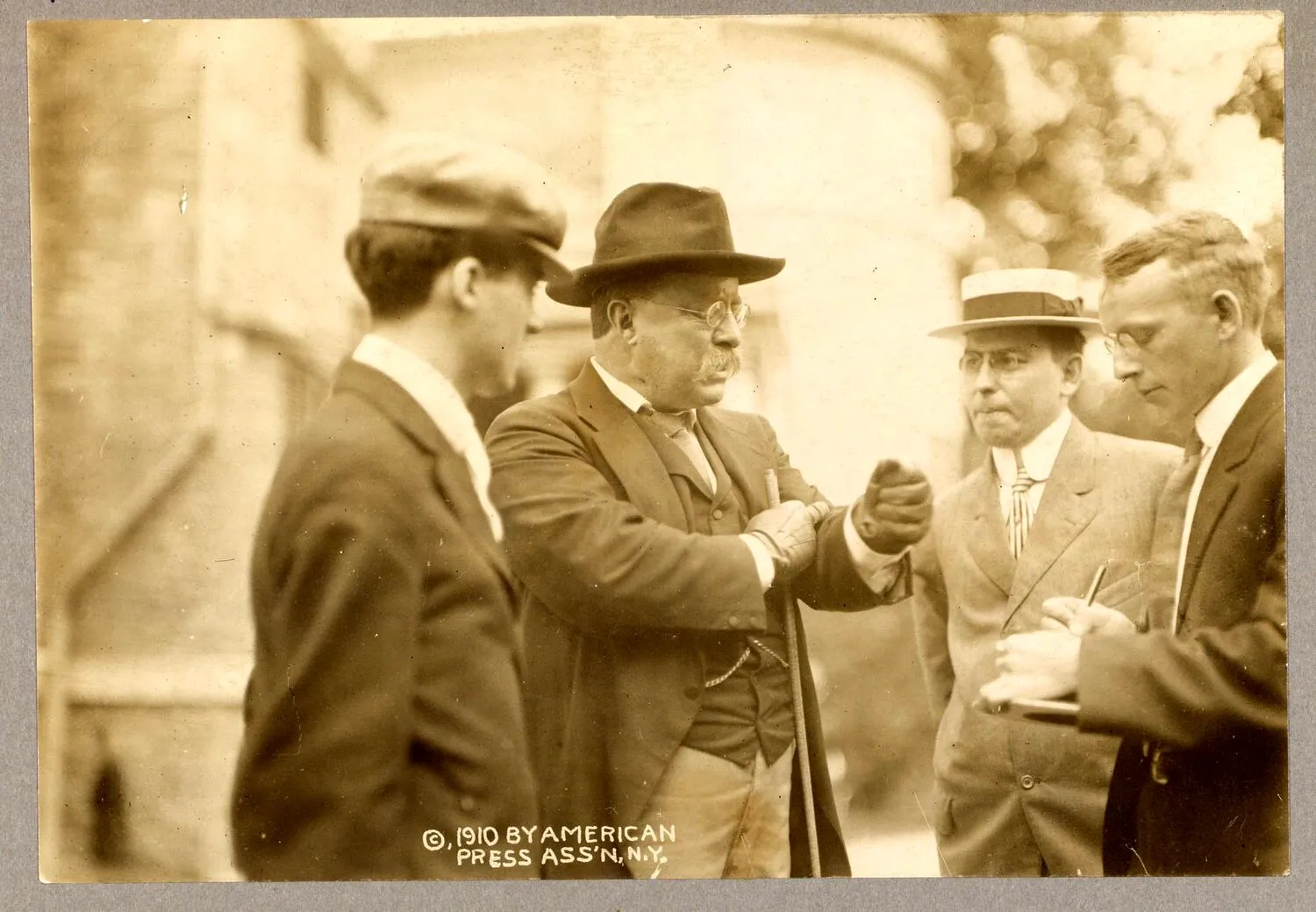
Roosevelt in conversation with reporters. He cultivated the press as no president had, granting daily access and shaping the news himself. (Library of Congress)
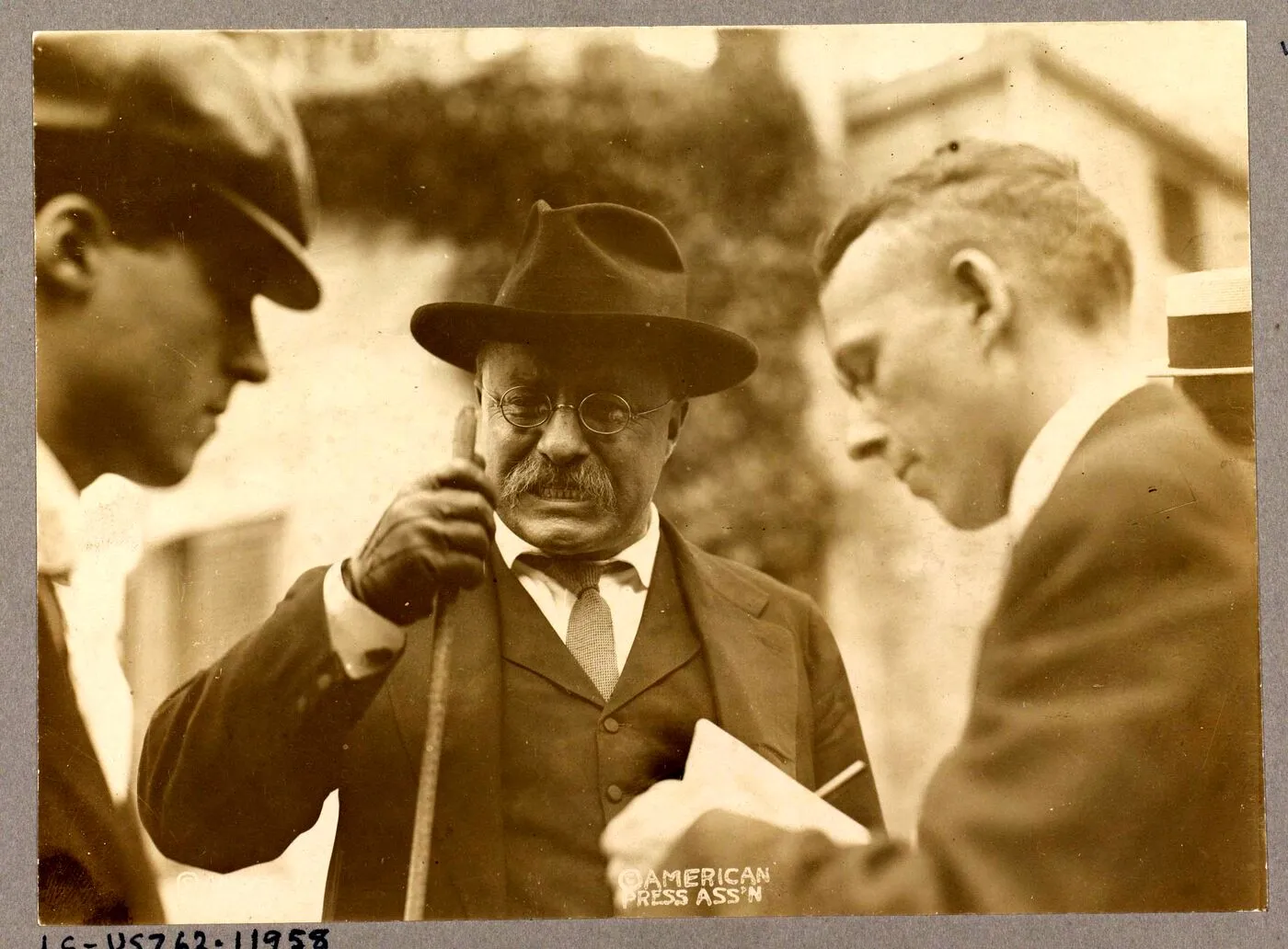
Roosevelt speaks with newsmen, papers in hand; he gave reporters their own room in the White House and a steady flow of stories. (Library of Congress)
A Room for the Press and Daily Access
One of Roosevelt's first innovations was to grant reporters something they had never had before: a dedicated room in the White House. This was not merely a courtesy. It was strategic brilliance. By giving journalists a place to work, a place to gather, and easy access to the President and his staff, Roosevelt ensured that they would be present, that they would be hungry for stories, and that they would be predisposed to treat the White House as the center of their attention. The arrangement created a symbiotic relationship: the press got access to power and information; the President got a platform through which to communicate directly with millions of Americans. Access, though, came on his terms: reporters who printed what he wanted deniable were banished to what the press corps called the “Ananias Club”—named for the biblical liar—and cut off from White House news.
Roosevelt granted interviews readily. He spoke to journalists with candor that his predecessors would have considered reckless. He provided vivid anecdotes and colorful quotes that were irresistible to reporters. He expressed his views with memorable language that journalists could not resist reporting. In short, he understood that if you gave reporters something interesting, they would write about it, and if millions of people read what they wrote, you had accomplished something that no speech could achieve alone.
Timing Announcements for Maximum Impact
Roosevelt was also supremely skilled at timing. He understood the newspaper cycle. He knew when stories would have the greatest impact. He knew which days were crowded with news and which were quiet. If he wanted an announcement to dominate the headlines, he would release it on a day when other news was sparse. If he wanted to bury a less favorable story, he would release a more dramatic announcement when the press was already focused on something else. This was not accident. This was calculation—the strategic manipulation of the news cycle for political purposes. A modern political operative would recognize these techniques instantly. In the early 1900s, they were revolutionary.
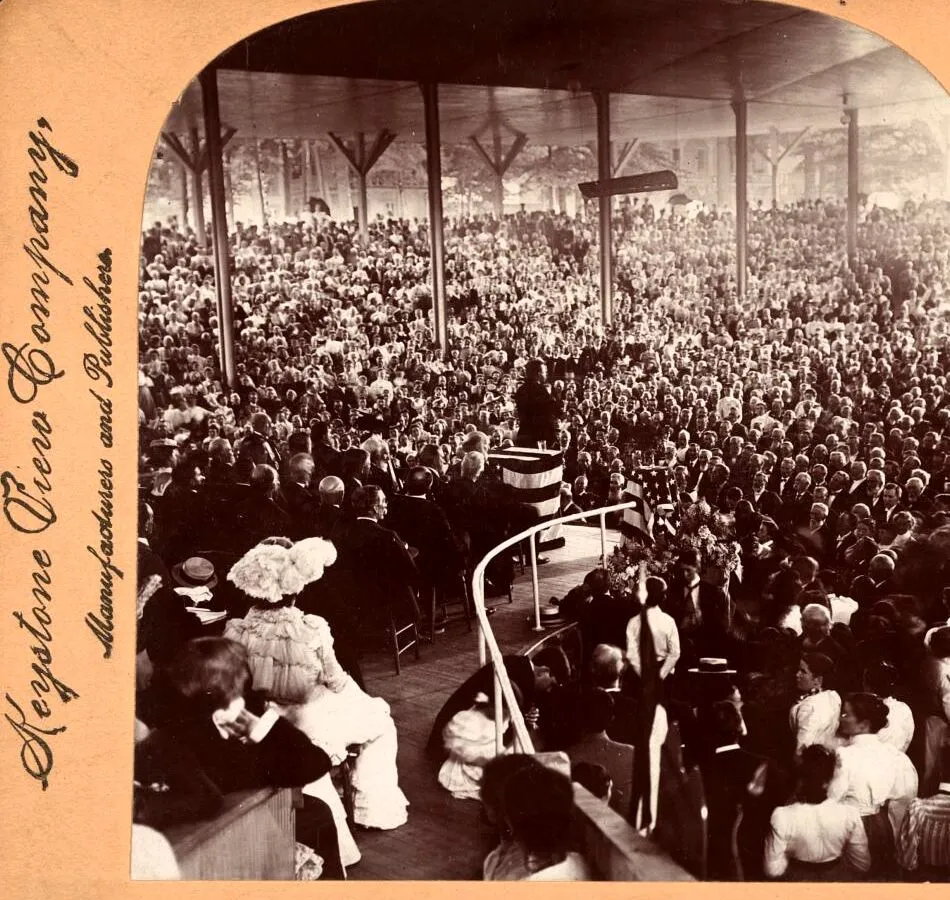
Roosevelt addresses a vast crowd at Chautauqua, New York; the presidency, he showed, was a “bully pulpit” for reaching the whole nation. (Library of Congress)
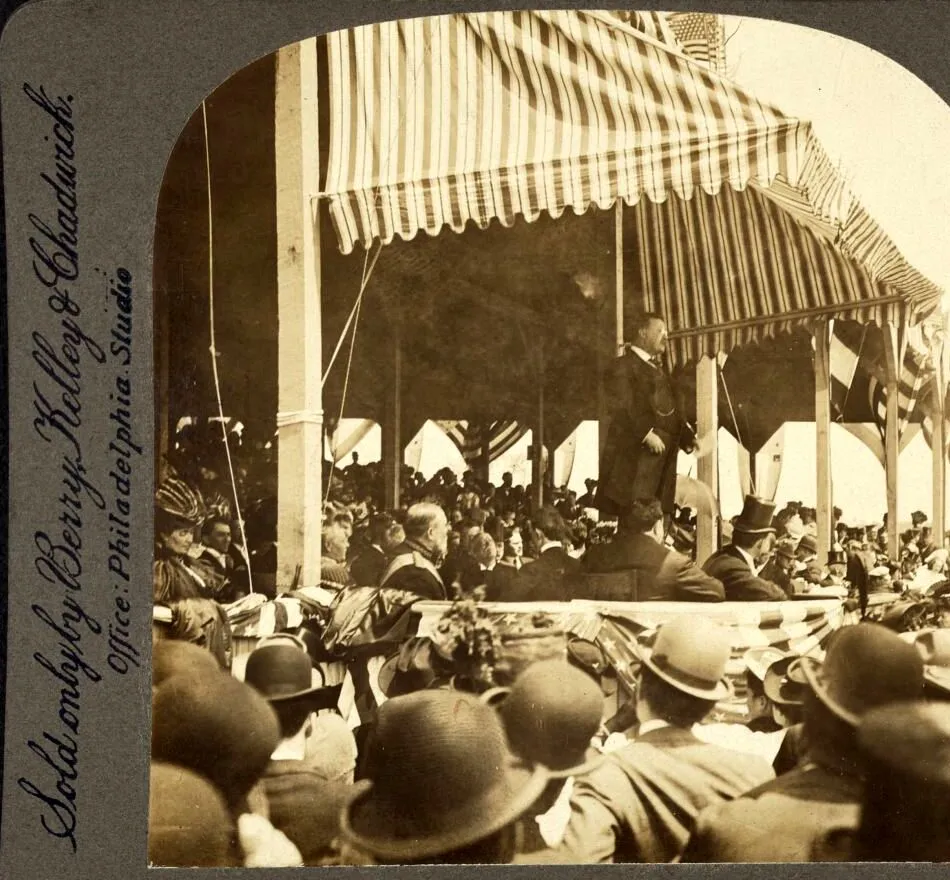
Roosevelt delivers the opening address at the Jamestown Exposition in 1907, rallying public support for his policies. (Library of Congress)
Building Support for Progressive Policies
Roosevelt used his relationship with the press strategically to build public support for his policies. When he decided to move against the trusts—the massive business combinations that he believed were strangling American commerce—he did not simply sign executive orders. He spoke publicly about the evils of monopoly. He gave speeches that made vivid, dramatic cases for federal action. He ensured that journalists understood the moral dimensions of his crusade. When the press reported on his trust-busting efforts, they reported them not simply as legal actions, but as righteous campaigns against corporate malfeasance. The President had shaped the narrative.
The same was true of conservation. Roosevelt believed passionately in preserving America's natural landscape. He used the press to build public enthusiasm for conservation. He painted vivid pictures of the beauty and majesty that would be lost if forests and canyons and natural wonders were simply handed over to commercial exploitation. The press, understanding the appeal of the story, reported it with enthusiasm. Millions of Americans who might not have thought about conservation suddenly understood it as a matter of national importance. The President had used the pulpit to create a constituency.
The Coal Strike and Presidential Mediation
The coal strike of 1902 provided a perfect example of Roosevelt's command of political communication. When coal miners and mine operators reached an impasse, with winter approaching and the nation facing a fuel shortage, Roosevelt intervened. But he did not simply order both sides to reach agreement. He brought them to the White House. He positioned himself as the guardian of the public interest, standing between the interests of capital and labor, determined that the people would not suffer. The press covered it intensively. Millions of Americans read about the President working to solve a crisis that affected them directly. It did not matter whether you supported the miners or the operators—what mattered was that the President was acting. The story was inherently dramatic, and Roosevelt had placed himself at its center.
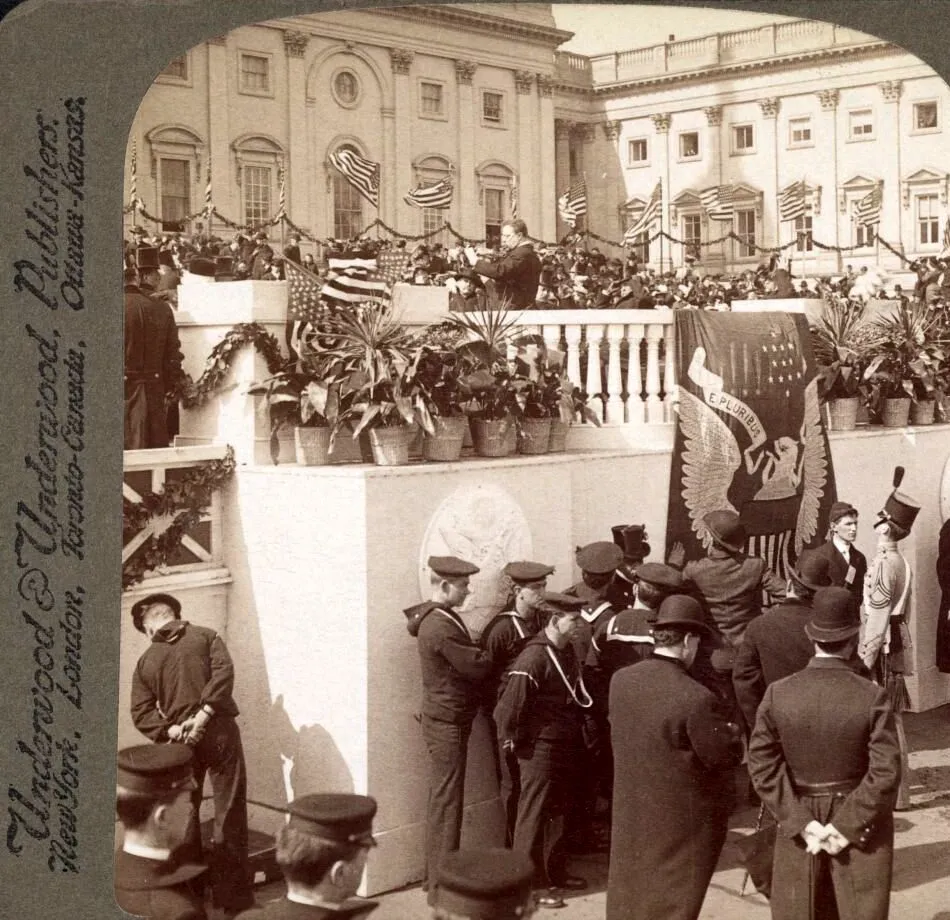
Roosevelt addresses the public from a decorated stand; he used popular opinion as leverage, as he did to pressure the mine owners during the 1902 coal strike. (Library of Congress)
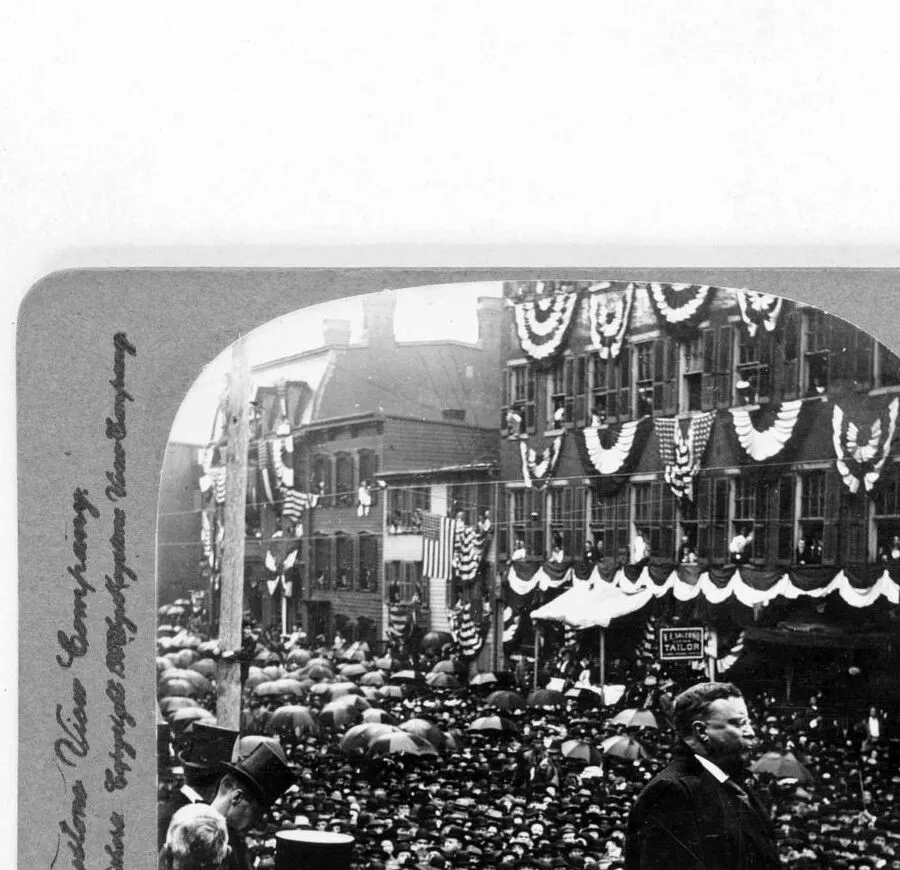
Roosevelt speaks at the cornerstone laying of the House office building (now the Cannon Building), April 14, 1906 — the setting of his “Man with the Muck-Rake” speech, which both praised and checked the reform press. (Library of Congress)
The Muckrakers and the Limits of Presidential Approval
Roosevelt's relationship with the investigative journalists of the era—the "muckrakers," as he called them—was complex. Figures like Lincoln Steffens, Ida Tarbell, and Upton Sinclair were exposing corporate corruption and government malfeasance in detailed, sensational investigations published in magazines like McClure's. Roosevelt both used and criticized them. He appreciated the way they exposed abuses that he believed needed to be corrected. But he also grew frustrated with what he saw as their cynicism and their refusal to recognize the progress he believed he was making. "The men with the muck rakes are often indispensable to the well-being of society," he warned in his famous speech of April 14, 1906, "but only if they know when to stop raking the muck, and to look upward to the celestial crown above them, to the crown of worthy endeavor." He wanted the press to expose wrongdoing, but not to undermine confidence in government itself. He wanted journalists to be his allies in reform, not obstacles to his vision.
Inventing the Modern Presidency
What Roosevelt understood, and what distinguishes him from his predecessors, was that in an age of mass communication, the presidency itself had changed. A president could no longer simply execute law and issue formal pronouncements. A president needed to persuade the public. He needed to shape public opinion. He needed to use every tool available—the press, the speaker's platform, the drama of public events—to build support for his policies. The President was not simply an administrator. He was a communicator. He was a persuader. He was, in a very real sense, a performer on a national stage.
Roosevelt understood this intuitively. He brought to the presidency an instinct for the dramatic, for the quotable phrase, for the vivid image. His life had been lived in public view—as a legislator, as a police commissioner, as a colonel leading troops, as a governor, as vice president. By the time he became president, he had already learned how to use the press. And as president, he perfected the art. He essentially invented the modern presidency's relationship with the media.
Learn more about Theodore Roosevelt's innovations in presidential communication
Continue Reading
- Executive Power and the Stewardship Theory — How Roosevelt expanded presidential authority
- The Coal Strike of 1902 — Mastering public opinion to resolve crisis
- Trust-Busting and Regulation — Using rhetoric to build public support for reform
- Roosevelt's Foreign Policy — The bully pulpit applied internationally
Primary Sources at the TR Center
Explore original documents and resources related to this topic in the Theodore Roosevelt Center Digital Library.
- The Man in the Arena — Roosevelt's famous speech on political engagement and public discourse
- Roosevelt's Rhetoric and Communication — Speeches and writings on presidential power
From the Archives
Explore original photographs, documents, and illustrations related to this topic in the Theodore Roosevelt Center Digital Library.
Recommended Reading
- Theodore Roosevelt: A Life, Nathan Miller, 2011, ISBN 978-0062078543
- The Rise of Theodore Roosevelt, Edmund Morris, 1979, ISBN 978-0812976205
- The Bully Pulpit: Theodore Roosevelt, William Howard Taft, and the Golden Age of Journalism, Doris Kearns Goodwin, 2013, ISBN 978-0743273466