
The Election of 1904: Roosevelt's Mandate and Fateful Promise
The Road to Nomination: Republican Confidence and Party Unity
For Republican delegates gathering in Chicago in the summer of 1904, there was no real question about the presidential nomination. Theodore Roosevelt had revitalized the party. His administration had cracked down on corporations that violated the law, embarked on an ambitious conservation program, and begun work on the Panama Canal. Roosevelt had also proved his political acumen by building a coalition that united the progressive and conservative wings of the Republican Party. Eastern business interests, increasingly convinced that Roosevelt's trust-busting would actually stabilize capitalism by eliminating the most reckless corporations, supported his nomination. Western progressives championed his conservation agenda. Labor appreciated his intervention in the coal strike of 1902. Republicans were confident and energized. Eastern Republican stalwarts who had questioned whether a young reformer could govern effectively had been proven wrong. The convention nominated Roosevelt on the first ballot without significant opposition.
The Democrats nominated Judge Alton B. Parker of New York, a conservative jurist who represented the party's more cautious eastern wing. Parker was respectable but colorless. He had spent his career on the bench, rising to Chief Judge of the New York Court of Appeals (he would turn to corporate law only after the election), and represented the Democratic Party's cautious establishment. He offered the American people a choice between Roosevelt's dynamic, aggressive progressivism and a more cautious, legalistic approach to governance. The American people were in no mood for caution. Parker's campaign emphasized constitutional restraint and warned against presidential overreach. But the public was not convinced that caution was what America needed in 1904.
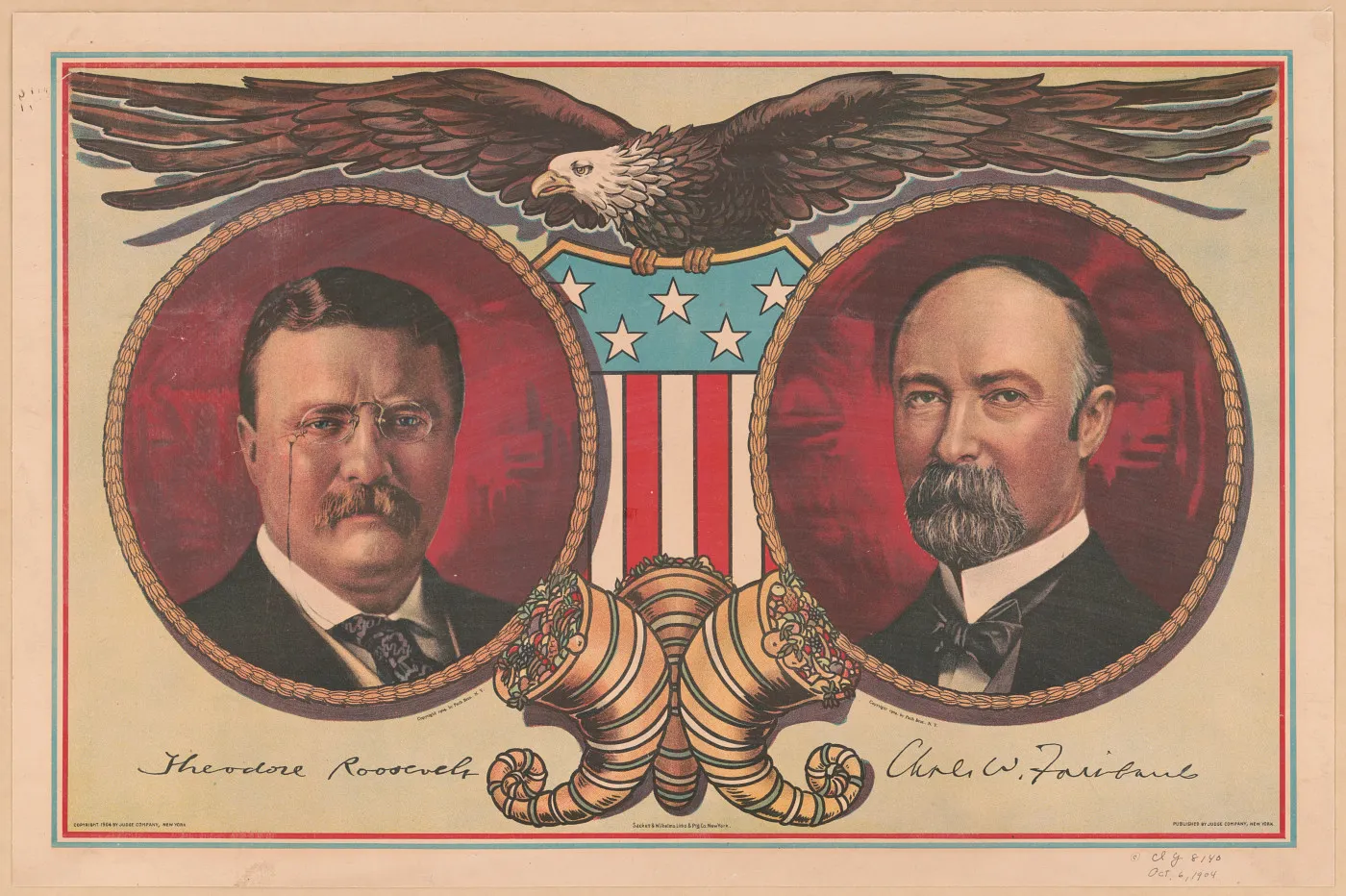
The 1904 Republican ticket: President Theodore Roosevelt and running mate Charles W. Fairbanks, whom the party nominated with enthusiastic unity. (Library of Congress)

A 1904 Puck cartoon skewers the era's pressure on corporations to bankroll the campaign, a controversy that shadowed Roosevelt's fundraising. (Library of Congress)
The Campaign and Roosevelt's Fundraising Troubles
Roosevelt's campaign proved remarkably sophisticated for the era. Supporters organized rallies, distributed campaign literature, and mobilized voters using the emerging technologies of mass communication. The campaign emphasized Roosevelt's achievements and his vision for America's continued progress. Yet the campaign also revealed emerging problems in American political finance.
Republican fundraisers, seeking to ensure Roosevelt's victory, collected substantial sums from major corporations—railroad magnates, oil companies, steel manufacturers. Some companies donated explicitly to gain access to the Roosevelt administration or to prevent Roosevelt from investigating them more aggressively. This created a controversy that would dog Roosevelt's later career: had his administration negotiated secret deals with corporations in exchange for campaign contributions? The American public would later demand investigation of these donations, raising ethical questions about the relationship between campaign finance and presidential decisions about corporate regulation. These tensions would eventually contribute to Roosevelt's disillusionment with President Taft.
A Landslide Victory: The Numbers
The election results were stunning. Roosevelt won 56.4 percent of the popular vote—at the time the largest popular-vote margin ever recorded for a presidential candidate. He captured 336 electoral votes to Parker's 140. Roosevelt carried every state outside the South, and even made significant inroads in the border states. Democrats were swept back in numerous congressional races. The public had endorsed Roosevelt and his policies with unmistakable clarity.
Roosevelt understood the magnitude of his victory. He had won not merely as McKinley's successor but as a president in his own right, elected on his record of reform and vigorous executive action. The American people had chosen his vision for America's future. No president in decades had received such a clear mandate.
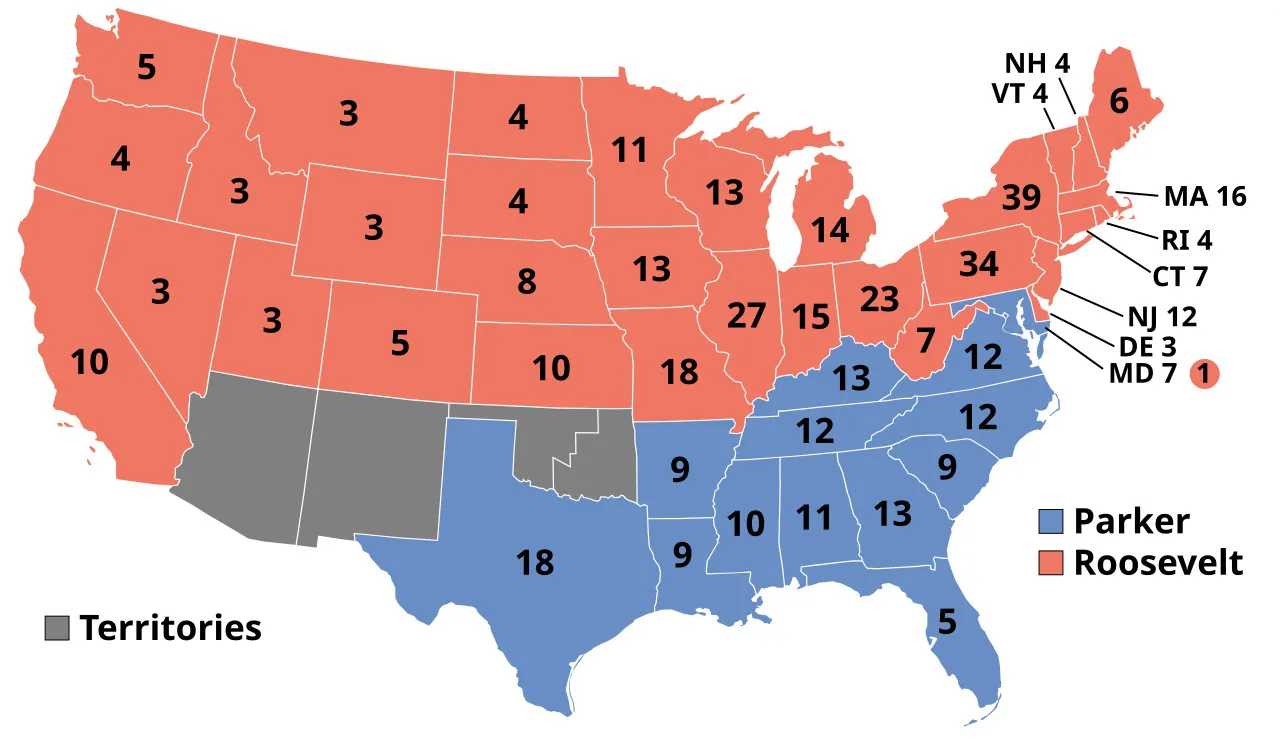
Roosevelt (red) carried every state outside the Solid South, winning 336 electoral votes to Alton B. Parker's 140 in a historic landslide. (Wikimedia Commons)

Theodore Roosevelt in 1904, the year he won the presidency in his own right after first inheriting it upon William McKinley's assassination. (Wikimedia Commons)
Election Night and the Fateful Promise
On the evening of his victory, November 8, 1904, Roosevelt issued a statement to the press at the White House that would haunt him for the rest of his political career. In the exhilaration of his landslide victory, Roosevelt announced that he would not seek another term as president. "The wise custom which limits the President to two terms regards the substance and not the form," the statement declared. "Under no circumstances will I be a candidate for or accept another nomination." He would retire from the presidency at the end of his elected term in March 1909.
It was an extraordinary statement, made in the flush of victory when Roosevelt's authority and popularity were at their absolute peak. No president in American history had voluntarily announced that he would not run again while still possessing overwhelming political power to secure another term. Roosevelt's stated reason was rooted in constitutional principle—the two-term tradition established by George Washington, which held that a president should voluntarily step aside after two terms. Roosevelt believed this tradition was essential to preventing the accumulation of excessive power in the executive branch. By publicly committing to it, he was affirming his belief in constitutional limits and republican virtue.
But the announcement also reflected Roosevelt's youthful confidence at age 46 that he could accomplish whatever he set out to do in his second term and then step aside. He believed he could reshape American governance, build the Panama Canal, establish conservation policy, and regulate corporations—all in four years—and then pass the presidency to a worthy successor. His confidence proved unwarranted. Within months, as events developed in ways Roosevelt had not anticipated, he would come to view his election night promise as a terrible mistake. But a public promise made by the president, reported in newspapers across the country, could not simply be withdrawn.
Regret and the Path to Political Fracture
Roosevelt later wrote that making the 1904 promise was among his greatest political mistakes. He came to believe that he alone possessed the commitment and competence to execute his progressive agenda. Whoever succeeded him—he assumed it would be Secretary of War William Howard Taft—would lack his energy and his vision. The presidency, once relinquished, could not be reclaimed. By 1908, as Roosevelt considered the course his successor might take, he deeply regretted the promise made in 1904.
This regret would shape the final years of Roosevelt's presidency and would set in motion the events that fractured the Republican Party. Roosevelt began focusing intensely on grooming Taft as his successor, trying to ensure that his chosen heir would continue his policies. But Roosevelt could not control Taft once the younger man became president. And his inability to directly influence events from outside the White House became a source of profound frustration that ultimately led to Roosevelt's 1912 challenge to Taft and the Bull Moose party movement that shattered Republican unity and handed the presidency to Woodrow Wilson.
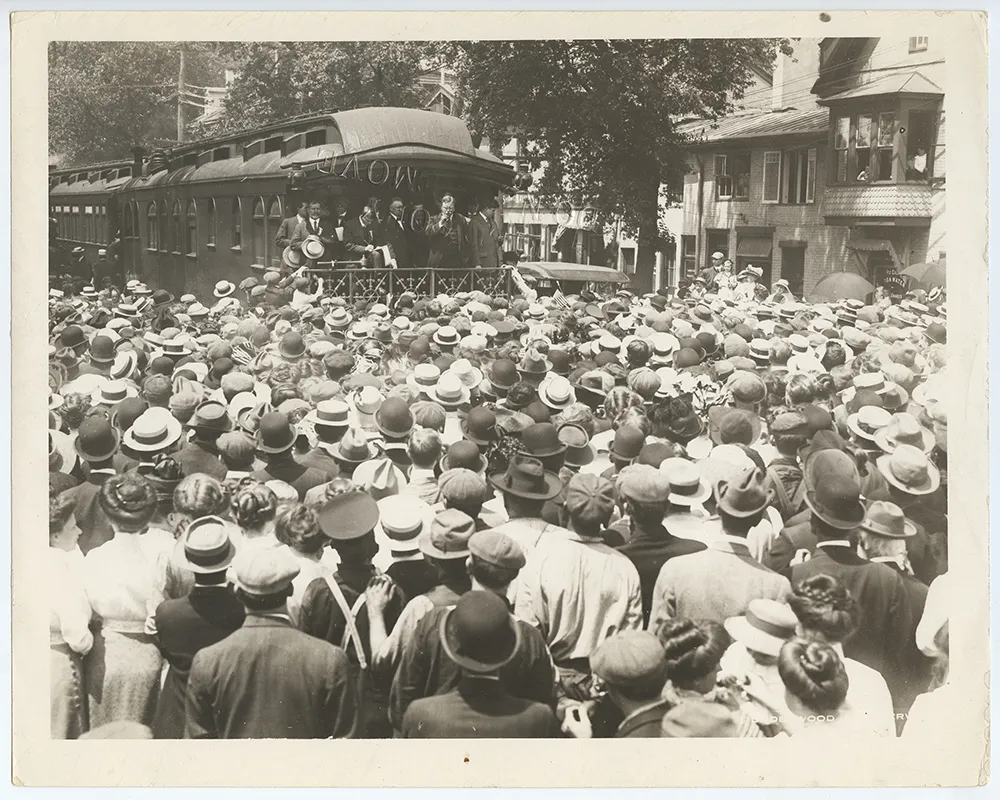
Roosevelt campaigning from a train in 1912; his 1904 pledge not to seek another term helped drive him into the third-party run that split the GOP. (Wikimedia Commons)
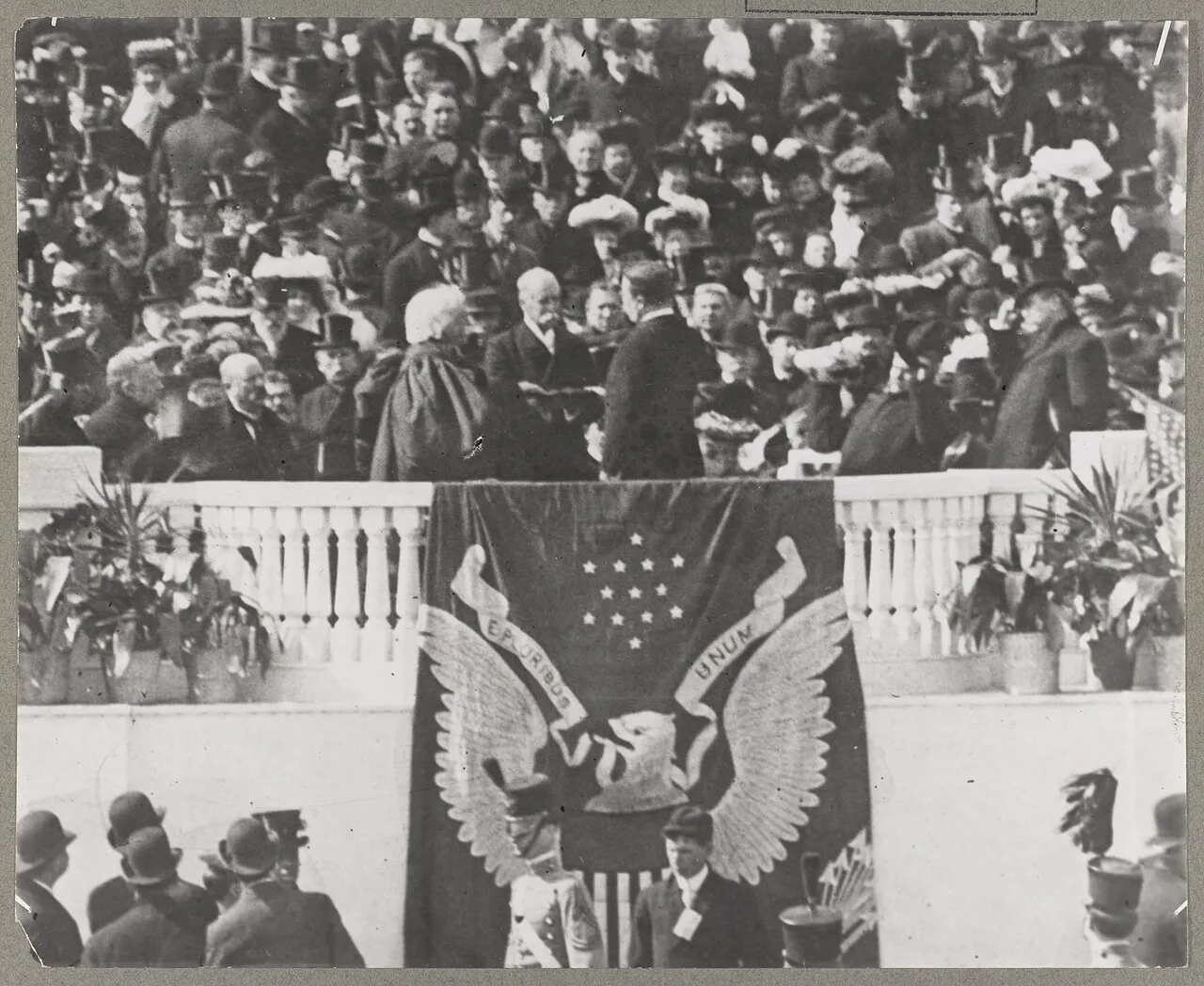
Roosevelt is inaugurated at the Capitol on March 4, 1905, beginning the full term voters had just granted him in his own right. (Library of Congress)
Significance: Defeating an Assassin's Successor
There was profound significance in Roosevelt's election victory that transcended the numbers. When McKinley was assassinated in 1901, many Republicans and American elites feared that Americans might not accept an accidental president, that there might be questions about Roosevelt's legitimacy. Some suggested the party should nominate someone else in 1904, precisely to avoid the appearance that an assassin's successor was claiming the presidency.
Roosevelt's landslide victory answered those doubts definitively. The American people accepted him. More than that, they embraced him. They voted for his policies, his style, his vision for America. Roosevelt had transformed from the "boy president" thrust into office by tragedy into a president elected on his merits with a mandate from the people.
That achievement made his election night promise all the more poignant. At the very moment when Roosevelt's power was absolute and his popularity unmatched, he voluntarily accepted a limitation on his authority. He told the American people that their president would serve only until March 1909 and then would step aside. It was an act of constitutional principle and political confidence that the subsequent course of events would expose as a miscalculation.
The Campaign Against Parker: Substance and Style
The campaign itself had been vigorous but not particularly close. Roosevelt's supporters emphasized his achievements—conservation, trust-busting, the Panama Canal, American naval power, his role in ending the Russo-Japanese War (for which he would later win the Nobel Peace Prize). Parker and the Democrats criticized Roosevelt for executive overreach, for ignoring constitutional constraints in pursuit of his agenda, for his aggressive foreign policy.
Roosevelt dismissed these criticisms. He believed the Constitution granted the president broad powers to act in the national interest. He believed a strong executive was necessary to govern effectively. American voters agreed. They returned Roosevelt with the largest popular-vote percentage of any candidate since the Civil War.

Democrat Alton B. Parker, the reserved New York judge Roosevelt defeated in 1904, offered a study in contrast to the president's exuberant style. (Library of Congress)
A Turning Point for the Presidency and the Nation
The 1904 election confirmed that the American people wanted an active, powerful executive. They wanted a president who would challenge monopolies, protect natural resources, assert American power in world affairs, and push reforms through Congress and the bureaucracy. Roosevelt had provided all of this, and voters rewarded him with overwhelming support.
Yet the election also established a limitation that would shape the final four years of Roosevelt's presidency. He had promised to leave office in March 1909. That promise meant that from the moment his second term began, he was a "lame duck" president. Political enemies could argue that Roosevelt's authority was waning. Politicians began thinking about succession. The energy and unity that had characterized Roosevelt's early presidency would gradually fracture.
For more information about Roosevelt's presidency and his political achievements, consult the Theodore Roosevelt Center.
The 1904 election represented the apex of Roosevelt's political power. He had won vindication as an elected president. He had received a mandate for his policies. He stood at the height of popularity and authority. But in that moment of triumph, he had also accepted a self-imposed limit on his power—a limit that would shape all that followed.
Continue Reading
- The Bully Pulpit — How Roosevelt shaped public opinion and shaped his campaign
- William Howard Taft — Roosevelt's chosen successor in 1908
- The Bull Moose Party — Roosevelt's 1912 challenge to his successor
Primary Sources at the TR Center
Explore original documents and resources related to this topic in the Theodore Roosevelt Center Digital Library.
- Roosevelt's Presidency and Elections — Encyclopedia entries on 1904 campaign and Roosevelt's political legacy
From the Archives
Explore original photographs, documents, and illustrations related to this topic in the Theodore Roosevelt Center Digital Library.
Recommended Reading
- Theodore Roosevelt: A Life, Nathan Miller, 2011, ISBN 978-0062078543