
Conservation by the Numbers
The Broad Strokes: 230 Million Acres Protected
Roosevelt protected approximately 230 million acres of public land through executive proclamations, executive orders, and legislation—an area nearly equal to all the Atlantic states from Maine to Virginia combined, with the addition of Pennsylvania, West Virginia, and Vermont. This represented roughly ten percent of the total territory of the United States, achieved in just seven and a half years of presidency.
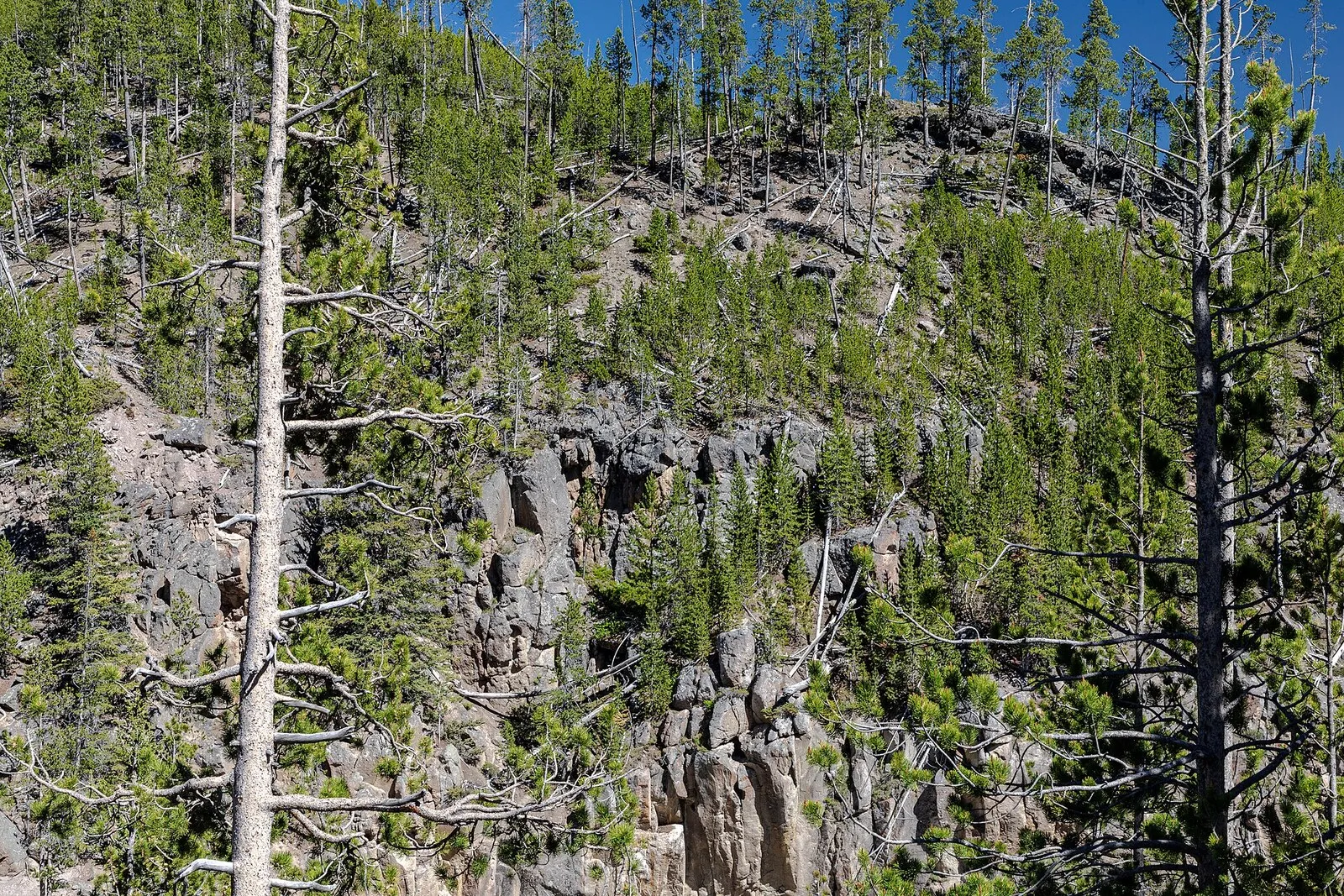
Roosevelt placed roughly 230 million acres of American land under federal protection, a wilderness legacy spanning forests, parks, monuments, and refuges. (Wikimedia Commons)
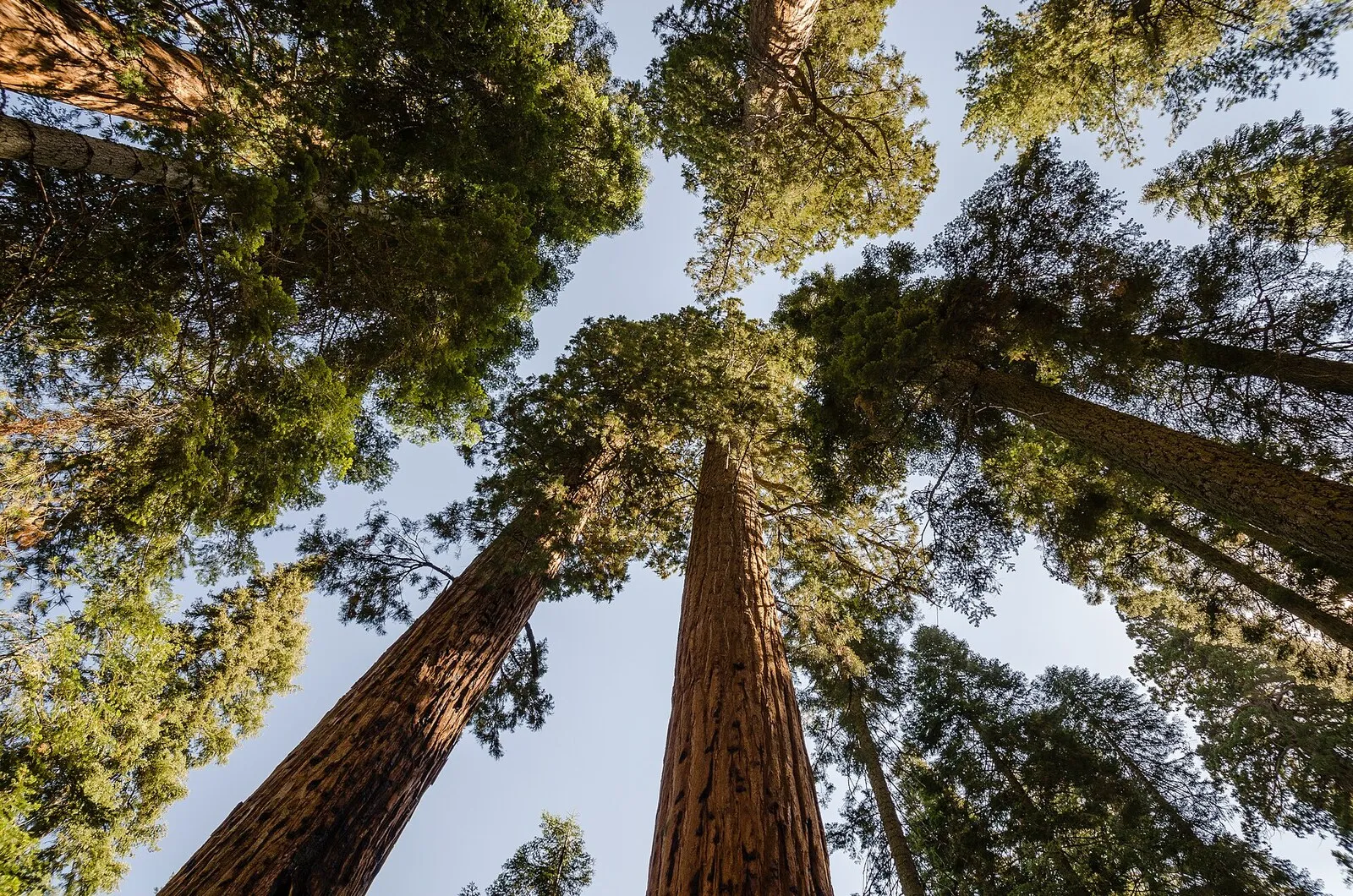
Roosevelt established roughly 150 national forests, adding some 150 million acres of protected woodland to the public domain. (Wikimedia Commons)
National Forests: The Foundation of Federal Stewardship
Roosevelt's most prolific conservation action involved the nation's forests. When he took office, approximately 47 million acres were already protected as forest reserves under authority granted by the Forest Reserve Act of 1891. Roosevelt dramatically expanded this system.
He established or enlarged 150 national forests, and by mid-1909 the national forests covered more than 194 million acres. In his first year alone, federal woodland reserves expanded by roughly one-third through executive proclamation, actions he pursued quietly and without fanfare to minimize political opposition from Western timber interests and livestock operators.
By 1907, Roosevelt faced Congressional pressure to restrict his authority. Senator Charles W. Fulton of Oregon proposed an amendment that would strip the President of forest reserve authority in six northwestern states. Roosevelt responded dramatically. Administration clerks worked forty-eight-hour shifts to prepare thirty-three proclamations creating and enlarging forest reserves across about 15.6 million acres before the amendment deadline. The Forest Service noted that its "drafting force worked night and day" to complete the massive undertaking in just two days.
National Parks: Monuments to American Grandeur
Roosevelt worked with Congress to establish or protect 5 national parks:
- Crater Lake National Park (Oregon, 1902)
- Wind Cave National Park (South Dakota, 1903)
- Sully's Hill National Game Preserve (North Dakota, 1904)
- Mesa Verde National Park (Colorado, 1906)
- Platt National Park (Oklahoma, 1906)
These parks were distinguished from forests by their protection of entire ecosystems, geological wonders, and archaeological sites—places where the principle guiding conservation was preservation for public appreciation and scientific study rather than timber extraction and resource extraction.
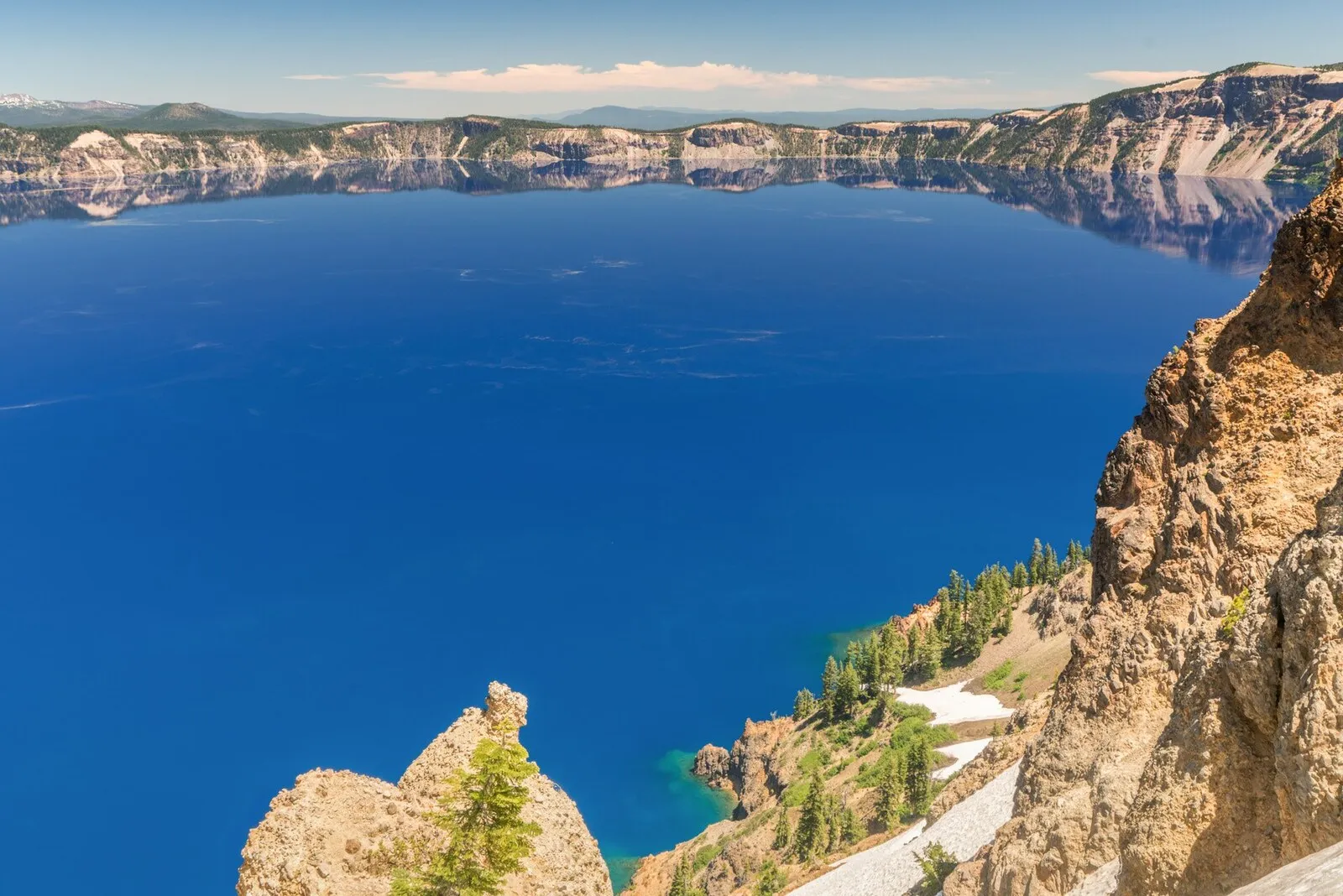
Crater Lake, Oregon, was one of five national parks Roosevelt signed into existence, established in 1902. (Wikimedia Commons)
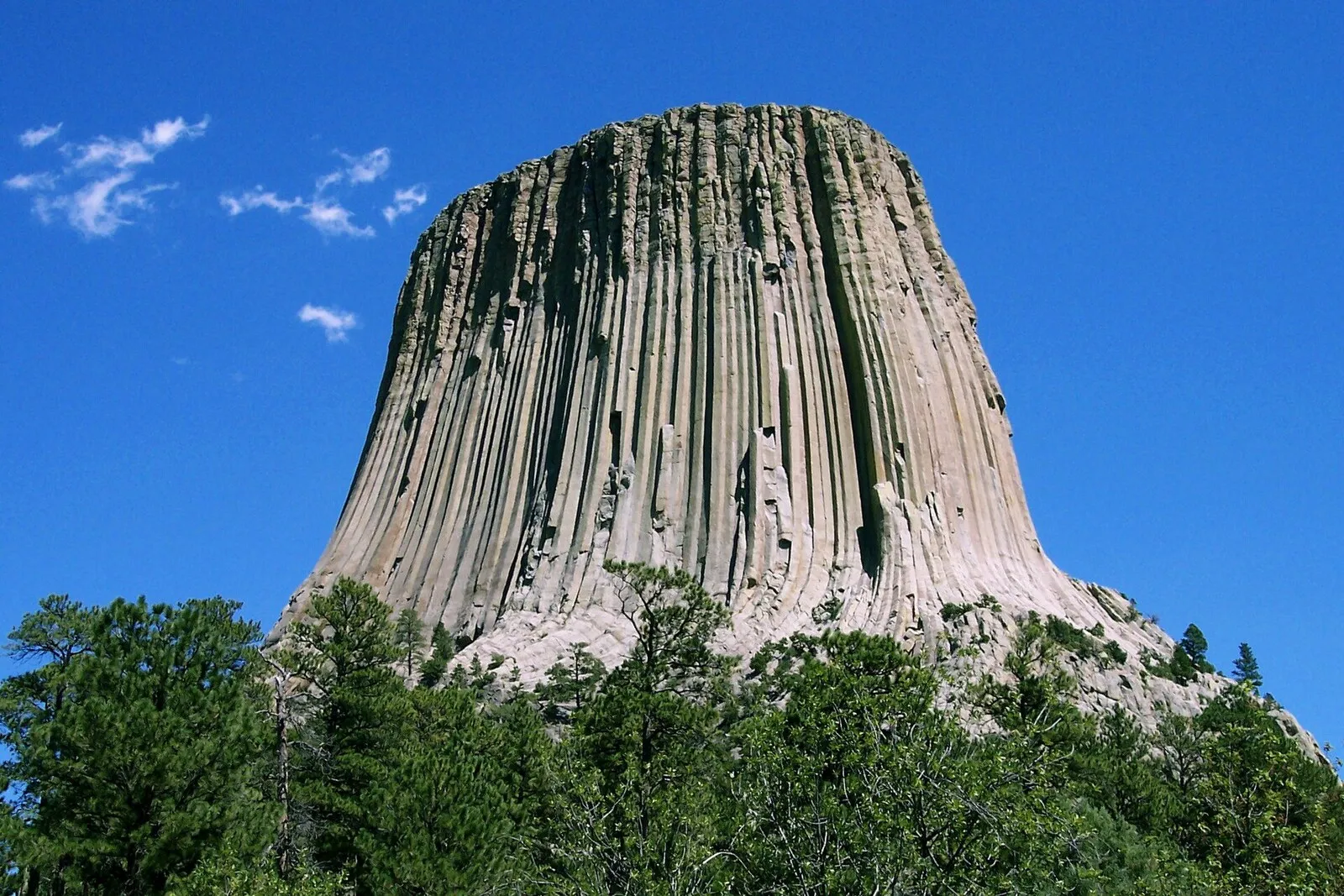
Devils Tower, Wyoming, became the nation’s first national monument in 1906, the first of 18 Roosevelt proclaimed under the Antiquities Act. (Wikimedia Commons)
National Monuments: The Antiquities Act Unleashed
Perhaps Roosevelt's most creative conservation tool was the Antiquities Act, signed into law on June 8, 1906. This legislation granted the President authority to set aside public lands as "national monuments" without requiring Congressional approval—a power that proved perhaps the most consequential conservation authority of his presidency.
Roosevelt established 18 national monuments, protecting sites of scientific, historical, and scenic significance. These included:
- Devil's Tower (Wyoming, 1906) — the first monument designated under the Antiquities Act, protecting this iconic geological formation
- Muir Woods National Monument (California, 1908) — preserving ancient coastal redwoods named for naturalist John Muir
- Grand Canyon National Monument (Arizona, 1908) — later upgraded to national park status, this designation protected one of America's greatest natural wonders
- Petrified Forest National Monument (Arizona, 1906)
- Gila Cliff Dwellings National Monument (New Mexico, 1907)
Roosevelt deployed the Antiquities Act with aggressive enthusiasm, using the President's authority to protect vast landscapes from private development and resource extraction. Each monument reflected his conviction that certain natural wonders possessed value transcending their potential economic use, and that federal stewardship was the only mechanism capable of preserving them in perpetuity.
Wildlife and Avian Conservation: 51 Federal Bird Reserves
Roosevelt understood that wildlife conservation required federal intervention. State hunting regulations could not protect migratory birds crossing multiple jurisdictions, and commercial hunting had decimated waterfowl populations. Roosevelt's response was systematic and expansive.
He designated 51 federal bird reserves, protecting critical habitat for migratory waterfowl, seabirds, and other species threatened by hunting pressure and wetland destruction. These reserves included:
- Stump Lake Bird Reservation (North Dakota, 1905) — protecting northern Great Plains wetlands critical to migratory waterfowl
- Passage Key (Florida, 1905) — a critical breeding ground for seabirds in Tampa Bay
- Pelican Island (Florida, 1903) — the first of Roosevelt's bird reserves
- Breton Island (Louisiana, 1904) — a Gulf of Mexico seabird rookery that Roosevelt later visited in person
Roosevelt also created 4 national game preserves specifically designed to protect large mammals including bison, elk, and antelope from hunting pressure and habitat destruction. These reserves demonstrated Roosevelt's belief that federal authority was essential to prevent extinctions and maintain populations of species whose existence was threatened by commercial and sport hunting.

Pelican Island, Florida, became the nation’s first federal bird reserve in 1903, the first of 51 Roosevelt created. (U.S. Fish and Wildlife Service via Wikimedia Commons)

The Salt River (Theodore Roosevelt) Dam in Arizona was among 24 federal reclamation projects launched under the 1902 Newlands Act. (Wikimedia Commons)
Reclamation and Water Conservation: 24 Projects
Roosevelt's conservation vision extended beyond forests and wildlife to the scientific management of water resources. He championed the Reclamation Service (now the Bureau of Reclamation), which transformed arid western landscapes through irrigation projects that allowed the development of agriculture in previously uninhabitable regions.
Under Roosevelt's leadership, 24 reclamation projects were initiated or funded, bringing water to millions of acres of western land. These projects represented a different conservation philosophy from forest protection—they were about productive use of resources through scientific management, rather than preservation for its own sake. Yet they reflected Roosevelt's broader conviction that the federal government had both the authority and the obligation to steward the nation's natural resources scientifically for present and future benefit.
Notable projects included the Salt River Project (Arizona), the Minidoka Project (Idaho), and the Shoshone Project (Wyoming). These undertakings literally reshaped the American West, enabling settlement patterns and agricultural productivity that would define the region for a century.
The Inland Waterways Commission: Coordinated Resource Management
Beyond individual land designations, Roosevelt created the Inland Waterways Commission in 1907 to coordinate the scientific management of the nation's river systems, forests, and water resources. This commission represented a revolutionary concept: that conservation required integrated, multi-agency coordination rather than isolated preservation efforts.
The Commission brought together experts in forestry, hydrology, transportation, and resource management to develop comprehensive strategies for managing the Mississippi River and other major waterways. This body proved influential in establishing the principle that conservation was not a collection of disconnected actions but a coherent national policy requiring executive coordination and scientific expertise.
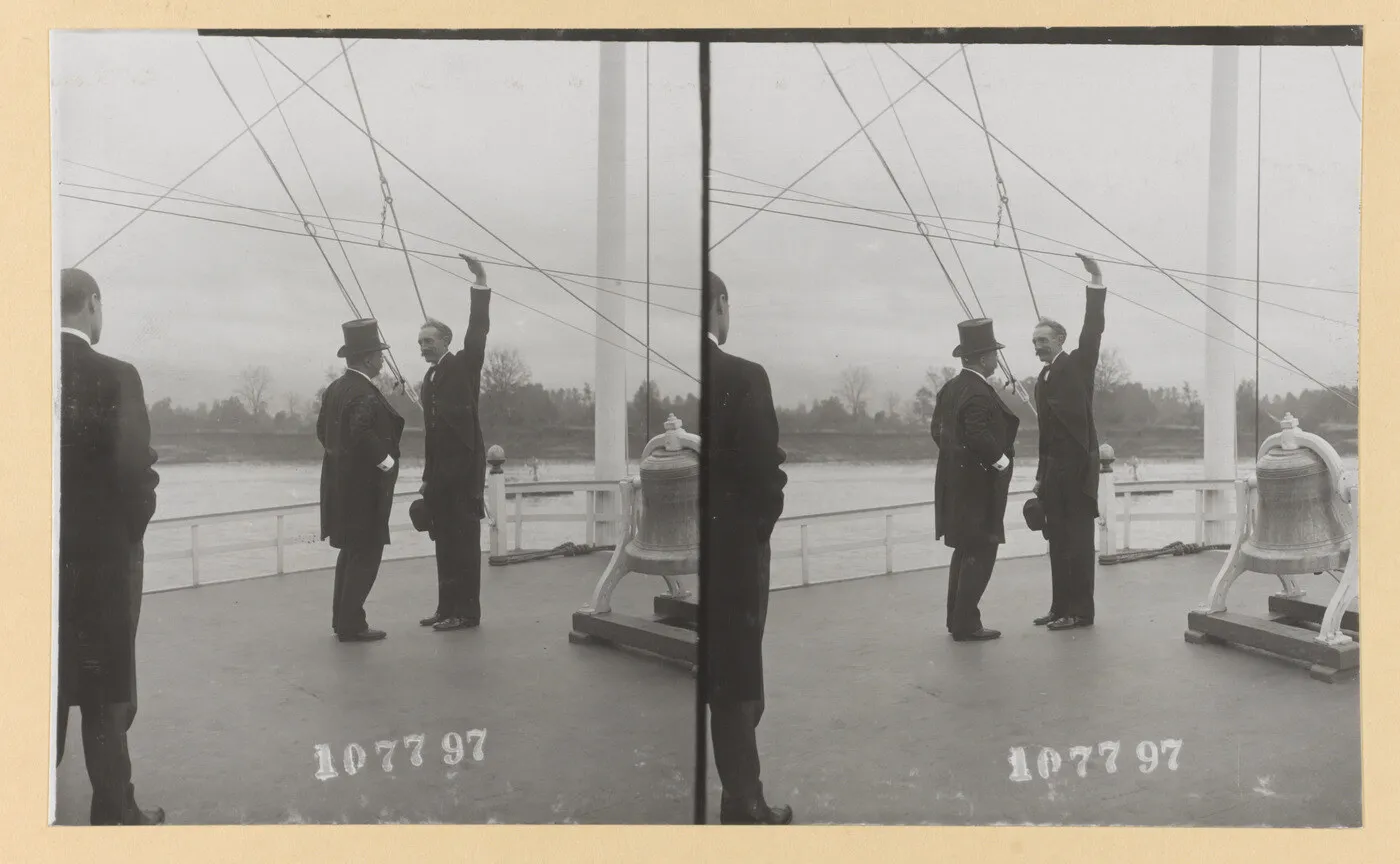
Roosevelt and the Inland Waterways Commission tour the Mississippi River aboard the steamer Mississippi in October 1907. (Library of Congress)

The 1908 Conference of Governors gathered the nation’s leaders at the White House to coordinate the conservation of natural resources. (Harvard College Library, Theodore Roosevelt Collection)
The Scale and Speed of Action
What made Roosevelt's conservation legacy remarkable was not merely its scope but its pace and political audacity. The memorandum documenting the rush to protect forests before the 1907 Congressional deadline reveals the intensity of Roosevelt's commitment. When Congress threatened to strip his authority, Roosevelt did not negotiate or compromise—he acted. The Forest Service worked day and night shifts for 48 hours straight to prepare the proclamations that would protect millions of acres.
This was conservation at presidential tempo, moving at speeds that shocked and infuriated Western politicians dependent upon resource extraction industries. Yet it was also legally sound, strategically brilliant, and politically durable. Decades later, courts would uphold Roosevelt's designations, and Congress would create additional protections, but the core of what Roosevelt protected in those fevered years remained secure.
A Legacy in Numbers
The statistics tell the story:
- 230 million acres — total lands protected
- 150 national forests — from about 47 million acres in 1901 to more than 194 million by mid-1909
- 5 national parks — Crater Lake, Wind Cave, Sully's Hill, Mesa Verde, Platt
- 18 national monuments — from Devil's Tower to the Grand Canyon
- 51 federal bird reserves — protecting migratory waterfowl and seabirds
- 4 game preserves — protecting bison, elk, and other mammals
- 24 reclamation projects — bringing irrigation to the arid West
- 1 Inland Waterways Commission — coordinating integrated resource management
These numbers represent Roosevelt's conviction that conservation was not a private preference or an elite concern, but a fundamental governmental responsibility. "The Nation behaves well," he believed, "if it treats the natural resources as assets which it must turn over to the next generation increased and not impaired in value." By that measure, Roosevelt believed his administration had behaved exceptionally well.
Continue Reading
- The Conservation Legacy — Overview of Roosevelt's environmental achievements and impact
- Conservation in Roosevelt's Own Words — Roosevelt's philosophy and vision for conservation
- The Presidency — The broader context of Roosevelt's executive actions and policies
Primary Sources at the TR Center
Explore original documents and scholarly essays about Roosevelt's conservation achievements in the Theodore Roosevelt Center Digital Library.
- Conservation Encyclopedia — Comprehensive overview of Roosevelt's conservation policies, programs, and their environmental impact
- Theodore Roosevelt Biography — Full biographical context on how conservation shaped Roosevelt's presidency
From the Archives
Explore original photographs, documents, and illustrations related to this topic in the Theodore Roosevelt Center Digital Library.
Recommended Reading
- The Wilderness Warrior by Douglas Brinkley (2009). ISBN: 978-0-06-194057-6
- The Big Burn by Timothy Egan (2010). ISBN: 978-0-618-96841-1
- Leave It As It Is by David Gessner (2020). ISBN: 9781982105044
- Theodore Roosevelt: A Strenuous Life by Kathleen Dalton (2007). ISBN: 978-0-307-42968-1