
The Naval War of 1812: A Young Historian's Masterwork
An Obsession Begins at Harvard
While Theodore Roosevelt was still a student at Harvard College, he became obsessed with a particular subject: the naval history of the United States during the War of 1812. The obsession was characteristic of Roosevelt—total, all-consuming, driven by a conviction that naval power was essential to American security and global influence. He began gathering sources, both published and archival. He pored over ship designs, studying the technical specifications of American and British vessels with the intensity of an engineer. He analyzed battle tactics. He read diplomatic records. He wrote with furious intensity, determined not merely to produce a competent historical work but to create something that would rival the naval histories of established scholars.
The project consumed him during his final years at Harvard and continued after his graduation in 1880. While Roosevelt was establishing himself in law school and then in politics, while he was courting Alice, while he was beginning to navigate the treacherous waters of Assembly politics, he was also writing. Late into the evening, in whatever rooms he occupied—at Harvard, later in the townhouse with Alice, later in Albany during legislative sessions—Theodore Roosevelt wrote about the naval war of nearly seventy years earlier.
The research was meticulous and evidence-based in a way that reflected Roosevelt's emerging historical methodology. He didn't rely on secondary sources alone or on the conventional wisdom about the war. He investigated primary documents. He sought out naval records, weighing British accounts as carefully as American ones. He was determined that his conclusions would be supported by documentation, not merely by rhetorical flourish. This methodical, evidence-driven approach to history—analyzing causes, weighing competing claims, reaching conclusions supported by documentation—would remain characteristic of his historical writing throughout his life.

Theodore Roosevelt as a young man at Harvard, where he began the research that grew into The Naval War of 1812. (Library of Congress)

The title page of Roosevelt’s The Naval War of 1812, the scholarly naval history he published at the age of twenty-three. (Internet Archive)
Published at Twenty-Three: A Serious Scholarly Achievement
In 1882, when Roosevelt was just twenty-three years old, The Naval War of 1812 was published. The work was approximately 400 pages, thoroughly documented, with detailed analysis of ship designs, battle tactics, and strategic decisions. It was no work of popular history or casual reminiscence. It was, by any standard, a serious contribution to American historical literature. Established scholars recognized its merit. Naval officers recognized its technical accuracy and its strategic insights. The book was placed on every U.S. Navy ship as a reference work—a remarkable honor for a work by someone barely past his teenage years.
The book reveals Roosevelt's capacity for sustained intellectual effort. It reveals his belief that naval power was a fundamental determinant of national power. It reveals his admiration for decisive action in warfare—for naval commanders who made bold decisions and saw them through, regardless of risk. The themes of the book—the importance of military preparedness, the necessity of naval strength, the relationship between sea power and national security—would echo throughout Roosevelt's entire career.
Interestingly, Roosevelt's analysis of the war was not entirely flattering to American naval commanders. He criticized what he saw as cautious, defensive tactics. He admired boldness and aggression. He believed that naval commanders had frequently missed opportunities for decisive action because they were overly cautious, overly concerned with preserving their ships rather than achieving victory. This preference for aggressive action over defensive caution would characterize Roosevelt's approach to military affairs throughout his life—a philosophy that would have both beneficial and dangerous consequences.
A Work That Endures
Though later historians would revise and supersede aspects of Roosevelt's naval history, the work retained its significance. It was reprinted multiple times during Roosevelt's lifetime and continued to be consulted by naval strategists and historians. The book demonstrated that Roosevelt was not merely a politician with reform zeal; he was a man of letters, a serious historian, an intellectual capable of sustained research and rigorous thinking.
The success of The Naval War of 1812 also established a pattern in Roosevelt's life: he could master a subject through intensive study and sustained effort. He could produce work of high quality on topics ranging from history to hunting to ranching to political reform. This demonstrated capacity to think deeply and write clearly about a wide range of subjects gave Roosevelt authority in public discourse. When he spoke about naval matters, people listened not merely because he was a politician with power but because he had demonstrated serious knowledge of the subject.

The frigate USS Constitution, Old Ironsides, whose War of 1812 victories anchor the naval history that keeps Roosevelt’s book in print. (Library of Congress)
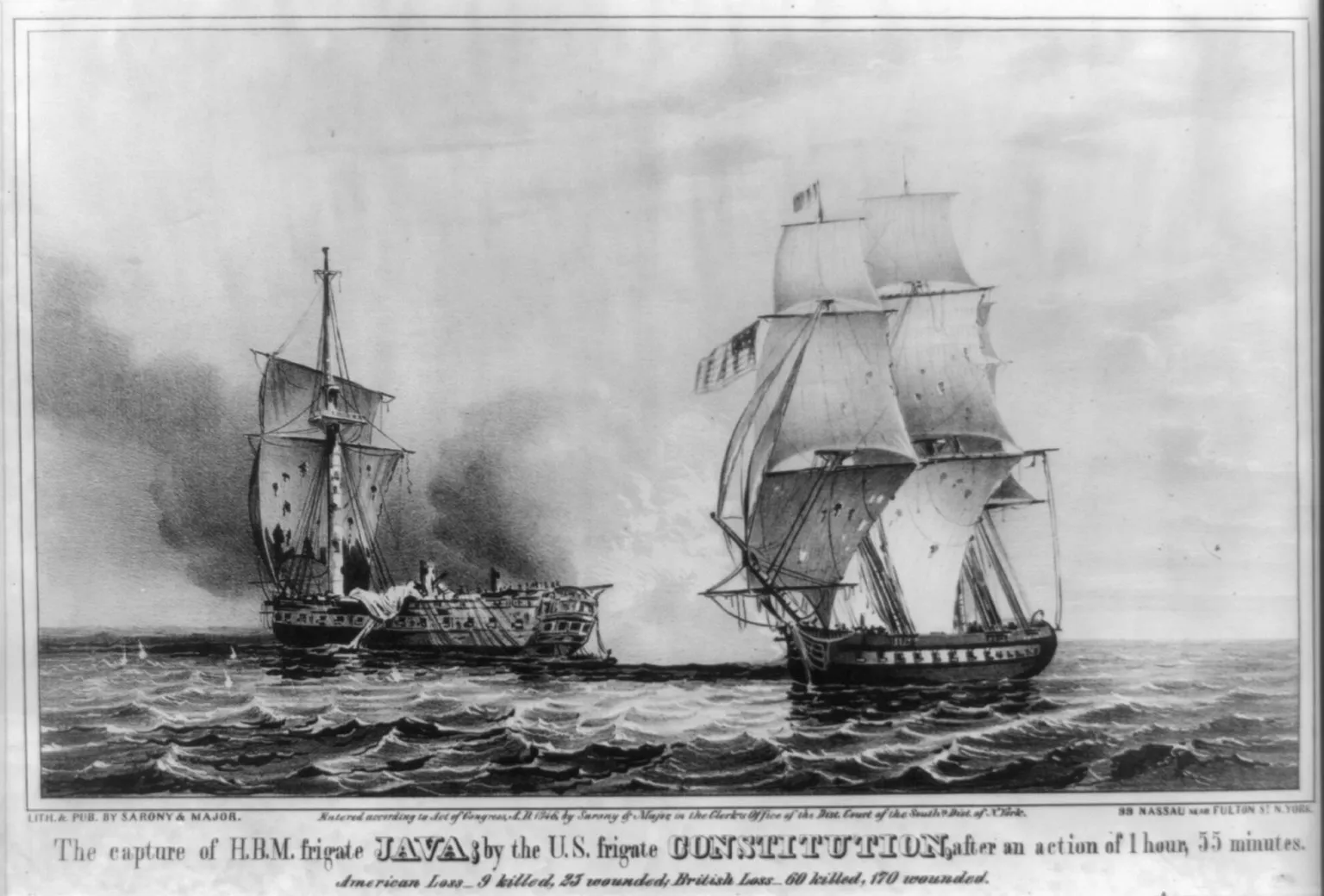
The USS Constitution captures HMS Java, one of the frigate duels Roosevelt reconstructed in exhaustive technical detail. (Library of Congress)
Roosevelt's Obsessive Research Process
What distinguished Roosevelt's approach to history was the depth and breadth of his research. He did not rely merely on published secondary sources, though he read them thoroughly. Instead, he pursued primary documents with an almost obsessive intensity. Working in New York's libraries, he dug into the official record—published ships' logs, captains' reports, and Navy Department documents—and, unusually for an American historian of his day, weighed the British sources as carefully as the American ones. He finished chapters during his 1881 European trip, where his uncle James D. Bulloch, the former Confederate naval agent, advised him on technical questions of ships and seamanship. This combination of documentary breadth and technical rigor gave Roosevelt's work a texture and authenticity that distinguished it from conventional historical accounts. He was not merely reading about naval history; he was trying to reconstruct it from the ground up, using every source available to him.
Reception and Authority Among Naval Historians
The book was received with genuine respect by professional historians and naval strategists. Naval officers regarded it as the most authoritative account of the war yet produced. What was remarkable was that it came from a man barely past his teenage years, still in law school, still establishing himself in politics. The book's academic rigor and historical accuracy gave it credibility that purely political writing would never have achieved. By the time Roosevelt entered politics, he had already established himself as a scholar whose word could be trusted on matters of fact and interpretation. This scholarly reputation became one of his greatest assets in public life.

Perry at the Battle of Lake Erie, 1813; Roosevelt’s rigorous accounts of such actions earned him standing among naval historians. (Wikimedia Commons)

The USS Constitution defeats HMS Guerriere, 1812; Roosevelt drew on such victories to argue for a strong, professional navy. (Wikimedia Commons)
The Book's Strategic Arguments and Their Influence
Roosevelt used his analysis of the War of 1812 to make arguments about American naval strategy that extended far beyond historical commentary. He argued that American naval commanders had been hampered by insufficient resources, inadequate training, and an excessive caution that prevented them from achieving decisive victories even when the tactical situation favored aggressive action. He made the case that naval power was essential to national security and that a nation's naval strength was a direct measure of its willingness to invest in its own defense. These arguments—drawn from historical analysis—would become central to Roosevelt's advocacy for naval expansion when he served as Assistant Secretary of the Navy in 1897. His historical analysis had given him not merely knowledge but a framework for thinking about naval policy that guided his later actions.
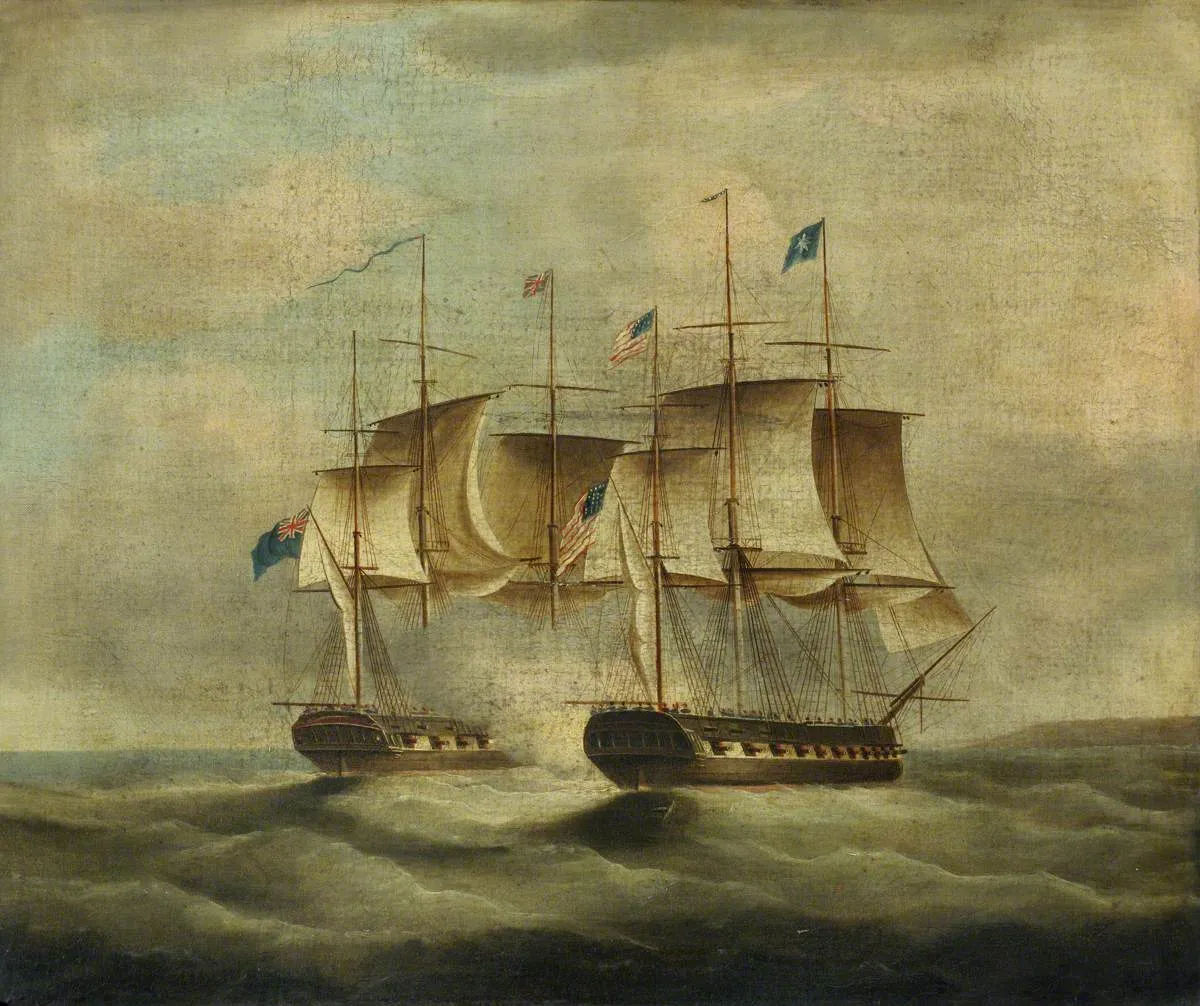
The USS United States captures HMS Macedonian, October 1812, an engagement central to Roosevelt’s case for American sea power. (Royal Museums Greenwich)
Foreshadowing a Remarkable Naval Career
In one sense, The Naval War of 1812 was a youthful intellectual achievement—the work of a brilliant young scholar. In another, deeper sense, it was a preview of Roosevelt's entire naval career. The themes he pursued in the book—the importance of naval strength, the necessity of aggressive leadership, the connection between naval power and national security—would dominate his thinking for the rest of his life. When he became Assistant Secretary of the Navy, he did not need to learn about naval strategy; he had already spent years thinking deeply about it. When he advocated for naval expansion in his speeches and writings, he was drawing on a foundation of historical understanding that few politicians could match. The book established him as someone who understood not merely the mechanics of naval warfare but its strategic significance to the nation's future. This understanding, combined with his position in government, gave him influence far beyond what a mere politician could achieve.
Continue Reading
- Assistant Secretary of the Navy — How Roosevelt applied his naval philosophy to government policy
- The New York State Assembly — Roosevelt's first position in public service
- The Spanish-American War — The conflict that validated Roosevelt's naval strategy
From the Archives
Explore original photographs, documents, and illustrations related to this topic in the Theodore Roosevelt Center Digital Library.
Recommended Reading
- The Naval War of 1812, Theodore Roosevelt, 2010 edition, ISBN 978-0486468341
- Theodore Roosevelt: A Strenuous Life, Kathleen Dalton, 2002, ISBN 978-0679767336