
Assistant Secretary of the Navy: Preparing for War (1897-1898)
The Strategic Doctrine of Alfred Thayer Mahan
Roosevelt's naval policy was grounded in the strategic thought of Captain Alfred Thayer Mahan, whose book The Influence of Sea Power upon History, 1660-1783 had been published in 1890. Mahan's central thesis was revolutionary in American strategic thinking: a nation's greatness required naval supremacy. Control of the sea lanes was the foundation of commercial power and national security. The state that achieved naval superiority could project power globally and protect its interests anywhere in the world.
Roosevelt had read Mahan's work and corresponded with him. As Assistant Secretary, Roosevelt promoted Mahan's strategic thought throughout the Navy Department. He understood the challenge facing American naval power: after the Civil War, the American fleet had deteriorated. The Navy consisted primarily of aging wooden ships. Modernization had been sporadic and underfunded. Britain maintained overwhelming naval supremacy. The American Navy could not project power into distant theaters or protect American interests in the Caribbean and Pacific. If the United States aspired to great power status, it needed a modern navy capable of competing with the naval powers of Europe.
"A nation should never fight unless forced to; but it should always be ready to fight. The mere fact that it is ready will generally spare it the necessity of fighting."
— Address before the Naval War College, June 2, 1897 · Theodore Roosevelt Center
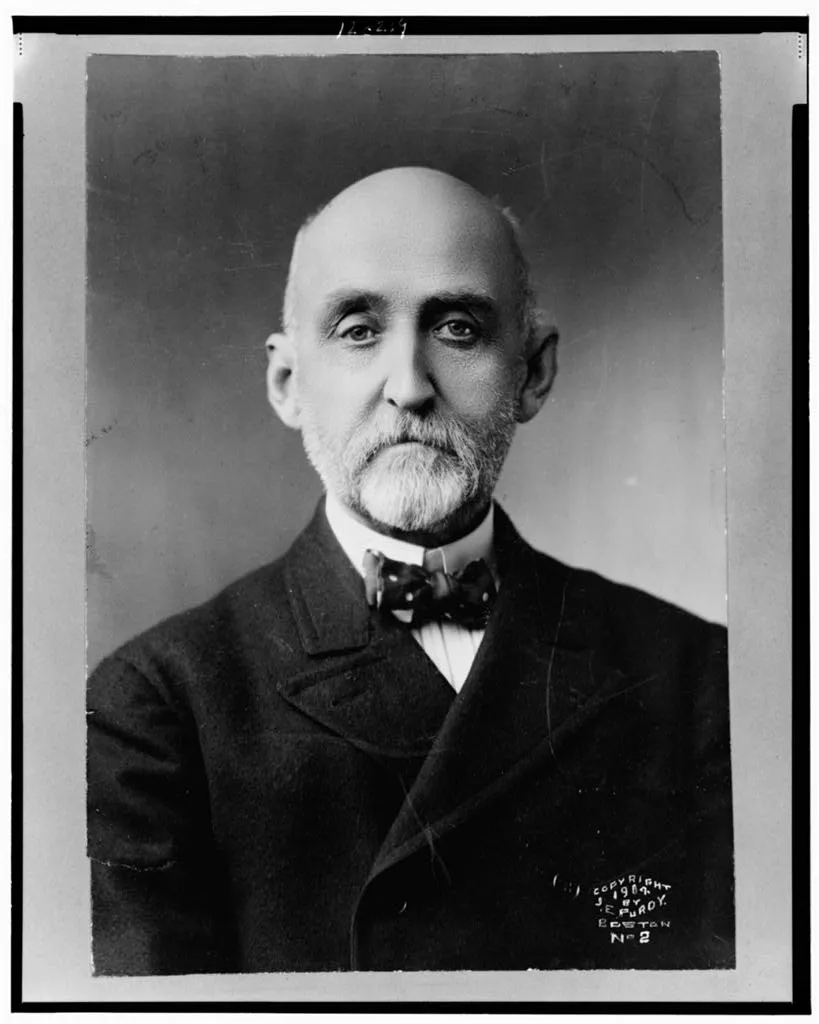
Roosevelt embraced the sea-power theories of Captain Alfred Thayer Mahan, who argued that national greatness depended on a powerful battle fleet. (Library of Congress)

As Assistant Secretary, Roosevelt pressed relentlessly to build and ready the modern steel “New Navy,” including battleships like the USS Oregon. (U.S. Naval History and Heritage Command)
Advocating for Naval Expansion
Roosevelt seized upon Mahan's analysis as strategic justification for naval expansion. In June 1897, he delivered a public speech at the Naval War College in Newport, Rhode Island, presenting his case for American naval strength. The speech advocated backing diplomacy with armed force. It articulated Roosevelt's conviction that American security and commercial interests required naval supremacy. He argued that the United States must modernize its fleet, construct modern battleships and armed cruisers, and develop the capacity to project American power globally.
Roosevelt's advocacy achieved concrete results when, in March 1898, Congress authorized emergency defense appropriations. In response to rumors of Spanish military preparations in Cuba, Congress appropriated $50 million for emergency military expenditures. Roosevelt, working with sympathetic members of Congress and benefiting from the emergency context, secured approximately $30 million of this appropriation for naval purposes. The Navy’s share went chiefly to purchasing auxiliary vessels, ammunition, and coal on an emergency basis; the great construction program — three battleships, sixteen destroyers, and more than a dozen torpedo boats — followed in the regular Naval Appropriations Act of May 4, 1898. Together they represented an unprecedented investment in naval power.
The Famous Cable: February 25, 1898
The most consequential action of Roosevelt's Assistant Secretary tenure occurred on February 25, 1898—a day that would prove pivotal in American history. Secretary Long departed his office, leaving Roosevelt in acting capacity. Roosevelt understood that war with Spain was probable, and he recognized that the Asiatic Squadron, the Navy's Pacific force based in Hong Kong, could be crucial to American military operations against Spanish possessions in the Philippines.
That afternoon, with the Secretary away, Roosevelt seized the opportunity to issue strategic orders to Commodore George Dewey, commanding the Asiatic Squadron. The cable read: "Order the squadron, except the Monocacy, to Hong Kong. Keep full of coal. In the event of declaration of war with Spain, your duty will be to see that the Spanish squadron does not leave the Asiatic coast, and then offensive operations in Philippine Islands. Keep Olympia until further orders." It was a contingency order — the squadron was to position itself and act only if war was declared — but Roosevelt was setting strategic parameters without the Secretary's explicit authorization.
When Secretary Long returned the next day and discovered Roosevelt's actions, he was annoyed but did not rescind the orders. Long's forbearance proved momentous. When war was declared in April 1898, the orders that Roosevelt had issued—without Long's explicit authorization—had already positioned the Asiatic Squadron for decisive action. Commodore Dewey moved on Manila, and the resulting naval battle on May 1, 1898, established American naval dominance in the Pacific and secured the Philippines as an American objective. One cable, sent during a superior's absence, had shaped the course of American military operations.

On February 25, 1898, with the secretary away, Roosevelt cabled Commodore Dewey to prepare for offensive operations against Spain in the Philippines — an order that helped shape the coming war. (Theodore Roosevelt Collection, Harvard College Library)

The explosion that destroyed the USS Maine in Havana harbor on February 15, 1898, killed 266 sailors and pushed a furious nation toward war. (Underwood & Underwood, 1898)
The USS Maine and the Drift to War
The explosion of the USS Maine in Havana harbor on February 15, 1898, killed 266 American sailors and created political crisis. The Court of Inquiry found that external explosion—presumably a mine—had detonated the Maine's forward magazine, though the court could not determine the origin of the explosion. Whether Spanish, Cuban insurgent, or accidental, the explosion killed American sailors and created political momentum for war.
Roosevelt, like many Republicans, interpreted the Maine's loss as Spanish responsibility and advocated American military response. He used his position to publicize the need for war preparation. He spoke to journalists about the likely necessity of military action. He worked behind the scenes to ensure that the Navy would be ready when war came. His public advocacy for military response, combined with his administrative actions to prepare the Navy, made him one of the most visible voices calling for war.
Personal Honor and Active Service
As war authorization moved forward in April and May 1898, Roosevelt faced a question of personal honor. He had preached war with Spain extensively. He had advocated for military preparation. He had used his position to push for naval expansion. But now other men were going to fight. Could he remain as Assistant Secretary while others took up arms? Roosevelt believed the answer was no. To preach war and then refuse to participate personally seemed to him a violation of integrity.
Roosevelt submitted his resignation to Secretary Long, leaving office on May 6, 1898. Both Long and President McKinley urged him to remain, emphasizing that his organizational talents were needed at the Navy Department. But Roosevelt was adamant: "for the last year I have preached war with Spain and should feel distinctly ashamed ... if I now failed to practice what I preached." He determined to resign and to serve in the field. He joined with Captain Leonard Wood, an experienced Army officer and the President’s physician, who was commissioned colonel of the new regiment, and together they organized the 1st United States Volunteer Cavalry Regiment, which would become known as the Rough Riders. Roosevelt's decision to leave the Assistant Secretary position reflected his conviction that a man who advocated policy must be willing to bear the consequences of that policy. It was a position that would define his understanding of executive responsibility for the rest of his life.
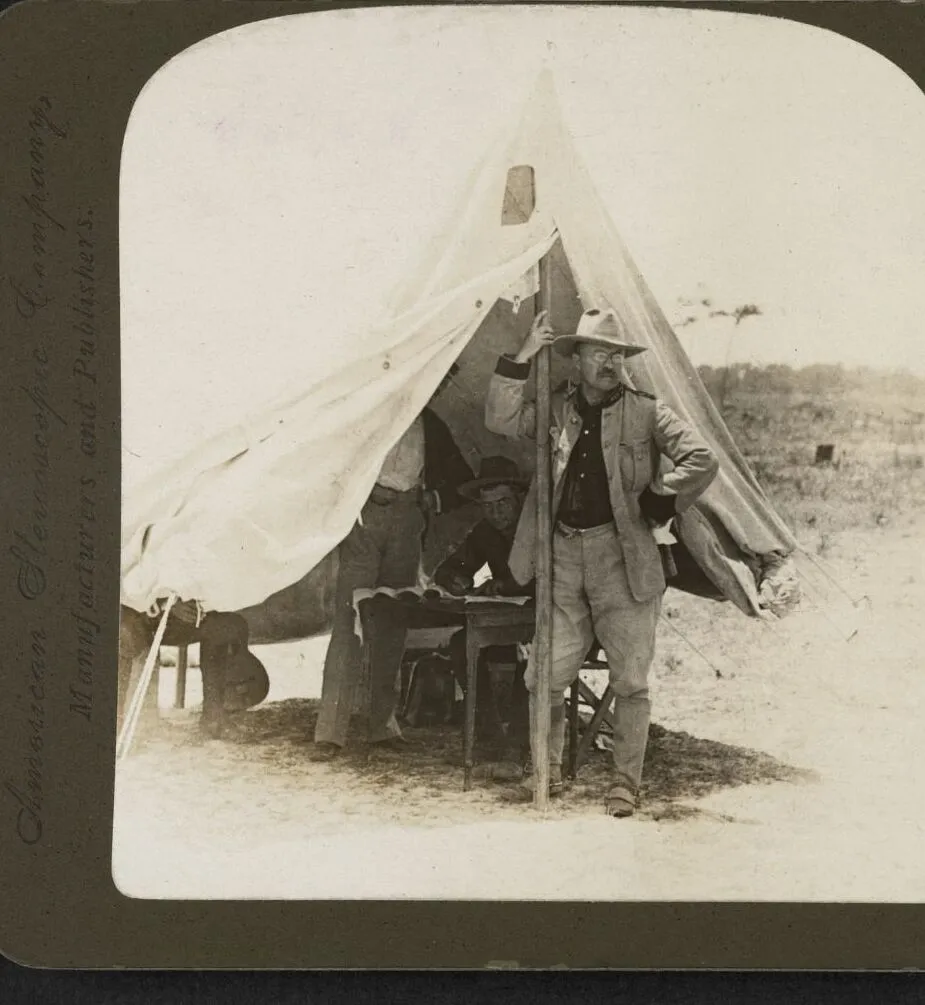
Roosevelt refused to direct a war from a desk. He resigned his Navy post to raise the Rough Riders — convinced that a man who preached the strenuous life had to live it. (Library of Congress)
A Short Tenure, A Lasting Impact
Roosevelt's tenure as Assistant Secretary lasted only about a year—from April 19, 1897, to May 6, 1898. It was a short time. But in that year, he had advocated for naval expansion, secured congressional appropriations for warship construction, positioned the Pacific Squadron for offensive operations against Spain, and helped push the nation toward war. When he left the position, the American Navy was stronger, more modern, and ready for action. His successor would inherit a very different Navy from the one Roosevelt had inherited—and that transformation was partly the result of Roosevelt's relentless advocacy and administrative action.
The famous cable to Commodore Dewey—sent without the Secretary's explicit authorization—was perhaps the most consequential single action of Roosevelt's tenure. It illustrated a principle that would guide Roosevelt's understanding of executive power throughout his life: a subordinate with clear convictions and the opportunity to act could set the parameters for subsequent events. When the superior refused to overturn the action, what had seemed like overreach became established policy. Roosevelt had learned that lesson well, and it would shape his approach to power for the rest of his life.
Continue Reading
- The Spanish-American War—The conflict Roosevelt helped prepare the Navy to fight
- The Rough Riders—Roosevelt's iconic cavalry regiment in Cuba
- San Juan Hill—The battle that made Roosevelt a national hero
- Governor of New York—Roosevelt's next political position
- The Vice Presidency—How Roosevelt ascended to the presidency
- Police Commissioner of New York City—An earlier reform position
Primary Sources at the TR Center
The Theodore Roosevelt Center's digital library contains extensive materials related to Roosevelt's naval career and the Spanish-American War era.
- Spanish-American War timeline—A chronology of the conflict Roosevelt prepared for
- 1898 Diary—Roosevelt's personal account of his military service
- The Crowded Hour—Roosevelt's memoir of the Cuban campaign
- Alfred Thayer Mahan encyclopedia entry—The naval strategist whose ideas influenced Roosevelt
From the Archives
Explore original photographs, documents, and illustrations related to this topic in the Theodore Roosevelt Center Digital Library.
Recommended Reading
- Theodore Roosevelt's Naval Diplomacy by Henry J. Hendrix (2009). ISBN: 978-1-61251-831-2
- Theodore Roosevelt and the Rise of the Modern Navy by Gordon Carpenter O'Gara (1969)
- The Rise of Theodore Roosevelt by Edmund Morris (1979). ISBN: 978-0-307-77782-9