
Governor of New York: The Stepping Stone to the Presidency (1899-1900)
The Campaign: Running on War Hero Fame
Roosevelt's path to the Governor's office began with his fame. His return from Cuba in the autumn of 1898 made him one of the most celebrated men in America. The newspapers had covered his military exploits extensively. American readers had followed the story of the Rough Riders and their famous charge at San Juan Hill. Roosevelt was on the covers of magazines. He was the subject of newspaper editorials and Sunday sermons. He was the personification of American martial vigor and courage. New York Republicans, recognizing a political asset when they saw one, recruited Roosevelt to be their candidate for Governor of New York in 1898.
The campaign itself was hard-fought. In a difficult year for Republicans, Roosevelt survived a challenge to his eligibility over his New York residency and stumped the state by rail. He was elected in November 1898 by a narrow margin of roughly 18,000 votes — about one percent — over Democrat Augustus Van Wyck. In January 1899, at age 40, he became Governor of New York, a state with more population and more political significance than any other state in the nation. He brought to the office the energy of a war hero, the conviction of a reformer, and the absolute certainty that he would reshape New York state government according to his vision.

Fresh from Cuba, Roosevelt ran for governor of New York in the fall of 1898 as a certified war hero — Rough Rider hat and all. (Library of Congress)

In Albany, Roosevelt governed as an activist reformer, willing to break with his own party’s bosses to get results. (Theodore Roosevelt Collection, Harvard College Library)
Aggressive Reform in the Governor's Office
Roosevelt brought the same aggressive reformism to the Governor's office that had characterized his previous positions. He pushed for expansion of civil service protection for state employees, reducing political patronage in state government. He pursued laws protecting workers and regulating corporations. He pushed for conservation of state forests and natural areas. He challenged the Republican Party establishment, particularly the party boss Thomas Platt, who had expected to control a grateful young governor. Roosevelt was not grateful. He was independent. He pursued his own agenda, often over Platt's objections.
Roosevelt's relationship with Thomas Platt, the Republican boss of New York, was contentious from the beginning. Platt had helped engineer Roosevelt's nomination as Governor, expecting that Roosevelt would be pliable and grateful. He was profoundly wrong. Roosevelt appointed people based on merit and ability, not based on their loyalty to Platt's political machine. He pursued reforms that Platt opposed—conservation measures, worker protections, corporate regulations. He used his position to advocate for policies that he believed in, regardless of what the party machine wanted. He was the Governor of New York, and he intended to exercise that authority fully, not to be a puppet for Platt or anyone else.
Civil Service and Corporate Regulation
Roosevelt advocated for expansion of civil service protection to state government positions. He supported legislation that would remove state jobs from political patronage and place them under merit-based hiring and promotion. This was the same fight he had been waging since his Assembly days, but now he had the authority of a Governor behind him. He succeeded in expanding civil service coverage in New York state. He also advocated for corporate regulation—laws that would restrict the ability of large corporations to exploit workers or consumers. He pursued legislation to improve workplace safety, to limit working hours, and to regulate corporate power.
Some of these policies were controversial. Business interests opposed regulations that limited their freedom to operate. Conservative Republicans believed that Roosevelt was going too far in his advocacy for worker protection and corporate regulation. But Roosevelt was unmoved by opposition. He believed that government had a responsibility to protect workers and to regulate corporate power. He believed that the state should not passively accept abuses by powerful corporations. These convictions would shape his subsequent presidency and his approach to American political economy.
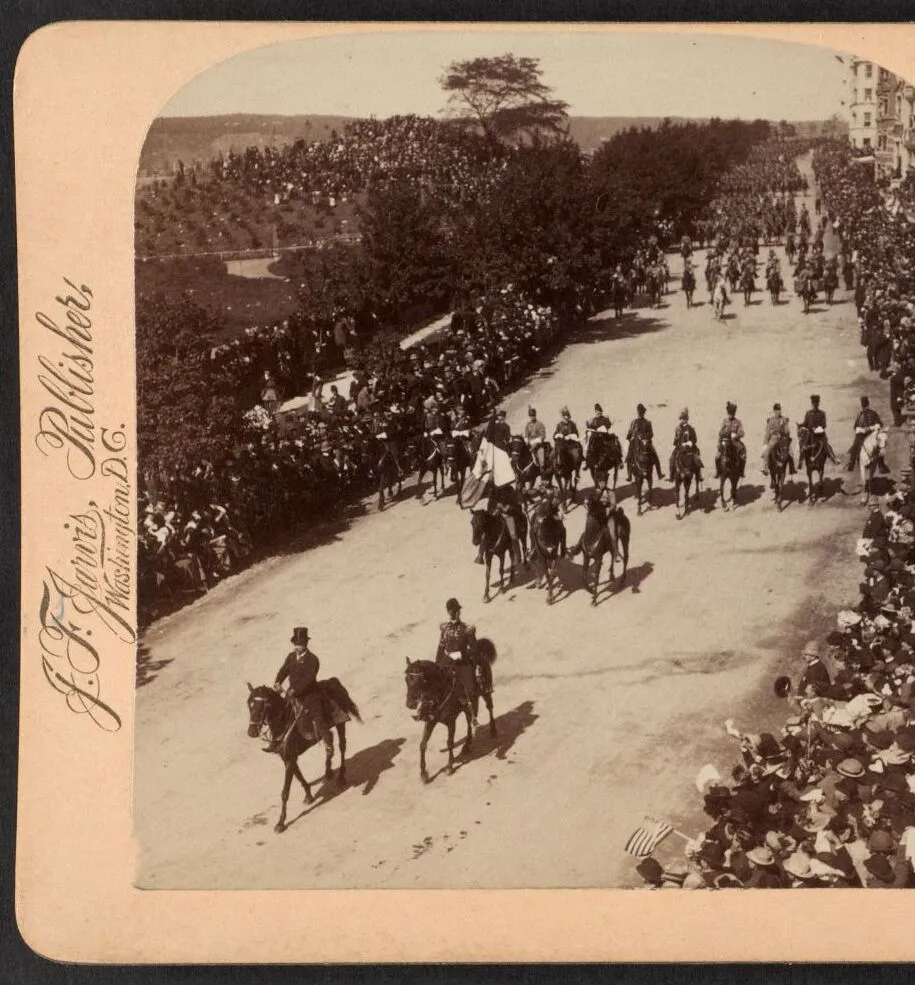
Roosevelt pushed a civil-service merit system and, most daringly, a tax on public-utility franchises — putting him on a collision course with corporate interests. (Library of Congress)

Party boss Thomas C. Platt found Roosevelt ungovernable — and engineered his nomination as Vice President in 1900 to kick him upstairs, out of Albany. (Theodore Roosevelt Collection, Harvard College Library)
The Conflict with Platt: Kicking Him Upstairs
By early 1900, the conflict between Roosevelt and Platt had escalated dramatically. Platt, unable to control Roosevelt and frustrated by the young Governor's independence, considered ways to remove him from office or to limit his influence. Platt's solution was brilliant in its cynicism: if Roosevelt could not be controlled as Governor, perhaps he could be isolated in a position where he would have no actual power. Platt and McKinley's political managers began discussing making Roosevelt Vice President on the McKinley ticket for 1900. It was a strategy of political exile—what they called "kicking him upstairs." Take this energetic, independent young man and put him in a position—the Vice Presidency—that was widely regarded as a political dead end, a place where ambitious men went to die.
Roosevelt opposed the idea vehemently. He wanted to remain Governor. He was only two years into his term. He had a reform agenda still to pursue. He saw the Vice Presidency as a position where he would have no real authority and no real opportunity to affect policy. He told friends that he hoped to serve out his term as Governor and then establish a legal practice. The Vice Presidency represented everything he feared: powerlessness disguised as honor.
But Platt was determined. Platt used his considerable influence with the Republican National Committee to push Roosevelt's nomination for Vice President. The plan was elegant from the party machine's perspective: get Roosevelt out of the Governor's office where he could actually do damage to the machine's interests, place him in an office where he would have no real power, and maintain control of New York politics through a more cooperative successor. Mark Hanna, McKinley's political manager and the most powerful figure in Republican politics aside from McKinley himself, opposed Roosevelt's nomination, but for different reasons. Hanna understood that Roosevelt was ambitious and dangerous—a man who might not accept the traditional subordination of a Vice President to the President. Hanna knew that the only thing standing between Roosevelt and the presidency was McKinley's life. In one of history's most famous political observations, Hanna warned: "Don't any of you realize that there's only one life between that madman and the presidency?"
Reluctant Vice President
Despite opposition from Hanna and Roosevelt's own reluctance, Roosevelt was nominated for Vice President on the McKinley ticket in 1900. Roosevelt accepted the nomination reluctantly, making clear his frustration with a position he saw as powerless — but once nominated he campaigned ferociously, traveling more than 21,000 miles and delivering hundreds of speeches for the ticket. He told friends that he planned to study law and build a legal practice after his time as Vice President. He seemed resigned to political exile. McKinley and Roosevelt won re-election in 1900 with a substantial majority. In March 1901, Roosevelt was inaugurated as Vice President of the United States.
"I would a great deal rather be anything, say professor of history, than Vice-President."
— Letter to Senator Thomas C. Platt, February 1, 1900
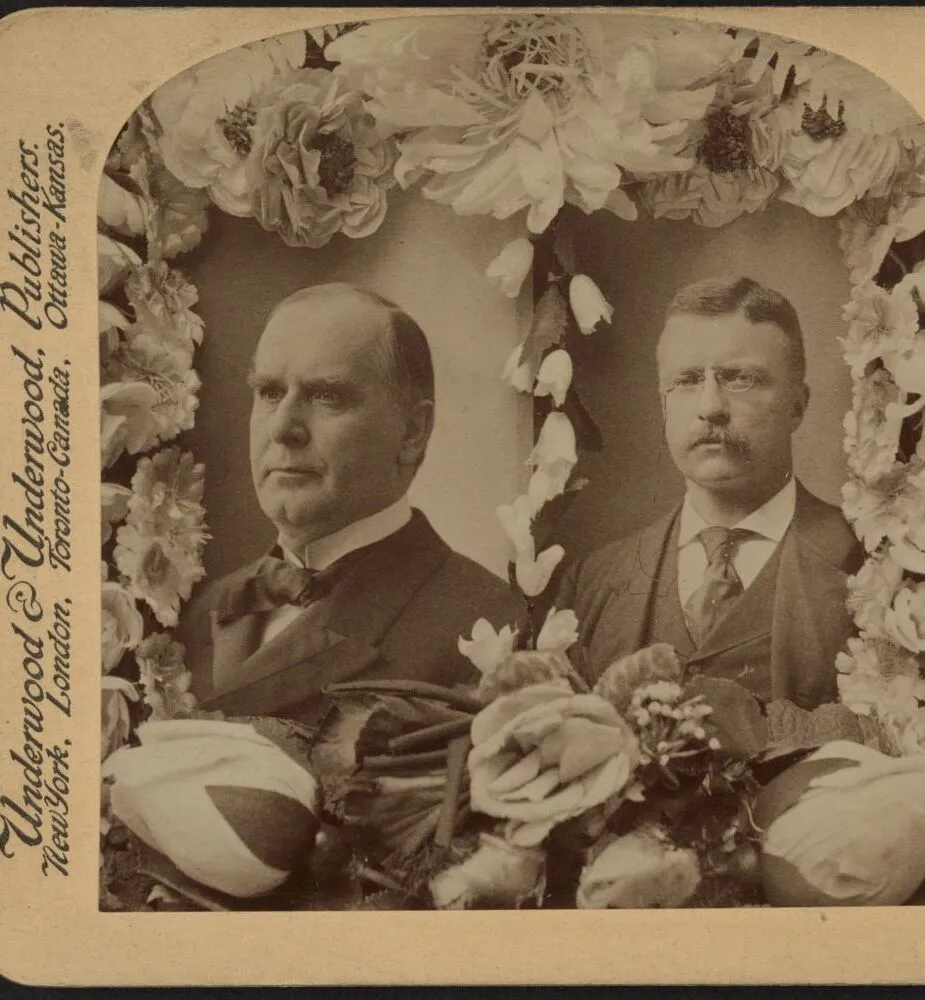
Roosevelt joined the McKinley ticket reluctantly, fearing the vice presidency was a political dead end. Within a year, an assassin’s bullet made him president. (Library of Congress)
A Successful Governorship
In retrospect, Roosevelt's two years as Governor of New York (1899-1900) were quite successful. He had pursued his reform agenda despite resistance. He had expanded civil service protection. He had advocated for worker protection and corporate regulation. He had challenged the Republican Party machine and maintained his independence. He had demonstrated that he could govern a major state effectively. He had used the Governor's office as a platform to advance his ideas and build his national reputation.
But at the time, Roosevelt did not see his situation positively. He had been, in his view, removed from effective power and placed in an office that was widely regarded as a political dead end. He was frustrated and angry. He did not know that within months, events would conspire to place him in the most powerful position in America. He could not have predicted that his time as Vice President would be extraordinarily brief or that it would lead to the presidency. He only knew that he had been moved out of an office where he had real power and placed in an office where he had none. It seemed like the end of his political career. It was, in fact, the beginning of the most important chapter.
Continue Reading
- The Vice Presidency—Roosevelt's brief time as Vice President before becoming President
- How Theodore Roosevelt Became President—The path from Vice President to the White House
- The Rough Riders—Roosevelt's military fame that led to the governorship
- San Juan Hill—The battle that made Roosevelt famous
- Civil Service Reform—A cause Roosevelt pursued as Governor
- Rise to Power Overview—Roosevelt's political ascent
Primary Sources at the TR Center
The Theodore Roosevelt Center's digital library contains materials related to Roosevelt's governorship.
- Theodore Roosevelt Life Timeline—Key dates in Roosevelt's governorship
- Politics and Government encyclopedia—Overview of Roosevelt's political career
- Theodore Roosevelt Biography—Comprehensive biographical information
- TR Center Bibliography—References on Roosevelt's governorship
From the Archives
Explore original photographs, documents, and illustrations related to this topic in the Theodore Roosevelt Center Digital Library.
Recommended Reading
- Governor Theodore Roosevelt: The Albany Apprenticeship, 1898-1900 by Richard Collin (1996)
- The Rise of Theodore Roosevelt by Edmund Morris (1979). ISBN: 978-0-307-77782-9
- Theodore Roosevelt: A Life by Nathan Miller (1992). ISBN: 978-0-688-04693-2
- The McKinley Assassination by Scott Miller (2011). ISBN: 978-0-06-187607-1