
How Theodore Roosevelt Became President: The Pan-American Exposition and McKinley's Assassination
The Pan-American Exposition and the Fateful Day
In September 1901, President William McKinley visited the Pan-American Exposition in Buffalo, New York—a grand celebration of American technological and industrial achievement. The Exposition showcased the electrical innovations, engineering marvels, and industrial progress that America had made during the nineteenth century. The grounds sparkled with electric lights, a revolutionary display of American technological prowess. McKinley, always conscious of his role as representative of American dignity, was greeted enthusiastically by crowds. He appeared in good health and good spirits, moving through the crowds shaking hands and speaking warmly to visitors and admirers.
On September 6, 1901, McKinley continued his traditional public reception, greeting members of the public in an informal receiving line. A man named Leon Czolgosz approached him—a 28-year-old factory worker, the son of a Polish immigrant, and a committed anarchist who believed that government itself was inherently a form of oppression and that political assassination could be justified as an act of liberation. Czolgosz had traveled to Buffalo specifically to kill the president. He had a .32-caliber pistol hidden beneath a handkerchief wrapped around his hand.
As McKinley reached out with his characteristic warmth to shake Czolgosz's hand, the anarchist's gun fired twice in rapid succession. One bullet deflected off a button and grazed the President; the other struck him in the abdomen, penetrating his stomach and damaging a kidney. The President fell, blood spreading across his white shirt. Chaos erupted. Czolgosz was immediately seized and arrested by security guards who beat him savagely before subduing him. McKinley was rushed to physicians. Initial reports suggested that McKinley's wounds, while serious, were not necessarily fatal. Surgeons examined him and expressed cautious optimism about his recovery. McKinley was a strong man, in good general health, with a powerful constitution. Many people believed that he would recover.
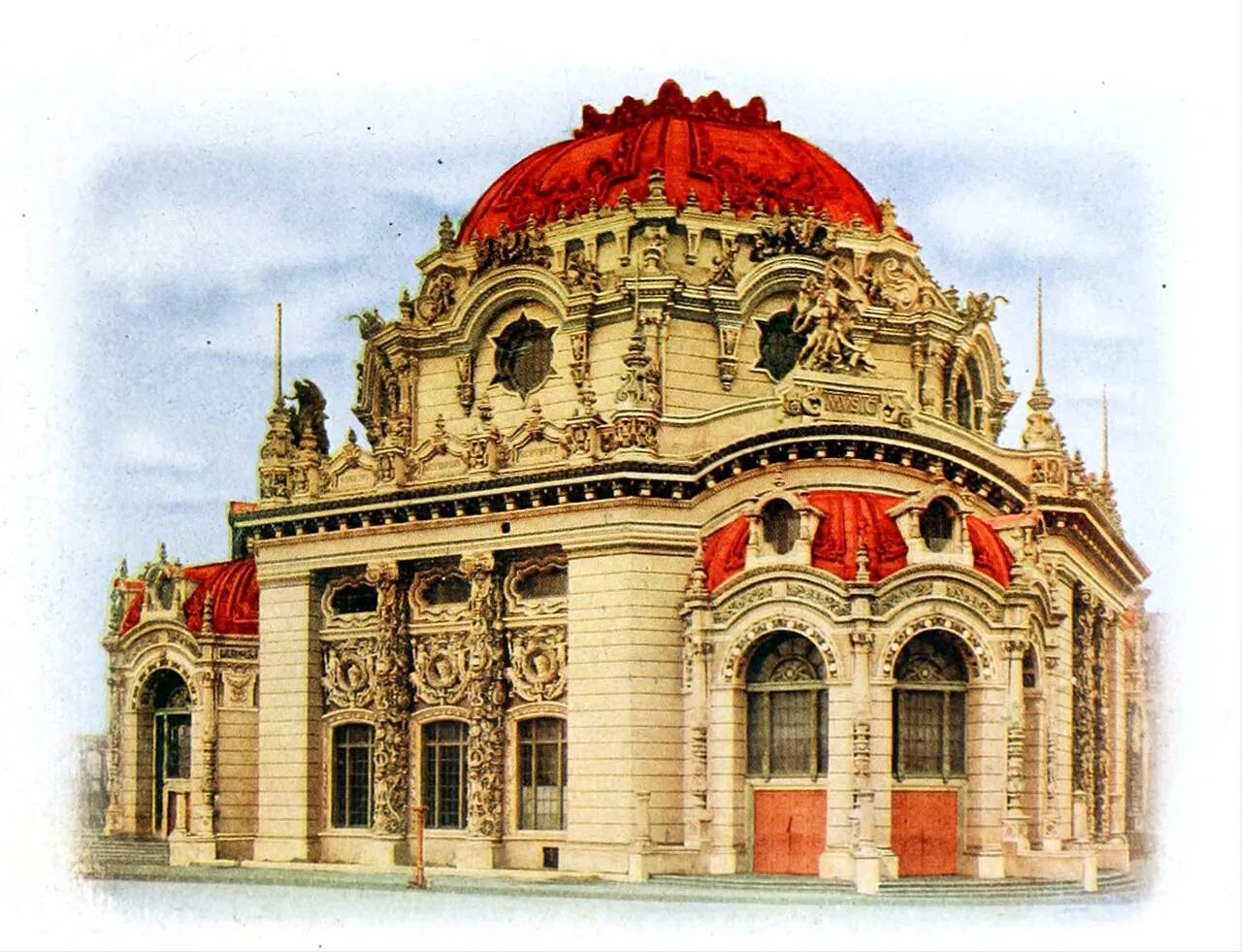
The Temple of Music at the Pan-American Exposition in Buffalo, where President William McKinley was shot on September 6, 1901. (Library of Congress)

President William McKinley, photographed in 1901, the year an assassin’s bullet ended his life and elevated Theodore Roosevelt to the presidency. (Harvard College Library)
The Vice President's Anguish: Days of Uncertainty
Vice President Theodore Roosevelt, attending a Vermont Fish and Game League gathering on Isle La Motte in Lake Champlain, learned of the shooting within hours. He hurried to Buffalo to be near McKinley. In the days following the assassination attempt, Roosevelt remained near Buffalo, watching the President carefully. Initial bulletins from McKinley's physicians suggested that the President was responding well to treatment. His condition seemed to be stabilizing. Cautiously, optimistically, physicians and officials believed that McKinley would recover from his wounds.
Then McKinley's condition deteriorated. The wounds, while not immediately fatal, had become infected. Gangrene developed. McKinley's condition worsened dramatically. The physicians who had been optimistic now recognized that McKinley was likely to die. They informed Roosevelt and other officials that the President's death was probable. On September 13, McKinley seemed to be rallying slightly, and Roosevelt was sent away, told to rest. But that night McKinley's condition declined sharply. At 2:15 a.m. on September 14, 1901, President William McKinley died.
The Midnight Summons: Roosevelt's Descent from Mount Marcy
When McKinley's condition began to deteriorate precipitously on the evening of September 13, Roosevelt was in the Adirondacks on Mount Marcy, the highest peak in New York, enjoying what he expected to be a peaceful vacation week. He had been summoned to Buffalo earlier in the week as McKinley's condition worsened, but when McKinley seemed to be recovering and physicians expressed cautious optimism, Roosevelt had been given permission to return to his mountain retreat. Now, at midnight, another telegram came through the darkness: McKinley was dying. Roosevelt had to get to Buffalo immediately. There was no time to waste.
The midnight summons and the subsequent ride down Mount Marcy became one of the most famous journeys in American history—a dash through darkness that would carry Roosevelt toward his destiny. In the moonless mountain night, a superintendent's wagon was hastily arranged to carry Roosevelt down the steep slopes at dangerous speed. The vehicle bounced and lurched over rough mountain roads, the horses driven hard through the darkness. The driver pushed them relentlessly, knowing that every minute mattered. Roosevelt sat in the wagon, gripping the seat as it swayed, understanding with awful clarity as he descended through the black forest that McKinley was dying and that he was about to become President of the United States—a responsibility he had never wanted, thrust upon him by tragedy at the very moment of his greatest reluctance.
By morning, exhausted but driven by circumstance, Roosevelt had reached the train station. At the North Creek station a telegram from Secretary of State John Hay reached him: McKinley had died at 2:15 a.m. on September 14, 1901—just hours before Roosevelt could reach his bedside. Theodore Roosevelt, the reluctant Vice President who had wanted no part of the presidency, was now the President of the United States.

Vice President Theodore Roosevelt in August 1901, weeks before McKinley’s death made him president. (Library of Congress)
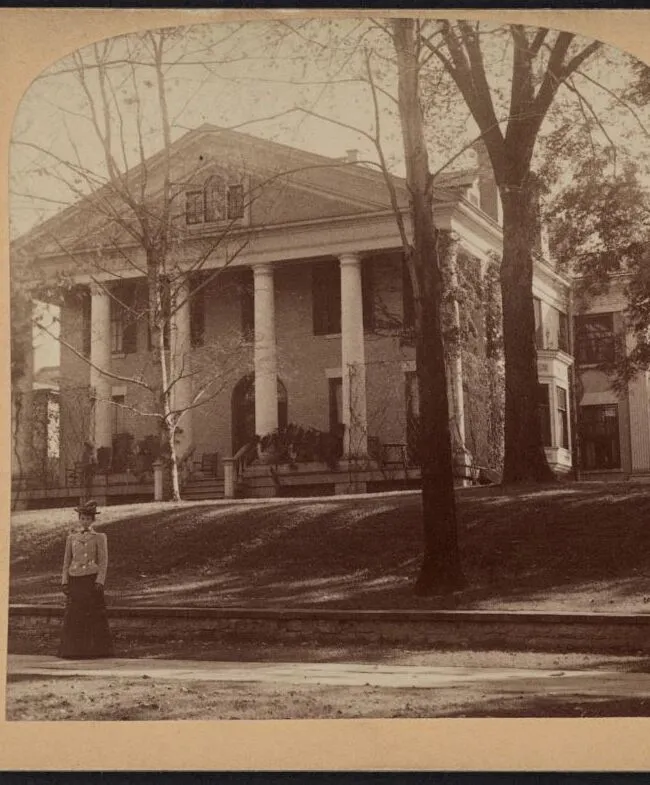
The Ansley Wilcox house in Buffalo, where Theodore Roosevelt took the presidential oath of office on September 14, 1901. (Library of Congress)
The Oath of Office: President at 42
Roosevelt arrived in Buffalo on September 14 and went directly to the Ansley Wilcox house on Delaware Avenue, where McKinley's body had been taken. In a private ceremony in the late afternoon, with cabinet members and other officials present, Theodore Roosevelt took the oath of office as President of the United States. U.S. District Judge John R. Hazel administered the oath. The setting was somber. Outside, people were grieving the loss of their president. Inside, a new president was being sworn in. At age 42, Roosevelt became the youngest president in American history—and certainly one of the most energetic men ever to hold the office. He was also aware of the gravity of the moment and the weight of what had just fallen upon his shoulders. He was solemn, serious, understanding that he had been thrust into power by tragedy and that he now carried the responsibility of the highest office in the land.
Roosevelt's first act as President was to retain McKinley's cabinet. The continuity was important both politically and practically. McKinley's cabinet members would help Roosevelt understand the operations of the executive branch and the various policies that McKinley had pursued. The business community needed reassurance that the government would not undergo radical change. But the message was also clear: Roosevelt intended to be his own president, not merely a caretaker of McKinley's legacy. He would govern with his own vision and his own values. The cabinet members understood that they now worked for a very different kind of chief executive—one younger, more aggressive, more committed to reform.
The Reaction: America's Response to the New President
Mark Hanna, who had feared Roosevelt's ascension more than almost any other Republican leader, reacted with shock and despair. Hanna had warned repeatedly that Roosevelt was dangerous, that he was unfit for the presidency, that he would be a reckless and destructive chief executive. Now Hanna's worst fears had been realized. The "madman," as Hanna had called Roosevelt, was now President. Hanna is reported to have said: "Now look, that damned cowboy is President of the United States."
But the American public was less pessimistic. Roosevelt had the reputation of a reformer, a war hero, a man of vigor and action. Many Americans were excited by the prospect of a young, energetic president. Roosevelt's reputation as a reformer suggested that he would pursue progressive policies. His military background suggested that he would be a strong advocate for American interests abroad. The newspapers were largely favorable to the new president. American stock markets, after an initial dip due to the shock of McKinley's assassination, began to recover as investors anticipated continuity in McKinley's policies under the new administration.

Theodore Roosevelt in 1901, the year he became the twenty-sixth and youngest president of the United States at age 42. (Library of Congress)
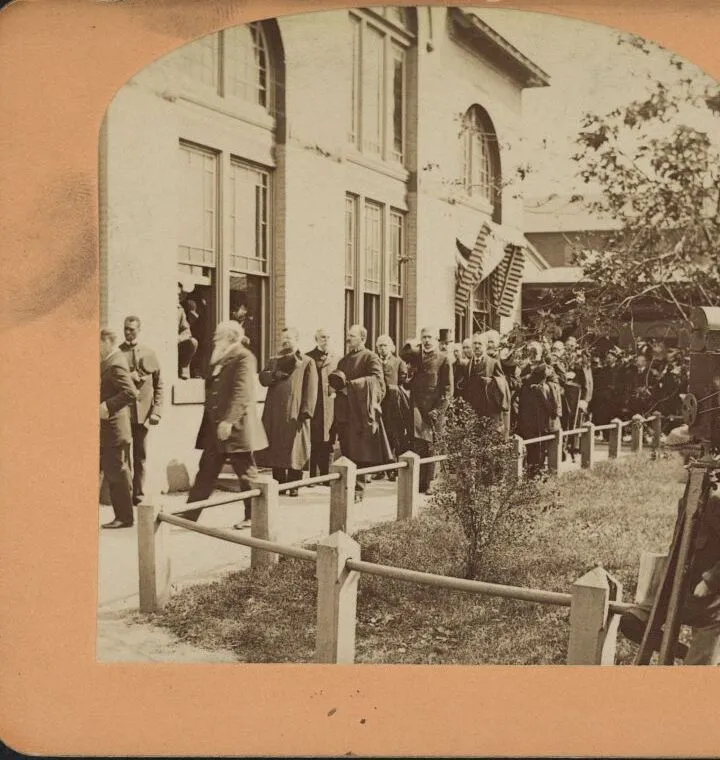
President Roosevelt and his escort arrive in Canton, Ohio, for the funeral of the martyred President McKinley in September 1901. (Library of Congress)
From Rise to Power to the Presidency
Theodore Roosevelt's rise to the presidency had taken him through many positions: New York state assemblyman, cattle rancher, U.S. Civil Service Commissioner, New York City Police Commissioner, Assistant Secretary of the Navy, colonel of the Rough Riders, Governor of New York, Vice President. Each position had taught him something about power and governance. Each position had prepared him in some way for the ultimate position—the presidency itself. But none of them had been inevitable stepping stones. Roosevelt had not pursued the presidency directly. He had pursued challenges, pursued positions where he could exercise authority and pursue reform. The presidency had come to him through tragedy and the unpredictable course of events.
Once Roosevelt became President, he would demonstrate that all of his previous experience had prepared him well. He would bring to the office the energy, the determination, the commitment to reform that had characterized his previous positions. He would expand presidential power in ways that McKinley had not. He would pursue an aggressive foreign policy. He would use federal power to regulate corporations, to conserve natural resources, to advance what he called "the strenuous life" for the nation. He would be, in many respects, the most energetic and most active president that America had yet known. The reluctant Vice President would become the most dynamic president of his era—and one of the most important presidents in American history.
"Speak softly and carry a big stick — you will go far." If a man continually blusters, if he lacks civility, a big stick will not save him from trouble; and neither will speaking softly avail, if back of the softness there does not lie strength, power.
— Vice President Roosevelt quoting his favorite proverb, Minnesota State Fair, September 2, 1901 — four days before McKinley was shot · Theodore Roosevelt Center
The Path Completed
Theodore Roosevelt's path from his arrival in the Dakota Badlands in the 1880s as a grieving young man to the presidency in 1901 had been neither planned nor predetermined. It had been shaped by chance and circumstance as much as by Roosevelt's own ambitions and abilities. The grief that drove him to Dakota had given way to recovery and remarriage. The reform battles of his earlier career had built his reputation and his political skills. The Spanish-American War had made him famous. Political circumstances, particularly his conflict with Thomas Platt, had elevated him to the Vice Presidency. And then a moment of violence and tragedy had placed him in the highest office in the land. It was a rise to power shaped by determination, ability, ambition, and luck. All of those elements had been necessary. Without any of them, the outcome might have been very different.
Continue Reading
- The Vice Presidency—Roosevelt's reluctant path to the presidency
- Governor of New York—Roosevelt's executive test before the presidency
- The Rough Riders—Military service that made Roosevelt famous
- The Spanish-American War—The conflict that changed Roosevelt's trajectory
- Rise to Power Overview—Roosevelt's political ascent explained
- Rise to Power Timeline—Key dates and events in Roosevelt's rise
Primary Sources at the TR Center
The Theodore Roosevelt Center's digital library contains materials documenting Roosevelt's path to the presidency.
- Theodore Roosevelt Life Timeline—A comprehensive chronology of Roosevelt's life
- Inaugural Site Collection—Materials related to Roosevelt's presidency
- Theodore Roosevelt Biography—Comprehensive biographical information
From the Archives
Explore original photographs, documents, and illustrations related to this topic in the Theodore Roosevelt Center Digital Library.
Recommended Reading
- The McKinley Assassination by Scott Miller (2011). ISBN: 978-0-06-187607-1
- Murdering McKinley by Eric Rauchway (2003)
- The Rise of Theodore Roosevelt by Edmund Morris (1979). ISBN: 978-0-307-77782-9