
Colonel Cândido Rondon: Explorer, Protector, and South American Partner
The Visionary Military Reformer
Cândido Mariano da Silva Rondon (1865–1958) was not simply an explorer or adventure-seeker. He was a Brazilian military officer with a profound commitment to indigenous rights and to bringing the interior regions of Brazil into the modern nation through peaceful contact and respect rather than conquest and exploitation. In the 1890s and early 1900s, Rondon oversaw the construction of telegraph lines through the Brazilian wilderness — a massive undertaking that required his men to establish peaceful relations with indigenous peoples and to respect indigenous territories while building infrastructure.
Rondon's approach was revolutionary for its time. In an era when European and American powers were "pacifying" indigenous populations through force, Rondon advocated for something more enlightened: treating indigenous peoples as peoples to be understood and respected, not as obstacles to progress. He believed that Brazil's interior regions could be developed while protecting indigenous populations and their ways of life. He founded what became the Indian Protection Service (Serviço de Proteção aos Índios, or SPI), an organization dedicated to protecting indigenous peoples from exploitation and violence.
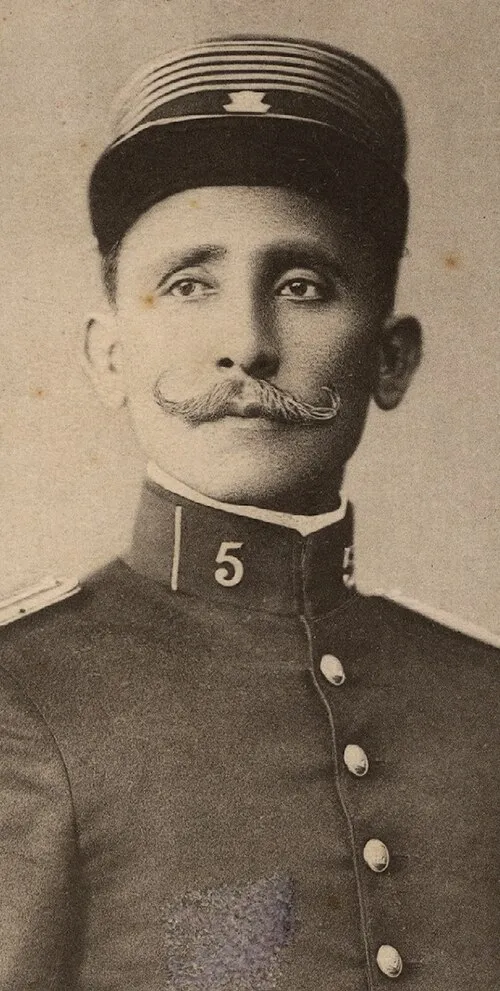
Cândido Mariano da Silva Rondon as a young Brazilian army officer. A military engineer, he strung telegraph lines across thousands of miles of unmapped Amazon frontier. (Wikimedia Commons)

Colonel Roosevelt (left) and Colonel Rondon, co-commanders of the 1913-14 Roosevelt-Rondon Scientific Expedition into the Brazilian interior. (Wikimedia Commons)
The River of Doubt Expedition
After leaving the presidency, Roosevelt was determined to undertake a great adventure. An invitation came from the Brazilian government to explore a major river in the Amazon basin that had not been thoroughly mapped or studied. The river was considered dangerous — home to hostile indigenous peoples, to caimans and anacondas, to disease and starvation. Roosevelt accepted immediately. Here was a chance to do something that no ex-president had done — to undertake a genuine scientific expedition into unknown territory.
Rondon was essential to making this expedition possible. He knew the Brazilian wilderness. He had connections with indigenous peoples who had previously been hostile to outsiders. He understood the logistics of traveling through unmapped territory. He also shared Roosevelt's intellectual curiosity and his belief that exploration and scientific knowledge were valuable and important. With Rondon's help, Roosevelt organized the expedition.
Hardship, Rescue, and the Bonds of Survival
The River of Doubt expedition was harrowing beyond what anyone except perhaps Roosevelt had anticipated. The party — including Roosevelt, his son Kermit, naturalists, cameramen, indigenous guides, and paddlers — traveled downstream on rivers they had never seen before, never knowing what lay ahead, never certain that the maps they had were accurate or complete. They encountered indigenous peoples living in the region, some friendly and willing to trade, some hostile and threatening. They faced disease in abundance — Roosevelt contracted malaria and other tropical illnesses that brought him near death. Kermit contracted similar fevers. The party faced starvation when supplies ran out. They faced equipment failures. They faced capsized canoes and lost supplies. At one point, about three months into the expedition, Roosevelt was so ill with fever and infection from an injury that had become infected, that Kermit and the others genuinely believed he might die in the wilderness.
Throughout this ordeal, Rondon was Roosevelt's partner, protector, and guide. When indigenous peoples appeared on the riverbanks or approached the party's camps, Rondon could often communicate with them, could negotiate with them, and always brought his philosophical commitment to respecting indigenous autonomy and dignity to the encounters. Rather than violence or domination, Rondon sought peaceful contact and mutual respect. Roosevelt, delirious with fever, suffering from severe dysentery, his body failing him in ways he had never experienced, was profoundly impressed by Rondon's knowledge of the wilderness, his courage in facing danger, and his character in dealing with the indigenous peoples they encountered. Their partnership during this difficult journey transcended a mere expedition partnership — it became a genuine friendship forged in the crucible of shared hardship and mutual reliance on each other for survival.

A gaunt Roosevelt writes in camp. Fever and an infected leg nearly killed him; Rondon's discipline and knowledge of the wilderness helped bring the party out alive. (Library of Congress)
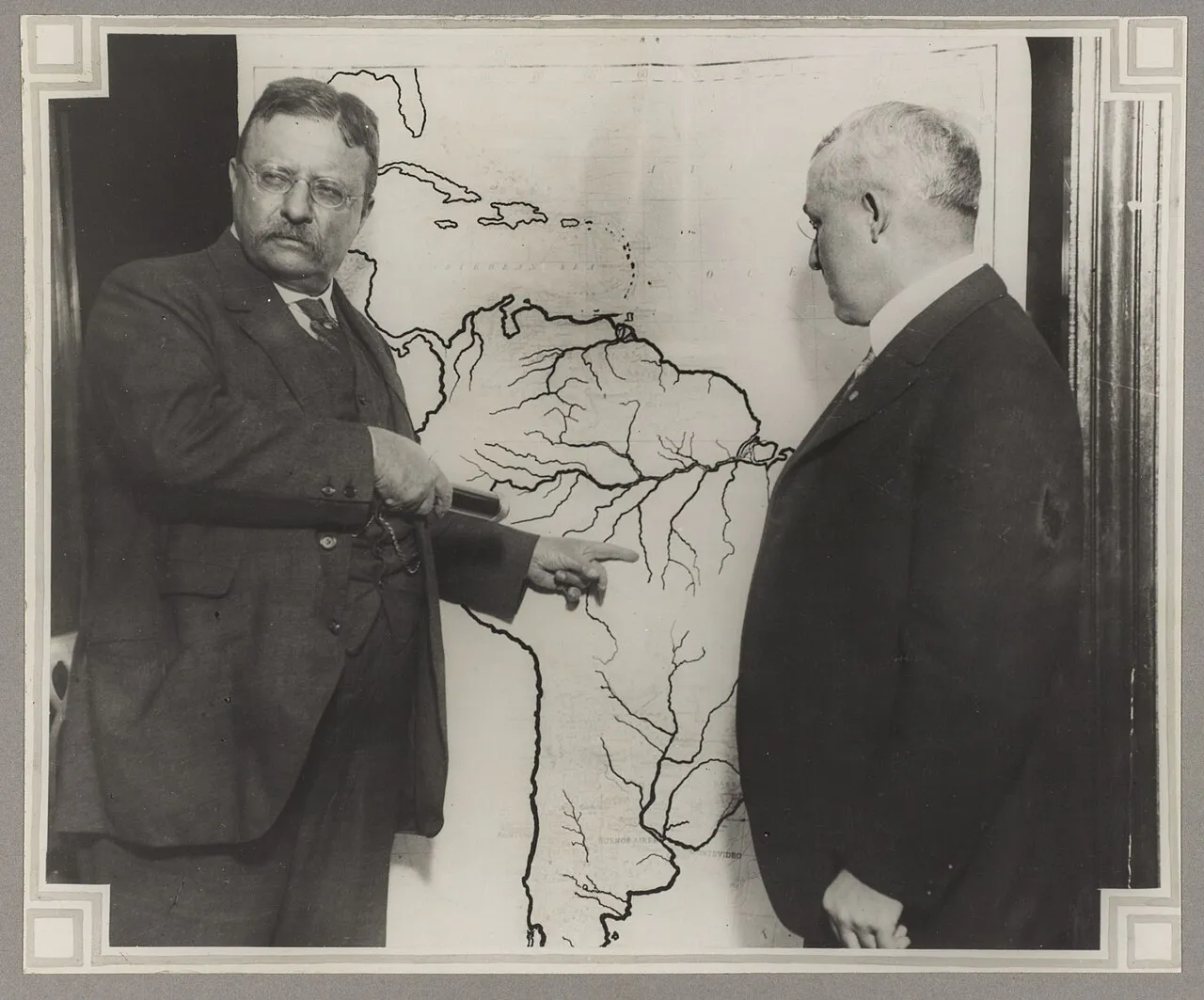
Roosevelt points to the course of the river the expedition charted. Brazil renamed the River of Doubt the Rio Roosevelt in his honor. (Library of Congress)
The River Renamed
When the expedition finally emerged from the wilderness, it was big news. Roosevelt, who had nearly died, had survived and had explored a major river whose course had never been mapped. The Brazilian government, eager to recognize both the exploration and the partnership between Roosevelt and Rondon, officially renamed the river Rio Roosevelt (now often called the Rio Teodoro). It was a fitting tribute to both the former American president and to Rondon's role in guiding the expedition.
For Roosevelt, the expedition and his partnership with Rondon represented more than just adventure. It reinforced his belief in the value of exploration, of science, of understanding natural systems and indigenous peoples. Rondon represented an enlightened approach to indigenous affairs — one that Roosevelt increasingly came to admire and support.
Rondon's Philosophy: "Die if Necessary but Never Kill"
What made Rondon remarkable in his historical context was his unwavering commitment to indigenous rights, dignity, and peaceful contact. His motto — often translated as "Die if necessary but never kill" when referring to indigenous peoples — captured his fundamental conviction that indigenous peoples should be treated with respect and protected from exploitation and violence, not conquered or enslaved. While colonial powers and economic interests were extracting resources, enslaving indigenous peoples, and displacing them from their lands, Rondon was working to protect them, to establish peaceful contact, and to create legal frameworks that recognized indigenous autonomy.
The Indian Protection Service (Serviço de Proteção aos Índios, or SPI) that Rondon founded was imperfect — no institution operating within a nation-state can truly be independent or free from the pressures and prejudices of the dominant society, and the SPI would eventually be corrupted and ultimately abolished. But Rondon fought relentlessly to make the SPI a force for protection rather than exploitation, for respect rather than domination. He argued that indigenous peoples could be brought into peaceful contact with Brazilian society without violence or subjugation. He documented indigenous knowledge and practices. He fought against exploitation by rubber tappers and resource extractors.
Roosevelt, after his experiences with Rondon in the River of Doubt expedition and after seeing firsthand the indigenous peoples of South America, came to share some of Rondon's convictions about the moral necessity of protecting indigenous populations. Roosevelt's respect for Rondon as an expert on indigenous affairs deepened. The ex-president's considerable influence, combined with his credibility as an explorer, naturalist, and former world leader, lent support to Rondon's efforts. When Roosevelt spoke about indigenous peoples in his later years, he did so with knowledge gained from direct experience and with genuine respect for Rondon's expertise and his lifetime commitment to indigenous rights.

Rondon in later life. His motto toward Brazil's indigenous peoples — 'Die if necessary, but never kill' — guided a lifetime of exploration and protection. (Wikimedia Commons)
A Legacy in the Wilderness
The renaming of the river was symbolically important, but Rondon's real legacy was in the work he did to protect indigenous peoples and to promote enlightened policies toward indigenous territories. The Indian Protection Service, though later corrupted and eventually abolished, represented an important experiment in indigenous rights. Rondon's vision — that indigenous peoples could be respected and protected while a nation developed — was ahead of its time.
For Roosevelt, the friendship with Rondon reinforced beliefs that were already developing in his later life. He had come to see that conservation wasn't just about preserving wild places — it was also about respecting and protecting the indigenous peoples who lived in and understood those places. Rondon embodied that philosophy.
Continue Reading
- The River of Doubt Expedition — Roosevelt's greatest adventure after leaving office
- Kermit Roosevelt — Theodore's son who accompanied him on the expedition
- Post-Presidency Life — Roosevelt's activities after his White House years
- Conservation — Roosevelt's evolving views on indigenous lands and protection
- Roosevelt as a Young Naturalist — The scientific interests that shaped his later explorations
- Theodore Roosevelt Biography — Understanding the man who undertook these adventures
Primary Sources at the TR Center
Discover photographs, documents, and accounts from the River of Doubt expedition. The TR Center Digital Library contains materials that bring this remarkable journey to life.
- Cândido Rondon — Encyclopedia entry on the TR Center
- Family and Friends — Learn about Roosevelt's personal relationships and companions
- Photographs from the TR Collection — Visual documentation of Roosevelt's travels and expeditions
- Theodore Roosevelt Biography — Complete biographical overview on the TR Center
- Bibliography on Roosevelt — Suggested reading on his explorations and adventures
From the Archives
Explore original photographs, documents, and illustrations related to this topic in the Theodore Roosevelt Center Digital Library.
Recommended Reading
- The River of Doubt: Theodore Roosevelt's Darkest Journey by Candace Millard (2005). ISBN: 978-0-385-51337-2
- Colonel Roosevelt by Edmund Morris (2010). ISBN: 978-0-679-60415-0