
The River of Doubt: The Brazilian Expedition (1913–1914)
A New Frontier After Electoral Defeat
After his defeat in the 1912 election, Theodore Roosevelt found himself facing a familiar psychological challenge: what to do with the restless energy that characterized his temperament when political action was no longer immediately available to him? He was fifty-five years old, in declining health after his years of intense activity, but still driven by a hunger for challenge and adventure. The solution he embraced was characteristic: he would undertake another expedition, this time to one of the last unexplored regions of the world—the Amazon Basin of Brazil, along an unmapped river known to the few explorers who had encountered it as the Rio da Dúvida—the River of Doubt.
The expedition was organized with scientific pretensions. The American Museum of Natural History would receive specimens. Roosevelt and his son Kermit would conduct research on the river and its surrounding wilderness. Colonel Cândido Mariano da Silva Rondon, a Brazilian explorer of considerable repute, would lead the expedition. The ostensible purpose was scientific: to map an unmapped river, to study the ecosystem, to collect specimens for American museums. But underneath the scientific rationale lay something more fundamental: Roosevelt's need to test himself against danger, to prove that he remained vital and capable despite his age and his electoral defeat.
On October 4, 1913, Roosevelt sailed from New York for South America; Kermit, already in Brazil working as a bridge engineer, joined the expedition there. The expedition would prove to be far more harrowing and dangerous than even Roosevelt anticipated—a genuine struggle for survival that brought him closer to death than perhaps any experience of his extraordinary life had done.

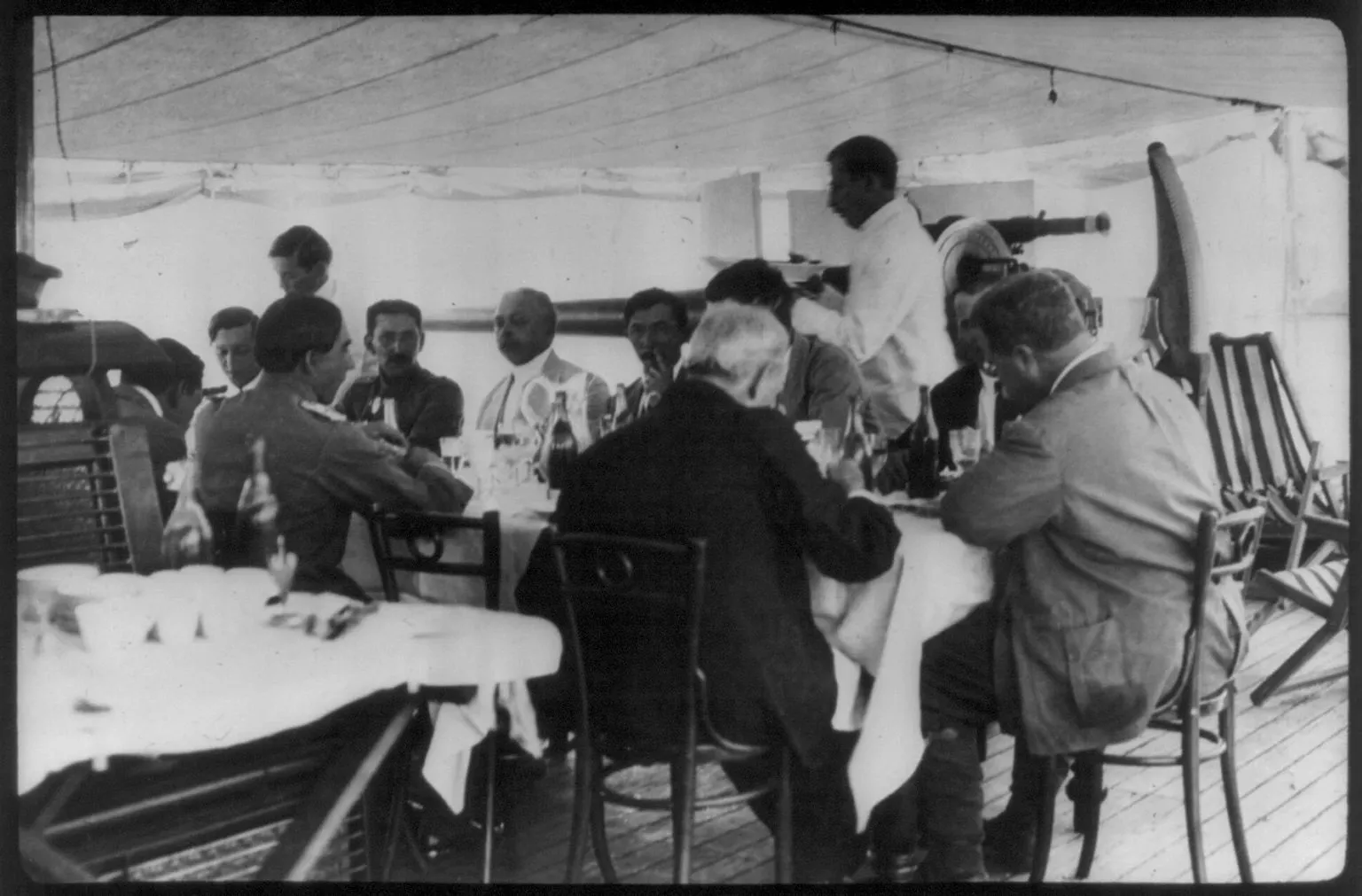
After his crushing defeat in the 1912 election, the restless Roosevelt accepted an invitation to explore an uncharted river deep in the Brazilian Amazon. (Library of Congress)

What began as a genteel speaking tour and river survey became, at Colonel Rondon's urging, a far more dangerous descent of the unmapped “River of Doubt.” (Library of Congress)
Planning the Expedition: Origins of a Fateful Decision
Roosevelt's South American journey began innocently enough as a speaking tour. He had accepted invitations from the Museo Social Argentino in Buenos Aires to deliver lectures, and Father John Augustine Zahm, a Catholic priest and educator, had organized a speaking itinerary across Argentina, Brazil, and Chile. Roosevelt anticipated a pleasant journey with hunting opportunities and naturalistic observation—nothing more demanding than his recent African safari. But as he traveled through South America in late 1913, everything changed.
It was Lauro Müller, Brazil's foreign minister, who presented the tempting alternative. Müller had encountered Roosevelt and proposed something far more ambitious than lectures: an expedition to explore an unmapped river deep in the Brazilian interior—the Rio da Dúvida, or River of Doubt. The river's course was unknown. Its length was uncertain, possibly exceeding a thousand kilometers. It was assumed to flow north, perhaps into the Rio Madeira, a major tributary of the Amazon, but no one could say for certain. Colonel Cândido Rondon, a Brazilian army engineer and explorer of considerable reputation, had laid telegraph lines through the region and had named the mysterious river during his assignments. He knew the territory better than any man alive.
The Brazilian government had economic motives: vast rubber stands covered the province of Amazonas, and until all the rivers were mapped, it would be difficult for prospectors to stake valid claims. But Müller appealed to Roosevelt's vanity and his scientific interests. He could add to geographic knowledge. He could advertise Mato Grosso as ideal for European settlement. Most seductively, he could accomplish what few explorers had done: descend an unmapped river through unexplored territory.
Roosevelt's initial skepticism gave way to fascination. His mind was made up. On October 21, 1913, he committed to the expedition. As he wrote, he would be leaving on "the river trip of a lifetime."
The Expedition Team: Scientists, Adventurers, and Paddlers
Roosevelt assembled a diverse team of naturalists, adventurers, and support staff. George K. Cherrie, an ornithologist and mammalogist in his forties, was one of the finest naturalist-explorers in America. Whipcord-tough from decades of fieldwork in tropical South America, Cherrie had fathered children on the Orinoco River with jaguars lurking nearby—credentials that appealed to Roosevelt. Cherrie had also been a revolutionary gun-runner in Colombia and a jailbird in Venezuela, qualities that perfectly matched Roosevelt's romantic notion of capable men unconcerned with legal niceties.
Leo E. Miller, a skilled field naturalist from the American Museum, volunteered for the expedition. Father Zahm, the organizing priest, continued in his multilingual scholarly role. Anthony Fiala, an experienced explorer, served as director of supplies. And of course, Kermit Roosevelt accompanied his father, as he had on the African safari years before. Colonel Cândido Rondon, the legendary Brazilian army engineer who knew the rivers and the land better than any living man, served as co-commander.
The expedition also included Brazilian army officers trained in field specialties, gun-bearers, paddlers, guides, and porters—the *camaradas* as they were called—who would provide muscle and local knowledge. By the time the party assembled at José Bonifácio station near the headwaters of the Dúvida in December 1913, Roosevelt commanded a small army of men. The American Museum of Natural History had pledged $20,000 for specimens, with promise of more if needed. It was one of the most ambitious natural history expeditions ever organized.

The party joined Brazil's famed explorer Cândido Rondon and naturalist George Cherrie, gathering specimens as they pushed toward the river's headwaters. (Library of Congress)

The jungle exacted a terrible toll. One man drowned in the rapids; another was murdered by a camp-mate, who was then left behind to the wilderness. (Library of Congress)
Crisis and Tragedy: Murder in the Jungle
By late March 1914, tensions within the expedition had risen to a breaking point. Men were hungry, exhausted, and frightened. Malaria and dysentery ravaged the party. Supplies were desperately low—only three weeks of rations remained. The psychological strain of the jungle, the uncertainty of what lay ahead, and the physical hardships transformed some men into liabilities.
Julio de Lima emerged as the expedition's great problem. A Portuguese *camarada* of muscular build, Julio combined idleness with dishonesty. He had been caught stealing food repeatedly by Paixão, a huge black sergeant, who had beaten him for his thefts. Yet Julio remained mysteriously well-fed while others starved—apparently hoarding provisions for himself. Roosevelt, observing him closely, wrote in his journal that Julio had "the heart of a ferocious cur in the body of a bullock."
On March 30, 1914, near a mountain crest, the crisis came to a head. Julio dropped his load, picked up a carbine, and muttered off into the jungle as if to hunt. But his intention was darker. Moments later shots rang out. The men following behind found Paixão, the sergeant who had repeatedly disciplined Julio, dead on the trail, shot by Julio’s hand. Julio, rather than face execution or justice, then disappeared into the jungle, abandoning the expedition entirely. Roosevelt would later write that Julio had struck Paixão down in revenge for his beatings, then vanished into the forest rather than face Roosevelt's judgment.
The murder sent shock waves through the party. One of their own had been killed by another. The law of the jungle had superseded any civilized order. Roosevelt, despite his familiarity with violence and danger, was shaken by the event. It underscored the complete breakdown of authority and order that occurred when men were pushed beyond their physical and psychological limits.
Into the Unknown: The Immense Challenges
The expedition began with a journey into the heart of the Amazon Basin. Roosevelt, Kermit, and a party of naturalists, guides, and support staff traveled by canoe down the uncharted Rio da Dúvida, deeper into wilderness that had never been thoroughly explored by outsiders. The river was treacherous—filled with dangerous rapids that threatened to destroy their fragile dugout canoes. The jungle was impenetrable, thick with vegetation, home to jaguars, anacondas, caimans, and innumerable insects and parasites that found human flesh an irresistible source of food.
The waters themselves presented horrors the men had never imagined. The river teemed with piranha—razor-toothed fish that Roosevelt would later call “ferocious little monsters.” The fish swarmed in organized schools, spreading out to scout for prey and then alerting others to attack. Roosevelt documented that “the [piranha’s] rabid, furious snaps drive the teeth through flesh and bone.” One of the expedition's naturalists, Leo Miller, had a large piece of his hand torn away by a piranha in a single bite. Even more terrifying were the candiru—transparent little catfish barely an inch long that could swim into body cavities and were known to be lethal to humans. When the men were forced to wade while maneuvering the canoes, every step meant risking attack.
Food became desperately scarce. By early April, the party had exhausted their stores and survived on Brazil nuts, hearts of palm, wild honey, and occasional fish—fish that the cunning piranha often stole from their lines with knife-blade teeth. They supplemented rations with grilled parrots and toucans when lucky, monkey stew when fortunate enough to hunt successfully. But the jungle, beautiful though it was, proved unwilling to provide sustenance. Game was rare. The forest seemed designed to starve intruders.
Malaria struck the party with vicious persistence, including Roosevelt himself. A leg infection developed that refused to heal in the jungle's oppressive humidity and filth. Within weeks of beginning the expedition, Roosevelt developed a fever of 105 degrees Fahrenheit. His body shrank visibly—losing some fifty-five pounds, a quarter of his body weight. The combination of malaria, infected leg wound, advanced age of fifty-five, and severe malnutrition created a perfect storm of physical collapse. One member of the party was murdered by another in a fit of desperation and rage. The expedition became, quite literally, a desperate struggle for survival.
Roosevelt's body began to fail him utterly. His heart, weakened by disease and deprivation, could scarcely pump blood through his frame. Cherrie, the expedition's most experienced naturalist, watched in growing horror as his friend's decline accelerated. On one downhill walk from one camp to the next, Cherrie wrote: “As he and I went down the trail to our camp at the foot of the rapids, his heart was so affected that frequently he had to sit down and rest. He was evidently in great pain because three or four times he threw himself on the ground and begged me to go on.” Roosevelt's heroic attempt to continue the expedition had brought him to the very edge of death. At one desperate moment, delirious from fever and stripped of his usual reserves of will, Roosevelt asked Kermit to proceed downriver without him. He could no longer keep pace. He told his son to go ahead, to save himself, to complete the mission so that the sacrifice would not be for nothing. Kermit, then twenty-four years old, refused absolutely. The young man would not abandon his father to death in the jungle. Instead, he devoted himself entirely to Roosevelt's care, nursing him through the fever, speaking to him through the delirium, keeping him alive through sheer force of filial devotion and will. Without Kermit's refusal to surrender, Theodore Roosevelt would almost certainly have died in that jungle.

In heavy dugout canoes, the party fought rapids, disease, hunger, and hostile terrain down a river no outsider had ever mapped. (Library of Congress)

An infected leg wound and raging fever nearly killed Roosevelt. Delirious, he urged the others to leave him behind — but his son Kermit refused. (Library of Congress)
Near-Death and Survival
Roosevelt's body began to fail him catastrophically in early April 1914. The combination of malaria, dysentery, an infected leg wound, and severe starvation created an apocalyptic physical crisis. His fever spiked to 105 degrees and remained there day after day. He lost approximately fifty-five pounds—nearly a quarter of his body weight—shrinking from a vigorous man into something resembling a skeleton, his clothes hanging loose on his wasted frame. George Cherrie, the expedition's most experienced naturalist, kept a journal that recorded his rising alarm. At the darkest moment, he wrote the words that nearly broke his heart: “I DON'T BELIEVE HE CAN live through the night.” The Brazilian natives who accompanied the party, hardened by years in the jungle, did not believe Roosevelt would survive. His delirium was profound; he spoke confusedly, seemed to have lost his grip on reality. Lying in a hammock slung between two trees, shaking uncontrollably from fever, sometimes unable to sit up or even lift his head, the man who had been President of the United States seemed to be slipping away.
It was at this nadir of human endurance that Roosevelt made a decision characteristic of his nobility. As the expedition's naturalist George Cherrie recalled it, Roosevelt gathered them and said: “Boys, I realize that some of us are not going to finish this journey. Cherrie, I want you and Kermit to go on. You can get out. I will stop here.” He was urging the others to proceed downriver without him, so that the expedition would succeed and the rest would survive. Roosevelt was, in essence, asking his son to let him die alone in the jungle so that Kermit and others might reach safety. This was not weakness—it was the ultimate act of fatherly love, a man prepared to sacrifice himself so his son might live.
Kermit refused. The young man—twenty-four years old—would not abandon his father. Instead, he devoted himself entirely to Roosevelt's care. Kermit nursed his father through the fever, applied compresses of cold water, encouraged him to drink, spoke to him through the delirium, kept him alive through sheer force of will and filial devotion. Without Kermit's steadfast attention and his refusal to surrender, Theodore Roosevelt would almost certainly have died in that jungle, and his body would never have been found.
By late April 1914, the expedition had descended to the river’s confluence with the Aripuanã, confirming that the Rio da Dúvida—soon to be renamed Rio Roosevelt—was indeed a major tributary of the Amazon system, roughly 760 kilometers long. The party emerged from the jungle and reached settled territory. A Brazilian steam launch carried the broken man downriver to Manaus, where he could at last receive proper medical care before traveling on to Belém and home by sea. Medical examination revealed that he had contracted septicemia—a life-threatening blood infection caused by his infected leg wound—in addition to his other maladies. The infection had poisoned his bloodstream. For several weeks, his condition remained so precarious that physicians were uncertain he would survive. The South American expedition appeared likely to prove fatal after all.
But Roosevelt's extraordinary capacity for recovery—whether attributable to his robust constitution built by decades of outdoor activity, his indomitable will, or some combination of both—carried him through the crisis. He reached New York on May 19, 1914, in dramatically diminished physical condition. His health was broken. The lingering effects of malaria, the septicemia, and the sheer ordeal would manifest as chronic ailments—kidney problems, cardiac issues, persistent fevers—that would plague him for the rest of his life. The river had done something that no enemy, no political opponent, no personal setback had ever done: it had broken Theodore Roosevelt's body. The River of Doubt had nearly killed him, and while he survived physically, something in him had been irrevocably altered by the ordeal. He had tested the limits of human endurance and found them.
Scientific Discoveries and Geographic Achievement
Despite the ordeal, the expedition succeeded in its geographic mission. The Rio da Dúvida was mapped and confirmed to be a substantial river flowing into the Amazon system, ultimately proven to be roughly 760 kilometers long. The Brazilian government formally renamed it Rio Roosevelt in honor of the expedition's achievement. This geographic contribution was genuine and permanent—a real addition to mankind's knowledge of South America's hydrology and geography.
The scientific results were equally substantial. Cherrie and the other naturalists collected thousands of specimens—birds, mammals, insects, and botanical samples—that enriched the American Museum of Natural History's collections. Roosevelt, who had always possessed the methodical habits of a serious naturalist, observed and documented species encounters. His journals from the expedition were filled with precise descriptions of animals, plants, indigenous peoples, and the terrain. The expedition produced scholarly publications in scientific journals and added significantly to knowledge of Amazonian ecology and the indigenous peoples of the region.
Roosevelt channeled his experiences into a book published in 1914: *Through the Brazilian Wilderness*. The volume combined geographical narrative, natural history observation, and philosophical reflection on the nature of exploration and human endurance. It was less celebratory than his African work had been—the tone was more somber, more cognizant of human limitations and the real dangers of wilderness exploration. The book stands as a permanent record of one of the last great overland expeditions into unknown territory.

Against the odds, the expedition mapped the entire river — later renamed the Rio Roosevelt — and brought back a wealth of specimens for science. (Library of Congress)

Roosevelt emerged some fifty pounds lighter and permanently weakened. He never fully recovered, and the ordeal likely shortened his life. (Library of Congress)
The Price of Adventure: Long-term Health Consequences
The River of Doubt expedition would haunt Roosevelt's remaining years. The physical damage was substantial and permanent. The malaria never fully left his system, recurring in chronic bouts of fever that exhausted him. The heart strain he experienced in the jungle manifested as ongoing cardiac issues. His kidneys, damaged by septicemia and malaria, never fully recovered. He aged visibly after 1914, his vigor noticeably diminished compared to the vigorous president of just years before.
Contemporaries noticed the change. Roosevelt seemed more tired, less able to sustain the relentless activity that had characterized his entire life. He still engaged in hunting and outdoor activity, but with less of the abandon and physical confidence he had once possessed. The expedition had cost him his health in exchange for geographic knowledge and personal achievement—a calculation he had made willingly, but one whose price became clearer with each passing year.
The River of Doubt served as a warning: a man's body has limits, even the body of a man as physically extraordinary as Theodore Roosevelt. Roosevelt had tested those limits and found them. Five years later, in January 1919, his weakened constitution would fail him entirely, and he would die at Sagamore Hill at age sixty. The River of Doubt had set in motion the sequence of ailments and physical decline that would lead to his premature death.
Candice Millard's Account and the Expedition's Legacy
The story of the River of Doubt expedition has been told in vivid detail in Candice Millard's book The River of Doubt, which reconstructs the journey through primary documents and provides a gripping narrative of the expedition's dangers and the physical and psychological toll it took on Roosevelt. Millard's account reveals the desperation of the situation, the genuinely life-threatening challenges the party faced, and the way that Roosevelt's determination to complete the mission nearly cost him his life.
The River of Doubt expedition is significant as evidence of Roosevelt's extraordinary capacity to endure hardship and danger. Even at fifty-five years old, facing malaria, infection, starvation, and isolation, he refused to surrender. But the expedition is equally significant as evidence of Roosevelt's mortality, of the limits of the human body, of the physical costs of his relentless pursuit of the strenuous life. He emerged from the Amazon broken in health, prematurely aged, carrying scars—physical and psychological—that would contribute to his death five years later.
Candice Millard's bestseller The River of Doubt revived the story for modern readers — a harrowing testament to Roosevelt's courage and its cost. (Library of Congress)
Continue Reading
- Post-Presidency Overview — Roosevelt's remarkable decade after leaving the White House.
- Kermit Roosevelt — Roosevelt's son and expedition companion.
- Theodore Roosevelt and World War I — Roosevelt's advocacy for the war and family sacrifice.
Primary Sources at the TR Center
Explore original documents and resources related to the River of Doubt expedition in the Theodore Roosevelt Center Digital Library.
- River of Doubt Encyclopedia Entry — Comprehensive overview of the expedition and its geographic and scientific achievements.
- South American Journey Encyclopedia Entry — Roosevelt's travels and expeditions in South America.
From the Archives
Explore original photographs, documents, and illustrations related to this topic in the Theodore Roosevelt Center Digital Library.
Recommended Reading
- The River of Doubt: Theodore Roosevelt's Amazonian Adventure by Candice Millard (2005). ISBN: 978-0-385-51337-2
- My Last Chance to Be a Boy: Theodore Roosevelt's South American Expedition of 1913–1914 by Joseph R. Ornig (1994).
- Colonel Roosevelt by Edmund Morris (2010). ISBN: 978-0-679-60415-0
- Through the Brazilian Wilderness by Theodore Roosevelt (1914).