
Kermit Roosevelt
A Child of Adventure: The Early Years
Kermit Roosevelt was born in 1889, the third child and second son of Theodore Roosevelt and his second wife, Edith Kermit Carow. He grew up in the Roosevelt household during his father's rapid rise to power — from New York State Assembly, through ranching and hunting, through police commissioner, assistant secretary of the Navy, governor of New York, and finally to the presidency. Kermit grew up with adventure stories. His father had hunted in the West, explored, written about his experiences, and lived the strenuous life that he preached.
While his elder brother Ted Jr. followed the conventional path of military service and government, Kermit was drawn more intensely to adventure, exploration, and the wilderness. He wanted to explore unmapped places. He wanted to hunt in Africa, travel in South America, see the world beyond the boundaries of American civilization. He had inherited his father's restlessness, his father's passion for the outdoors, and his father's belief that life should be lived boldly and fully.
When Theodore Roosevelt left the presidency in 1909, he planned something remarkable: a year-long hunting and collecting expedition to East Africa. As an ex-president, he could have retreated to a comfortable life of writing, lecturing, and influence. Instead, he decided to go to Africa — not as a tourist, but as a serious hunter collecting specimens for the American Museum of Natural History, as an observer of African wildlife and ecology, as an adventurer seeking to experience the wild world while he was still vigorous enough to do so. And crucially, he decided to take Kermit with him — not as a child to be protected and supervised, but as a young man of nineteen who would be his full partner in the expedition, his hunting companion, and his co-explorer.

Kermit Roosevelt as a boy. Bookish and daring, he was the son most like his father in his hunger for wild places. (Wikimedia Commons)

Kermit accompanied his father on the 1909-10 African expedition, hunting and collecting specimens for the Smithsonian. (Wikimedia Commons)
The African Safari
For nearly a year, from 1909 to 1910, father and son hunted together in East Africa. They shot specimens for the American Museum of Natural History while experiencing the vast landscapes of Kenya, Uganda, and the Sudan. The experience transformed Kermit. At nineteen years old, he had just completed his freshman year at Harvard when his father invited him on this extraordinary expedition. Theodore Roosevelt hesitated at first—this was supposed to be his once-in-a-lifetime adventure—but he concluded that Kermit's serious demeanor and discipline made him an acceptable companion. Roosevelt's letter to his young son revealing his expectations set the tone for everything that followed: the boy must treat the trip as a college course, enjoy it fully, count it as education, and then buckle down to hard work afterward.
Kermit proved worthy of his father's trust. He was the official photographer and naturalist's assistant, documenting wildlife and collecting specimens. In the process, he earned the Swahili nickname Bwana Mdogo—"Little Master"—from the safari porters. He was not his father's exact duplicate; Edmund Morris noted that Kermit was made of "more fragile material" and possessed a quiet, brooding disposition that gave him a gravitas startling for his age. Yet he matched his father in hunting prowess, even shooting an elephant—a trophy that few young men could claim. Roosevelt noticed, with evident pride, that Kermit played the mandolin with ease and had inherited the Roosevelt gift for languages, adding fluent Swahili to his existing knowledge of French, Latin, and Greek.
When the expedition ended, Kermit returned to Harvard and completed his four-year degree in just two and a half years—a testament to the discipline his father had instilled. Published accounts of the safari ensured that Kermit's name became associated with adventure and exploration. He was not merely "the President's son"—he was Kermit Roosevelt, explorer and naturalist. He had made his own mark on the world, and he was only in his early twenties.
The River of Doubt: Crisis and Rescue
After Africa, Kermit pursued a career as a gentleman adventurer and businessman in South America. He worked for the Brazil Railway Company and then the Anglo Brazilian Iron Company, building bridges in the remote Xingu Valley—work that was extraordinarily dangerous. In 1912, a bridge he was working on collapsed while he was beneath it, and he fell thirty-five feet into a dry, rocky ravine. He survived by inches, walking away with two broken ribs, two missing teeth, and a partially dislocated knee. He endured recurring bouts of malaria and worked in regions where indigenous peoples had killed several engineers with their long arrows. Yet Kermit seemed to thrive in this rough, unfamiliar environment, earning his father's admiration for his independence and courage.
Kermit was also in love. Belle Willard, the beautiful daughter of American diplomat Joseph Willard, had captured his heart. They had met at Sagamore Hill and maintained their romance through letters across thousands of miles while Kermit worked in Brazil. In October 1913, when his father announced he was traveling to South America for a lecture tour and an expedition, Kermit planned to meet him in Bahia. More importantly, Kermit had sent Belle a marriage proposal aboard a ship bound north from Brazil. On November 14, 1913, Belle's answering letter arrived: "I'm very glad you did send the letter, because, I do love you, and will marry you." Kermit was overjoyed.
But then Roosevelt's plans changed dramatically. Instead of following the previously planned route, the expedition would attempt something far more hazardous: a descent of an unmapped river in the Brazilian Amazon called the Rio da Dúvida (the River of Doubt). Edith Roosevelt, concerned for her aging husband's safety, urged Kermit to accompany his father. With great reluctance and heartache at leaving Belle, Kermit agreed, writing to her: "It just doesn't seem as if I could live so long without seeing you, but I feel so very sure that I am doing what you would want me to do."
The River of Doubt proved far more perilous than anyone had anticipated. As the naturalist Frank Chapman would later write, there was "not a more difficult or dangerous journey than that down the [River of Doubt]" in all of South America. The rapids were treacherous and unpredictable. Food supplies ran dangerously low. Tropical disease decimated the entire expedition. Theodore Roosevelt contracted severe malaria and other tropical illnesses that brought him dangerously close to death. Roosevelt's fever soared to 105 degrees. One member of the party wrote that as the former president lay delirious, wracked with infection from injuries and physical collapse, they genuinely believed they were witnessing his final hours. Cherrie, one of the naturalists, would later recall the vivid scene: "The black rushing river with the great trees towering high above along the bank; the sodden earth under foot; for a few moments the stars would be shining, and then the sky would cloud over and the rain would fall in torrents, shutting out the sky and trees and river."
It was Kermit, younger and physically stronger than his father, who proved absolutely essential to Roosevelt's survival. While the expedition's leader lay helpless, burning with fever and infection, Kermit helped care for him during the expedition's darkest moments. He worked alongside Colonel Rondon, the Brazilian military officer and co-commander, and the rest of the party to keep Roosevelt alive when his body seemed to be giving up the struggle. Kermit translated between his father and Rondon—a crucial task, since Roosevelt's command of Portuguese extended only to "mais canja" (more soup), while Rondon spoke no English. When they finally emerged from the wilderness after two months on the river, both men were thin, bearing scars from the ordeal, weakened by disease and starvation—but alive. The shared ordeal of facing death together in the Amazon wilderness bound father and son even more deeply than their African adventure had done.
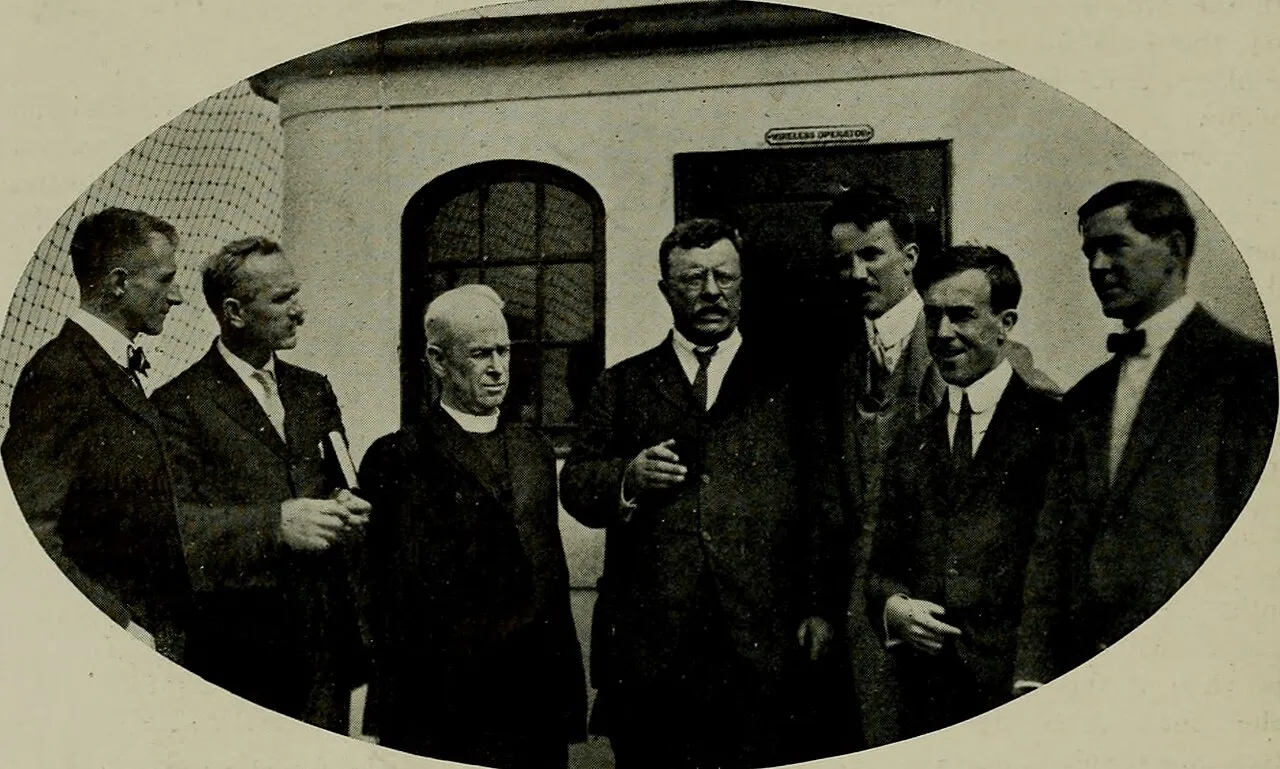
On the 1914 River of Doubt expedition, Kermit's strength and resolve helped save his fever-stricken father's life. (Wikimedia Commons)

A gifted linguist and businessman, Kermit struggled in peacetime with the depression and alcoholism that adventure had once held at bay. (Library of Congress)
The Struggle After Adventure: Alcoholism and Inner Darkness
But something profoundly changed in Kermit after the River of Doubt expedition. The great adventure was over. He had explored. He had hunted in Africa and South America. He had descended an uncharted river with his father and saved his life. He had done everything his father had done and in some ways had surpassed it. Yet he seemed to struggle deeply with what came next. How do you live an ordinary, conventional life after you have descended an uncharted river with your father? How do you settle into domestic routine, business, and ordinary responsibilities after you have stared death in the face in the Brazilian jungle?
Kermit married Belle Willard and they had four children—Kermit Jr., Joseph Willard, Belle, and Dirck. He worked in business ventures and tried to build a conventional, respectable life. But those who knew him well noticed that something was different about him now. Edmund Morris noted that even during his Harvard years, Kermit had been a young man "too fond of cards and liquor." The isolation and danger of South America, the peak experience of the River of Doubt, and the impossible standard his father had set seemed to have left him searching for meaning he could not find.
Beneath the surface of respectability, something was deeply troubling him. He struggled with alcoholism—a disease that manifested with increasing visibility as he aged. He suffered from depression, from a kind of darkness that no amount of achievement or adventure seemed able to dispel. The man who had been such a vibrant, energetic adventurer—who had explored the world with his father, who had laughed easily, who had seemed at home in the wilderness—seemed to be gradually disappearing. Theodore Roosevelt's sister Corinne observed that of all the Roosevelt children, Kermit was "the most sensitive." That sensitivity, which had made him literary and thoughtful, seemed now to make him vulnerable to struggles he could not articulate and could not escape.
Service in War
Kermit served as an officer in World War I—taking a commission with the British Army in Mesopotamia before transferring to the U.S. Army— hoping that military service and patriotic duty might provide the structure and meaning that civilian life seemed unable to offer. He served again in World War II. Like so many military men, he sought in service a larger purpose beyond himself. But the wars seemed to deepen rather than resolve his inner struggles. During World War II, he was stationed in Alaska—thousands of miles from home, from Belle, from his children, isolated in one of the most remote postings the Army could offer. It was a lonely assignment for a man who had already spent so much of his adult life far from those he loved.

Kermit sought out combat in both world wars — with the British in Mesopotamia in 1917 and again in uniform in the Second World War. (Library of Congress)

Kermit died in Alaska in 1943. His restless courage and his private torment both echoed the family he was born into. (Wikimedia Commons)
A Tragedy That Echoes
On June 4, 1943, Kermit Roosevelt died by suicide at Fort Richardson, Alaska, at the age of 53. The death was officially reported to his mother as a heart attack, but the truth—thoroughly documented since—is that his long struggle with depression and alcoholism had finally overwhelmed him. Kermit was a man who had spent his life seeking adventure and experience, who had accomplished more than most men could dream of, who had stood in the wildest places on earth and stared death in the face. Yet in the end, he had struggled—silently and desperately—with invisible demons that no amount of external achievement could vanquish.
His death marked the end of an era. He left behind his four children, a legacy of exploration and scientific discovery, and memories of a young man of extraordinary sensitivity and courage. His books about his travels, his photographs, his scientific collections—these remain as testimony to a life of remarkable external achievement. Yet his tragic end also left behind a cautionary tale: that adventure and accomplishment, however great and however genuine, cannot always protect us from our own inner struggles. The strenuous life, as practiced by the Roosevelts, could demand everything of the body and the spirit, but it could not guarantee peace of mind or lasting contentment.
The Adventurer's Legacy
Kermit Roosevelt was not as famous as his father, not as politically influential as his sister Alice, not as publicly celebrated as his brother Ted Jr. Yet he embodied something essential about the Roosevelt spirit: the belief that life should be lived fully, boldly, and without fear of the unknown. He was a bridge between his father's generation and the modern era—a man who could correspond with Rudyard Kipling about poetry, work as a translator for his father and Colonel Cândido Mariano da Silva Rondon, speak multiple languages including Arabic, Urdu, Hindustani, and Portuguese, and still find time to be a skilled hunter, photographer, and naturalist. Few men have lived such genuinely multifaceted lives.
His written accounts of his travels, his photographs, his naturalistic collections—these remain as enduring testimony to a life fully lived in its external dimensions. He showed the world that America's children could venture into the unknown and return with knowledge. He proved that serious exploration was still possible in the twentieth century. His books provided accurate geographic and naturalistic information that scientists used for decades. His photographs documented peoples and landscapes that were rapidly vanishing in the face of modernization.
But his life also reveals something more complex: that the strenuous life, for all its glory and genuine achievements, cannot answer all of life's deepest questions. Kermit had adventure, but he struggled to find peace. He had accomplishment, but could not find lasting contentment. He was sensitive, literary, intelligent, and courageous—and yet these gifts could not protect him from the darkness that pursued him. His life is a reminder that even the greatest adventures must eventually end, and what comes after requires its own kind of courage—the courage to face ourselves when the external world no longer calls us forward. That courage, perhaps, was the one adventure Kermit Roosevelt never fully mastered.
Continue Reading
- Theodore Roosevelt — Kermit's father and his companion on expeditions.
- Theodore Roosevelt Jr. — Kermit's older brother and fellow officer in World War I.
- The River of Doubt Expedition — Kermit's dangerous Amazon expedition with his father.
- Theodore Roosevelt and World War I — Kermit's military service and family sacrifice.
Primary Sources at the TR Center
Explore original documents and resources related to Kermit Roosevelt in the Theodore Roosevelt Center Digital Library.
- Kermit Roosevelt Encyclopedia Entry — Comprehensive overview of his adventures, expeditions, and later struggles.
- African Safari Encyclopedia Entry — Information on the 1909-1910 expedition and Kermit's role as Roosevelt's hunting companion.
From the Archives
Explore original photographs, documents, and illustrations related to this topic in the Theodore Roosevelt Center Digital Library.
Recommended Reading
- Theodore Roosevelt by Louis Auchincloss (2001)
- The River of Doubt: Theodore Roosevelt's Darkest Journey by Candace Millard (2005). ISBN: 978-0-385-51337-2
- Colonel Roosevelt by Edmund Morris (2010). ISBN: 978-0-679-60415-0