
Elliott Roosevelt: The Tragic Brother
The Charming Younger Brother
Born in 1860, Elliott seemed from his earliest years to have everything his older brother did not. While Theodore was bookish and intense, Elliott was charismatic and seemingly carefree. While Theodore struggled with his body and had to discipline his mind through hard work, Elliott possessed effortless athletic grace and physical attractiveness. While Theodore was awkward in social situations and had to labor to develop confidence, Elliott had the kind of easy charm that made him a natural at social success. In childhood and adolescence, Elliott appeared to be the more promising of the two brothers.
Both boys had absorbed their father's gospel of "Muscular Christianity"—the idea that physical vigor and moral seriousness were intertwined, that a man's body should be disciplined and his character should be sound. But where Theodore embodied this philosophy through intellectual engagement with ideas and through the development of willpower and self-mastery, Elliott embodied it in a more purely physical way. He rode horses beautifully. He hunted with skill and courage. He possessed the kind of easy confidence that comes from physical prowess and social success.
Theodore, watching his younger brother's effortless successes, sometimes envied him. One family account notes that Elliott "seemed to have all the good looks, the charisma, the physical prowess, and the sense of fun" while Theodore was "bookish," dependent on "heroic literature and nature studies" to nourish his soul. But what Theodore learned and Elliott never quite grasped was that charm and good looks and physical grace are not sufficient to sustain a meaningful life. The strenuous life, Theodore believed, required something more: discipline, purpose, and moral commitment.
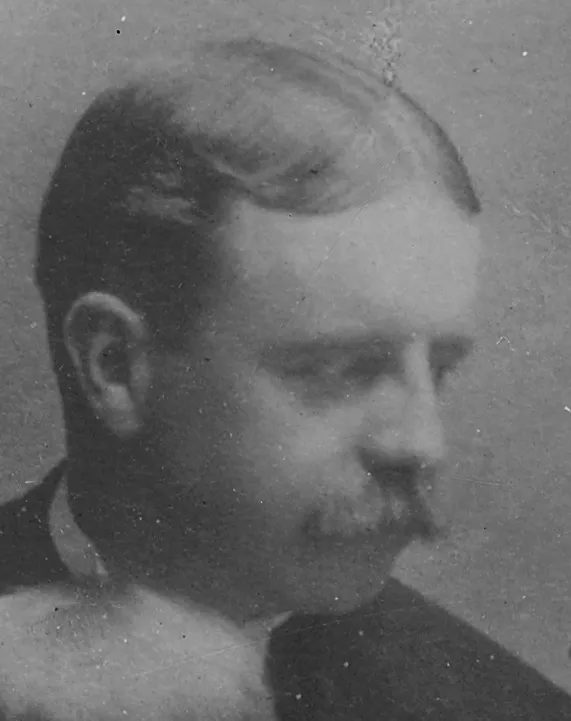
Elliott Roosevelt, Theodore's younger brother — handsome, athletic, and by all accounts the more naturally charming of the two. (Wikimedia Commons)

Theodore and Elliott as young sportsmen. As Theodore's career rose, Elliott's life began a slow, painful decline. (Harvard College Library, Theodore Roosevelt Collection)
The Beginning of the Decline
Elliott's troubles began early, though they were not immediately apparent. He traveled the world as a sportsman—hunting big game in India while still in his early twenties—and took positions in real estate and banking that seemed to point toward a life of respectable achievement. He was charming enough to attract the attention and admiration of important people. He was handsome enough to be immediately welcome in society. Everything seemed positioned for a life of conventional success.
But Elliott lacked something crucial that Theodore possessed: a capacity for sustained self-discipline and a genuine commitment to moral seriousness. Where Theodore turned his physical infirmities and his natural shyness into occasions for developing willpower and self-mastery, Elliott's gifts became occasions for self-indulgence. He began to drink—at first socially, then with increasing frequency and intensity. Alcohol became his refuge from the responsibilities and moral demands that he found unbearable.
On December 1, 1883—shortly before his brother was devastated by Alice's death and his mother's simultaneous death—Elliott married Anna Rebecca Hall, a young woman from an aristocratic family. For a brief moment, it seemed that marriage might be the stabilizing force that could anchor Elliott and help him build a meaningful life. But it was not to be. Elliott's impulses toward dissolution soon overwhelmed his capacity for domestic responsibility.
A Descent into Dissolution
The details of Elliott's decline were painful for the family to discuss, and it is not surprising that the family's private papers contain relatively little documentation of these years. What we know comes largely from Theodore's letters to his brother, letters that are anguished and reveal both deep love and deep frustration. Theodore wrote to Elliott, begging him to reform, to take responsibility for his family, to live up to the Roosevelt name and the principles their father had instilled in both of them.
But Elliott could not or would not change. He began to drink heavily—alcohol seeming to provide an escape from the responsibilities and moral awareness that his mind, unable to focus on intellectual pursuits as Theodore's could, found unbearable. His drinking led to infidelities and to a general neglect of his wife and the children who were born to them. He was frequently absent from home. He was often unable to hold a job. The family's attempts to help him were constant but ultimately unavailing.
Theodore tried everything. He attempted interventions, appealed to Elliott's sense of honor and family obligation, tried to use his growing political influence to secure employment for his brother. He tried to appeal to Elliott's conscience and to remind him of the principles their father had taught. Nothing worked. Elliott's alcoholism deepened. By the late 1880s and early 1890s, he was essentially unemployable, moving from place to place, sometimes living abroad in an attempt to escape his creditors and his responsibilities.
For a time, Elliott lived in Virginia, where locals remembered him as a genial, courteous, and kind gentleman, despite his obvious personal difficulties. But his chronic instability meant he could find rest nowhere. He was haunted by his failures, by the disappointment of his family, by his own awareness that he was failing to become the man he might have been.
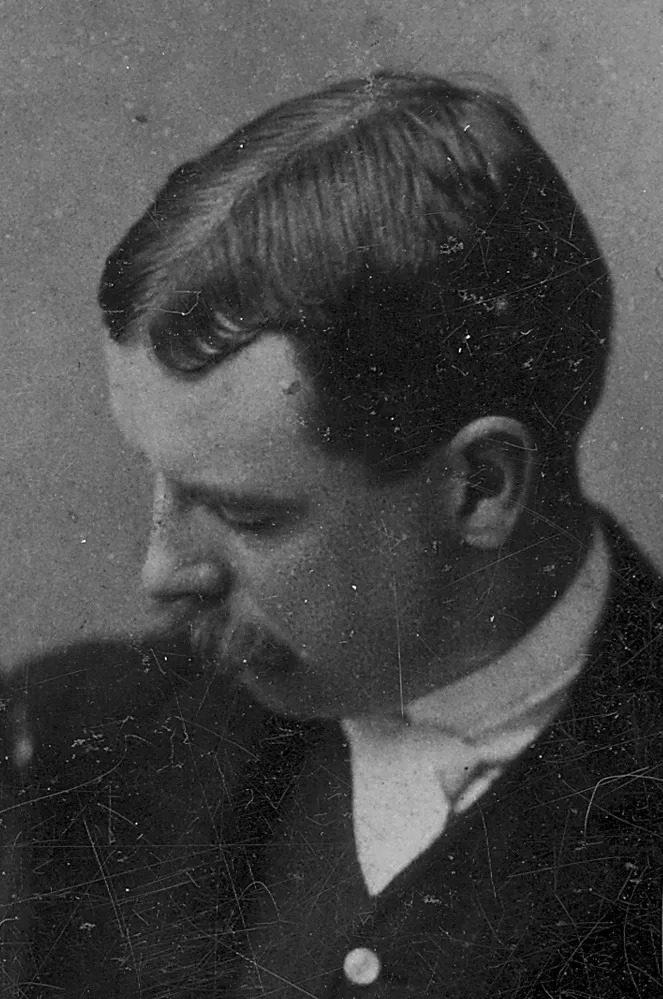
Elliott struggled for years with alcoholism and injury. What began as youthful excess deepened into a dissolution his family could not halt. (National Archives)

Elliott adored his daughter Eleanor, the future First Lady, who idolized him despite his failings. (National Archives)
A Painful Legacy: Eleanor Roosevelt
Elliott had children, including a daughter born in 1884 to his wife Anna Rebecca Hall. That daughter was named Eleanor Roosevelt. She would eventually become First Lady of the United States, one of the most significant political figures of the twentieth century. But her childhood was marked by her father's unreliability and emotional cruelty. Elliott was charming when sober but could be emotionally devastating when drunk. He made promises he failed to keep. He told his daughter stories about the man he wanted to be while living a life that contradicted those stories entirely.
The psychological impact on Eleanor was profound. Her father represented himself as a person of high principle while living a life of dissolution. He told her he loved her while neglecting her. He was absent when she needed him. The experience created in Eleanor a sense that she could rely only on herself, that she must find worth through service and duty, that romantic love and family connections were unreliable sources of meaning. In a bitter irony, Elliott's failure as a father may have contributed to his daughter's extraordinary success as a public figure and activist.
The End
In August 1894, while Theodore was serving as a United States Civil Service Commissioner in Washington, Elliott Roosevelt died in New York. The exact cause was not widely publicized—the family preferred to keep the details private—but he was thirty-four years old and his health had been wrecked by years of alcoholism and dissipation. He had lived long enough to see his children grow, long enough to experience the consequences of his choices, but not long enough to recover from them or to become the man he might have been.
Theodore's grief was complicated by guilt and regret. He had not been able to save his brother. Despite his own growing prominence and power, despite his attempts to intervene, Elliott had been beyond reach. In his correspondence with his sister Corinne, Theodore expressed his sorrow with characteristic intensity, mourning the gallant, generous boy his brother had once been. The memory of Elliott at his best—the charming, gifted youth—remained vivid and poignant.

Elliott with his children. He died in 1894 at just thirty-four, leaving Eleanor orphaned of a father she never stopped mourning. (Wikimedia Commons)
The Unfinished Story
Elliott Roosevelt's life reminds us that talent and charm and privilege are not sufficient to create a meaningful existence. A man can have every advantage and still fail if he lacks the moral discipline to use those advantages wisely. Elliott had great gifts, but he did not have the will to develop them, to direct them toward something larger than personal pleasure, to use them in service of something beyond himself.
Yet there is something else in Elliott's story that deserves recognition: Theodore's unflinching commitment to his brother. For years, Theodore kept trying. He did not give up on Elliott, did not write him off as a lost cause, did not stop believing that his brother might yet reform. That commitment ultimately proved futile, but it speaks to something noble in Theodore's character—a loyalty to family, a refusal to condemn, a persistent belief in the possibility of redemption.
Elliott's death had one lasting consequence that would transform American history: Eleanor Roosevelt, his daughter, was raised by relatives who could provide what her father could not—stability, principle, and emotional constancy. She would eventually marry her cousin Franklin Delano Roosevelt and become, alongside him, one of the most consequential figures in twentieth-century American politics and world affairs. In this, at least, Elliott's legacy was not entirely one of failure and waste. His daughter took the pain of his failures and transformed it into a commitment to service and justice that changed the world.
Continue Reading
- Theodore Roosevelt Sr. — Elliott's father, whose values and discipline Elliott failed to embrace
- Eleanor Roosevelt — Elliott's daughter who transformed his tragedy into lasting historical achievement
- The Roosevelt Family Tree — Understanding Elliott's place within the broader Roosevelt lineage
Primary Sources at the TR Center
Explore original documents and resources related to Elliott Roosevelt in the Theodore Roosevelt Center Digital Library.
- Alice Roosevelt Longworth — Elliott's niece who witnessed his troubled years
- Theodore Roosevelt Biography — Full context on Elliott's impact on his brother's life and character
From the Archives
Explore original photographs, documents, and illustrations related to this topic in the Theodore Roosevelt Center Digital Library.
Recommended Reading
- The Fighting Roosevelts by James Burke (2018).