
Leonard Wood: Soldier, Rough Rider Colonel, and Ally
From Army Surgeon to Soldier: The Geronimo Campaign and Medal of Honor
Leonard Wood began his military career as a physician in the U.S. Army Medical Corps. Born in 1860, he joined the Army as a contract surgeon in 1885 and was commissioned as an assistant surgeon in the Medical Department the following year. But from the beginning, Wood's ambitions extended far beyond medicine. He wanted combat command. He wanted action. He understood that in the military of his era, combat leadership was the path to advancement and prestige.
In the 1880s and 1890s, Wood served in the American Southwest, where the Army was engaged in ongoing campaigns to subjugate the Apache peoples and end the armed resistance of leaders like Geronimo. During these campaigns, Wood distinguished himself not as a surgeon but as a fighting officer. In 1886, during the pursuit of Geronimo's band, Wood led troops in pursuit and earned a Medal of Honor for his extraordinary valor in combat. It was a remarkable achievement for a man whose commission was in the medical service — it demonstrated that Wood could fight as well as any combat officer, and perhaps better than most.
Wood's combination of medical knowledge, combat experience, and demonstrated ability to command made him extraordinarily valuable to the Army. He understood the realities of frontier warfare. He had field experience. He had proven judgment. He was accustomed to taking responsibility for lives, making decisions under pressure, and executing orders competently. He was fluent in Spanish, had lived in the Southwest, and understood the terrain and the enemy. When Theodore Roosevelt, then Assistant Secretary of the Navy and eager to organize a military response to Spanish actions in Cuba, thought about who should help him organize and lead a volunteer cavalry regiment, he naturally thought of Leonard Wood as an ideal partner and the first colonel of the new regiment.

Leonard Wood began as an Army contract surgeon — winning the Medal of Honor in the 1886 Geronimo campaign — before becoming a line soldier. (Harvard College Library, Theodore Roosevelt Collection)

Officers of the 1st U.S. Volunteer Cavalry — the Rough Riders — that Colonel Wood raised and led with Lieutenant Colonel Roosevelt, Tampa, 1898. (Library of Congress)
The Rough Riders Partnership
The First Volunteer Cavalry Regiment — the Rough Riders — was organized hastily and brought together an unusual collection of men: cowboys, Native Americans, Ivy League athletes, and assorted adventurers. Theodore Roosevelt served as Lieutenant Colonel. Leonard Wood was Colonel. Together they trained the regiment and brought some organizational coherence to what might have been chaos. By the time of the famous charge up Kettle Hill (often mistakenly called San Juan Hill) on July 1, 1898, Wood had been promoted to brigade command, and it was Roosevelt, newly a colonel, who led the regiment up the hill.
The Rough Riders became legendary, and both Roosevelt and Wood became heroes — not just military heroes but national figures. Roosevelt's charge up the hill and his personal bravery became central to his political identity. Wood's steady command and his tactical competence were equally important to the regiment's success and reputation. The war was brief, the regiment's actual combat experience was limited, but the political impact was enormous. Both men emerged from the war with enhanced reputations and increased national prominence.
Roosevelt's Trust and Friendship
What's often less visible in discussions of the Rough Riders is the personal friendship and professional trust that developed between Roosevelt and Wood. Roosevelt relied on Wood's judgment and championed him for important positions—it was President McKinley who appointed Wood military governor of Cuba after the war, with Roosevelt, then governor of New York, among his strongest advocates. Wood's administrative abilities proved as impressive as his military command. He oversaw the pacification of Cuba, the establishment of American military government, and eventually the transition to Cuban civilian independence — a complex task that Wood navigated with apparent competence.
As president, Roosevelt continued to call on Wood for major responsibilities. Wood served as a general officer—rising after Roosevelt's presidency to Army Chief of Staff from 1910 to 1914—and as a trusted military advisor. More importantly, Wood was one of the few people whose military and professional judgments Roosevelt genuinely respected. They could disagree about military strategy or personnel, but Roosevelt gave Wood's views serious weight.

Roosevelt and Wood in camp. Their partnership in the Rough Riders became a lifelong friendship built on mutual trust. (Library of Congress)
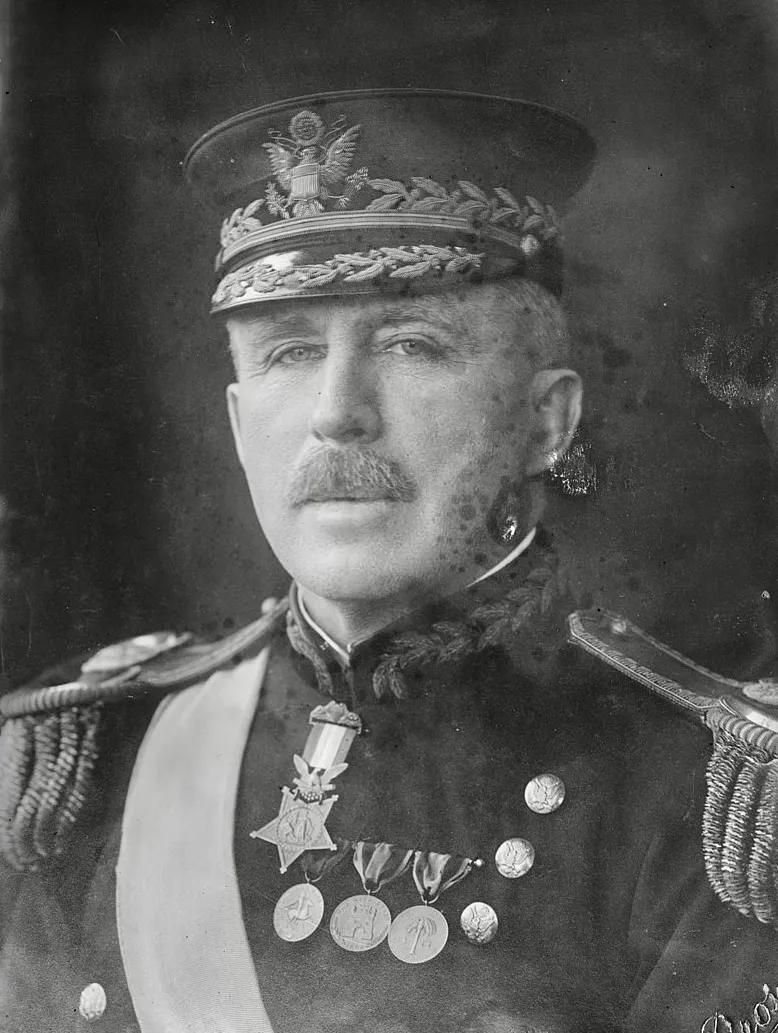
Major General Leonard Wood, who rose to Army Chief of Staff and led American forces from Cuba to the Philippines. (Wikimedia Commons)
Military Campaigns and Global Responsibilities
Wood's service extended beyond Cuba. He served in the Philippines during the American occupation, dealing with both military operations and civil administration, and later served as governor of Moro Province. He was involved in military planning and strategy at the highest levels. Wood epitomized the kind of officer Roosevelt wanted in the American military — educated, capable, willing to take responsibility, and devoted to service.
The Roosevelt-Wood relationship shows how much Roosevelt valued competent military leaders. Unlike some political leaders who view the military with suspicion or who appoint officers primarily for political reasons, Roosevelt sought out capable professionals like Wood. He trusted Wood's military judgment because Wood had earned that trust through demonstrated competence and character.
Military Governor of Cuba and the Friendship Deepens
After the Spanish-American War, when American troops occupied Cuba, Roosevelt — now Governor of New York — recommended that Wood be appointed as the military governor of the island. Wood accepted the assignment and served from 1898 to 1902, governing Cuba under American military authority. It was a complex and challenging position. Wood had to maintain order, establish the infrastructure of governance, deal with various factions with different visions for Cuba's future, and eventually prepare the island for some form of independence or self-government. His tenure was marked by genuine administrative accomplishment — he built schools, improved sanitation, and worked to establish the groundwork for Cuban civilian government.
Roosevelt, though no longer directly in Wood's chain of command, maintained close contact with his friend. Roosevelt had appointed Wood to the position, and he took personal pride in Wood's accomplishments. The correspondence between them during these years shows genuine warmth and mutual respect. Roosevelt trusted Wood's judgment in matters of administration and military governance. Wood, for his part, valued Roosevelt's advice and his confidence in his work.
Wood remained close to Roosevelt throughout their lives. When Roosevelt left the presidency in 1909, Wood didn't disappear from his life. The two men maintained their friendship and continued to correspond about military and political matters. When Roosevelt challenged Taft in 1912, Wood—then serving as Taft's Army Chief of Staff—stayed out of the political fight between his two patrons. When America entered World War I in 1917, both Roosevelt and Wood advocated fiercely for American military preparedness and aggressive prosecution of the war. They believed, similarly, that wars should be fought to be won decisively, and they criticized the Wilson administration for what they saw as insufficient commitment to military victory.

Wood as military governor of Cuba, where his administrative reforms deepened Roosevelt’s admiration for his old comrade. (Harvard College Library, Theodore Roosevelt Collection)
The Ideal of Service
What Roosevelt valued in Leonard Wood was ultimately the same thing he valued in himself and expected of all Americans: a commitment to service beyond self-interest, a willingness to face physical danger and hard work for the sake of larger goals, and a dedication to excellence in whatever task was undertaken. Wood embodied these values. He didn't seek personal comfort or leisure. He took on difficult assignments and executed them with competence.
The Roosevelt-Wood friendship demonstrates that Roosevelt's relationships weren't all political calculations. With Wood, as with Bill Sewall, Roosevelt found someone he could respect not just for political usefulness but for character and genuine accomplishment. Wood had earned Roosevelt's trust through years of demonstrated competence and integrity.
Continue Reading
- Maltese Cross Ranch — Roosevelt's Dakota ranching operations and frontier experiences during the 1880s
- The Roosevelt Family Tree — Understanding Roosevelt's broader relationships and networks
- The Strenuous Life — Roosevelt's philosophy of vigor that he shared with military men like Wood
Primary Sources at the TR Center
Explore original documents and resources related to Leonard Wood in the Theodore Roosevelt Center Digital Library.
- War and Military Affairs Encyclopedia — Context on military campaigns and officers in Roosevelt's era
- Life of Theodore Roosevelt Timeline — Key dates marking Roosevelt's military service and relationships
From the Archives
Explore original photographs, documents, and illustrations related to this topic in the Theodore Roosevelt Center Digital Library.
Recommended Reading
- Leonard Wood: A Biography by Hermann Hagedorn (1931)
- Colonel Roosevelt by Edmund Morris (2010). ISBN: 978-0-679-60415-0
- Rough Rider: The Life of Theodore Roosevelt by Edward J. Renehan Jr. (1997)