
Martha "Mittie" Bulloch Roosevelt
Bulloch Hall and the Complicated Legacy of the South
Martha Bulloch was born in Hartford, Connecticut, on July 8, 1835, daughter of Major James Stephens Bulloch, a man of genuine prominence in the antebellum South. The family moved to Roswell, Georgia, around 1839, and she grew up at Bulloch Hall, a significant plantation home there, in a world shaped by plantation agriculture, slavery, and the rigid social hierarchies of the antebellum South. She was educated, accomplished, and comfortable with her place in that society. Her half-brother James Dunwoody Bulloch and her brother Irvine Bulloch were close to her, and they would both become Confederate naval officers during the Civil War. James Bulloch became a Confederate diplomat who worked to secure ships and supplies for the Southern cause, including involvement with the CSS Alabama, the famous Confederate commerce raider. This family connection to the Confederate cause placed her in an extraordinarily complicated position when she married New Yorker Theodore Roosevelt Sr. in 1853 and moved North: a Southern woman of prominent Confederate family living in Manhattan while her brothers fought for the South and the nation tore itself apart.
Yet New York society, in the 1850s and 1860s, welcomed her. She had beauty, genuine poise, and an unforced grace that transcended sectional lines. Those who met her in New York society wrote admiringly of her charm, her dignity, her intelligence, and her warmth. She was neither boastful nor retiring, nor did she apologize for her Southern origins. Rather, she possessed a quiet confidence and a genuine courtesy that drew people to her. She embodied the possibility that Americans could maintain family and regional loyalties while being part of a larger national community.

Bulloch Hall in Roswell, Georgia, the antebellum home where Mittie Bulloch grew up and married Theodore Roosevelt Sr. in 1853. (Wikimedia Commons)

Martha 'Mittie' Bulloch Roosevelt, the Georgia-born mother whose warmth and storytelling shaped young Theodore's imagination. (Wikimedia Commons)
A Mother's Quiet Guidance
Mittie Roosevelt raised her children with a blend of Southern gentleness and Northern discipline. Young Theodore worshipped her—she was his tender refuge from the demands his father placed on him, yet she never indulged him without purpose. When he suffered from severe asthma attacks as a child, she nursed him with patience. When he grew wild and undisciplined, she set firm boundaries. She was a woman of deep feeling who taught her children that emotions should be acknowledged, not suppressed—a lesson the future president would carry all his life.
The younger Theodore would often hide in her rooms when his own intensity became overwhelming. She would sit quietly while he read to her, while he shared his fears about his weakness, his ashamed tears over physical limitations that his father wanted him to overcome. She gave him permission to feel, even as his father demanded he toughen himself. This balance—between tenderness and strength, between acknowledging fear and overcoming it—became central to how Theodore Roosevelt understood himself.
She also gave her children a broader view of American history and regional difference. Her brothers served the South; her husband and son served the North and later the nation as a whole. She embodied the complexity of a nation learning to reconcile itself. She showed young Theodore that you could love people on different sides of great divides, that patriotism came in different forms, that understanding was more valuable than judgment.
Confederate Ties and Family Loyalty
Mittie's brothers were not ordinary soldiers—her brother James became a Confederate diplomat and naval officer. Yet even during the war, even when brothers and in-laws stood on opposite sides, the family maintained bonds of love. Theodore Jr. admired his Southern relatives; he visited Georgia, he heard their stories, he came to understand that being American meant holding within yourself the tensions of a divided past.
This was perhaps Mittie's greatest gift to her son: not a simplistic patriotism, but a harder-won understanding that American identity was built from diverse, sometimes contradictory traditions, and that true union required respect across those divides.

Mittie's half-brother James Dunwoody Bulloch was the Confederacy's chief naval agent in Britain, where he arranged the building of the raider CSS Alabama. (Wikimedia Commons)
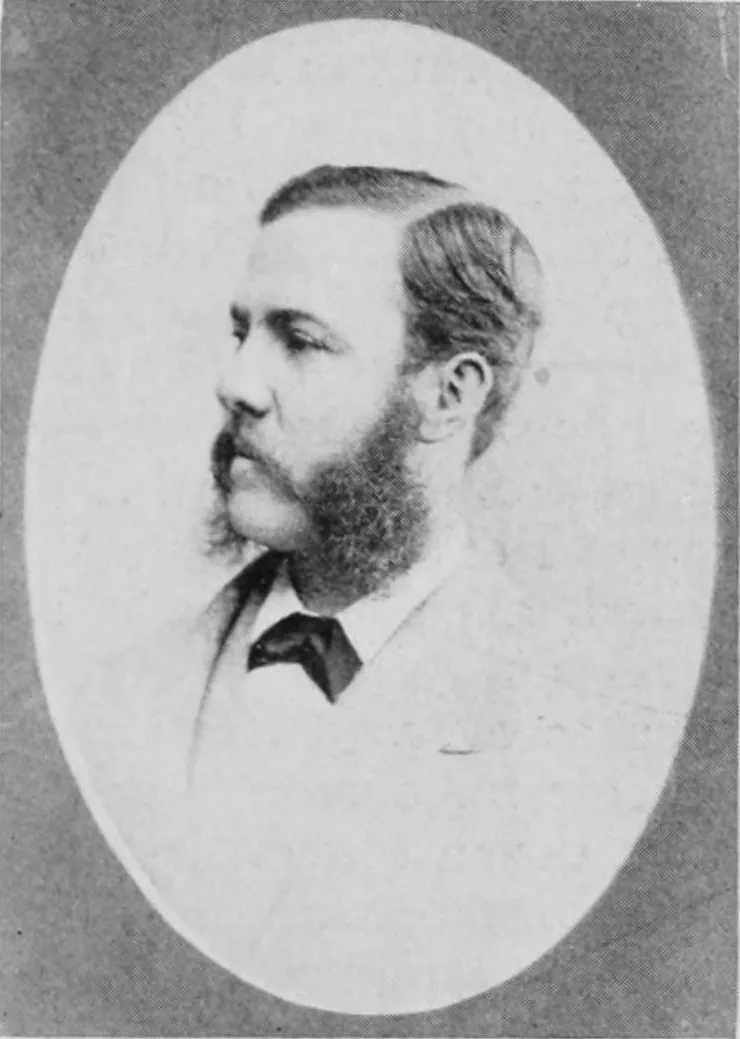
Her younger brother Irvine Bulloch served aboard the CSS Alabama. Mittie kept her Confederate sympathies in a staunchly Unionist New York household. (Wikimedia Commons)
A Tragedy That Darkened History
On February 14, 1884, Martha Bulloch Roosevelt died of acute typhoid fever. She was 48 years old. The date is one of the darkest in American presidential history: on that very same day, Theodore Roosevelt's first wife, Alice Hathaway Lee, died just down the hall from her mother-in-law, having given birth to baby Alice two days earlier. The double loss sent Theodore into profound grief. His diary entry for February 14 was marked with a large black X, and he wrote: "The light has gone out of my life."
When he recovered from his initial shock, TR grieved for his mother too. He had been with her in her final hours, and he understood that he had lost not just a wife, but also the woman who had taught him the meaning of duty, grace, and love.
Her Influence on a Presidency
Theodore Roosevelt would become a president known for vigor, for commanding authority, for hard decisions. But anyone who knew him well recognized another side: a capacity for deep feeling, a respect for women's intelligence, an understanding that strength and tenderness were not opposed but complementary. These came from his mother.
When President Roosevelt filled his cabinet with men of intellect and principle, when he listened to women advisors, when he wrote about the family and domestic life with unusual openness for a man of his era—these too were echoes of Mittie. She had been raised in the Old South, yet she adapted to the New North. She had been a mother, a wife, a woman of private influence, yet she shaped the conscience of a president.

Renowned for her beauty and charm, Mittie brought a Southern grace to the Roosevelt home that left a lasting mark on her son. (Wikimedia Commons)

Mittie died of typhoid fever in 1884 — hours before her daughter-in-law Alice, in the same house — a double loss that nearly broke Theodore. (Wikimedia Commons)
A Legacy of Grace Under Pressure
Mittie Roosevelt lived through the Civil War as a Northern-dwelling Southerner. She raised a sickly, anxious boy to become an athlete and a leader. She buried her husband far too early. She died on a day that would become one of her son's most difficult memories. Through it all, those who knew her remembered her kindness, her composure, and her capacity to find grace in hardship.
Theodore Roosevelt carried his mother with him throughout his presidency. When journalists asked him how he managed the weight of office, he would think of her quiet strength. When he made decisions affecting families, when he spoke about the bonds that hold a nation together, he was channeling the wisdom of a Georgia belle who had learned to love more than one America.
Learn More
Explore more about Theodore Roosevelt's family and heritage:
- Theodore Roosevelt Sr. — TR's father
- Alice Hathaway Lee Roosevelt — TR's first wife
- The Roosevelt Family at Home
- TR's Childhood Years
- TR Center: Theodore Roosevelt Center Encyclopedia
Continue Reading
- Theodore Roosevelt Sr. — Martha's husband and the father of Theodore, Bamie, Elliott, and Corinne
- The Roosevelt Family Tree — Martha's ancestry in the Southern Bulloch family and her children
- Elliott Roosevelt — Martha's younger son whose life trajectory contrasted sharply with Theodore's
Primary Sources at the TR Center
Explore original documents and resources related to Martha Bulloch Roosevelt in the Theodore Roosevelt Center Digital Library.
- Martha Bulloch Roosevelt Encyclopedia Entry — Biographical essay on her life and influence on Theodore Roosevelt
- Theodore Roosevelt Biography — Full context on Mittie's formative influence on the future president
From the Archives
Explore original photographs, documents, and illustrations related to this topic in the Theodore Roosevelt Center Digital Library.
Recommended Reading
- The Roosevelt Women by Betty Boyd Caroli (1998)
Historical Note: Martha Bulloch was born July 8, 1835, in Hartford, Connecticut; her family moved to Roswell, Georgia, around 1839. Her half-brother James Dunwoody Bulloch and brother Irvine Bulloch served the Confederacy; James became a Confederate naval agent. She died of typhoid fever on February 14, 1884—the same day her daughter-in-law Alice Hathaway Lee died—creating a dual tragedy that deeply affected Theodore Roosevelt. Information comes from family records and biographies including Carleton Putnam's Theodore Roosevelt: The Formative Years and Stacy Cordery's Theodore Roosevelt: In the Vanguard of the Modern.