
The Antiquities Act of 1906: Roosevelt's Conservation Superpower
The Backstory: How the Act Came to Be
The Antiquities Act's roots lay in a practical concern. American archaeologists were furious. Looters and vandals were ransacking southwestern archaeological sites—Ancestral Puebloan ruins, cliff dwellings, sacred places—stripping artifacts and destroying irreplaceable scientific evidence. Native Americans watched as their sacred sites were desecrated. The government seemed powerless to stop it. Federal law offered almost no protection for archaeological treasures on public land.
Representative John F. Lacey of Iowa, a longtime conservation advocate, drafted the Antiquities Act as the remedy. Lacey's original intention was modest: give the President power to protect small archaeological and historical sites scattered across the public domain. The President would proclaim these as "national monuments," removing them from the public land available for sale or homesteading. Like other conservation-minded lawmakers, Lacey believed conservation required coordinated federal action. The monuments would be small, focused on archaeology and history.
What Congress created, however, proved much more powerful than anyone anticipated. The Antiquities Act's language was elegantly simple: the President could proclaim "any lands owned and controlled by the Federal Government" as national monuments to protect "objects of historic or scientific interest." Those words—"objects of historic or scientific interest"—became a gateway.

By 1900, looters were stripping ancient sites like Mesa Verde's Cliff Palace of their artifacts. Alarm over this destruction drove the campaign for a federal antiquities law. (California Historical Society Collection, USC Libraries)
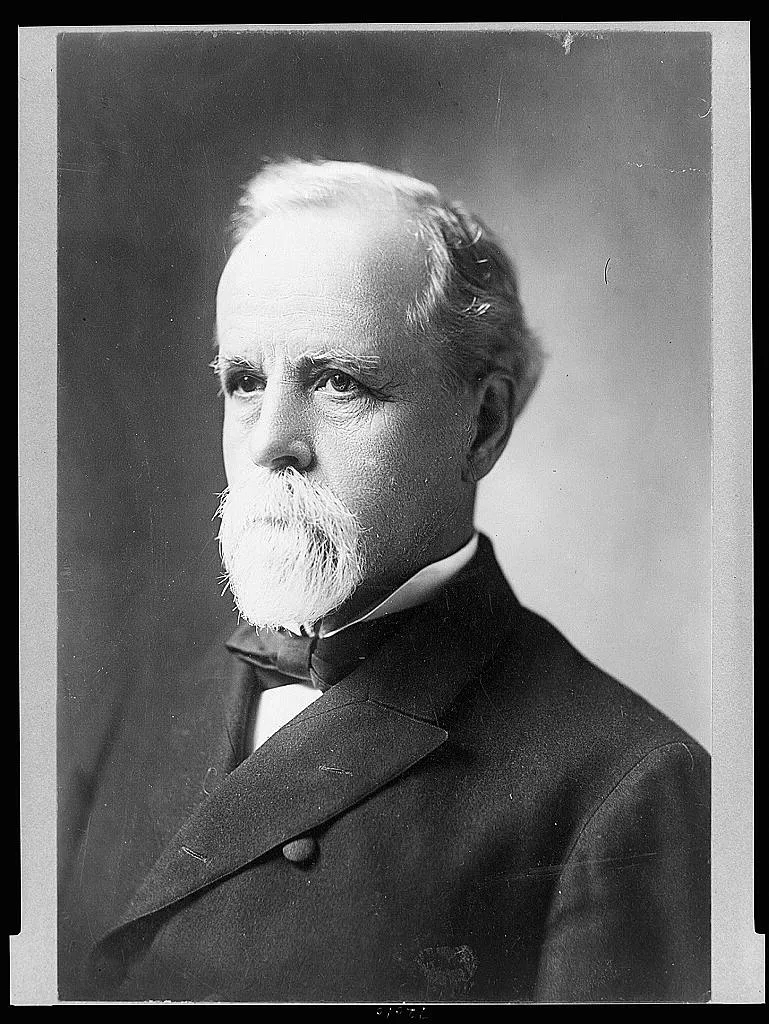
Iowa Congressman John F. Lacey shepherded the Antiquities Act through Congress in 1906, giving the president power to protect landmarks by proclamation. (Library of Congress)
Lacey's Vision and Roosevelt's Revolution
John Finley Lacey had served in Congress since 1889, emerging as one of the most thoughtful voices on conservation in America. He authored the Lacey Act of 1900, which prohibited the interstate transport of illegally killed wildlife and laid groundwork for federal wildlife protection. When southwestern archaeologists approached him about monument protection, Lacey understood the urgency. The American Museum of Natural History and the Smithsonian Institution were losing irreplaceable artifacts to pot hunters and vandals.
Lacey crafted language that gave the President broad discretion but with clear limitations: monuments should protect objects of historic or scientific interest, and they should encompass only as much land as was necessary to protect those objects. Congress debated whether this granted too much presidential power. Some feared the President might establish monuments simply as land grabs, removing valuable territory from development. Yet there was bipartisan recognition that archaeological sites needed protection, and the Antiquities Act passed with both Republican and Democratic support.
Roosevelt immediately grasped what Lacey may not have foreseen: the statute's language was a constitutional warrant for unprecedented presidential power. "Objects of historic or scientific interest" was not limited to ruins. Geological formations, natural landscapes, rare ecosystems—all qualified as objects of scientific interest. And "necessary" to protect those objects could be interpreted expansively. What began as a remedy for archaeological looting became an instrument for transforming federal conservation policy.
Roosevelt Seizes the Opportunity
Roosevelt immediately recognized that geological formations could be "objects of scientific interest." So could dramatic natural scenery. So could ecosystem types. As soon as Congress handed him the power on June 8, 1906, Roosevelt began planning. He consulted with scientists, archaeologists, and conservationists. Which places deserved permanent protection? What was worth preserving for all time?
The act became Roosevelt's secret weapon—a way to bypass Congress entirely. Western senators and representatives opposed conservation. They wanted public lands open for mining, logging, and grazing. Congress moved slowly. But the President, armed with the Antiquities Act, could act unilaterally. He could protect a dramatic landscape before Congress could pass a bill to open it for exploitation.
Roosevelt's interpretation of the act was audacious. Devils Tower, his first monument, wasn't an archaeological site at all. It was a striking geological formation in Wyoming—a column of columnar jointed stone rising 1,267 feet above the Belle Fourche River. It had no artifacts, no human history of scientific note. But it was undeniably an object of scientific interest. Roosevelt's designation established immediately that the Antiquities Act could protect natural wonders, not just ruins.
Critics howled. Shouldn't monuments be archaeological sites, as Lacey intended? Roosevelt didn't hesitate. He understood the larger principle: the nation's geological and natural patrimony deserved the same protection as its archaeological heritage. The landscape itself was a text to be studied, a treasure to be preserved.

Roosevelt moved fast. On September 24, 1906 — barely three months after signing the Act — he proclaimed Wyoming's Devils Tower the first national monument. (DXR / Wikimedia Commons)

Roosevelt stretched the Act well beyond ruins, using it to protect natural wonders too — among them Arizona's Petrified Forest, safeguarded in 1906. (National Park Service)
The Monument Revolution: From Archaeology to Landscapes
The distinction between Lacey's original vision and Roosevelt's interpretation was subtle but revolutionary. Lacey envisioned modest monument proclamations protecting specific archaeological sites—perhaps 1,000 to 5,000 acres per monument. Roosevelt thought bigger. Some of his monuments encompassed hundreds of thousands of acres. Grand Canyon National Monument alone protected roughly 800,000 acres—an area as large as Rhode Island.
This expansion provoked fierce resistance. Congress members from Western states denounced Roosevelt for "locking up" public lands and denying them to miners, loggers, and settlers. Nevada Senator George S. Nixon complained that Roosevelt was converting Nevada into "a wilderness of rocks and sage brush." But Roosevelt believed the nation had an obligation to preserve its natural heritage. In his mind, future generations would thank him for protecting the Grand Canyon far more than they would resent the temporary unavailability of minerals or timber.
Roosevelt's eighteen monuments included archaeological treasures like Chaco Canyon, geological wonders like Natural Bridges, and vast ecosystems like Mount Olympus. Each proclamation expanded the understanding of what "objects of scientific interest" meant. By the time he left office, the category encompassed geological formations, botanical specimens, rare ecosystems, and archaeological sites. The Antiquities Act had been transformed from a modest remedy for archaeological looting into an instrument for comprehensive landscape preservation.
The Grand Canyon: The Boundary-Breaking Proclamation
Roosevelt's most controversial monument proclamation was the Grand Canyon in January 1908. The canyon had been debated in Congress for years as a potential national park. Legislation had repeatedly stalled. Western mining interests opposed protection, arguing that minerals beneath the canyon floor merited extraction. Marcus Smith, Arizona Territory's delegate in Congress, opposed the Grand Canyon National Monument, insisting that it violated the intent of the Antiquities Act.
Yet Roosevelt proceeded. Roosevelt had stood at the canyon's rim in 1903 and urged Americans to keep it unmarred "for your children, your children's children, and for all who come after you, as one of the great sights which every American if he can travel at all should see." Its 800,000 acres encompassed not primarily archaeological sites but geological formations of profound scientific importance. The exposed rock layers recorded a billion years of Earth's history. To Roosevelt, this geological significance qualified the canyon as an object of scientific interest. He would not wait for Congress. The monument was proclaimed on January 11, 1908.
The Grand Canyon proclamation became the constitutional test case for the Antiquities Act. When opponents challenged it in court, arguing that Roosevelt had exceeded his authority, the courts ultimately sustained the President's power. This legal vindication established that the Antiquities Act granted the President broad discretion to interpret "objects of historic or scientific interest" and to determine what land area was "necessary" to protect those objects. From that point forward, every president understood that they possessed virtually unlimited monument-making power.
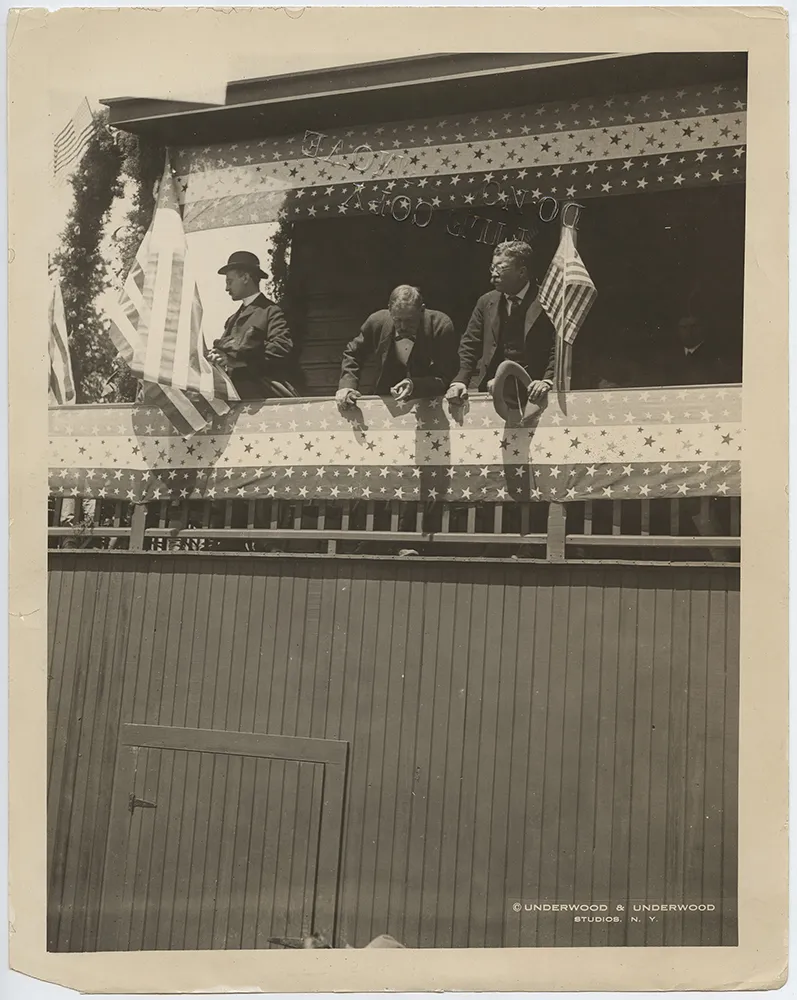
Roosevelt had urged Americans to “leave it as it is” when he saw the Grand Canyon in 1903. In 1908 he used the Antiquities Act to protect more than 800,000 acres of it — far beyond what many thought the law allowed. (SMU Libraries)

The power Roosevelt claimed endured: later presidents used the Act to protect places like California's Muir Woods, proclaimed a monument in 1908, and scores of sites since. (Cheyenne Gensel / Wikimedia Commons)
A Century of Presidential Power
The Antiquities Act became the most consequential conservation law ever passed. Every president since Roosevelt has used it. Franklin D. Roosevelt proclaimed Jackson Hole National Monument. Jimmy Carter protected vast stretches of Alaska. Bill Clinton designated Grand Staircase-Escalante. Barack Obama designated Bears Ears. Donald Trump shrunk some monuments, but didn't eliminate the power. Across more than a century, presidents of both parties have wielded the Antiquities Act to protect places they deemed worthy of permanent preservation.
This bipartisan utilization speaks to the Act's genius. Once established, monument-making became routine presidential prerogative. Each subsequent president inherited not only the legal authority to proclaim monuments but the political expectation that they would do so. The Act became embedded in American conservation practice. Millions of Americans think of "national monuments" without realizing that this form of protection is entirely dependent on a law passed 120 years ago and wielded boldly by a president determined to preserve the natural world.
During his presidency, Roosevelt proclaimed 18 national monuments protecting roughly 1.5 million acres. These included archaeological treasures like Chaco Canyon in New Mexico, geological marvels like Grand Canyon and Natural Bridges in Utah, and ecological gems like Mount Olympus in Washington. Many have since been converted to national parks by Congress. The Grand Canyon became one of America's most visited wonders, generating billions in tourism revenue and unchanged in its majesty from the day Roosevelt protected it.
For Roosevelt, the lesson was plain: the sure way to preserve a place of great value was to proclaim its protection in time, before the opposition could organize. The Antiquities Act gave him the power to proclaim whenever he judged it necessary, without waiting for Congressional approval. It was presidential power at its boldest—using statutory authority to accomplish conservation goals that Congress might never authorize.
The Monument Legacy Today
Roosevelt's monuments remain the foundation of America's public lands heritage. Devils Tower draws 400,000 visitors annually. Grand Canyon National Monument evolved into Grand Canyon National Park, one of the most visited parks in America. Muir Woods protects a primordial redwood forest that visitors experience as unchanged since Roosevelt's time. These places generate substantial economic benefits for surrounding communities while preserving landscapes that would otherwise have been destroyed by mining, logging, or development.
But the Antiquities Act's deeper legacy is philosophical. Roosevelt established the principle that the nation's special places—its geological wonders, its ecological treasures, its archaeological sites—belong to all Americans, not to mining companies or timber corporations. The Act declares that a president can, in an emergency, protect what Congress moves too slowly to protect. It embodies faith that some landscapes transcend economic calculation and deserve preservation for their own sake and for the benefit of future generations.
When subsequent presidents have used the Act to protect Bears Ears in Utah or Papahanaumokuakea in Hawaii or any of the hundred other monuments proclaimed since 1906, they invoke the authority Roosevelt claimed and Congress granted. The Antiquities Act endures as testimony to Roosevelt's conservation vision and to his belief that the stewardship of the American landscape was the President's sacred trust.

Sites Roosevelt protected remain landmarks today — among them Arizona's Montezuma Castle, one of the best-preserved cliff dwellings in North America. (Fredlyfish4 / Wikimedia Commons)
A Law That Shaped a Nation
The Antiquities Act transformed the relationship between the American presidency and the American landscape. It established the principle that the nation's special places belong to all Americans, not to timber companies or mining interests. It created a mechanism for emergency conservation when Congress was deadlocked. It demonstrated that a determined president, armed with the right legal authority, could reshape America's environmental future.
For Roosevelt, the Antiquities Act was vindication of his deepest conviction: that the president was the steward of the nation's future, responsible for preserving its natural heritage. He used the act boldly, expansively, and with lasting effect. Every time an American visits the Grand Canyon, walks among the stone bridges of Utah, or stands beneath Devils Tower in Wyoming, they experience the legacy of Theodore Roosevelt's interpretation of a simple, elegant statute.
The act survives today as testament to what a single piece of legislation, in the hands of a visionary executive, can accomplish. It is Roosevelt's most enduring conservation legacy—not the specific monuments he proclaimed, though those matter, but the permanent power he claimed to protect America's natural world.
Leave it as it is. You can not improve on it. The ages have been at work on it, and man can only mar it.
— Theodore Roosevelt at the Grand Canyon, May 6, 1903
Continue Reading
- 18 National Monuments Proclaimed — The complete list and stories behind each monument Roosevelt designated.
- National Parks Established Under TR — Five new parks created or expanded during his presidency.
- National Forests: From 47 Million to 194 Million Acres — Roosevelt's transformation of America's forests.
- Gifford Pinchot and Scientific Forestry — The visionary forester who shaped Roosevelt's conservation agenda.
- The 1908 Governors Conference — TR's summit for coordinating conservation across the nation.
Primary Sources at the TR Center
Explore the TR Center’s Digital Library for documents and resources on the Antiquities Act and Roosevelt’s monument-making authority.
- Antiquities Act Encyclopedia Entry — Detailed background on the law and its revolutionary impact.
- National Monuments Subject Page — Complete coverage of the 18 monuments Roosevelt proclaimed.
- Roosevelt’s Conservation Record — A comprehensive overview of his environmental accomplishments.
- Conservation Encyclopedia — In-depth articles on Roosevelt’s conservation initiatives.
From the Archives
Explore original documents, photographs, and proclamations related to the Antiquities Act in the Theodore Roosevelt Center Digital Library.
Recommended Reading
- The Wilderness Warrior: Theodore Roosevelt and the Crusade for America by Douglas Brinkley (2009). ISBN: 978-0060565312
- The Antiquities Act: A Century of American Archaeology, Historic Preservation, and Nature Conservation, edited by David Harmon, Francis P. McManamon, and Dwight T. Pitcaithley (2006)
- Dispossessing the Wilderness: Indian Removal and the Making of the National Parks by Mark David Spence (1999)