
Timeline: The Roosevelts in Uniform
Theodore Roosevelt led the Rough Riders in 1898, and twenty years later all four of his sons were overseas in uniform. Follow the family from a troop train in Texas to the Armistice and a Medal of Honor more than a century later. Read the full story at Theodore Roosevelt and Veterans Day.
OFF TO WAR
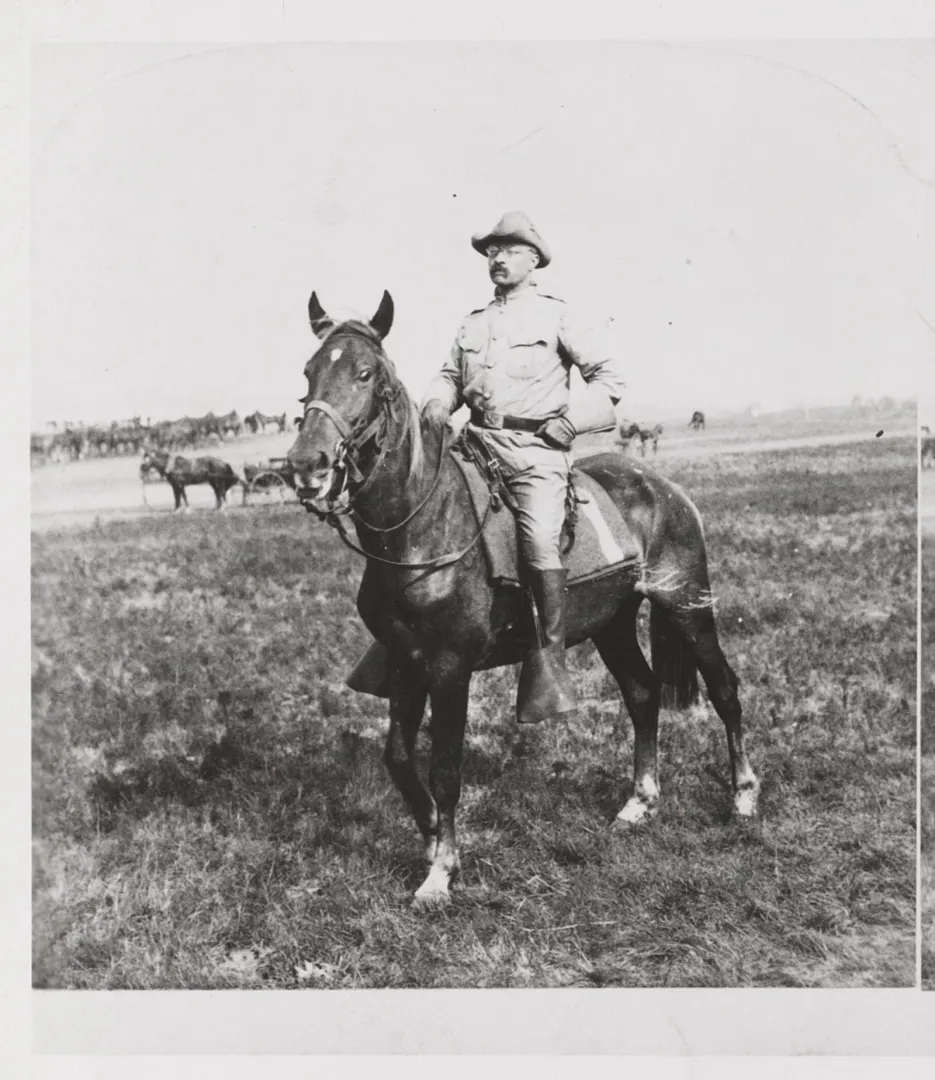
"It was on Sunday, May 29th, that we marched out of our hot, windy, dusty camp to take the cars for Tampa," T.R. wrote in The Rough Riders. He was lieutenant colonel of the 1st U.S. Volunteer Cavalry, and the regiment was leaving San Antonio.
DECORATION DAY ON A TROOP TRAIN
T.R. spent Decoration Day on a troop train rolling east across Texas. The next day, a wire report said, "Roosevelt's rough riders have been passing through New Orleans all day."
KETTLE HILL
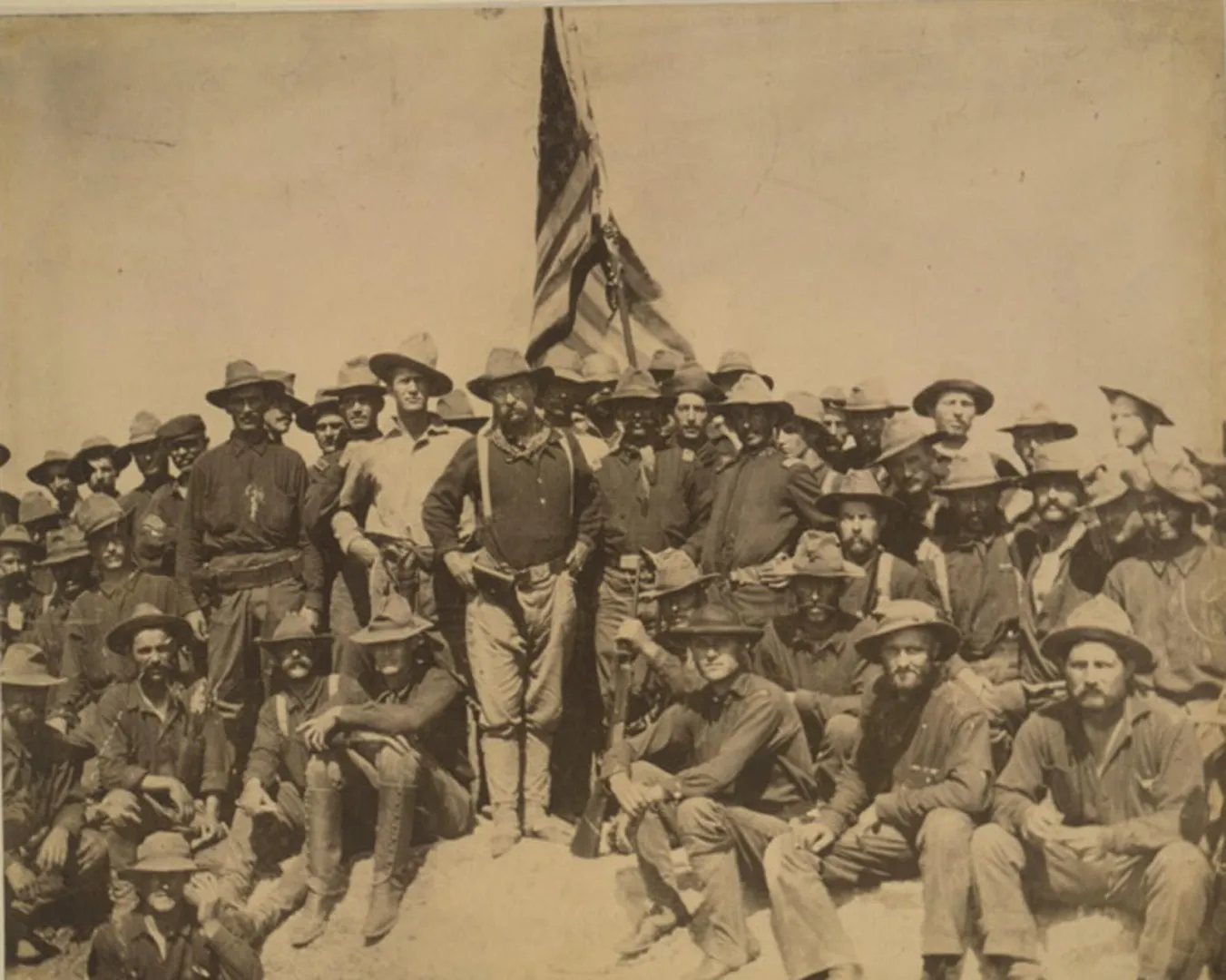
T.R. led the charge up Kettle Hill on the San Juan Heights. In his book he called it "the hill on our right, which we afterward grew to call Kettle Hill."
A WARTIME MEMORIAL DAY
Less than two months after America entered the war, T.R. reviewed the Nassau County sheriff's reserve and Home Defense League at Mineola, Long Island. One wire report put the crowd at 20,000. He urged his neighbors to buy Liberty Bonds.
FOUR SONS OVERSEAS
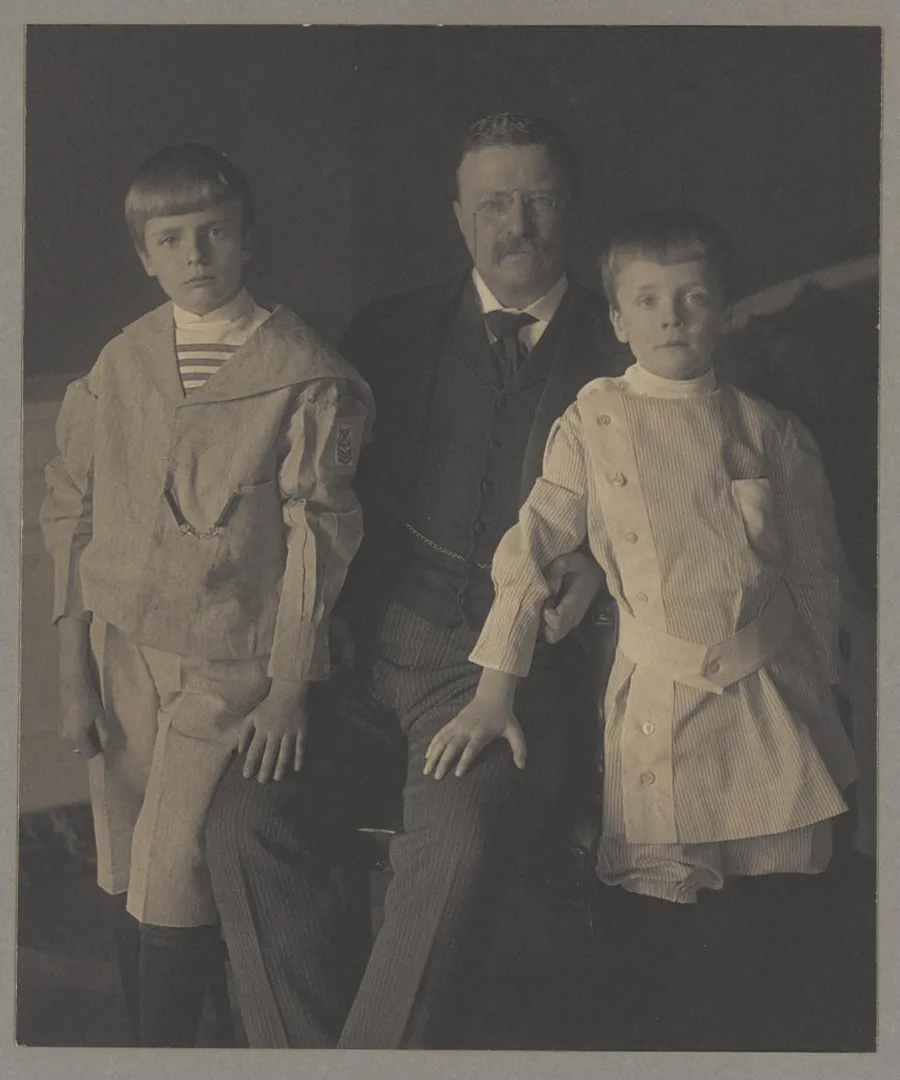
All four Roosevelt sons were overseas. On Memorial Day their father spoke in Detroit on behalf of the Navy, while Quentin was in France.
QUENTIN’S LAST FLIGHT
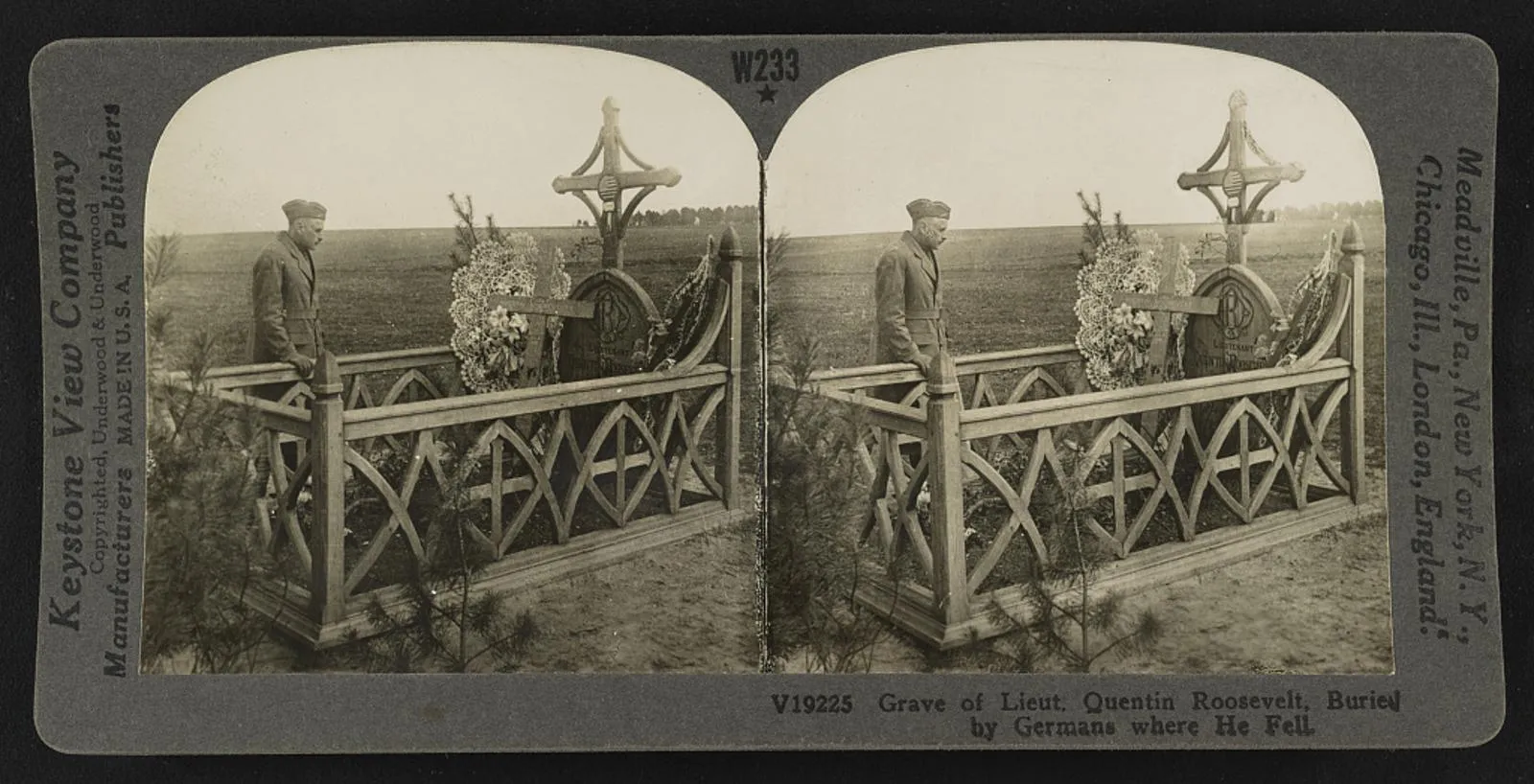
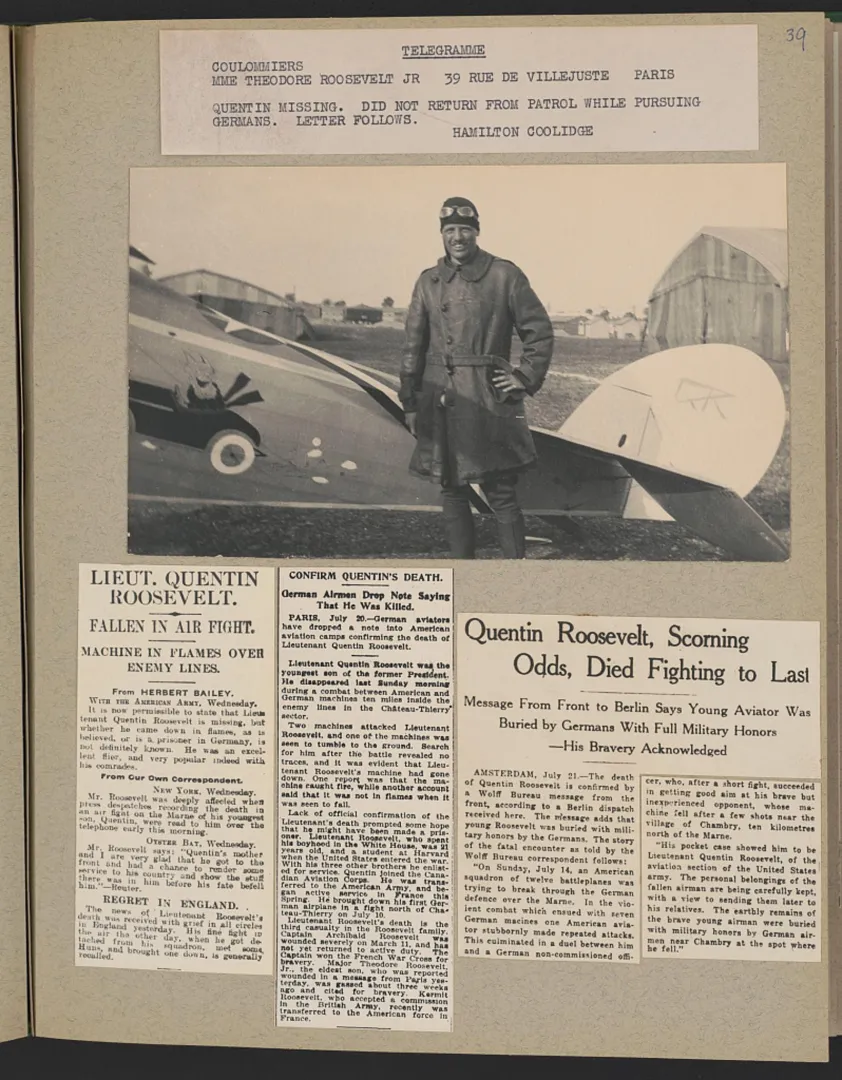
Lt. Quentin Roosevelt of the 95th Aero Squadron was killed in aerial combat near Chamery, France. German forces buried him where he fell. In 1955 he was reburied beside his brother Ted at the Normandy American Cemetery.
"THE STUFF THERE WAS IN HIM"
T.R. learned of Quentin's death and issued a statement: "Quentin's mother and I are very glad that he got to the front and had the chance to render some service to his country and to show the stuff there was in him before his fate befell him."
ON TO SARATOGA
The day after the news, T.R. kept his speaking date in Saratoga, New York. His sister Corinne recalled that he would not cancel, because he felt it was more than ever his duty to go.
ARMISTICE, AND A HOSPITAL BED
On the day the Armistice ended the fighting, T.R. was taken from Sagamore Hill to Roosevelt Hospital in New York. He had been in bed for more than a week, with what newspapers called sciatica.
HOME FOR CHRISTMAS
After six weeks in the hospital, T.R. went home to Sagamore Hill on Christmas Day.
DEATH AT SAGAMORE HILL
T.R. died at home, less than two months after the Armistice. He never saw an Armistice Day anniversary.
THE FIRST ARMISTICE DAY
America observed the first anniversary of the Armistice. In 1954 the holiday was renamed Veterans Day.
A MEDAL OF HONOR
President Bill Clinton awarded T.R. the Medal of Honor posthumously in the Roosevelt Room of the White House. His great-grandson Tweed Roosevelt accepted it.
From the Archives
Letters, photographs and papers about Armistice Day and the Roosevelts at war from the Theodore Roosevelt Center’s digital library.