
History of Medora
Nestled in the rugged North Dakota Badlands, the town of Medora has a history as dramatic as the landscape that surrounds it. Founded in the 1880s as an ambitious frontier enterprise, Medora quickly became a hub of ranching, industry, and frontier culture. Its story is inseparable from that of Theodore Roosevelt, who arrived as a young New York politician and left transformed into a leader of national significance.
Medora is more than just a picturesque town—it was the crucible where ideas of conservation, grit, and the “strenuous life” were tested against the harsh realities of the Dakota frontier. While the Marquis de Morès, a French nobleman, laid its foundations and gave it his wife’s name, it was Roosevelt’s time in Medora that made it truly historic. His years of ranching, hunting, and frontier living would later echo in his presidency, shaping policies that forever altered America’s relationship with its land and natural resources.
For the history buff, Medora offers a layered story: European aristocracy clashing with Western frontier life, the rise and fall of a cattle boom, and the unlikely forging of a statesman in the Badlands. It remains a place where the Old West is not just remembered but felt, where the open skies and rugged buttes still whisper the same lessons Roosevelt once drew from them.

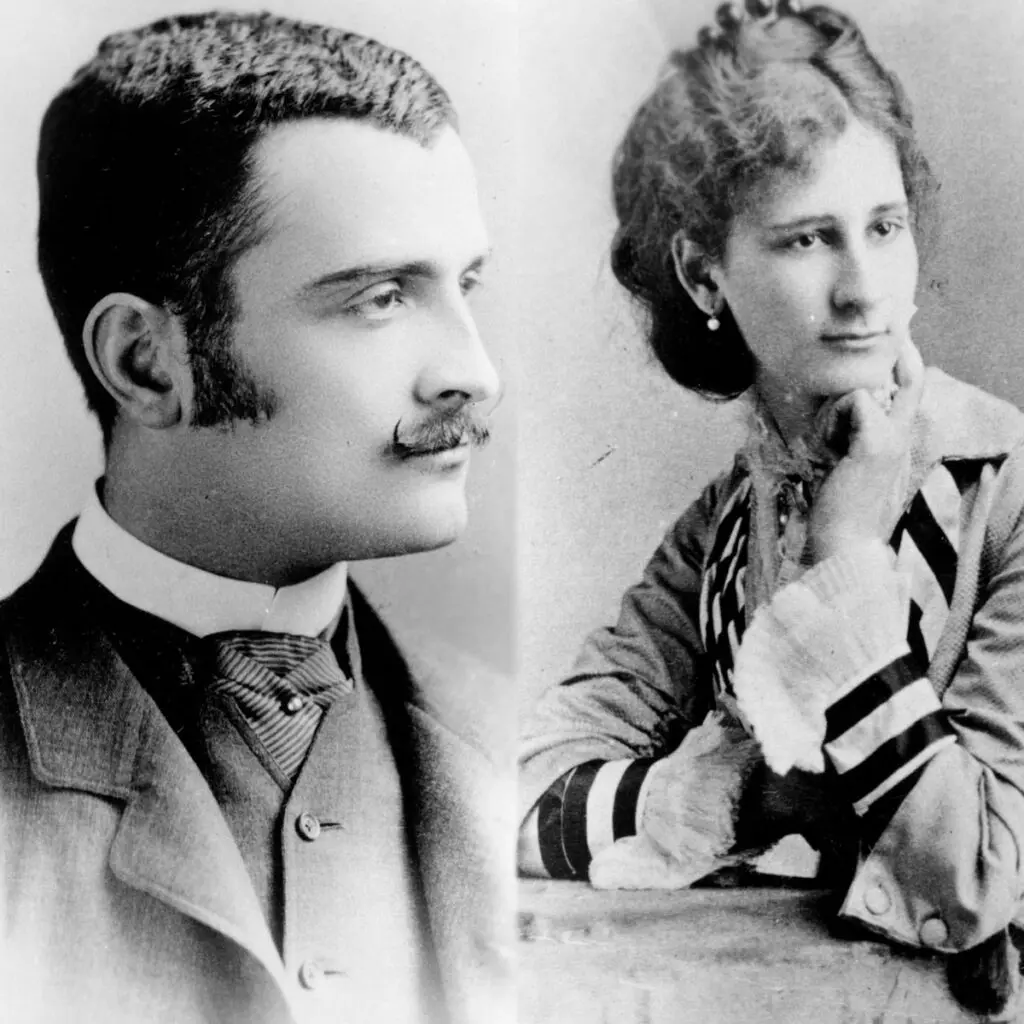
The Founding of Medora
Medora was born of ambition in the early 1880s, at the height of the cattle boom that swept across the Great Plains. Its founder, Antoine Amédée Marie Vincent Manca de Vallombrosa, the Marquis de Morès, was a French aristocrat with grand visions of empire on the Western frontier. In 1883, he arrived in the Dakota Territory with his wife, Medora von Hoffman, the daughter of a wealthy New York banker. It was her name that he gave to the settlement, ensuring her presence would be forever tied to this rugged land.
The Marquis sought not just to ranch but to revolutionize the meatpacking industry. Instead of shipping live cattle east on the railroads, he envisioned processing them locally and sending dressed beef in refrigerated cars directly to markets in Chicago and beyond. To achieve this, he built a meatpacking plant on the Little Missouri River, along with supporting infrastructure—warehouses, an icehouse, and even a hospital for his workers. For a time, Medora pulsed with optimism as the Marquis courted investors and drew attention to his Western venture.
But Medora was never an easy place to tame. The Marquis was a man of wealth and noble titles, yet the Badlands respected neither. His venture quickly encountered stiff resistance: railroads and Chicago packing houses were hostile to his competition, while the harsh Dakota winters and periodic droughts punished both cattle and men. Though his slaughterhouse processed thousands of animals in its brief operation, the venture collapsed by the mid-1880s, leaving ruins that still stand as silent testimony to his bold but ill-fated dream.
Even as the Marquis’s business faltered, Medora remained a small but bustling frontier town. Saloons, hotels, and boarding houses catered to cowboys, hunters, and ranchers. The railroad brought travelers and goods, while the cattle trails brought wealth and hardship in equal measure. It was in this environment—an uneasy blend of European aristocracy, frontier capitalism, and raw wilderness—that Theodore Roosevelt first encountered Medora.
Theodore Roosevelt’s Arrival in the Badlands
In September 1883, a young Theodore Roosevelt—then a 24-year-old New York assemblyman—stepped off the train in the tiny frontier town of Medora. He had come west on a hunting trip, eager to test his mettle against the wilderness and to pursue the bison that still roamed the Dakota plains. Thin, bespectacled, and by many accounts a picture of frailty, Roosevelt hardly looked like a man cut out for frontier life. Yet what began as a sporting adventure quickly grew into something deeper, binding him to the Badlands in ways neither he nor Medora could have anticipated.
During that first trip, Roosevelt struck up a partnership with two seasoned cattlemen, Sylvane Ferris and Bill Merrifield. Together they established the Maltese Cross Ranch (also called the Chimney Butte Ranch) a few miles south of Medora. Roosevelt invested $14,000—no small sum at the time—into cattle and ranching operations, seeing both adventure and opportunity in the booming livestock industry. The Maltese Cross Cabin, built by Ferris and Merrifield, became his first Dakota home, a modest but sturdy log structure with a pitched roof, sleeping loft, and wide veranda overlooking the rolling buttes.
Roosevelt reveled in the outdoor life, riding the range with cowboys, joining in roundups, and relishing the physical demands of ranch work. Yet he was still very much a visitor—an Eastern “dude” who was both respected and gently mocked by the hard-bitten locals. He brought books to read by lantern light, wrote letters to his family, and chronicled his experiences in vivid prose that revealed how deeply the land was already impressing itself upon him.
Though his first season in the Badlands was short, Roosevelt was hooked. In those vast, rugged landscapes, he found both the strenuous life he craved and a sense of personal renewal. His investment in ranching tied him financially to Medora, but more importantly, his experiences tied him emotionally and spiritually to the Dakota Territory. Within a year, tragedy in his personal life would send him back—not as a hunter seeking sport, but as a grieving man seeking solace.


Elkhorn Ranch

Maltese Cross Ranch
The Elkhorn Ranch – Roosevelt’s “Home Ranch”
In February 1884, Theodore Roosevelt’s world collapsed. On the same day—February 14—both his beloved wife, Alice Lee, and his mother, Martha, died within hours of each other in the Roosevelt family home in New York City. Overcome by grief, Roosevelt withdrew from public life and turned westward once more, seeking solace in the wild expanses of Dakota Territory.
When he returned to Medora later that year, he sought not just diversion but healing. He decided to establish a second, more permanent ranch, one that would be his true home in the Badlands. With the help of his trusted partners Bill Sewalland Wilmot Dow, hardy woodsmen from Maine, Roosevelt built the Elkhorn Ranch some 35 miles north of Medora, on a quiet stretch of the Little Missouri River.
The Elkhorn Ranch house was larger and more comfortable than the Maltese Cross Cabin. Built from cottonwood logs, it featured a broad veranda, a sitting room lined with books, and even rocking chairs made by Sewall and Dow. Roosevelt wanted a place where he could live a blend of frontier toughness and civilized comfort—rising before dawn for long rides across the buttes, then returning to read, write, and reflect in the evening.
At the Elkhorn, Roosevelt truly immersed himself in the strenuous life of a cattleman. He rode in blizzards, branded cattle, chased outlaws, and endured the brutal cycles of drought and winter that defined ranching in the Badlands. In one famous episode, he tracked down and personally captured three boat thieves who had stolen his skiff, marching them overland at gunpoint for days until they could be delivered to justice in Dickinson. Such exploits burnished his reputation locally, transforming him from a bookish Easterner into a man respected as both tough and fair.
But more than reputation, the Elkhorn gave Roosevelt resilience. In the solitude of the Badlands, surrounded by Sewall, Dow, and his cowhands, he worked through his grief and rebuilt his spirit. Later, he would write:
I would not have been President had it not been for my experiences in North Dakota.
The Elkhorn Ranch became, in Roosevelt’s own words, his “home ranch.” Though the severe winter of 1886–87 devastated his cattle operations and forced him to scale back his investments, the lessons he carried from those years never left him. The cabin is gone today, but the site remains preserved within Theodore Roosevelt National Park, often called the “cradle of conservation.”
Roosevelt’s Transformation in the Badlands
The years Theodore Roosevelt spent ranching in the Badlands were short in number—roughly from 1883 to 1887—but monumental in their impact. In that rugged country, Roosevelt’s body toughened, his confidence deepened, and his political philosophy began to take new shape. What he had sought as an adventurous diversion became instead a crucible that transformed him into the leader the nation would one day need.
Physically, the West reshaped him. Roosevelt, who had grown up frail and asthmatic, found in the strenuous work of riding, roping, and ranching a way to push his limits. Long days in the saddle hardened his frame, while exposure to the extremes of heat and blizzard taught him resilience. He came to relish the very toughness of the life, writing that hardship was not a burden but a proving ground.
Morally and intellectually, Medora forged his philosophy of duty, conservation, and fairness. Roosevelt admired the independent spirit of cowboys and ranchers but also saw the fragility of the Western frontier. The collapse of the cattle boom, overgrazing, and the devastating blizzards of the winter of 1886–87 convinced him that unchecked exploitation of land and wildlife carried consequences. These experiences would later inspire his conservation ethic as President, when he championed the creation of national parks, forests, and wildlife refuges.
Frontier justice, too, shaped Roosevelt’s views. Episodes such as his pursuit of boat thieves and his service as a deputy sheriff gave him a firsthand education in law, order, and responsibility. He admired the courage of those who lived by their wits and labor, but he also understood the necessity of civic duty and the rule of law in building a just society.
Perhaps most profoundly, the Badlands gave Roosevelt a place to confront loss and rebuild his spirit. In the silence of the wide prairies and under the endless skies, he emerged from grief with a renewed sense of purpose. The man who returned east from Medora was no longer merely a young politician from New York but a hardened, seasoned Westerner with a national perspective.
Roosevelt himself summed it up with characteristic clarity:
“Here the romance of my life began.”


Harold Schafer
Medora After Roosevelt – The Decline and Revival of a Frontier Town
When Theodore Roosevelt scaled back his ranching operations after the brutal winter of 1886–87, Medora itself began to decline. The cattle boom that had drawn Roosevelt and so many others to Dakota Territory collapsed as overgrazing, drought, and harsh winters devastated herds. Investors lost fortunes, homesteaders moved on, and the once-promising frontier town settled into a long period of stagnation.
The grand ambitions of the Marquis de Morès also crumbled. His meat-packing plant in Medora, designed to revolutionize the cattle industry by shipping dressed beef to Chicago, failed after only a few years. The Marquis himself eventually returned to Europe, where he died violently in North Africa in 1896. His French-inspired dream for Medora vanished almost as quickly as it had appeared, leaving behind ruins and memories of a bold, if ill-fated, experiment.
Through the late 19th and early 20th centuries, Medora remained a small ranching and railroad town. Roosevelt, now a rising national figure, occasionally referenced his Dakota years in speeches and writings, which kept Medora’s name alive in the public imagination. But the town’s population dwindled, and many of its early structures fell into disrepair.
Medora’s fortunes shifted in the mid-20th century with the arrival of a new benefactor: Harold Schafer, a North Dakota businessman and philanthropist best known for creating the Glass Wax and Mr. Bubble brands. In the 1960s, Schafer and his family invested heavily in restoring Medora’s historic buildings, revitalizing the town as a center of Western heritage and tourism. They established the Medora Musical, a summertime outdoor show that blended patriotism, cowboy culture, and the story of Roosevelt in the Badlands.
Today, Medora thrives not as a cattle empire or industrial hub but as a living museum of the frontier, a place where visitors can walk in Roosevelt’s footsteps, explore the remnants of de Morès’ enterprises, and enjoy the rugged beauty that shaped a president. The combination of historic preservation, cultural celebration, and natural wonder has given the town a second life—one rooted in memory and storytelling rather than speculation and industry.
Theodore Roosevelt’s years in Medora were brief, but their imprint on him—and on the nation—was indelible. In the rugged beauty of the Badlands, he discovered both personal healing and a philosophy of conservation, duty, and resilience that would guide his public life. When he later stood as President, he carried with him the lessons learned among cowhands, ranchers, and the wide skies of Dakota Territory.
Medora itself became part of that legacy. Though the cattle boom collapsed and the town shrank, Roosevelt’s memory gave it enduring significance. His famous declaration—
“I never would have been President if it had not been for my experiences in North Dakota.”
—cemented the Badlands as not just a personal refuge but a national birthplace of leadership.
The modern town of Medora reflects this intertwined heritage. Its historic structures, cultural attractions, and surrounding Theodore Roosevelt National Park all serve as gateways into the story of a young man’s transformation into a statesman. Every summer, visitors retrace his steps, from the Maltese Cross Cabin to the Elkhorn Ranch site, while enjoying the cowboy culture and hospitality that echo the frontier days.
Most importantly, Roosevelt’s conservation legacy—shaped in part by watching the fragility of the Dakota landscape—continues to resonate. As President, he set aside 230 million acres of public land, established national forests and wildlife refuges, and laid the foundation for the modern environmental movement. That vision was born in the Badlands, in Medora, where he witnessed both the grandeur of untouched wilderness and the dangers of reckless exploitation.
Today, Medora stands not just as a charming Western town, but as a living monument to the formative power of place. It reminds us that history is not only written in cities and capitals but also in the quiet stretches of prairie and river where character is forged.


Plan Your Visit to Medora
Step in the boots of Theodore Roosevelt and discover the place he loved.