
Martha "Mittie" Bulloch Roosevelt: The Southern Belle in New York

Martha “Mittie” Bulloch — a celebrated Southern beauty from Georgia — brought grace, romance, and a touch of the Old South into the Roosevelt household. (Wikimedia Commons)

Her family ran deep in the Confederacy: her half-brother James Dunwoody Bulloch was the South’s chief naval agent in Europe during the Civil War. (Wikimedia Commons)
Beauty, Charm, and a Voice Like Liquid Starlight
If Theodore Roosevelt Sr. represented the austere virtues of the Dutch merchant tradition, his wife Martha "Mittie" Bulloch Roosevelt embodied an entirely different world. She was, by universal account, extraordinarily beautiful. At 33, when she had already borne four children, she looked scarcely in her early twenties. She stood just over five feet tall, with a slender figure, tiny perfect hands, and features of remarkable delicacy. Her eyes were a soft, clear blue; her complexion, in the words of family recollection preserved by biographer David McCullough, "more moonlight-white than cream-white." Those who knew her described her as looking almost like a vision — "so young, so beautiful and gentle, that she might almost have been a sister to her children."
But her beauty was not what truly set her apart in the world of New York's merchant class. What made Mittie seem almost exotic was her gift for storytelling and her inexhaustible fascination with people. She possessed a liquid Southern voice, an everlasting interest in people, a gift for mimicry, and an overflowing romanticism — the traits her children and their biographers would remember most vividly. She created an entire world through narrative—a world that her children experienced more vividly than any place they actually lived.

Famed for her beauty and her soft Georgia voice, Mittie enchanted New York society. (Wikimedia Commons)

Mittie grew up at Bulloch Hall, a white-columned house in Roswell, Georgia — the setting of the childhood tales that later captivated her own children. (Wikimedia Commons)
Bulloch Hall and the Paradise That Shaped a Dynasty
For her children, Mittie created a mythical place through her stories: Bulloch Hall, the family's Greek Revival mansion in Roswell, Georgia—a place that defined her family's Southern heritage. The house stood on a gentle knoll with four massive Doric columns and a deep veranda positioned to catch the breezes and the views of the Chattahoochee River winding below. Around it grew giant oaks, Virginia cedars, magnolias, and mimosas—a landscape of natural grace that seemed to embody a golden age now lost.
Through Mittie's vivid performances—delivered with an actress's sense of timing and dramatic effect—her New York children experienced this Southern paradise as though they had lived there. She regaled them with accounts of parties and tableaux vivants, riding parties through open country, the river's color like heavily creamed coffee, the blue violets growing beside the house, the views of the valley in late-afternoon light. These weren't dry recollections; they were theatrical productions, and Mittie was a skilled performer.
Her daughter Corinne later reflected that Mittie's siblings and relatives seemed to possess something quite different from New York respectability: "They apparently none of them had any particular education, but all of them had the most delightful gifts. They were all good-looking, and all had entrancingly stormy love affairs." This Southern romanticism—the emphasis on beauty, passion, and emotional intensity—stood in sharp contrast to the restraint and duty that characterized her husband's world.
A Divided Household During the Civil War
The Civil War created a profound contradiction at the heart of the Roosevelt household. Mittie's brothers—James Dunwody, called "Uncle Jimmie," and Irvine Bulloch—were not content to sit out the war safely in New York. Uncle Jimmie sailed his packet ship back to New York, conscientiously returning it to its owners, and then made his way south to assume secret duties as a Confederate naval agent in England. There, operating in the shadows of international diplomacy, he would orchestrate one of the Confederacy's most audacious achievements: the construction and fitting out of the CSS Alabama, the famous Confederate raider that preyed on Union commerce throughout the war.
Irvine, Mittie's youngest brother, was only 19 when he left the University of Pennsylvania to sign on as a midshipman in the Confederate Navy. Legend held that he fired the last shot in the famous engagement with the USS Kearsarge off Cherbourg, France—though this claim, like many wartime stories, acquired significance beyond what fact could support.
Reports suggest Mittie herself packed supplies for Confederate soldiers while living in the Union in New York—a gesture of loyalty to her Southern family that created unbearable tension within the household. For young Theodore, growing up in a New York home with a Southern mother and uncles fighting for the Confederacy, the contradiction was devastating. He adored his mother, yet his own sympathies lay firmly with the Union. In pretend games on bridges in Central Park, he would play a Union boat while his older sister Bamie played the Confederate blockade-runner. Kneeling for evening prayers with his Aunt Anna (Mittie's sister, visiting from the South), he would implore the Almighty to "grind the southern troops to powder"—a prayer that revealed the intensity of his conflicted feelings.
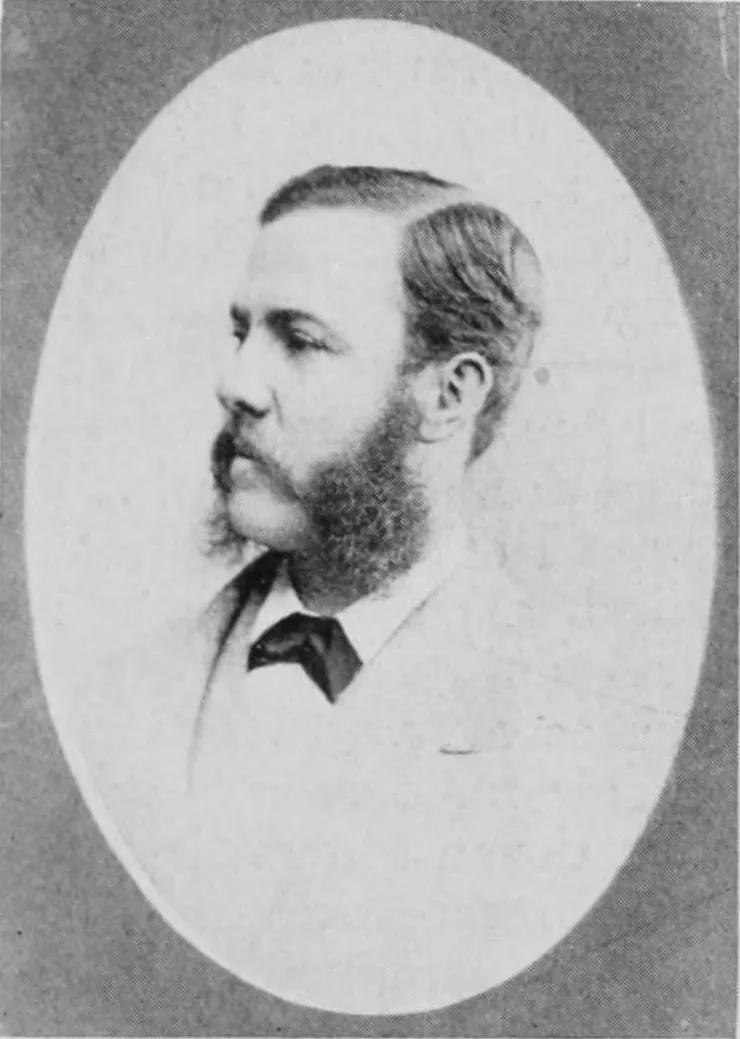
As her brothers Irvine and James served the Confederacy, Mittie secretly sent them aid — while her Union-supporting husband quietly looked the other way. (Wikimedia Commons)

Mittie doted on her frail, asthmatic “Teedie,” nursing him through countless sleepless nights and worrying over him long after he had made himself strong. (Theodore Roosevelt Collection, Harvard College Library)
A Mother's Anxiety and Protective Love
Mittie was, by all accounts, a doting mother, but her devotion was shadowed by anxiety. She worried about her children constantly—were they warm enough, fed enough, protected enough from the dangers of the world? During the Civil War years, when Theodore Sr. was away on Allotment Commission work, she was left managing the household and the children largely alone. Her letters paint a picture of exhaustion and overwhelm. "Teedie very unwell," she would write, staying up with him "six or seven times during the night," managing the children alone while enduring what Corinne later called her mother's "mental suffering."
Only once does Mittie allow herself even a momentary expression of self-pity—in a letter written late at night, when she had a moment free: "the only time unoccupied with the dear, troublesome little children deserted by their papa." It's a rare moment of complaint from a woman who generally bore her burdens without protest.
Love and Loss: A Wife's Devotion
Mittie's letters reveal the depth of her love for her husband. Theodore had pursued her with the intensity characteristic of his entire personality, and she had eventually returned his affection fully. When he was away, she counted the days. When he was home, she created a world of warmth and narrative entertainment for him and their children.
Theodore's friends remarked on the devotion the couple showed each other. This was not the conventional marriage of their social class, distant and formal. Theodore and Mittie were genuinely in love, and it showed. He wrote to her from his office at Roosevelt & Son of how the mere thought of her could brighten a day at 94 Maiden Lane, where "such a thing as sentiment would be laughed at as a humbug worthy of Mr. Barnum's collection."

Mittie died of typhoid on February 14, 1884 — in the same house, on the same day that her son’s young wife Alice died of kidney failure hours later. (Wikimedia Commons)
A Day Cut Short
Mittie Roosevelt lived to see her children grow, but she did not live to see them reach their full potential. On February 14, 1884—six years, almost to the day, after Theodore Sr.'s death and on the same day that Theodore Jr.'s first wife, Alice Hathaway Lee, would die—Mittie died at age 48. She had lived only 48 years, her life a bright flame that burned intensely but briefly.
She left her children with something irreplaceable: a sense of narrative richness, of beauty, of the romantic dimensions of human experience. Theodore Jr., practical and often severe in his philosophy, never lost the romantic sensibility his mother had given him. Her stories of the South, her gift for vivid description, her belief that life should be lived with intensity and feeling—these shaped him as profoundly as his father's moral seriousness. He was made of both: the Dutch merchant's duty and the Southern belle's passion.
Continue Reading
- Theodore Roosevelt Sr.: The Man Who Shaped a President — The Dutch-American husband who loved her deeply
- A Family Divided: The Roosevelts and the Civil War — How the nation's conflict divided the household
- TR's Siblings: Bamie, Elliott, and Corinne — The children Mittie nurtured with stories and love
- The Roosevelt Family Abroad: Grand Tour and Nile Adventure — The journeys Mittie made with her children
- "Make Your Body": Overcoming Childhood Asthma — A mother's anxious care during her son's struggle
From the Archives
Explore original photographs, documents, and illustrations related to this topic in the Theodore Roosevelt Center Digital Library.
Recommended Reading
- Mornings on Horseback by David McCullough (1981). ISBN: 0-7432-1738-1
- The Loves of Theodore Roosevelt by Edward F. O'Keefe (2024). ISBN: 978-1-9821-4568-2
- Alice and Edith by Dorothy Clarke Wilson (2011). ISBN: 0-385-24349-9