
TR’s Siblings: Bamie, Elliott, and Corinne—Family at Its Best and Worst
Bamie: The Strength Behind the Throne
Anna "Bamie" Roosevelt (1855–1931) was Theodore's older sister, nearly four years his senior, and she would become the most trusted confidant of his entire life. This is remarkable because Bamie suffered from Pott's disease, a form of spinal tuberculosis that caused severe spinal curvature. Despite this chronic condition—which gave her persistent pain and limited her physical capabilities—Bamie became one of the most politically connected women in Washington and possibly the single most important influence on Theodore's personal life.
Bamie was capable in a way that most people of her era simply weren't. When Theodore's first wife, Alice Hathaway Lee, died just two days after giving birth to baby Alice, it was Bamie who stepped in. She raised the infant, cared for her as tenderly as any mother could, and gave Theodore the space to process his overwhelming grief. Later, when Theodore remarried and had more children, Bamie remained the anchor of family life, the one person Theodore could trust absolutely with the people he loved most.
But Bamie's influence extended far beyond family. She was a political operator of remarkable skill, managing Theodore's household, entertaining the city's most influential figures, and understanding political realities with an acuity that some said matched Theodore's own. She was never in the spotlight herself—that wasn't her way—but she shaped events from behind the scenes. In many ways, Bamie embodied a kind of power that was available only to women of her era: indirect but profound, wielded through intelligence, discretion, and an absolute refusal to be limited by either convention or physical disability.

Anna “Bamie” Roosevelt — brilliant, capable, and hampered by a curved spine — was Theodore's confidante and shrewdest political advisor throughout his career. (Wikimedia Commons)
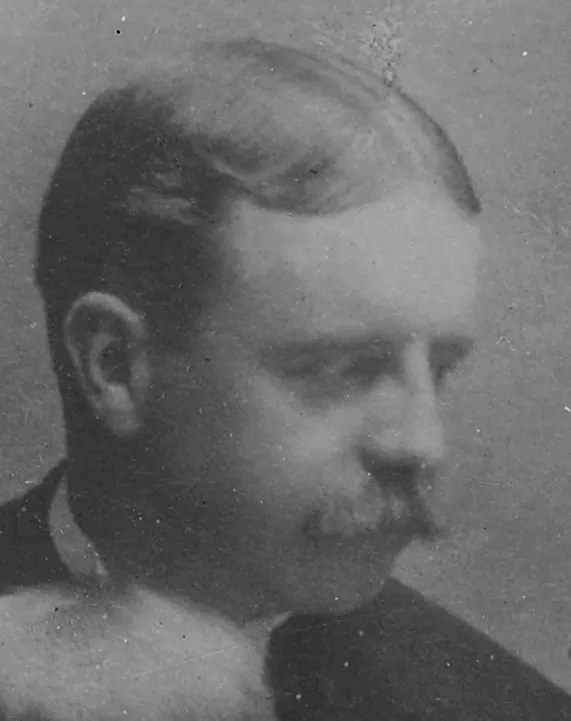
His charming, athletic younger brother Elliott — later the father of Eleanor Roosevelt — spiraled into alcoholism and died at thirty-four, a heartbreak that haunted Theodore. (Wikimedia Commons)
Elliott: Brilliance Destroyed by Alcohol
If Bamie represented the best of what the Roosevelt family could produce, Elliott Roosevelt (1860–1894) represented its tragedy. Elliott was Theodore's younger brother, brilliant, charming, and devastatingly unreliable. He was the kind of person who captivated those around him—handsome, witty, full of schemes and energy. But he was also an alcoholic at a time when the condition was still understood as a moral failure rather than a disease, and his brilliant mind was gradually destroyed by his addiction.
Elliott's life was a succession of failures that broke his family's heart. He married, became estranged from his wife amid a succession of scandals, and dragged the family name through gossip and shame; his wife Anna died in 1892, during their estrangement. He traveled abroad frequently, often in desperate attempts to escape his demons or to start fresh, but nothing worked. The wit and promise that had made him such a charming boy became evidence of wasted potential in the man.
In December 1883, Elliott married Anna Hall, one of the celebrated beauties of New York society. On October 11, 1884, their daughter Eleanor Roosevelt was born—the niece who would become one of the most influential First Ladies in American history. Yet not even the promise of a young family could arrest Elliott's decline.
By 1894, when Elliott died at only 34, his family had watched his long decline with helpless grief; his death ended an agony for everyone who loved him. The watching and worrying were over. The concern that he would embarrass the family again, make another terrible decision, destroy something else precious—it was finished. His death was a tragedy, certainly, but it was also a release from the exhausting pain of watching someone you love destroy himself with seemingly willing participation.
Corinne: The Poet and Political Voice
Corinne Roosevelt Robinson (1861–1933), the youngest of the four Roosevelt children, inherited something of her mother's gift for language and her father's moral seriousness. She became a poet of genuine accomplishment, a public speaker of considerable skill, and eventually a political figure in her own right—one of the first women to speak publicly about politics in America.
Theodore loved Corinne deeply and cherished her fiercely. In his letters, he's far more tender with her than he is with most people—the gruffness that characterized much of his personality would fall away when he wrote to his little sister. She knew him in a way that few people did, understood him, and was not afraid to challenge him when she thought he was wrong.
Corinne's political engagement was remarkable for a woman of her era. In 1912, when Theodore bolted from the Republican Party to run as a Progressive, Corinne campaigned publicly for her brother. In 1920, she seconded the nomination of General Leonard Wood at the Republican National Convention—the first woman to second the nomination of a major-party presidential candidate. She was also a devoted wife and mother, but she refused to let those roles limit her intellectual and political engagement with the world.

His youngest sister, Corinne Roosevelt Robinson, became a published poet and a skilled political operator who helped craft and promote her brother's public image. (Library of Congress)

The four Roosevelt children were fiercely close, bound by a childhood of shared adventures, illnesses, and the loss of both parents while still young. (Theodore Roosevelt Collection, Harvard College Library)
Sibling Bonds Forged in Childhood
The four Roosevelt children grew up in the same Manhattan townhouse, were educated at home by family and tutors, and shared the formative experiences of their era. They traveled together to Europe, rode horses together in Central Park, played elaborate pretend games together, and served as witnesses to each other's growth and transformation.
During the Civil War, they would play out the conflict on the bridges of Central Park—Bamie as the Rebel blockade-runner, Theodore as a Union boat, Elliott and Corinne in roles of their own invention. In these games, young Theodore worked through the impossible contradiction of loving his Southern mother while believing the Union cause was just.
The sibling relationships would endure throughout their lives, though they would be tested by Elliott's scandals and shaped by the premature deaths of their father and mother. Bamie would be Theodore's most trusted advisor and the great love of his private life. Corinne would be his intellectual companion and political ally. And Elliott, despite his failures, remained Theodore's brother—complicated, disappointing, but still bound by blood and childhood memory.
The Lessons of Family
Theodore's siblings taught him lessons that no schoolroom could provide. Bamie showed him that physical limitation did not mean being limited—that will and intelligence could overcome almost anything. Elliott's tragedy demonstrated the terrible cost of a will that turned inward, destroying the person who possessed it. And Corinne proved that women could be intellectually and politically engaged, that their voices mattered, that they deserved to be heard.
These lessons shaped Theodore's later life in ways both obvious and subtle. His devotion to Bamie was absolute. His struggle to understand and help Elliott—and his eventual acceptance that some people couldn't be saved—gave him a complicated humility beneath the bravado. And his respect for Corinne's mind and voice meant that he was never one of those men who thought women shouldn't engage with politics, policy, and the great questions of the day.
Continue Reading
- Theodore Roosevelt Sr.: The Man Who Shaped a President — The patriarch whose values shaped all four children
- Martha "Mittie" Bulloch Roosevelt — The mother who nurtured and held the family together
- A Family Divided: The Roosevelts and the Civil War — How siblings worked through national conflict together
- The Roosevelt Family Abroad: Grand Tour and Nile Adventure — Journeys that united the Roosevelt children
- The Roosevelt Family Roots — The family legacy shaped by all four siblings
From the Archives
Explore original photographs, documents, and illustrations related to this topic in the Theodore Roosevelt Center Digital Library.
Recommended Reading
- Mornings on Horseback by David McCullough (1981). ISBN: 0-7432-1738-1
- My Brother Theodore Roosevelt by Corinne Roosevelt Robinson (1921)
- The Roosevelt Cousins by Linda Donn (2001). ISBN: 0-679-44637-0