
Gifford Pinchot: The Forester Who Shaped a Nation
Yale and the European Education
Gifford Pinchot came from old money — his family was wealthy, which might have led him toward a life of leisurely privilege. Instead, he chose a path toward becoming something entirely new in America: a professional forester. When he attended Yale College as a member of the class of 1889, he discovered that the university offered no classes in forestry. Forestry as a profession did not yet exist in the United States. Undaunted, he sampled Yale's curriculum in subjects related to his vision — botany, geology, economics — all while earning respectable marks and winning the Townsend Prize for public debate. At his 1889 graduation, with characteristic boldness, he jettisoned his prepared alumni speech and delivered an extemporaneous declaration about the critical importance of forestry to America's future.
Realizing that he could not complete his forestry education in America, Pinchot set his sights on Europe, where Germany and France had pioneered scientific forest management. His voyage across the Atlantic brought him first to Southampton and London, where his head was, as he later recalled, “still being lost in the fog.” Yet fortune intervened. A high-ranking official in the Indian Civil Service provided letters of introduction to two eminent German foresters: Sir William Schlich, head of the British forest school, and Sir Dietrich Brandis, formerly the inspector general of forests for the British government in India. These luminaries recognized Pinchot's potential and directed him to the prestigious École forestière in Nancy, France, where he could put his French language skills to scholarly use.
In Nancy, Pinchot immersed himself in scientific forestry under the finest European teachers. But his education extended far beyond merely learning timber management techniques. He understood that European forestry required knowledge of soils, weather, light, geology, economics, and the intricate relationships within forest ecosystems. This interdisciplinary approach — treating forests as complex living systems rather than mere timber repositories — became the intellectual foundation of his revolutionary thinking. The great foresters he studied under, like Brandis, had taken European concepts of forest management and applied them successfully across the British Indian Empire, proving that these principles were transportable and adaptable to different landscapes and climates. When he returned to America in late 1890, his head full of European knowledge and his imagination fired by the possibility of creating an entirely new profession in his homeland, Pinchot was ready to reshape America's relationship with its forests.

Born to wealth, Gifford Pinchot studied at Yale and then in France and Germany — there being no forestry school in America — returning to become the nation's first native-trained forester. (Library of Congress)

At George Vanderbilt's Biltmore estate, Pinchot ran the first managed forest in America — proving that woodlands could be harvested and renewed rather than simply cut down. (Library of Congress)
Biltmore and the Birth of American Forestry Practice
Upon his return to America, Pinchot quickly found opportunity to practice what he had learned in Europe. In 1892, he secured his first major professional assignment: managing the forests of George W. Vanderbilt's Biltmore Estate near Asheville, North Carolina. Vanderbilt's palatial 250-room mansion — reputed to be the largest house in the United States — sat on thousands of acres of burned-over, grazed-down woodland. Pinchot's task was twofold: develop a forest-management plan to restore the degraded woods to productivity, and help Vanderbilt acquire an additional 100,000 acres for expansion.
The Biltmore work was a turning point. Pinchot later reflected on the moral paradox the estate represented: “Its setting was superb, the view from it breathtaking, and if it was a feudal castle it would have been beyond criticism, and perhaps beyond praise. But in the United States of the nineteenth century and among the one-room cabins of the Appalachian mountaineers, it did not belong. The contrast was a devastating commentary on the injustice of concentrated wealth.” Yet he seized the opportunity regardless, understanding that this high-profile project could demonstrate forestry's potential to a skeptical American public. He published a heavily illustrated book about the work, turning Biltmore into a showcase of scientific forest management. The success — both practical and publicity-wise — made Pinchot a national figure and established him as America's foremost expert on forestry. Throughout the 1890s, he continued as a consulting forester to other large landowners, each project generating newspaper articles and speeches that made forestry a household topic and burnished Pinchot's reputation as the man who could bring order and sustainability to American logging.
A Friendship Before Power
Pinchot and Roosevelt knew each other before Roosevelt became president. In the 1890s, Pinchot was making a name for himself as a consulting forester and as the visionary behind America's nascent forestry profession. Roosevelt, rising through New York politics and serving as Police Commissioner and then Governor, took note of Pinchot's work. When Roosevelt—elected vice president in 1900—became President upon McKinley's death in September 1901, he retained Pinchot, who had been appointed Chief of the Division of Forestry by McKinley in 1898, and made him a central figure in the administration. But it wasn't just a political appointment — Roosevelt and Pinchot shared a fundamental belief that America's natural resources should be managed wisely rather than squandered, and that the federal government had both the right and the responsibility to do the managing. They liked each other. They trusted each other. They shared a vision of what America could become if it managed its inheritance intelligently.
Together, they would reshape America's landscape. The turning point came in 1905 when Roosevelt signed legislation transferring 86 million acres of forest reserves from the Department of the Interior to the Department of Agriculture and establishing the U.S. Forest Service with Pinchot as its first chief. This was not mere bureaucratic reorganization — it was a fundamental shift in how America related to its forests and represented the culmination of Pinchot's nearly two decades of advocacy and planning.
To understand the revolutionary nature of this moment, consider that when Pinchot took office as Chief of the Division of Forestry in 1898, his agency had a tiny budget, few personnel, and did not manage a single acre of forest. The forest reserves were scattered across various departments and poorly managed. Within just seven years, Pinchot had transformed the situation entirely. He had founded the Society of American Foresters in 1900 and helped establish the Yale Forest School that same year — the nation's first graduate program in forestry, funded substantially by Pinchot's own family. The school's students spent summers apprenticing at Pinchot's Milford Experimental Forest in Pennsylvania before interning with the Bureau, gaining invaluable field experience that would populate the nascent Forest Service with trained professionals. When the Forest Service was established in 1905, Pinchot immediately hired many Yale graduates, creating a corps of scientific foresters ready to manage the nation's woodlands.
Pinchot wrote the Forest Service mission statement himself: “where conflicting interests must be reconciled” on the national forests, “the question will always be decided from the standpoint of the greatest good for the greatest number in the long run.” That phrase — “in the long run” — captured the essence of Pinchot's vision: sustainability across time, not just maximum harvest in the present. This was conservation, not preservation. The forests would be used for timber, grazing, water resources, and recreation, but managed scientifically to ensure those uses could continue indefinitely. Together, the president and the forester protected nearly 230 million acres of public land — more forest than had ever been preserved before, and transformed it from neglected wasteland into systematically managed national resources.

Roosevelt and Pinchot became fast friends and philosophical allies, hiking, boxing, and swimming together while plotting the future of America's public lands. (Library of Congress)

Pinchot's “wise use” — conservation as scientific management for human benefit — clashed with the pure preservationism of John Muir, splitting the movement. (Library of Congress)
The Vision That Divided America's Conservationists
Not everyone appreciated Pinchot's approach. John Muir, the great preservationist, believed that some wild places should be left untouched by human use — kept pristine for spiritual renewal and natural beauty. Pinchot respected Muir but disagreed fundamentally. Where Muir saw temples of nature that must be preserved, Pinchot saw resources that could serve humanity while remaining healthy and productive. These weren't merely philosophical differences; they shaped how America would relate to its wilderness for generations to come.
The Ballinger-Pinchot Controversy: The Test of Loyalty
The real test of Pinchot's convictions came under President William Howard Taft, Roosevelt's chosen successor. Taft was, by temperament and philosophy, a more cautious man than Roosevelt. While Roosevelt had been willing to use executive authority boldly and extensively — issuing proclamations and executive orders to protect lands — Taft preferred to work through established legal channels and Congressional consultation. This fundamental difference in approach to executive power became the axis of conflict, and it placed Pinchot in an impossible position.
The crisis erupted in 1909 when Secretary of the Interior Richard Ballinger proposed leasing Alaskan coalfields located within the Chugach National Forest to the wealthy, well-connected Guggenheim syndicate. To Pinchot, this was a betrayal of everything the Roosevelt administration had fought for. These were Roosevelt-era conservation lands, ostensibly protected for the public interest. The Guggenheim lease appeared to be a backroom deal favoring private wealth over public benefit. Pinchot first challenged it quietly within the executive branch, using official channels to voice his opposition. But when the Taft administration seemed inclined to approve the lease anyway, Pinchot took a fateful step: he informed President Taft in advance that he intended to go public with his concerns.
When Pinchot did speak out, he did more than merely object to a policy decision — he questioned the integrity of Secretary Ballinger and, by implication, President Taft's judgment in supporting him. In doing so, Pinchot violated the unwritten rule that cabinet officers do not publicly contradict their president. Taft, feeling his authority challenged, fired Pinchot for insubordination in January 1910.
The Ballinger-Pinchot controversy exploded across the front pages of every major newspaper in the country. Newspapers portrayed Pinchot as a crusading conservationist who had sacrificed his career to defend the public interest, while Ballinger became the symbol of corrupt special interests gaining access to public lands. Congressional investigations into the controversy dragged on for months, further embarrassing the Taft administration. For Roosevelt, still in Africa on his hunting expedition when the news reached him, the firing of Pinchot felt like more than a personnel decision — it was a fundamental betrayal of the conservation legacy that Roosevelt had worked his presidency to build. Roosevelt had regarded Pinchot as one of his closest advisors and dearest friends. Taft's dismissal of him planted a seed that would eventually grow into Roosevelt's decision to challenge Taft for the Republican presidential nomination in 1912. Even though Roosevelt lost that fight and the GOP split three ways in 1912, Pinchot remained vindicated in the court of public opinion — the man who had spoken truth to power and paid the price for it, only to be vindicated by history and the public's judgment.

Under Taft, Pinchot publicly accused Interior Secretary Richard Ballinger of betraying conservation — a scandal that got Pinchot fired and helped shatter the Republican Party. (Library of Congress)

Together, Roosevelt and Pinchot placed some 230 million acres under federal protection and built the U.S. Forest Service into a lasting institution. (Library of Congress)
A Legacy Written on the Landscape
Today, when you visit a National Forest — not a National Park, but a working forest where timber is still harvested, cattle still graze, and water still flows to communities downstream — you're seeing Pinchot's vision in action. The distinction he drew between preservation and conservation remains relevant. National Parks protect wild places; National Forests provide resources while maintaining ecological health. Both are necessary. Both reflect the different convictions of Muir and Pinchot, two men who loved nature differently but equally fiercely.
The Complicated Friendship
What's often forgotten is that Roosevelt genuinely cared for Pinchot as a friend, not just an advisor. They shared a vision of an America managing its resources intelligently rather than squandering them recklessly. When Taft fired Pinchot, Roosevelt felt personally betrayed. This wasn't just a political disagreement about policy; it was a breach of loyalty to a man Roosevelt respected. The Pinchot affair showed that Roosevelt's commitment to conservation wasn't abstract — it was deeply personal, tied to his friendships and his sense of duty to the next generation of Americans.
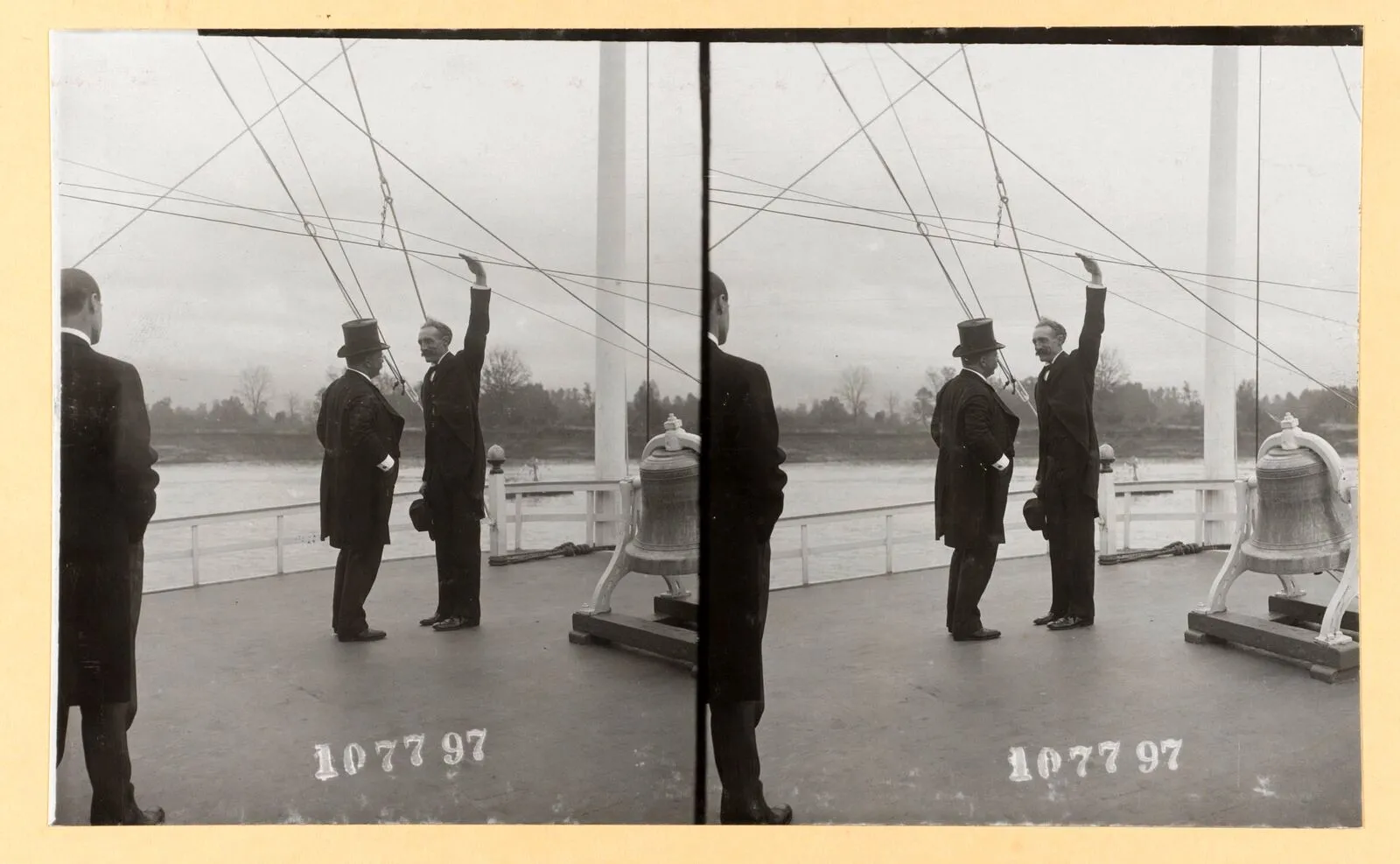
The friendship endured, though it strained when Pinchot's radicalism pushed Roosevelt further left than he wished to go in the Bull Moose years. (Library of Congress)
Life After Taft: Renewed Purpose
Pinchot's firing vindicated him in the court of public opinion, but it also freed him to pursue a broader political career. The forester had developed a taste for public struggle and felt he could accomplish more in electoral politics than in the shrinking world of forest administration under a hostile president. Between 1914 and 1938, he ran repeatedly for public office — for Congress, for the Senate, and for governor of Pennsylvania. His campaigns were vigorous and often unconventional. In 1914, just hours after his marriage to Cornelia Bryce, he put his honeymoon on hold to crisscross Pennsylvania on a campaign tour, shaking hands and pressing the flesh with voters. He lost that first race, and several others, but ultimately achieved his greatest electoral success when he won the Pennsylvania governorship twice, serving from 1923–1927 and again from 1931–1935.
As Pennsylvania's governor, Pinchot championed causes that would have made Roosevelt proud. He fought vigorously for civil rights for all citizens. He promoted rural development and infrastructure improvements, working tirelessly to bring modern roads and schools to isolated mountain communities that had been devastated by logging and mining. He balanced state budgets in good times and bad, refusing to let the state fall into financial chaos even as the Great Depression spread misery across the nation. His economic policies were progressive, creating jobs and generating hope in communities that had suffered decades of economic decline. He continued writing influential books about conservation and forestry, and remained a tireless lecturer and advocate for his vision of wise use conservation, traveling across America to speak about the need for sustainable management of natural resources.
Through it all, his friendship with Roosevelt remained strong, sustained by regular correspondence. When Roosevelt left the presidency in 1909, Pinchot was one of the few people Roosevelt remained truly close to. Though Roosevelt died in 1919 and could not see Pinchot's later political success and vindication, the foundation they had built together — the conservation principles, the Forest Service, the protected lands, the philosophical vision of using nature for the public benefit — endured and flourished. Pinchot lived to see the system he and Roosevelt had created become institutionalized and accepted as the normal way America managed its forests. He died in 1946, at the age of eighty-one, having reshaped not just America's forests but America's entire relationship with the natural world. In his legacy lay proof that a single person, armed with knowledge, conviction, and the friendship of a powerful ally, could redirect the course of a nation.
Continue Reading
- John Muir: The Wilderness Prophet — Pinchot's philosophical rival in conservation debates
- Conservation During the Roosevelt Presidency — The broader conservation agenda Pinchot helped shape
- William Howard Taft: Friend, Protégé, Rival — The president who dismissed Pinchot
- Roosevelt in the Badlands — Early development of Roosevelt's conservation philosophy
- National Forests and Forest Conservation — Pinchot's lasting legacy in resource management
- Conservation Legacy Overview — Roosevelt and Pinchot's shared conservation achievements
Primary Sources at the TR Center
Explore the Theodore Roosevelt Center's Digital Library for letters, photographs, and documents related to Gifford Pinchot and the conservation movement.
- Conservation Encyclopedia Section — Comprehensive essays on Roosevelt's conservation philosophy and achievements
- Politics and Government Encyclopedia — Articles on Roosevelt's political conflicts including the Ballinger-Pinchot affair
- Family and Friends Section — Information on Roosevelt's relationships with key advisors like Pinchot
- Roosevelt Timeline — Detailed chronology placing Pinchot's role in historical context
- Bibliography and Further Reading — Scholarly resources on conservation history and the Roosevelt presidency
From the Archives
Explore original photographs, documents, and illustrations related to this topic in the Theodore Roosevelt Center Digital Library.
Recommended Reading
- Breaking New Ground by Gifford Pinchot (autobiography). ISBN: 978-1-56833-254-1
- Gifford Pinchot and the Making of Modern Environmentalism by Char Miller (2001)
- Colonel Roosevelt by Edmund Morris (2010). ISBN: 978-0-679-60415-0