
The Death of Quentin Roosevelt: July 14, 1918
The White House Years: A Spirited Child
Quentin Roosevelt was Theodore Roosevelt's youngest child and in many ways his favorite. Born on November 19, 1897, he grew up in the White House during his father's presidency, from 1901 to 1909. The White House children during Roosevelt's era—particularly Quentin and his siblings—became figures of public fascination. They were the offspring of the nation's most energetic president, growing up in its most public house, and they brought a kind of controlled chaos to formal state functions. Roosevelt himself seemed to relish this havoc, often finding in his youngest son a mirror of his own restless energy.
As a boy, Quentin was a natural leader among Washington's young elite. He presided over what newspapers called "the White House Gang"—an unofficial society of the capital's most adventurous children. One of his companions remembered that Quentin wasn't accepted as leader simply because he was the president's son, but because “with his big head, cyclonic energy, and moral decisiveness he simply was Theodore Roosevelt in their imitative world.” Charles Taft, the portly son of Roosevelt's successor, served as his aides-de-camp, following Quentin's orders with unquestioning loyalty in their elaborate mock battles and raids across White House grounds.
Quentin was known for his pranks and his mischief, often conducting elaborate campaigns against the White House property and its staff. During one famous incident, a battle erupted over the grounds in which Quentin issued rapid-fire orders to his forces, commandeering a fire ax to slice the East Wing's garden hose into sections during what he called a military engagement. Roosevelt, hearing the commotion from his office, came charging out to investigate. Rather than punishing his son harshly, he used the moment as a teaching opportunity, lecturing Quentin about the importance of immediate action and accepting responsibility for one's choices—while noting that the government would now have to purchase an entirely new garden hose.
Yet there was also an underlying sweetness to Quentin. Unlike his father's sometimes aggressive nature, Quentin thought about the consequences of his actions on others. A capacity for genuine affection and loyalty made even those he had tormented willing to forgive him. His bosom companion was the White House security chief William Craig, a former guard to Queen Victoria, who delighted in spending hours reading comic papers with the young Roosevelt.
By his teenage years, Quentin had grown into a remarkably vital and spirited young man—filled with energy, humor, and a restless curiosity about machinery and mechanical systems. He was less intellectually driven than some of his siblings like Theodore Jr., who pursued serious academic work. Instead, Quentin's instincts were tactile and practical: he understood the piano as “an intricate system of levers,” he wrote with facility though flights of fancy engaged him less than the technical satisfaction of setting type in the school print shop, and he was endlessly fascinated by “machinery” of all kinds. What he had inherited from his father was the appetite for life, the willingness to take risks, and the conviction that caution and comfort were betrayals of one's potential.

The youngest of Roosevelt’s six children, Quentin was the ringleader of the “White House Gang” — mischievous, fearless, and his father’s favorite. (Wikimedia Commons)

By 1917 Quentin was a Harvard student in love with Flora Payne Whitney. The two became secretly engaged before he shipped out to war. (Library of Congress)
The Courtship and the Girl He Loved
In the years after his father's presidency, Quentin developed a serious romantic attachment to Flora Payne Whitney, daughter of one of America's wealthiest families. The courtship was the sort of thing the newspapers delighted in—the son of a former president courting the daughter of great wealth, a union that seemed to symbolize the natural order of American society. Flora was beautiful, accomplished, and deeply in love with Quentin. For his part, Quentin was devoted to her in a way that suggested depths of feeling beneath his cheerful exterior.
In 1917, as Quentin prepared to enter military service, he was also contemplating marriage. Flora urged him to marry before he left for France; his father encouraged it as well, fearing his youngest son might be killed in the war. But Quentin recoiled from the idea of wedding Flora only to leave her a widow within months, or worse, to become “a useless chain to which you were tied” should he return maimed and unable to live as a full man. Instead, he asked her to wait, promising that when he had completed his service and would be eligible for leave, they would marry in Paris next summer. The war intervened. Quentin felt the pull of duty and adventure more powerfully than the pull of romantic attachment. He would go to France as a combat pilot, testing himself against death, before he would take on the responsibilities of marriage.
The Spirited Young Pilot
When the United States entered World War I in April 1917, Quentin was nineteen years old. Unlike his older brothers Ted and Archie, who had attended the Plattsburg training camps and were sure of commissions in the infantry, Quentin's future remained uncertain. He had attended Harvard but had not distinguished himself academically. He had tried various pursuits but had not settled into a career. To his father, the restless energy that had characterized his childhood seemed to lack focus or direction. Roosevelt worried about Quentin's ability to find purpose in the world.
But when America entered the war, Quentin found his calling. He would become a pilot in the nascent U.S. Army Air Service. Flying was new, thrilling, and extraordinarily dangerous—the very frontier of military innovation. Aviation appealed to Quentin's fascination with machinery and mechanical systems in a way nothing else had. It was also a way to prove himself, not just to his father but to the world. He would not go to war as a staff officer or a clerk. He would go as a combat pilot, testing himself against German fighters in the skies above France, willing to take the ultimate risks.
Quentin's parents worried about his poor eyesight and his injury—a riding accident had dislocated two ribs where they joined the spine, leaving him in chronic pain. But he was determined. When he volunteered, he warned his father that if the U.S. Army rejected him, he was willing to see if the less rigorous Canadians would accept him as a pilot. He entered flight training at Mineola in New York with a lumbering Curtiss Jenny aircraft that proved brutally difficult to control, especially for a young man nursing a damaged back.
Progress in aviation training was breathtakingly fast. The German offensives in spring 1918 had created a desperate need for pilots. France begged for five thousand American aviators. The U.S. Army, ranked seventeenth in the world with barely a day's worth of ammunition, had fewer than a hundred trained pilots. Meanwhile, the average life expectancy of a chase pilot on the front was just eleven days. Quentin moved rapidly through training at Issoudun, in central France, a muddy aviation instruction center far behind the lines. By July 1918, he had earned his wings and been assigned to the 95th Aero Squadron, a unit stationed in France that was becoming legendary for its success against German aircraft. Quentin was proud to fly with this distinguished company, eager to prove himself in combat.
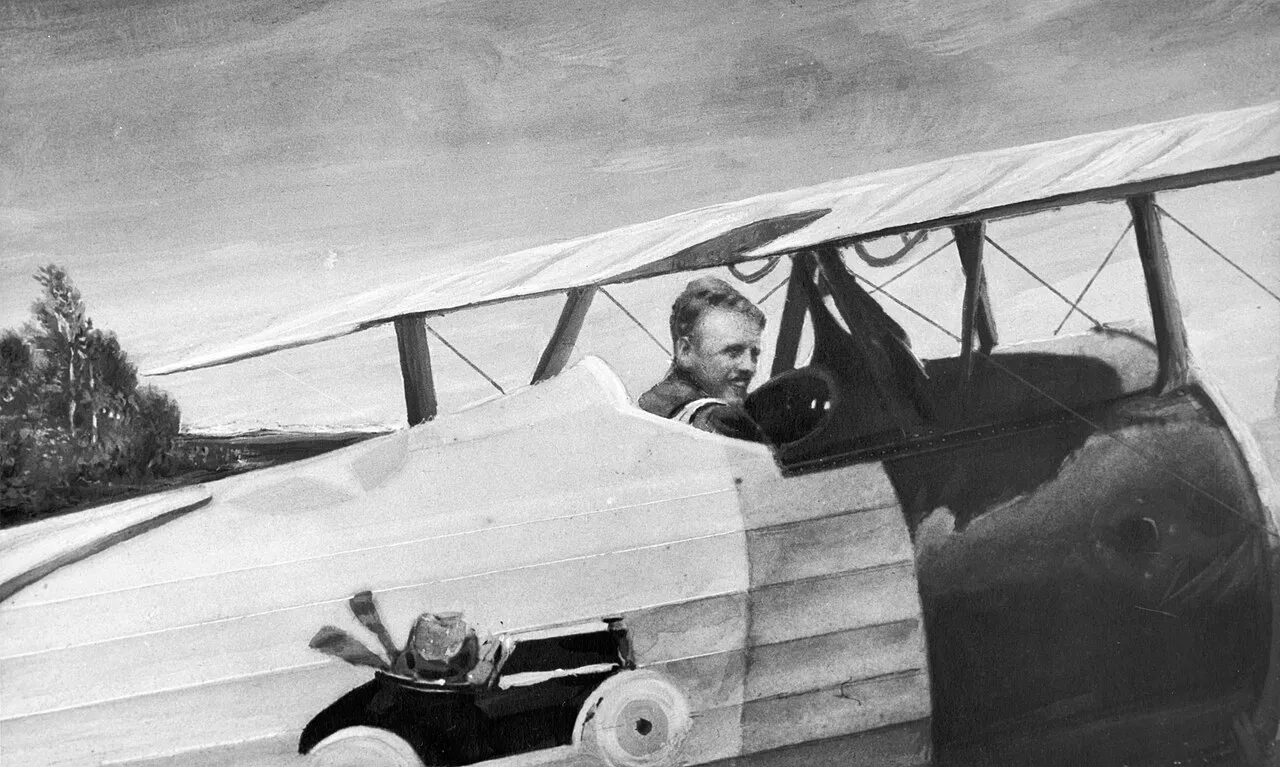
Quentin left Harvard to become a fighter pilot, learning to fly with the same reckless zest he brought to everything. (Wikimedia Commons)

Flying with the 95th Aero Squadron over France, Quentin downed an enemy plane before being shot down himself in a dogfight on July 14, 1918. (Wikimedia Commons)
Combat and Courage: The Final Mission
In July 1918, Quentin and his squadron were engaged in almost daily combat operations. The squadron flew Nieuport fighter aircraft—Pursuit planes, as they were called in that era—in missions protecting observation aircraft and hunting German fighters in the skies above the Marne. Quentin participated in multiple combat missions, demonstrating skill and eagerness. He was young, bold, and perhaps too willing to press attacks against enemy aircraft at the margins of prudence. Fellow pilots described him as “game as they make 'em in aviation,” noting his fearlessness and his willingness to take on German opposition even when outnumbered or at disadvantage. He had experienced flak on his maiden patrol along the lines and had seen a Mineola comrade killed earlier in the year, so he was not naive about his vulnerability. But he was clear-eyed about the risks in a way that suggested acceptance rather than fear. The average life of a fighter pilot on the front in summer 1918 was just eleven days.
In the last week of July 1918, the war was reaching a turning point. The massive German Spring Offensive had finally been halted. The Allies were launching devastating counterattacks, driving German forces back from Château-Thierry toward the country west of Reims. American forces, including the air service, were playing an increasingly critical role in this shifting tide. The 95th Squadron was engaged in constant operations, flying multiple patrols per day in support of advancing ground forces and in pursuit of German fighters.
On July 14, 1918—Bastille Day, a date that would resonate in Roosevelt family history—Quentin Roosevelt took off on what was to be a routine patrol mission over the Champagne region. The weather was clear. Quentin flew with his usual confidence and eagerness, commanding his Nieuport fighter with the precision he had developed through weeks of combat. He and his squadron encountered German aircraft in the skies near Chamery, in the Marne province, just as American forces were beginning their counteroffensive below.
The combat that followed was chaotic and violent, as air combat always was. In the engagement, Quentin's aircraft was hit by German fire. Two bullets passed through his brain. His Nieuport fighter, shattered and smoking, became uncontrollable. The damage was catastrophic, and he died instantly. His aircraft plummeted earthward, losing altitude and speed. Over the village of Chamery, the young pilot's aircraft crashed into a field just east of the road to Coulonges, a twisted wreckage of canvas and struts and metal. Quentin Roosevelt, age twenty, died before his plane hit the ground.
The German Soldiers' Respect: An Enemy's Military Honors
German soldiers who discovered Quentin's body in the wreckage of his aircraft near Chamery recognized who he was. The famous president's son was known throughout the German army. But instead of mistreatment, they did something extraordinary: they gave him a military funeral. According to American prisoners of war who witnessed the ceremony on July 15, 1918, some one thousand German soldiers stood in a detachment of honor, with officers at attention, as Quentin was laid to rest. A German soldier took a knife and scratched the word “ROOSEVELT” onto a cross-shaped piece of the Nieuport fighter, marking the grave. When American forces later advanced through Chamery, they found bits of Quentin's aircraft reverently scattered about the field—souvenir hunters had carefully removed pieces to keep, while the cross remained.
A German officer wrote a letter to Theodore Roosevelt explaining what had happened. The letter took weeks to reach the grieving father, traveling through neutral diplomatic channels and the machinery of a continent at war. The German military authorities themselves broadcast the news through the Wolff press agency in Berlin. This gesture from German soldiers to their enemy's son spoke to something profound about Quentin Roosevelt—and about the strange code of honor that persists even in the midst of war. These soldiers, who were fighting for their nation against the Americans, recognized in Quentin something worthy of respect: a young man who had fought with courage and skill, who had understood his duty and accepted the risks inherent in fulfilling it, who had given his life for a cause he believed in. They honored that sacrifice with the only gesture available to them: a proper burial and the dignity of a military funeral.
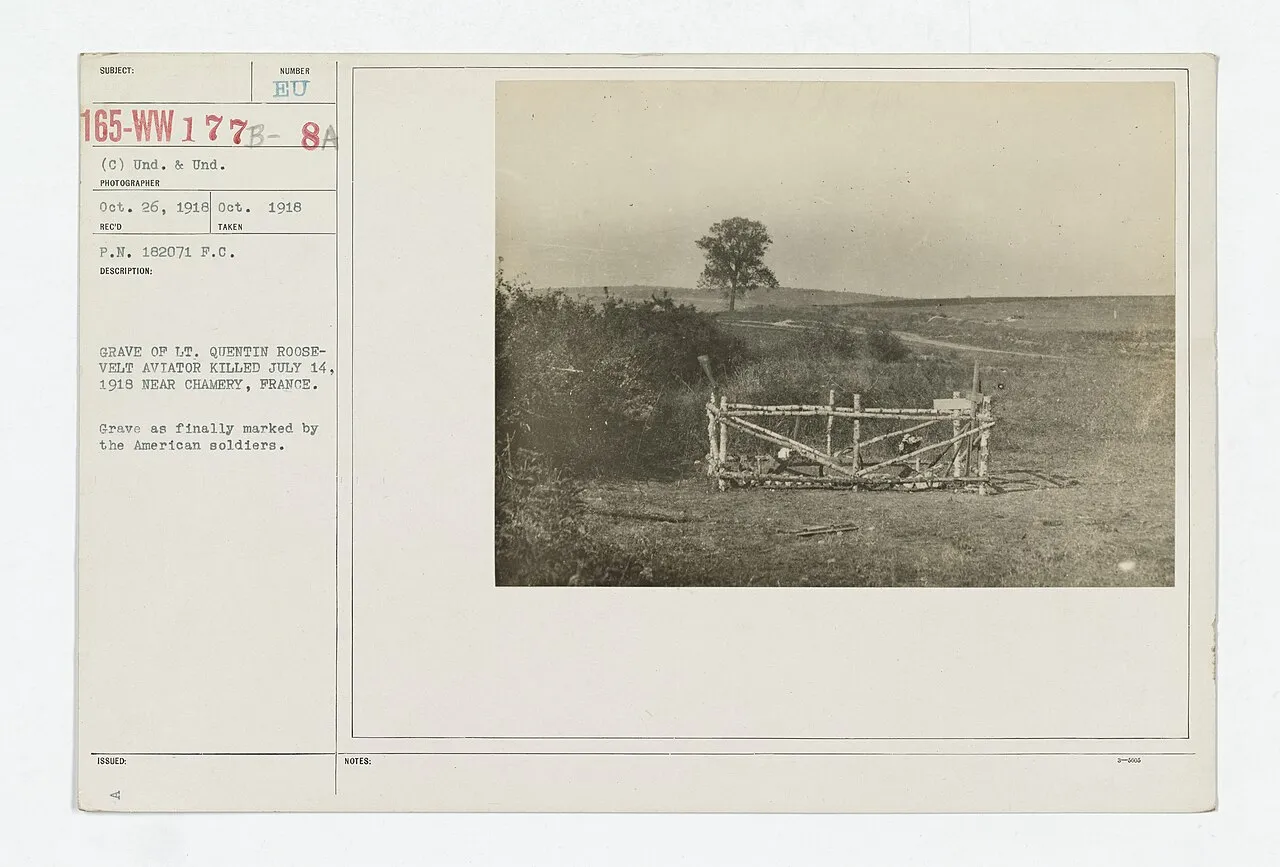
German soldiers, recognizing the former president’s son, buried Quentin with full military honors where he fell — a gesture that moved even his grieving family. (National Archives)

The news broke Roosevelt. “The old side of him is gone,” a friend observed. He bore the grief quietly, but it visibly aged and diminished him. (Wikimedia Commons)
The Unbearable News: A Father's Grief
On the morning of July 16, 1918, Theodore Roosevelt's secretary came to him with devastating news based on unconfirmed newspaper dispatches from Europe: Quentin had been killed in action over France. The Colonel paced up and down the piazza at Sagamore Hill, his face darkening as he absorbed the information. “But—Mrs. Roosevelt?” he asked. “How am I going to break it to her?” Over the next few days, as reports were confirmed through official channels and the German press, the full weight of loss settled on the Roosevelt household. The telegram from Woodrow Wilson arrived: “Am greatly distressed that your son's death is confirmed. I had hoped for other news.” The Roosevelts attended early mass that Sunday, trying to adjust to the enormity of the void that had opened so suddenly in their landscape.
The knowledge that his youngest son was dead struck Theodore Roosevelt with devastating force. Quentin had embodied everything he valued: courage, vigor, a willingness to take risks for a cause larger than himself. More than that, Quentin had been his favorite—the youngest, the most spirited, the one who most directly inherited his father's appetite for life and action. In many ways, Quentin had been the true Roosevelt child, the one least burdened by ambition or introspection, the one most purely alive.
Roosevelt's response to Quentin's death revealed a father's devastation beneath the public figure's facade of strength. Observers reported that he wept openly—something even close friends had rarely witnessed. Archie, his son who had been severely wounded in the war and was still recovering, found his father in moments of private anguish, clinging to the children’s old White House pony and weeping inconsolably. “Poor Quentyquee!” he cried out, using the childhood nickname he had bestowed on his youngest son decades before in the White House. The nickname embodied the long arc of a life cut short—from the spirited ten-year-old leader of the White House Gang to the twenty-year-old pilot who had given his life in the skies above France.
Public Grief and Private Torment
Yet Roosevelt maintained his public composure and his conviction that Quentin's death had been meaningful, that the war had been necessary, that his son had died for a cause worthy of ultimate sacrifice. In his public statement, he praised Quentin's bravery with words calculated to transform personal tragedy into national narrative: “Quentin's mother and I are very glad that he got to the front and had a chance to render some service to his country, and to show the stuff there was in him before his fate befell him.” He spoke of his pride in his son's service, of Quentin as a young man who had understood his duty and accepted the risks inherent in fulfilling it. But friends close to Roosevelt understood the terrible cost of this public composure. Beneath the brave face lay a father devastated by grief, a man who had championed military preparedness and war and had paid the ultimate price for his convictions in the coin of his child's blood.
Roosevelt attempted to find philosophical solace in his beliefs about sacrifice and duty. In one of his articles written during this period of grief, he wrote: “Only those are fit to live who do not fear to die; and none are fit to die who have shrunk from the joy of life and the duty of life. Both life and death are parts of the same Great Adventure.” But even as he published these words, contemporaries observed that they rang with a desperate quality—a father searching for some justification for the loss of his child, some way to transform personal tragedy into a narrative of nobility and meaning.
The strain between public composure and private anguish was immense. Roosevelt was a man who had always prided himself on strength, on the ability to endure any hardship through willpower and the strenuous life. But grief does not respond to willpower. The loss of a child is not something that can be overcome through determination. Roosevelt was forced to confront, in the final months of his own life, the limits of even his extraordinary strength. His conviction that sacrifice was noble, that death in service was meaningful—these beliefs that had sustained him became both a source of comfort and a source of additional torment, as he realized that all his philosophy could not bring his youngest son back to life.

The nation mourned the fallen aviator, even as Roosevelt privately tormented himself — wondering whether his own lifelong preaching of valor had sent his boy to die. (Library of Congress)
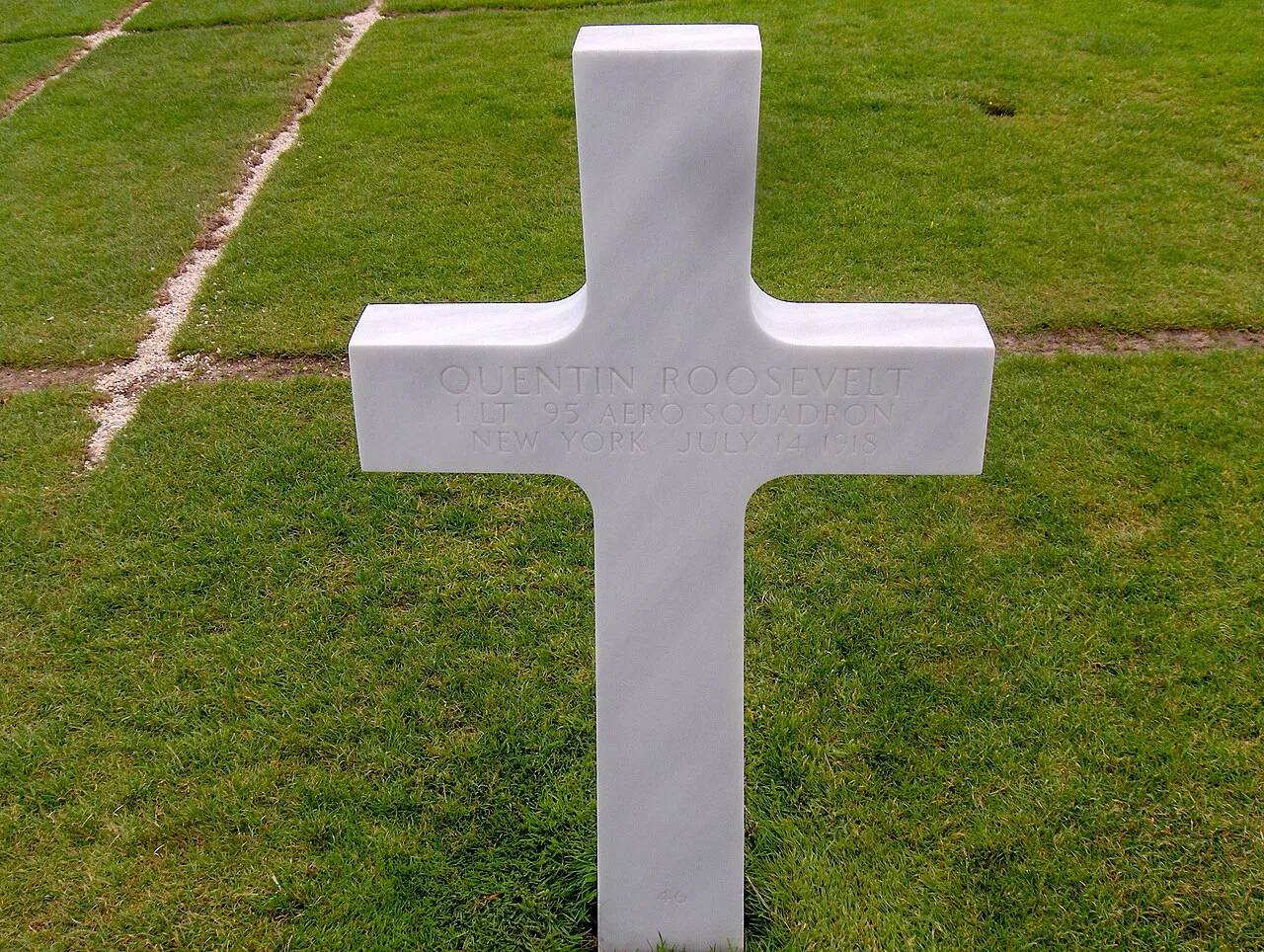
“It is very dreadful that he should have been killed,” Roosevelt wrote, “but it would have been worse if he had not gone.” The loss shadowed his final months. (Wikimedia Commons)
The Unbearable Guilt and Enduring Love
Roosevelt blamed himself, at least in part, for Quentin's death. He had been the one who had most forcefully advocated for American entry into the war when President Wilson counseled caution. He had been the one who had championed military preparedness, who had attended the Plattsburg training camps himself to show Americans the necessity of armed strength. He had been the one who had modeled a life of adventure and risk-taking that Quentin had emulated. The knowledge that his own convictions, his own example, and his own example had, indirectly but inexorably, contributed to his son's death was a burden that Roosevelt carried for the few remaining months of his own life.
His letter to Belle Willard Roosevelt, Kermit’s wife, written immediately after the confirmation of Quentin's death, revealed the depth of his anguish: “It is no use pretending that Quentin's death is not very terrible. There is nothing to comfort Flora at the moment; but she is young.— As for Mother, her heart will ache for Quentin until she dies.” That Edith's grief would be permanent, that the loss could never be healed, seemed to Roosevelt a truth too awful to contemplate. Yet he had no choice but to contemplate it. The father who had always believed that strength and determination could overcome any obstacle had finally encountered something his will could not overcome: the death of his youngest son and the knowledge of his own complicity in that death.
A Death That Changed Everything
Quentin's death in July 1918 marked a turning point in Theodore Roosevelt's final years. The vigor and energy that had characterized him through the African safari, the Brazilian expedition, and the Bull Moose campaign visibly declined in the months following the news. His health, already damaged by the fever-ridden River of Doubt expedition in Brazil, deteriorated rapidly. Archie's near miss in combat and Ted's gassing at Cantigny had prepared him for terrible news, yet the actual knowledge of Quentin's death seemed to accelerate the decline of his physical body in a way nothing else could.
Those who saw him in the months that followed reported being shocked at his appearance—the former president seemed a man diminished, aged beyond his years. He could speak of little but mortality. Hearing that Ted had been nearly blinded and killed, that Archie was crippled by his wounds, and contemplating the death of his youngest son seemed to compound into a weight of grief that even Roosevelt's iron will could not overcome. “Since Quentin's death,” he confessed in a letter to a friend that autumn, “the world seems to have shut down upon me.”
Roosevelt lived for less than six months after receiving confirmation of Quentin's death. When he died in January 1919—less than six months later—his death certificate attributed the cause to a pulmonary embolism, a blood clot that lodged in his lungs. But those closest to him understood a deeper truth: the knowledge of Quentin's death had broken something essential in him. It had introduced a weariness and a defeat that even his extraordinary will could not overcome. The man who had always believed that strength and determination could overcome any obstacle had finally encountered one he could not overcome: the death of his child and the terrible knowledge that his own convictions had helped send his youngest son to his death in the skies above France.
Continue Reading
- Theodore Roosevelt and World War I — Roosevelt's advocacy for the war and the sacrifice of his sons.
- Post-Presidency Overview — The extraordinary decade following his presidency.
Primary Sources at the TR Center
Explore original documents and resources related to Quentin Roosevelt and this tragic period in the Theodore Roosevelt Center Digital Library.
- Life of Theodore Roosevelt Timeline — Key events including his sons' military service and family losses.
- Family and Friends Encyclopedia — Information on Roosevelt's children and family relationships.
From the Archives
Explore original photographs, documents, and illustrations related to this topic in the Theodore Roosevelt Center Digital Library.
Recommended Reading
- The Golden Lad: Theodore Roosevelt and His Children by Eric Burns (2016). ISBN: 978-1-60598-951-8
- The Lion's Pride: Theodore Roosevelt and His Children by Edward J. Renehan Jr. (1998)
- Colonel Roosevelt by Edmund Morris (2010). ISBN: 978-0-679-60415-0