
Theodore Roosevelt on the Strenuous Life
On Action and Living Fully
I wish to preach, not the doctrine of ignoble ease, but the doctrine of the strenuous life, the life of toil and effort, of labor and strife; to preach that highest form of success which comes, not to the man who desires mere easy peace, but to the man who does not shrink from danger, from hardship, or from bitter toil, and who out of these wins the splendid ultimate triumph.
— “The Strenuous Life,” speech before the Hamilton Club, Chicago, April 10, 1899
From his 1899 speech “The Strenuous Life,” this passage captures Roosevelt’s entire philosophy. He was not preaching poverty or unnecessary hardship—he was preaching purpose, challenge, and the fulfillment that comes from struggle.
the greatest happiness is the happiness that comes as a by-product of striving to do what must be done, even though sorrow is met in the doing.
— An Autobiography, 1913
Ease brings no joy. Comfort brings no satisfaction. Happiness, as Roosevelt saw it, was not a goal to be pursued but a by-product of doing what must be done.

Theodore Roosevelt in his buckskin hunting suit, rifle in hand, 1885 — the young outdoorsman who preached the doctrine of the strenuous life (Harvard College Library, Theodore Roosevelt Collection).

President Roosevelt paddling a canoe toward shore — a lifelong believer that a sound body was the foundation of a vigorous life (Library of Congress).
On Physical Vigor and the Body
As a nation we have many tremendous problems to work out, and we need to bring every ounce of vital power possible to their solution. No people has ever yet done great and lasting work if its physical type was infirm and weak.
— North American Review, August 1890
Roosevelt believed physical strength was not vanity but necessity. A strong body was the foundation for a strong will and a courageous spirit—for nations as for individuals.
A republic can prosper, although the average man is not intellectually brilliant. But it cannot prosper if the average man becomes infirm of mind and soul, if he fears hard work and cares only for the easy avoidance of whatever is rough or unpleasant; or if, although of masterful temperament, he seeks to rise in ways that represent unscrupulous wrong to his weaker and less fortunate fellows.
— “The Key to Success in Life,” 1916 · Theodore Roosevelt Center
Fitness of mind and soul was not for athletes and soldiers alone. It was a prerequisite for effective citizenship and a successful life in any calling.
Bodily vigor is good, and vigor of intellect is even better, but far above both is character.
— The Strenuous Life, 1900
Roosevelt rejected the false choice between mind and body—and ranked character above them both. The complete person cultivated all three.
On Perseverance and Overcoming Hardship
Far better it is to dare mighty things, to win glorious triumphs, even though checkered by failure, than to take rank with those poor spirits who neither enjoy much nor suffer much, because they live in the gray twilight that knows not victory nor defeat.
— “The Strenuous Life,” speech before the Hamilton Club, Chicago, April 10, 1899
Failure was not something to be avoided at all costs. It was preferable to never trying at all. The strenuous life embraced the risk of failure because the alternative—safe, comfortable mediocrity—was worse.
In this life, no matter how much energy and ability and foresight we show, we are often certain to be trampled upon by men and events.
— Letter to Kermit Roosevelt, March 15, 1908 · Theodore Roosevelt Center
Roosevelt himself knew defeat—in elections, in ventures, in personal struggles—and he wanted his sons to expect it too. What mattered was never allowing defeat to stop the striving.
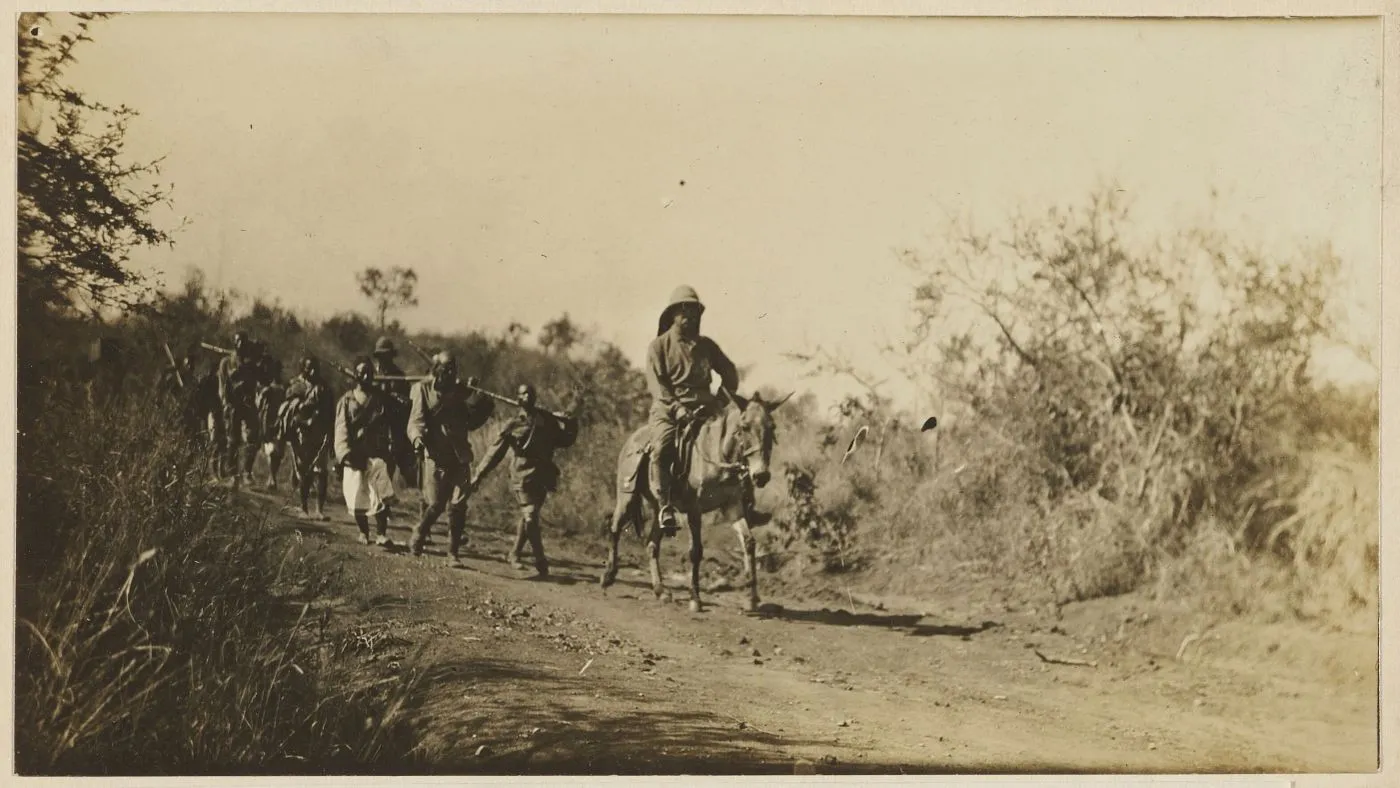
Roosevelt leading his safari party across the East African bush during the 1909–1910 expedition, a test of heat, distance, and endurance (Harvard College Library, Theodore Roosevelt Collection).

Roosevelt on horseback in the Badlands near Medora, North Dakota, where the hard work of ranch life shaped his character (Harvard College Library, Theodore Roosevelt Collection).
On Work and Purpose
Far and away the best prize that life offers is the chance to work hard at work worth doing.
— “The Key to Success in Life,” 1916 · Theodore Roosevelt Center
There was no secret to success in Roosevelt’s view: relentless work directed toward a worthy purpose was itself life’s best prize.
Do not let play interfere with work. Work hard, and when you do play, play hard.
— Speech at the dedication of a new high school building, Philadelphia, November 22, 1902 · Theodore Roosevelt Center
Whatever one’s station in life, Roosevelt insisted, one should be working—striving, improving, contributing—and playing with the same whole heart.
On Courage and Risk-Taking
in addition to courage and honesty we need the saving grace of common sense, for without that a man will make but scant headway in the world.
— Address at Boise, Idaho, May 28, 1903 · Theodore Roosevelt Center
For Roosevelt, courage came first among the virtues—but it never stood alone. Courage without honesty was dangerous, and courage without common sense accomplished nothing.
We do not admire the man of timid peace; we admire the man who embodies victorious effort; the man who never wrongs his neighbor, who is prompt to help a friend, but who has those virile qualities necessary to win in the stern strife of actual life.
— “The Strenuous Life,” 1899
Risk was inherent in the strenuous life. Timid peace earned no admiration; waiting for perfect safety meant never beginning.

Roosevelt beside a bull elephant during his 1909 African expedition, a pursuit that carried real danger in the field (Library of Congress).

Roosevelt reading in front of his tent in a hunting camp, 1910 — the reflective, book-loving side of a restless man of action (Library of Congress).
On the Examined Life
as soon as a man ceases to improve, he goes backward.
— Letter to Archibald B. Roosevelt, September 19, 1917 · Theodore Roosevelt Center
The strenuous life was not merely about external achievement. It demanded continual self-examination and self-improvement—standing still, for Roosevelt, was itself a kind of retreat.
speaking generally the boy or man who does one thing with his whole heart and learns how to do it well, will do other things with his whole heart.
— Remarks to the school children at Sioux Falls, South Dakota, April 6, 1903 · Theodore Roosevelt Center
What mattered was not the size of the task but the wholeness of the effort. Doing one thing with the whole heart, Roosevelt believed, built the habit of living that way.
On Fighting for What You Believe
Above all, let us shrink from no strife, moral or physical, within or without the nation, provided we are certain that the strife is justified, for it is only through strife, through hard and dangerous endeavor, that we shall ultimately win the goal of true national greatness.
— “The Strenuous Life,” speech before the Hamilton Club, Chicago, April 10, 1899
These are the closing words of the Strenuous Life speech. Roosevelt understood that the strenuous life demanded not just physical exertion but moral courage—the willingness to accept strife, moral or physical, when the cause was certain and just. A person could be physically strong but morally cowardly; Roosevelt demanded courage in all its forms.

Roosevelt with members of his expedition party and the American flag on safari in Africa, 1909–1910 (Library of Congress).

Roosevelt and companions on horseback with a pack of hunting dogs, 1905, ready to set out on the chase (Library of Congress).
On Overcoming Weakness
In the last analysis a healthy state can exist only when the men and women who make it up lead clean, vigorous, healthy lives; when the children are so trained that they shall endeavor, not to shirk difficulties, but to overcome them; not to seek ease, but to know how to wrest triumph from toil and risk.
— The Strenuous Life, 1900
Roosevelt’s own physical struggles—his asthma, his childhood frailty—gave him insight into what it took to overcome limitation through will and effort. He believed every person had weaknesses to confront, and that the training to overcome rather than shirk difficulty should begin in childhood. The strenuous life was the lifelong process of wresting triumph from toil and risk.
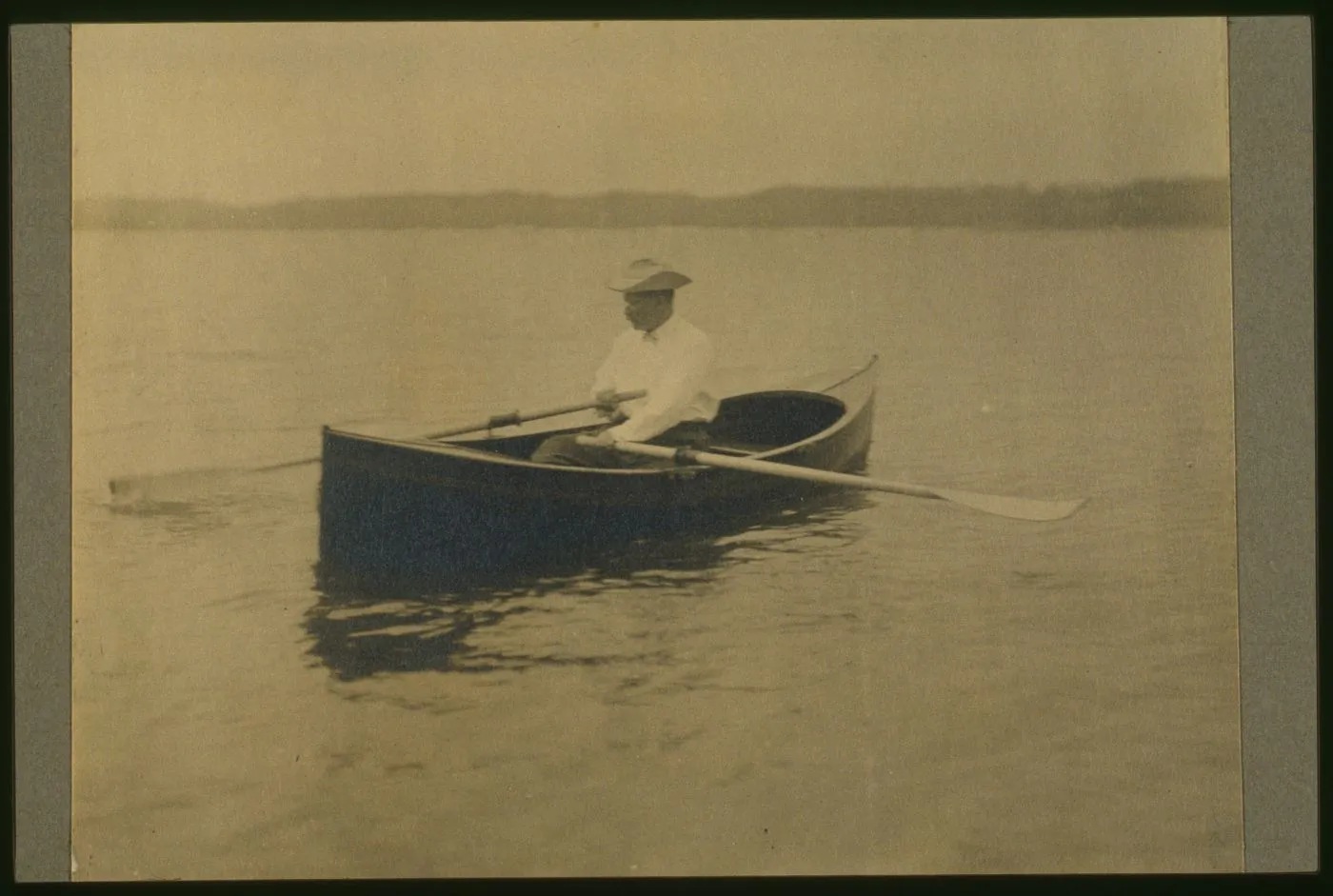
Roosevelt rowing on the water, 1905 — the frail, asthmatic boy who remade himself into a man through relentless physical exertion (Library of Congress).
On Joy in Struggle
It was probable that hardship lay in the future; but the day was our own, and the day was pleasant.
— Written on the Roosevelt–Rondon Expedition, Christmas Day, 1913
This captured something essential about Roosevelt’s philosophy: the strenuous life was not merely a grim duty. He wrote these words deep in the Brazilian wilderness, on an expedition that would nearly kill him—and still the day was pleasant. There was satisfaction, even happiness, in struggle itself: in striving for something that mattered, in testing yourself, in being alive in the deepest sense.
Continue Reading
- Citizenship — More on TR
- Leadership — More on TR
Primary Sources at the TR Center
Explore original documents and resources related to this topic in the Theodore Roosevelt Center Digital Library.
- TR Center Digital Library — Primary source collection
From the Archives
Explore original photographs, documents, and illustrations related to this topic in the Theodore Roosevelt Center Digital Library.
Recommended Reading
- The Strenuous Life by Theodore Roosevelt (1900)
- Theodore Roosevelt: A Strenuous Life by Kathleen Dalton (2007). ISBN: 978-0-307-42968-1