
Who Were the Rough Riders? Stories of Individual Men
Bucky O'Neill: The Gallant Sheriff
Captain William Owen "Buckey" O'Neill was one of the most famous Rough Riders. He had been the sheriff of Prescott, Arizona, known for his personal courage and his sense of justice. O'Neill was tall, handsome, and charismatic. He had newspaper experience—he had worked as a journalist before becoming a lawman. His courage was legendary in Arizona. When Theodore Roosevelt began organizing the Rough Riders, O'Neill was one of his first recruits. Roosevelt appointed him as a captain, a position that O'Neill filled with distinction.
On July 1, 1898, moments before the charge up Kettle Hill, O'Neill was killed by a sniper. He was on foot, pacing calmly in front of his prone troopers and refusing to take cover, demonstrating the kind of personal courage that Roosevelt so valued. A Spanish bullet struck him. O'Neill had known he was exposing himself to fire, but he rode forward anyway. His death devastated the regiment. Men who had fought beside him mourned him deeply. O'Neill represented the best qualities that Roosevelt valued: personal courage, leadership, and willingness to face danger directly. He died as he lived—acting with courage and honor in the face of danger.
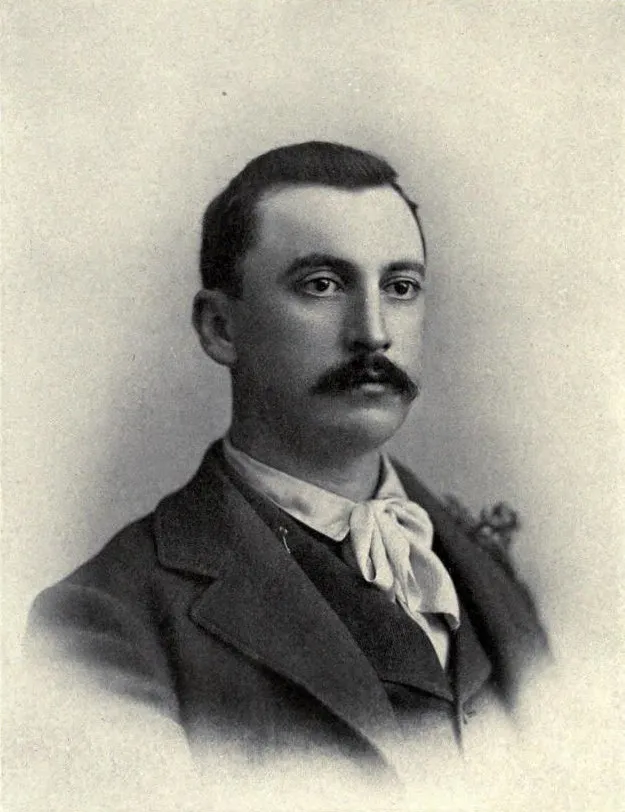
Captain William ‘Bucky’ O’Neill, the Prescott sheriff, mayor, and miner who joined the Rough Riders and was killed at San Juan Hill. (Wikimedia Commons)
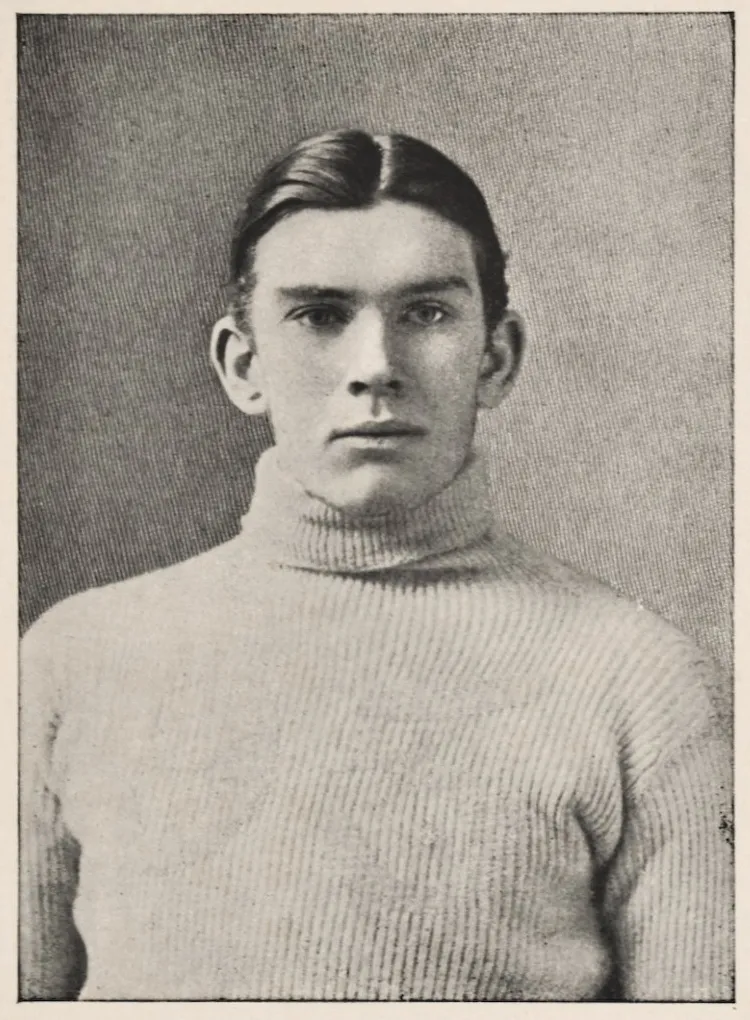
Sergeant Hamilton Fish III, grandson of a U.S. Secretary of State and a Columbia oarsman, was among the first Rough Riders killed at Las Guasimas. (Wikimedia Commons)
Hamilton Fish Jr.: The Wealthy Recruit
Hamilton Fish Jr. was the grandson of Grant's Secretary of State. He came from one of New York's wealthiest families. He was educated at Columbia, where he rowed on the varsity crew. Yet he volunteered to serve in the Rough Riders as a private soldier—not an officer, but an ordinary trooper. Fish's decision to volunteer, despite his wealthy background, surprised many people. But Fish believed in the righteousness of the cause and wanted to serve his country. He was killed at Las Guasimas on June 24, 1898, dying alongside Captain Allyn Capron Jr. His death demonstrated that the Rough Riders were composed of men of all social classes, all of whom were willing to risk their lives for their country.
Tom Isbell: Native American Scout
Tom Isbell was a Cherokee Indian who served as a scout for the Rough Riders. He was an expert tracker and woodsman, skilled in the kind of work that was invaluable in the difficult terrain of eastern Cuba. Isbell fired one of the first American shots at Las Guasimas and was wounded seven times in the regiment's combat operations, but survived the war. His service demonstrated the complex role that Native Americans played in American military forces during this period. Despite the history of conflict between Native Americans and the American government, many Native Americans served in the Army during the Spanish-American War and fought with skill and dedication.

Troop H, recruited in Indian Territory, included many Native American troopers such as Cherokee scout Tom Isbell. (Harvard College Library)

Captain Woodbury Kane, a Knickerbocker society yachtsman and Harvard man, at Camp Wikoff after the Cuba campaign. (Harvard College Library)
Woodbury Kane: The Society Sportsman
Woodbury Kane was a wealthy New Yorker, a man of social prominence and athletic accomplishment. He was educated in the best schools and belonged to the best clubs. Yet he volunteered to serve in the Rough Riders as a soldier. Kane's participation demonstrated that the regiment attracted men not just from the frontier, but from America's elite. Kane survived the war and returned to the fashionable sporting world of yachting and clubs he had known before; he died in 1905. His service in the Rough Riders remained one of the defining experiences of his life.
"We drew recruits from Harvard, Yale, Princeton, and many another college; from clubs like the Somerset, of Boston, and Knickerbocker, of New York; and from among the men who belonged neither to club nor to college, but in whose veins the blood stirred with the same impulse which once sent the Vikings over sea."
— Theodore Roosevelt, The Rough Riders (1899)
Ben Daniels: Former Marshal of Dodge City
Ben Daniels had been a marshal in Dodge City, Kansas—one of the most lawless frontier towns in America. He had faced gunfights and outlaws. He had enforced the law in conditions of chaos and danger. When Daniels volunteered for the Rough Riders, he brought to the regiment the kind of practical experience that only frontier law enforcement officers possessed. Daniels survived the war, and Roosevelt later appointed him United States Marshal for Arizona Territory; he also served as superintendent of the Yuma Territorial Prison. His service in the Rough Riders was part of a lifelong military and law enforcement career.

Benjamin ‘Ben’ Daniels, a former marshal of Dodge City, brought a frontier lawman’s grit to the Rough Riders. (Wikimedia Commons)

Troop A from Arizona—cowboys, miners, and frontiersmen—on the parade ground, typical of the Western volunteers who filled the regiment’s ranks. (Harvard College Library)
Cowboys and Frontiersmen
About 300 to 400 of the Rough Riders were genuine cowboys from Arizona, New Mexico, Oklahoma, and Texas. These were men who had spent their lives on horseback, managing cattle, dealing with harsh weather and difficult terrain. They were expert horsemen and marksmen. Many of them could not read or write, but they possessed skills of tremendous value in military service. They understood terrain. They could track animals and men. They could operate effectively in the chaos of combat. They were, in many respects, the backbone of the regiment's military effectiveness.
College Athletes and Eastern Sportsmen
The regiment also included a significant number of young men from the East—Harvard men, Yale men, students from Princeton and other prestigious universities. Many of these men were athletes, accustomed to physical competition and trained to accept discipline. They came to the regiment seeking adventure and military glory. Some of them died in Cuba. Others survived and used their experience in the Rough Riders as a foundation for subsequent military or political careers. The participation of these young men from America's elite demonstrated Roosevelt's ability to attract followers from across the social spectrum.

Rough Riders recommended for gallantry—among them the Eastern college athletes and sportsmen who served beside the Western cowboys. (Harvard College Library)

The 1st U.S. Volunteer Cavalry on a regimental ride near Tampa—cowboys, lawmen, Native Americans, and Ivy League gentlemen in one regiment. (Harvard College Library)
A Regiment Composed of America's Diversity
The Rough Riders' diversity reflected America itself. A cowboy from Arizona rode beside a banker from New York. A Native American scout worked with a Harvard graduate. A former marshal from Kansas served with an immigrant who had only recently arrived in America. The regiment brought together men who, in civilian life, would never have encountered each other. Yet united by Roosevelt's leadership and by their shared military purpose, they functioned as an effective fighting force. The Rough Riders proved that Americans from different backgrounds, different regions, and different social classes could work together effectively when given the right leadership and the right cause.
Those Who Died and Those Who Survived
The Rough Riders lost 23 men killed or mortally wounded in Cuba, and many more were wounded or fell victim to tropical disease. For those who died, the regiment became a memorial to their sacrifice. For those who survived, the experience was transformative. Many of the surviving Rough Riders remained connected to Roosevelt for the rest of their lives. They formed veterans' organizations. They attended reunions. They spoke about their experiences and honored those who had died. The regiment had bonded these men together in ways that ordinary life rarely does.
The men of the Rough Riders came from every corner of America and from every walk of life. Some were famous before they volunteered; others found fame through their service in the regiment. But all of them, in their own way, represented something that America valued: courage, willingness to serve, and the ability to function effectively as part of a larger community. The stories of individual Rough Riders illuminate not just the Spanish-American War, but the character of America itself in the waning years of the nineteenth century.
Continue Reading
- The Rough Riders Regiment — Overview of Roosevelt's famous cavalry unit
- The Battle of San Juan Hill — Where many Rough Riders proved their valor
- Colonel Leonard Wood — Roosevelt's commanding officer
- The Buffalo Soldiers — African American cavalry units at San Juan Hill
Primary Sources at the TR Center
Explore original documents and resources related to this topic in the Theodore Roosevelt Center Digital Library.
- Rough Riders atop San Juan Hill — Photograph documenting the regiment after battle
- The Rough Riders Book — Roosevelt's memoir describing the men and their service
- Spanish-American War Timeline — Events and dates from the 1898 conflict
From the Archives
Explore original photographs, documents, and illustrations related to this topic in the Theodore Roosevelt Center Digital Library.
Recommended Reading
- The Rise of Theodore Roosevelt by Edmund Morris (1979). ISBN: 978-0-307-77782-9
- The Crowded Hour: Theodore Roosevelt, the Rough Riders, and Lessons of Leadership by Clay Risen (2019). ISBN: 978-0-385-54582-3
- Theodore Roosevelt's Rough Riders and Their Impact on San Juan Hill by Peggy Samuels (1997). ISBN: 978-0-517-88614-3