
Theodore Roosevelt's Six Children
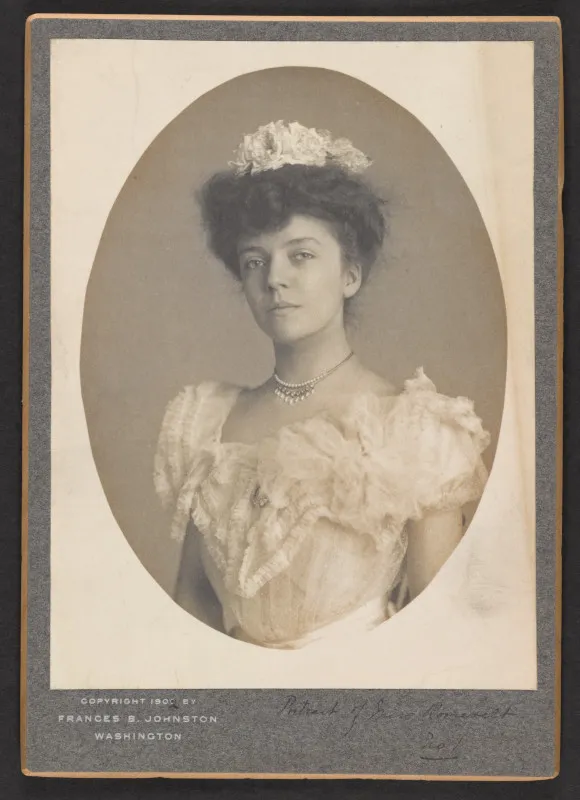
Alice Roosevelt Longworth (1884–1980)
Theodore's eldest child, born to his first wife Alice Lee, was a princess in her own right. With honey-colored hair, pale blue eyes, and her mother's luminous beauty, Alice became the most famous debutante of her era. As the President's daughter, she commanded national attention in a way few women had before her.
But Alice was not merely a decorative figure. She was brilliant, witty, and devastatingly sharp-tongued. She married Congressman Nicholas Longworth and became one of Washington's most influential hostesses. She could read Greek and Latin, understand politics at the highest levels, and could slice a political opponent to ribbons with her wit.
Alice lived longer than any of her siblings, dying in 1980 at age 96. She remained a figure in Washington society throughout the 20th century, a connection to an earlier, more colorful era of American political life.

Theodore Roosevelt Jr. (1887–1944)
Known as "Ted Jr." to distinguish him from his father, Theodore Roosevelt Jr. was a soldier's soldier. He graduated from Harvard and entered military service, where he distinguished himself in World War I, earning the Distinguished Service Cross. He served as a brigadier general during World War II—promoted to major general after his death—and participated in the Normandy landings on D-Day, June 6, 1944. At age 56, he was the oldest officer to land on a beach that day—an act of extraordinary courage that earned him the Medal of Honor, the nation's highest military decoration.
Wounded in both world wars but refusing to be invalided out of service, Ted Jr. embodied his father's creed of the strenuous life and duty to the nation. He died of a heart attack in July 1944, just weeks after D-Day, while still commanding his troops. His younger brother Archie eulogized him as a man who had lived exactly as their father would have wished—in service, in courage, and in the arena of life.
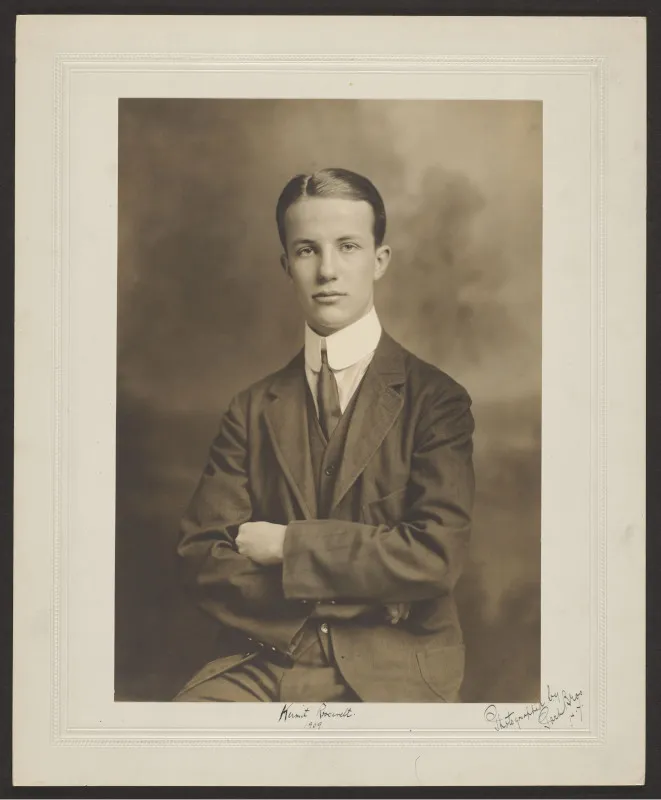
Kermit Roosevelt (1889–1943)
Kermit, Theodore's second son, was perhaps his closest companion in adventure. Theodore took Kermit with him on his post-presidency African safari in 1909–1910, a journey captured in the popular book "African Game Trails." Together they hunted, explored, and experienced the wild Kenyan landscape that Theodore loved.
Kermit was intelligent, athletic, and seemingly destined for great things. But he struggled with a demon that shadowed much of his life: alcoholism. This struggle grieved Theodore deeply. Kermit tried repeatedly to overcome his addiction, but the condition was relentless. He served in World War I, serving in the British Army before American entry, and later in World War II, but his personal battles were never fully conquered.
Kermit died in 1943, dying by suicide—a tragedy that revealed the depths of his internal suffering. Theodore had been dead for twenty-four years when his beloved second son took his own life, unable to continue the struggle against his addiction.

Ethel Roosevelt Derby (1891–1977)
Ethel, Theodore's only daughter with Edith, was the family's emotional anchor. Quieter than her siblings, less ambitious for public attention, Ethel devoted herself to her family and her nursing work. She married Richard Derby, a surgeon, and the couple became deeply involved in medical service and philanthropy.
Ethel was the one who held the family together, who cared for her aging parents, who maintained the traditions and bonds of the Roosevelt household. She lived to age 86, outliving most of her siblings, and remained a dignified connection to her father's era until her death in 1977.
While she did not seek the spotlight like her sister Alice, Ethel's quiet strength and consistent devotion were just as essential to the Roosevelt legacy.
Archibald Bulloch Roosevelt (1894–1979)
Known as "Archie," Theodore's second youngest son inherited his father's courage and sense of duty. Archie served in World War I and was severely wounded in combat, experiences that scarred him both physically and emotionally. Like his brother Ted Jr., he refused to let his wounds prevent him from continuing to serve.
In World War II, Archie served again, leading an infantry battalion in the New Guinea campaign, where he was wounded a second time. He survived both wars and lived to age 85, seeing the postwar world take shape. Archie was quieter than his more famous brothers, content to serve his country without seeking public recognition.


Quentin Roosevelt (1897–1918)
Quentin, Theodore's youngest son, was bright, spirited, and his father's favorite in many ways. As a young man during World War I, Quentin volunteered to serve as a fighter pilot in the American Expeditionary Forces. He was good at it—quick, brave, and skilled in the air.
On July 14, 1918, just months before the war ended, Quentin's plane was shot down over France. He was killed in combat at age 20. The news shattered Theodore. He had lost his youngest son, the one who seemed to embody most fully the strenuous ideals Theodore had championed his entire life.
In his public statement, Theodore bore the loss with stoic pride: "Quentin's mother and I are very glad that he got to the front and had the chance to render some service to his country, and to show the stuff there was in him before his fate befell him." It was one of the greatest sorrows of his final years. The boy who had run through the White House halls while his father was President, who had played with his siblings, who had promised so much—was gone. Theodore himself died less than six months after Quentin's death, in January 1919.
World War Service and Family Sacrifice
The Roosevelt children's service in the Great War stands as one of the most remarkable records of any American family. All four sons served: Ted Jr. with distinction in the war itself, winning the Distinguished Service Cross and later commanding in World War II. Kermit served, though his personal struggles continued alongside his military service. Archie served and was severely wounded. Quentin served as a pilot and was killed. The four sons of Theodore Roosevelt served their nation in combat, and three of them were wounded or killed. This was not abstract patriotism; this was family sacrifice at the deepest level. Theodore, who had served in the Spanish-American War and believed deeply in the duty of young men to serve in their nation's defense, watched his sons march into combat. Quentin's death—occurring just months before the war's end—was one of the greatest sorrows of Theodore's final years. When Theodore died less than six months after Quentin's death, many observers noted that it was as though the loss of his youngest son had taken the life force out of him.


The Toll of Bearing the Roosevelt Name
Being a child of Theodore Roosevelt carried both extraordinary advantages and extraordinary burdens. The Roosevelt name opened doors, provided connections, granted access to elite circles. It also imposed expectations. Theodore's children felt the weight of their father's reputation and his convictions about what it meant to live a worthy life. They were expected to be courageous, honest, hardworking, engaged in public service. They were expected to live the "strenuous life" that their father preached. Some of them, like Ted Jr., embraced these expectations fully and lived remarkable lives of service. Others, like Kermit, struggled under the weight of expectation—striving to live up to an ideal while fighting personal demons that their father could not understand or help them overcome. Alice, the eldest, used her intelligence and wit to carve out her own identity rather than simply being "the President's daughter," though she remained throughout her life a public figure shaped by her extraordinary father.
How They Carried (or Struggled With) the Legacy
Ted Jr. perhaps best embodied his father's ideals. He served the nation in uniform without hesitation, led men in combat with courage and integrity, and lived the strenuous life his father had preached. His World War II service and his willingness to lead from the front—even at age fifty-six on D-Day—demonstrated a commitment to the Roosevelt ideal of public service through sacrifice. Archie, though quieter than his older brother and his famous father, also served with distinction and carried the Roosevelt name with quiet integrity. Ethel, refusing the public spotlight, demonstrated a different kind of Roosevelt virtue—the willingness to serve without seeking recognition, to maintain family bonds, to support her aging parents, and to live with purpose and principle outside the glare of public attention. Alice lived long and powerfully, using her position and her wit to comment on American politics throughout the twentieth century, carrying the Roosevelt legacy of engagement with public affairs. Kermit and Quentin paid with their lives or their mental health for the burden of being Roosevelt sons in an era when national service meant combat and sacrifice.
Theodore Roosevelt's six children represented the next generation of American leadership. Their lives, marked by service and sacrifice, reflected the ideals their father had championed.
Continue Reading
- The Roosevelt Family — The family dynasty and relationships that shaped his life
- Sagamore Hill — The family home where children grew up and parents demonstrated values
- The Connection to FDR — How Roosevelt's niece Eleanor married Franklin Delano Roosevelt
Primary Sources at the TR Center
Explore Roosevelt family letters and documents in the Theodore Roosevelt Center Digital Library.
- Roosevelt Family Correspondence — Letters revealing his relationships with each of his six children
- Roosevelt's Personal Writings — Intimate reflections on fatherhood, sacrifice, and family bonds
From the Archives
Explore original photographs, documents, and illustrations related to this topic in the Theodore Roosevelt Center Digital Library.
Recommended Reading
- The Lion's Pride by Edward J. Renehan Jr. (1998)
- The Roosevelt Family of Sagamore Hill by Hermann Hagedorn (1954)
- The Loves of Theodore Roosevelt by Edward F. O'Keefe (2024). ISBN: 978-1-9821-4568-2