
TR in Presidential Rankings: A Consistent Top Tier
Historians' Consensus: Roosevelt Among the Greatest
Since the mid-twentieth century, historians and political scientists have conducted periodic surveys asking scholars to rank American presidents by various criteria—effectiveness, moral authority, economic management, foreign policy. In nearly every major ranking exercise, Theodore Roosevelt consistently places in the top five. In the C-SPAN historians surveys he has ranked fourth every time, behind Abraham Lincoln, George Washington, and Franklin D. Roosevelt; the main variable in other surveys is whether he ranks above or below Thomas Jefferson and FDR.
This consistency across different surveys, different eras, and different methodologies is remarkable. Roosevelt remains popular with both historians and the general public. He is praised by scholars across the ideological spectrum—conservatives admire his views on power and national strength, while progressives admire his views on social reform and conservation. This broad appeal suggests that his historical significance is genuinely substantial and not merely the product of ideological preference.

A formal portrait of President Theodore Roosevelt, whom scholars consistently rank among the greatest of all American presidents. (Library of Congress)
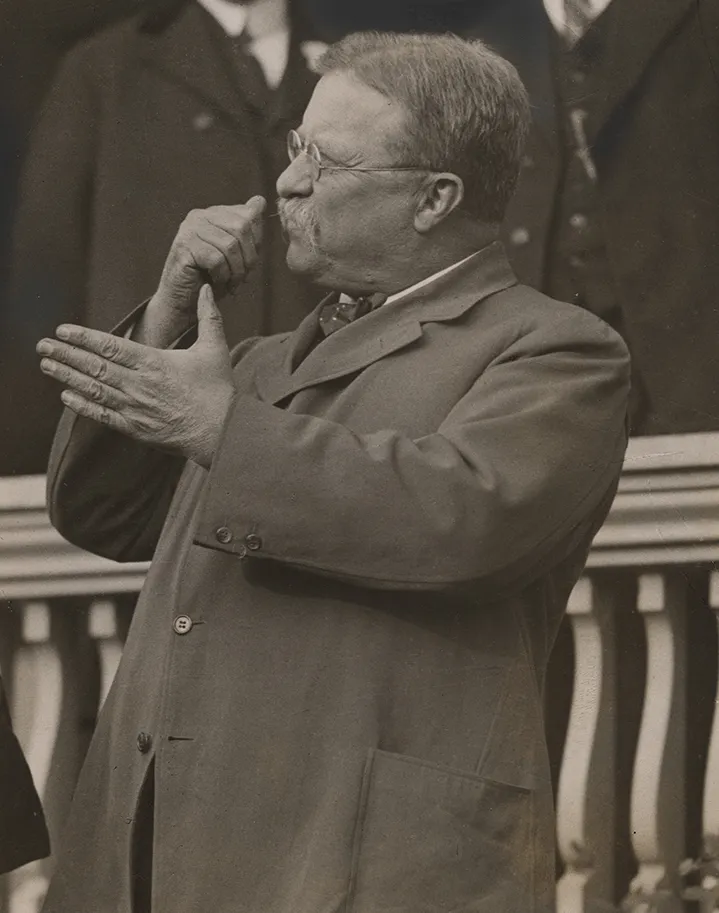
Roosevelt's forceful leadership and mastery of the bully pulpit help explain why historians rank him so highly. (Library of Congress)
Why Historians Rank Roosevelt So Highly
Scholars cite several reasons for Roosevelt's high ranking. First, his conservation legacy is virtually unmatched. He protected approximately 230 million acres of public land—an area larger than Texas. He established the principle that natural resources belong to the nation and should be managed for the common good. This achievement has only grown in significance as environmental concerns have become more pressing.
Second, Roosevelt fundamentally transformed the presidency. Before Roosevelt, the presidency was often a reactive office—Congress initiated legislation and the president signed or vetoed. Roosevelt transformed it into a proactive office, where the president could initiate programs and challenge Congress. He used executive orders extensively. He spoke directly to the American people. He saw the presidency as a "bully pulpit" from which to lead the nation. This conception of the presidency has endured and shaped every subsequent presidency.
Third, Roosevelt's trust-busting and progressive policies demonstrated that government could actively regulate business and protect workers. He showed that federal government could intervene in the economy in ways that had been previously thought impossible or unconstitutional. Many of his policies have become permanent features of American government, from the regulation of corporations to protections for workers and consumers.
Fourth, Roosevelt positioned America as a world power. He took an active role in international affairs, mediating the Russo-Japanese War (for which he won the Nobel Peace Prize), building the Panama Canal, and asserting American interests globally. Whether one approves of American imperialism or not, there is no question that Roosevelt moved America from relative isolationism to active global engagement.
Different Methodologies, Consistent Results
The most famous presidential ranking is the C-SPAN Historians Survey, conducted in 2000 and repeated in 2009, 2017, and 2021. In all four surveys, Roosevelt ranked fourth. The Siena College Research Institute has conducted similar surveys with similar results. Academic journals have published various ranking studies. Murray and Blessing's survey of historians, conducted in the 1980s, also ranked Roosevelt very highly. Across different methodologies and different sets of respondents, Roosevelt consistently achieves high rankings.
This consistency suggests that Roosevelt's high ranking is not a product of recent historical fashion or ideological bias. Rather, it reflects a broad scholarly consensus that his presidency was significant and consequential. Historians who might disagree on many things tend to agree that Roosevelt was a transformative president.

Whatever the survey methodology, Roosevelt lands near the top of nearly every scholarly ranking of U.S. presidents. (Library of Congress)
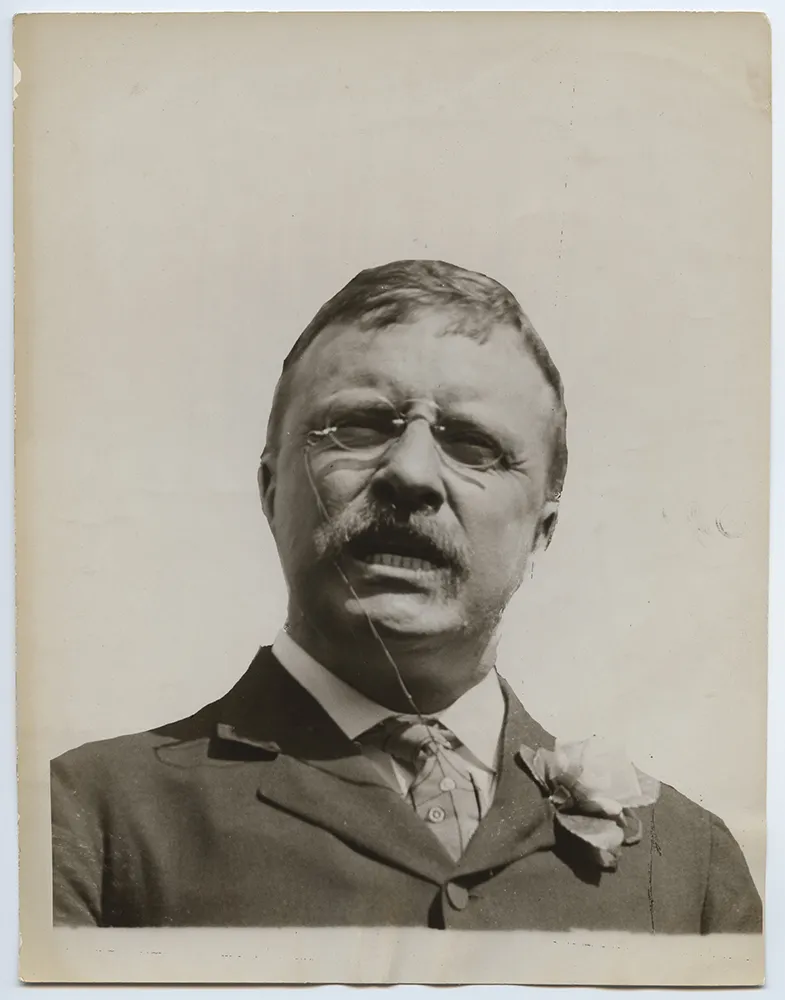
Vigor, vision, and a bold expansion of the presidency form the heart of Roosevelt’s case for greatness. (Library of Congress)
What Makes a Great President? Roosevelt's Case
The rankings raise important questions about how we evaluate presidential greatness. Different criteria produce somewhat different rankings. If you focus on management of the economy, different presidents rise in importance. If you focus on moral authority and civil rights, Lincoln rises further in importance. If you focus on foreign policy success, results vary. Roosevelt scores well on nearly every dimension—which is part of why he ranks so highly overall.
Roosevelt combined several qualities that historians value: vision, effectiveness, willingness to challenge established power, genuine intellectual engagement with policy questions, and ability to inspire public support. He was not perfect—he had the racial attitudes and imperialist assumptions of his era, and they shaped his policies. But the combination of vision and effectiveness is rare in history. Roosevelt had both.
The Debate: Is Roosevelt Overrated or Underrated?
Not all historians agree with the high rankings Roosevelt receives. Some argue that his conservation legacy, while significant, is overstated. Some contend that his trust-busting did not significantly reduce monopoly power and may have been more symbolic than substantive. Some critics point out that his imperialist ventures in the Philippines and Latin America are morally problematic and have had lasting negative consequences. Some scholars argue that his racism and his limited commitment to civil rights for African Americans should lower his overall ranking.
Others argue that Roosevelt is underrated. They point out that much of his progressive agenda stalled under his more conservative successor, William Howard Taft, and again under the Republican administrations of the 1920s. The full realization of Roosevelt's progressive vision required Wilson's presidency and the New Deal decades later. If we measured Roosevelt's impact not by what he directly accomplished but by what he inspired and made possible, his ranking might be even higher.
The debate reflects genuine historical disagreement about how to evaluate presidents and how to weigh different achievements and failures. But even scholars who are critical of some aspects of Roosevelt's presidency tend to acknowledge his historical significance and his lasting impact on American government and politics.

Debate persists over whether Roosevelt is overrated or underrated, yet his top-tier standing has proven remarkably durable. (Library of Congress)

Roosevelt’s enduring popularity is carved in granite at Mount Rushmore, beside Washington, Jefferson, and Lincoln. (Dean Franklin, CC BY-SA)
Roosevelt's Popularity with the General Public
Interestingly, Roosevelt's popularity extends beyond academic historians to the general American public. Polls of Americans show that Roosevelt ranks very highly in public opinion. He is viewed favorably across demographic groups and political affiliations. His image—vigorous, action-oriented, principled—continues to appeal to Americans. Children learn about him in schools. His home at Sagamore Hill attracts thousands of visitors annually. His legacy is woven into American popular culture.
This combination of scholarly esteem and public popularity is relatively rare. Some presidents rank highly with scholars but are little known to the public. Others are remembered fondly by the public but are viewed skeptically by historians. Roosevelt achieves high rankings on both dimensions, suggesting that his historical significance is both substantial and genuinely recognized.
The Durability of Roosevelt's Ranking
What is most striking about Roosevelt's presidential ranking is its durability. For more than a century, scholars have ranked him highly. Unlike some presidents whose standing rises and falls with changing historical fashions, Roosevelt has maintained consistent support. Even when his policies have been criticized or revised, his fundamental historical importance has not been questioned. This suggests that his ranking reflects something real—a genuine and substantial impact on American history and governance.
Whether one personally approves of Roosevelt's policies or not, it is difficult to deny that he fundamentally shaped the American presidency, the relationship between government and business, the conservation of natural resources, and America's role in the world. These are the reasons historians rank him so highly.
To explore scholarly assessments of Roosevelt's presidency in more depth, visit the Theodore Roosevelt Center's research collection.
Continue Reading
- Theodore Roosevelt Biography — More on TR
- TR's Legacy — More on TR
Primary Sources at the TR Center
Explore original documents and resources related to this topic in the Theodore Roosevelt Center Digital Library.
- TR Center Digital Library — Primary source collection
From the Archives
Explore original photographs, documents, and illustrations related to this topic in the Theodore Roosevelt Center Digital Library.
- Theodore Roosevelt in the West — Roosevelt portrait symbolizing his legacy
- Col. Roosevelt in Rough Riders uniform — Iconic military portrait
Recommended Reading
- Theodore Roosevelt: A Strenuous Life by Kathleen Dalton (2007). ISBN: 978-0-307-42968-1
- Power and Responsibility by William Henry Harbaugh (1961)
- The Era of Theodore Roosevelt by George E. Mowry (1958)