
Edith Roosevelt’s Colonial Gardens
The White House Rose Garden and the Jacqueline Kennedy Garden grow on two plots Edith Roosevelt laid out in 1902 and 1903, after the old greenhouses came down. She called them her "colonial gardens," and she filled them with the flowers of an earlier America.
The Fight Over the Glass Houses
In 1902 a cluster of greenhouses and a glass conservatory still stood off the west terrace. Architect Charles McKim found them unsightly and wanted them gone. Edith objected strongly, mostly for practical reasons. The glass houses grew the flowers for White House decorating and gifts, and replacing them would not be easy. According to the National Park Service's history of the grounds, the White House gardener, Henry Pfister, took her side.
McKim won. Under the "Treaty of Oyster Bay," told on the renovation page, new greenhouses went up away from the house, in the city's propagating gardens. The White House Historical Association counts five built on the Mall in 1902 and sixteen by 1913.
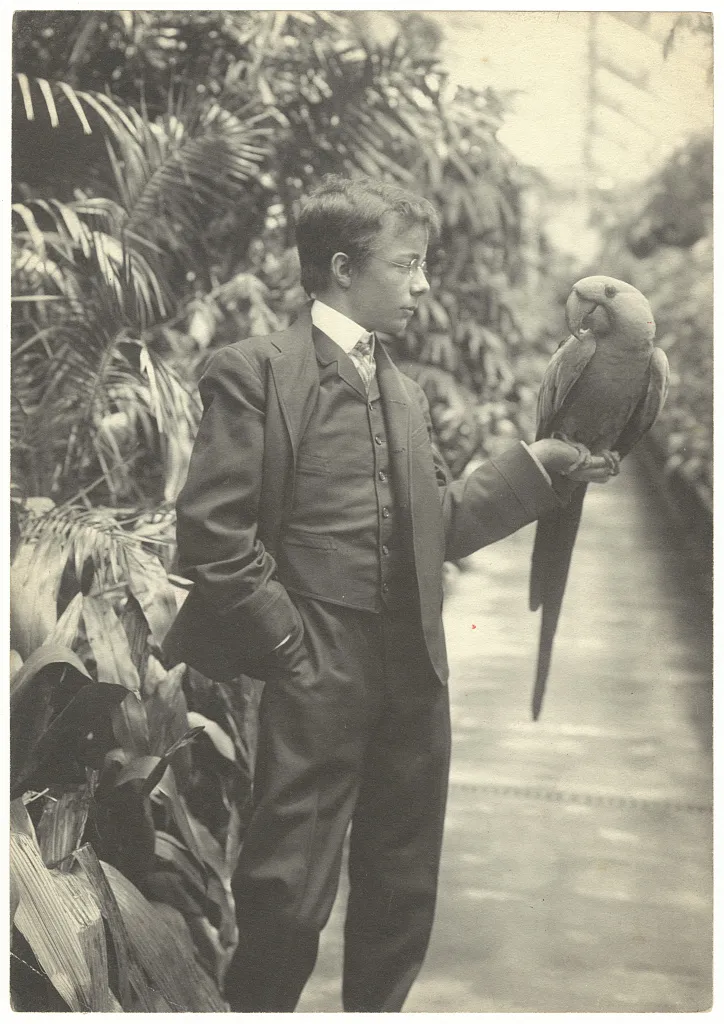
Ted Roosevelt Jr. and Eli Yale, the family’s hyacinth macaw, in the White House conservatory in 1902, the year it was torn down. (Frances Benjamin Johnston / Library of Congress)
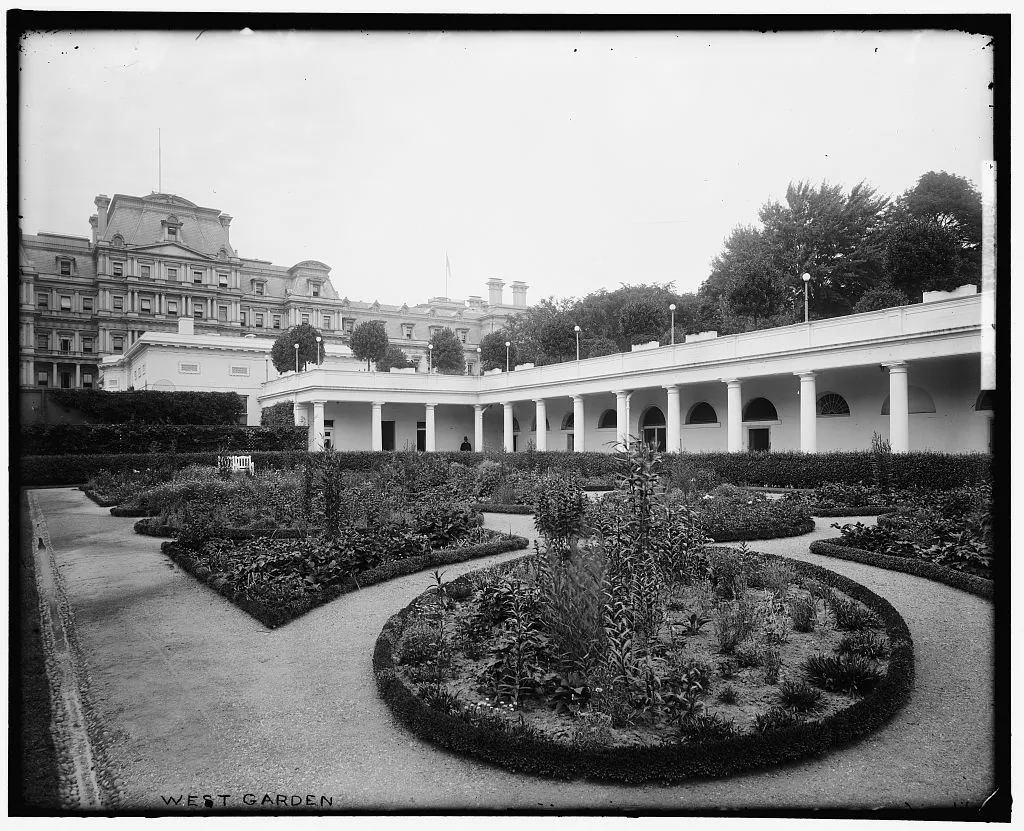
Edith Roosevelt’s west colonial garden, with boxwood-edged beds where the Rose Garden is today, probably photographed before Ellen Wilson replaced it in 1913. (Harris & Ewing / Library of Congress)
Old-Fashioned Flowers
On the cleared ground south of the east and west terraces, Edith laid out her colonial gardens. Biographer Lewis Gould writes that she chose flowers from the era of Martha Washington and Dolley Madison. The White House Historical Association lists sweet peas, black-eyed Susans and quince, along with the jasmine she and her husband, Theodore Roosevelt, enjoyed on summer evenings. In the White House Historical Association's description, low boxwood framed curving beds full of Johnny-jump-ups, daisies and wildflowers that Edith and her friends gathered on walks in the country.
A newspaper of the day, quoted by Gould, called the gardens "Mrs. Roosevelt's only hobby." Gould adds that she and T.R. strolled the paths every day they could.
On the Record
The Chief of Engineers' annual report, as quoted by the National Park Service, described the work plainly: "the ground immediately south of the two terraces was laid out into colonial (herbaceous) flower gardens. Gravel walks were constructed, shrubs and plants set out, a privet hedge planted around three sides of it, and flower beds made." The Park Service counts 2,000 boxwood bushes planted as edging.
Edith's plans reached the rooftops, too. A 1903 newspaper report described her plans for gardens of potted trees and flowering plants on top of the new east and west terraces, and by 1904 potted bay trees lined the East Terrace.
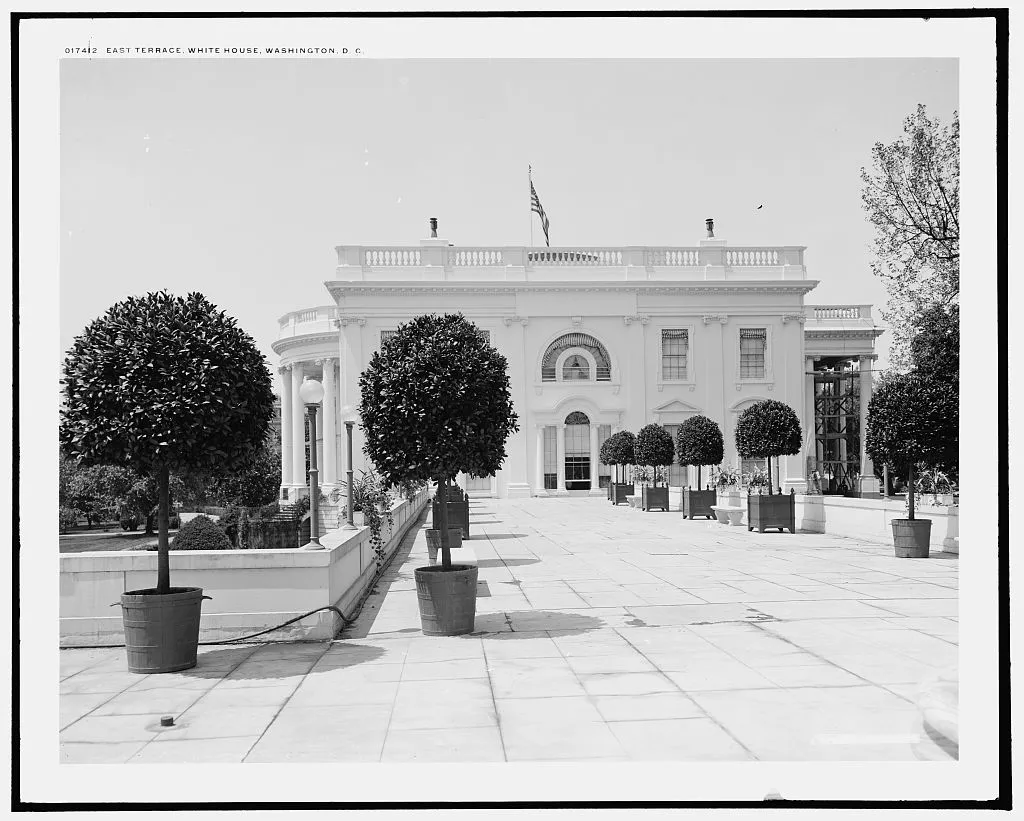
Potted bay trees line the rebuilt East Terrace about 1904. (Detroit Publishing Co. / Library of Congress)

Guests stroll the South Lawn, with the Washington Monument beyond, at one of the Roosevelts’ garden parties, about 1905. (Underwood & Underwood / Library of Congress)
Garden Parties
In spring the gardens and the South Lawn became a stage. Garden parties were a fixed part of each Roosevelt social season, alongside the big teas and the East Room musicales.
What Became of Them
The colonial gardens lasted about a decade. In 1913 First Lady Ellen Wilson replaced them. The National Park Service credits Beatrix Farrand with the new east garden, and George Burnap and Mrs. Wilson with the west. The same two plots are today the Jacqueline Kennedy Garden on the east and the Rose Garden on the west.
The Portrait on the Bench
Théobald Chartran's 1902 portrait of Edith, a gift of the French Republic, shows her seated on a garden bench with the South Portico behind her. The White House Historical Association identifies the setting as her colonial garden and notes that Chartran moved the portico to fit the picture. One puzzle remains: Chartran came to paint her in early 1902, months before the conservatories came down. The garden in the painting may be at least partly his invention.

Edith Roosevelt's official portrait by Théobald Chartran (1902), photographed by Frances Benjamin Johnston. She was admired for the organization and calm she brought to a busy household and to public life. (Library of Congress)
Continue Reading
- Remaking the White House, 1902: Edith calls in architect Charles McKim, and four months of work rebuild the house.
- Running the White House: How Edith Roosevelt took stock of the house, fixed its social calendar and opened a new door for guests.
- Edith Roosevelt and the Presidential China: Presidential dinnerware goes on view for visitors, and Edith refuses to let the chipped state china be auctioned.
- Edith Roosevelt, First Lady: A social secretary, East Room musicales and a quiet hand in politics.
- Sagamore Hill: The Roosevelts' Oyster Bay home, where the "Treaty of Oyster Bay" was struck.
Primary Sources
From the Archives
Explore original photographs, documents, and illustrations in the Theodore Roosevelt Center Digital Library.
Recommended Reading
- Lewis L. Gould, Edith Kermit Roosevelt: Creating the Modern First Lady (Lawrence: University Press of Kansas, 2013). ISBN 978-0-7006-1902-3
- Sylvia Jukes Morris, Edith Kermit Roosevelt: Portrait of a First Lady (New York: Coward, McCann & Geoghegan, 1980). ISBN 978-0-698-10994-0