
Archibald Roosevelt: Wounded Twice in War
The Warrior's Blood
Born in 1894, Archibald was the third son of Theodore Roosevelt and Edith Carow. From his earliest years, he absorbed his father's gospel of "the strenuous life." Like his brothers, he was raised to believe that privilege carried with it the obligation to contribute, to act, to serve something larger than oneself. But where his older brother Ted seemed to accept military service as a natural path, and where young Quentin embodied his father's teachings with high-spirited enthusiasm, Archie carried them with a kind of quiet, determined intensity that would mark his entire life.
As a young man, Archibald attended Harvard, following the family tradition. He was an accomplished student, though not the intellectual that some of his siblings were. What characterized him more was a kind of focused determination—when he chose to do something, he did it thoroughly and well. Upon graduation, he went into business. But like his brothers, he joined the Plattsburg preparedness movement, and when war came he was commissioned as an officer in the United States Army; for the men of his generation and class, wartime service was an expected duty for those serious about their obligations to the nation.

Archie (with his younger brother Quentin) grew up in the White House. Like all TR's sons, he was raised to answer the call to duty. (Library of Congress)
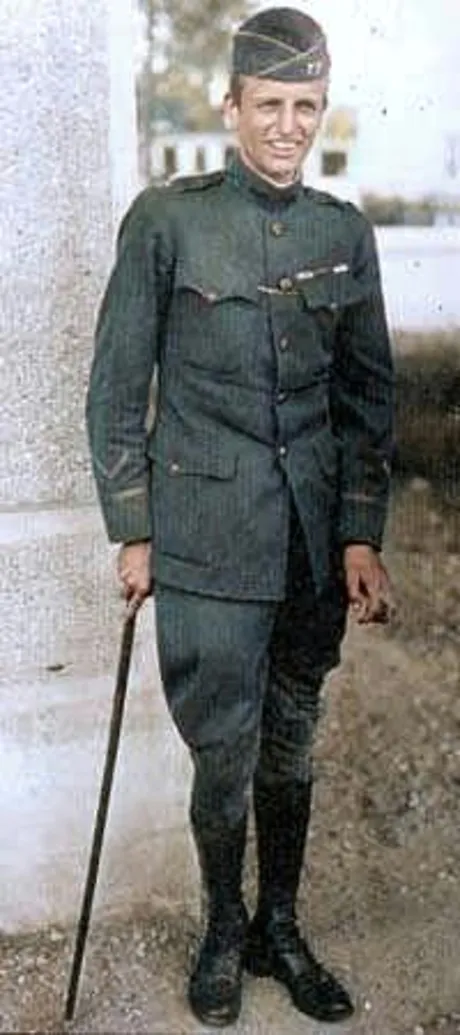
In 1918 Archie was gravely wounded in France — his arm and leg shattered — and was discharged with a permanent disability and the French Croix de Guerre. (Wikimedia Commons)
The Inferno of the First World War
When the United States entered World War I in 1917, Archie was newly commissioned through the Plattsburg officer training movement. He served in France with the American Expeditionary Forces, commanding troops in some of the war's most devastating engagements. Trench warfare on the Western Front represented something almost unprecedented in human conflict—industrial-scale killing on a scale that previous generations could barely have imagined. Tens of thousands of men died for the gain of mere hundreds of yards. Artillery bombardments lasted for days, pulverizing the landscape and the men who stood in it.
On March 11, 1918, when German shellfire shattered his arm and leg, Archie Roosevelt experienced the full horror of modern warfare. Shrapnel tore into his left arm and shattered his kneecap, wounds so severe that the arm's nerve damage never fully healed. The cumulative effect was catastrophic.
When Archie was finally evacuated from the front, his condition was grave. Army doctors examined him carefully and rendered their verdict: he was 100 percent disabled. The injuries to his body and mind were so severe that he was declared unable to work in any capacity. For a man of Archie's generation and class—men who had been raised to believe that activity and service defined worth—this diagnosis must have seemed like a death sentence of a different kind. His body might recover, but would his sense of purpose? Could a man who had been shaped by the ideology of "the strenuous life" accept a life of enforced inactivity?
A Remarkable Return to Service
What happened next revealed something extraordinary about Archie Roosevelt's character. Most men who had been through what he experienced would have accepted their disability, retired to civilian life, and tried to build new identities around something other than military service. That would have been the rational, understandable choice.
But Archie Roosevelt was not most men. Discharged as fully disabled in 1918, he recovered slowly and rebuilt his life in civilian terms—entering the bond business and later co-founding the investment firm Roosevelt & Cross. But when the United States entered World War II, he made a decision that seemed almost incomprehensible to those around him: he asked to return to the Army. Against the advice of those who loved him, against medical recommendations, against what seemed like basic common sense, he was recommissioned in 1942 and returned to active military service.
In the two decades between the wars, Archibald married, started a family, and built his business career. He became involved in conservative political causes. He remained, as far as the public knew, a man trying to make the best of his disabilities while pursuing the life he could build. But he also remained, deep in his being, a soldier.
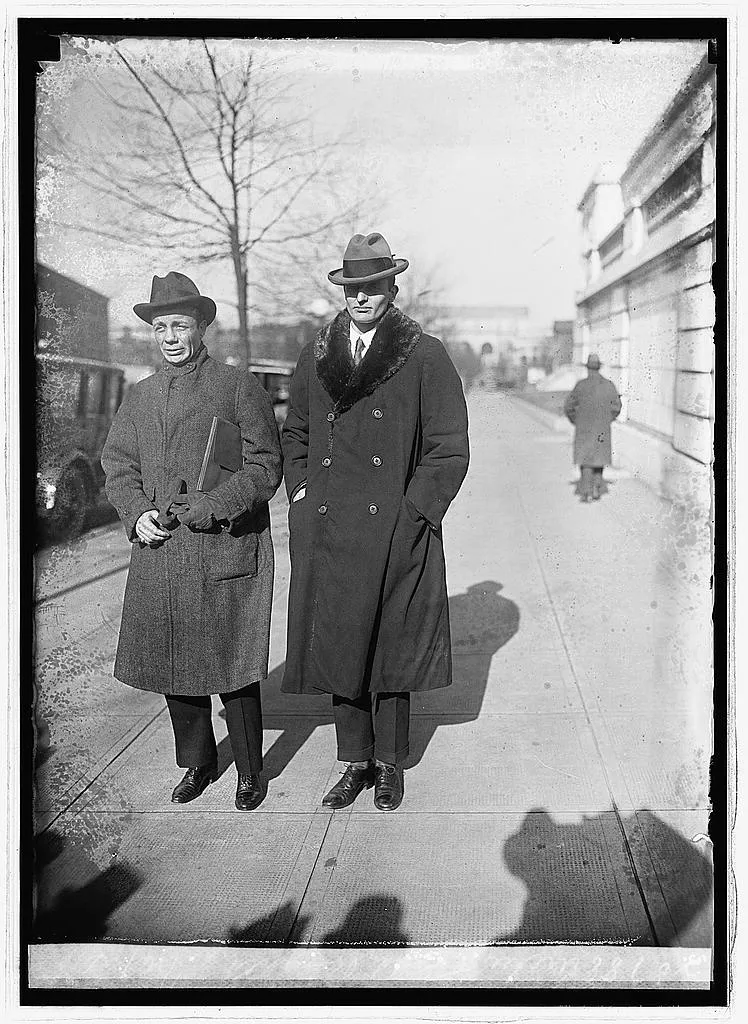
Between the wars Archie built a business career, but he never lost the soldier's sense of duty that would call him back to arms. (Library of Congress)

Past fifty and already disabled, Archie talked his way back into uniform in the Second World War, leading troops in the Pacific. (Wikimedia Commons)
Wounded Again in the Second Conflict
When World War II erupted in 1941, Archie was already past the age when most men serve in combat. Yet at forty-seven, he returned to uniform, still active, still committed to his duty. When American troops began fighting in the Pacific Theater, Archie was among them. He served in New Guinea, in one of the most difficult and dangerous military environments of the entire war—a jungle environment where disease, tropical conditions, and fierce Japanese resistance combined to make survival itself a challenge.
And once again, in the crucible of combat, Archie Roosevelt was severely wounded. A grenade shattered his knee—at Biak in 1944, when he was fifty—and he was wounded so badly that the Army once again declared him 100 percent disabled. But this time, there was something even more remarkable: Archie was reportedly the only American soldier to receive that designation in both world wars.
The Private Warrior
What made Archie Roosevelt distinctive among Theodore Roosevelt's children was his fierce privacy. While his siblings—particularly his sister Alice and his younger brother Quentin's memory—became public figures, Archie seemed determined to live his life away from the spotlight. He was not interested in writing memoirs or giving interviews about his experiences. He did not seek the kind of public recognition that military service could bring. He was, in many ways, the Roosevelt who least wanted to be a Roosevelt, at least in any public sense.
Yet this very privacy gives his life a peculiar significance. He did not serve for glory or recognition. He did not serve because he sought to enhance his family's reputation or extend his father's legacy. He served because, in his understanding, service was what one did. It was duty, plain and simple. It was the obligation that came with the advantages he had been born with. It was the answer to the question "What should I do with my life?"—a question his father had taught all his children to take seriously.

Wounded in the same knee in both wars, Archie was the only American soldier declared totally disabled in two conflicts. He bore it with quiet stoicism. (Library of Congress)
A Life of Quiet Dignity
Archibald Roosevelt lived a long life, passing away in 1979 at the age of eighty-five. In his later years, he was involved in conservative political causes and organizations. He married, had a family, built a private life away from the glare of publicity that had characterized his father's existence. He lived in a way that would have been incomprehensible to many of his father's friends and contemporaries—with dignity and privacy, without seeking or demanding the kind of public attention that his achievements might have commanded.
His life reminds us that not all heroism is public. Not all courage is celebrated. Sometimes the truest form of the strenuous life—the life of action and duty that Theodore Roosevelt preached—manifests not in speeches or in public achievements, but in the quiet determination to fulfill one's obligations regardless of cost, regardless of recognition, regardless of whether the world will ever know what you sacrificed.
Archie Roosevelt was wounded twice in war. But he was never broken. He never surrendered to despair or to the idea that his disabilities made him less of a man. He simply persisted, served, did what he believed was right, and asked for nothing in return but the chance to do his duty. In a family full of vivid, public personalities, Archie Roosevelt stands as a testament to a different kind of excellence: the excellence of unassuming determination and private virtue.
Continue Reading
- Theodore Roosevelt and World War I — The conflict that shaped Archie's service
- Theodore Roosevelt Jr. — Archie's older brother who also served in war
- Quentin Roosevelt — His younger brother's tragic sacrifice
- Roosevelt Family Roots — The family values that shaped Archie
- The Strenuous Life in Office — TR's philosophy that guided his sons
- Edith Roosevelt — Archie's mother
Primary Sources at the TR Center
Learn more about Archibald Roosevelt's military service and the broader context of American soldiers in World War I and II. The TR Center Digital Library contains materials documenting this period of American military history.
- Ted Roosevelt Jr. — Information on Archie's brother's military service
- Family and Friends — Explore the Roosevelt family relationships
- Theodore Roosevelt Biography — Understand the father who shaped these soldiers
- Roosevelt Genealogy — Trace the Roosevelt family lineage
From the Archives
Explore original photographs, documents, and illustrations related to this topic in the Theodore Roosevelt Center Digital Library.
Recommended Reading
- The Lion's Pride: Theodore Roosevelt and His Family in Peace and War by Edward J. Renehan Jr. (1998).